





Mineral Business Rajasthan: Industrial Investments Hotbed
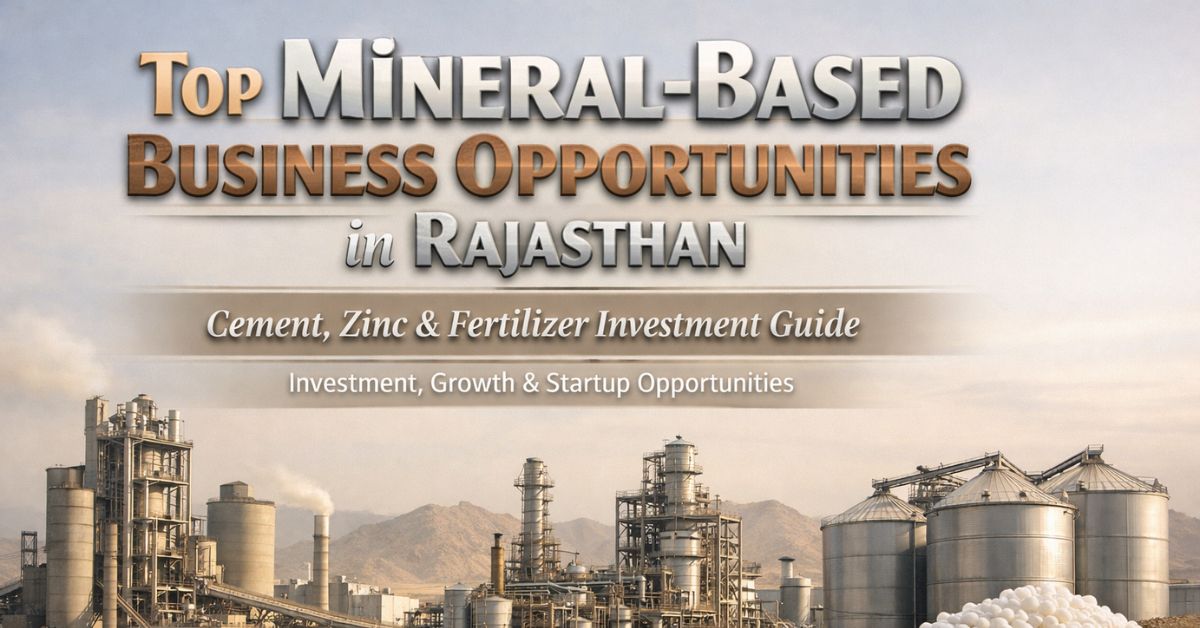
Rajasthan has become one of the most important states of the country for the production of minerals and continues to attract industrial investors from other parts of the country. The strength of this state is not only its abundance of natural resources but also the capacity to accommodate large-scale manufacturing through a good infrastructure and favourable industrial policies. For the entrepreneurs planning to start mineral-based industries in Rajasthan, it provides a stable and low-risk environment to the industries compared to many other regions.
The presence of mineral sector in Rajasthan is supporting several major industries such as manufacturing of cement, fertilizers and metal processing. Because the raw materials are available locally, businesses can operate at lower transportation costs, and they can have more predictable supply chains. This advantage massively increases the long-term profitability and efficiency of operations.
Table of Contents
ToggleDownload the Full Guide: The Complete Technology Book on Pesticides, Insecticides, Fungicides and Herbicides
Mineral Strength That Supports Industrial Development
Rajasthan plays a dominant role in India’s mineral production which directly supports the downstream industries. The state is popularly known for its leadership in the production of limestone, which makes it a major contributor of the national cement industry. Limestone availability results in a consistent supply of raw materials which is crucial to stable production and cost control.
In addition to the limestone, the state of Rajasthan has important reserves of phosphorite and Zinc. These minerals are the basis of fertilizer and metal industries. The fact that they are available within a single state offers opportunities for integrated industrial development and value addition.
Some of the important mineral advantages of Rajasthan are:
- Biggest producer of limestone in India
- Major supplier of phosphorite for fertilizer production
- High concentration of zinc and lead reserves
- Established mining and processing infrastructure
These advantages make Rajasthan one of the most reliable places for mineral-based industrial investments.
Why Rajasthan is a Competitive Location for New Industrial Projects
The success of any industrial project is dependent on a number of basic factors such as resource availability, logistics, and government support. Rajasthan scores well in all these fields and thus it is a favourite among the entrepreneurs and investors seeking to establish their business in the manufacturing sector.
One of the greatest benefits is nearness to raw materials. The proximity of factories to mines results in reduced transportation expenses which increases production efficiency. This solution decreases total operational expenses while it improves profi.
Another important factor is infrastructure. Rajasthan has a wide network of highways and railway lines which connect the industrial areas in Rajasthan with the major markets all over India. These transportation systems allow businesses to transport goods swiftly and efficiently, which is crucial for keeping customers satisfied and on time.
Government policies are also an important factor in promoting the growth of industries. The state provides financial incentives and regulatory support for businesses investing in manufacturing industries and mineral processing industries.
Common support measures taken by governments include:
- Capital investment subsidies for new industries
- Exemptions from electricity duty
- Industrial land allotment help
- Developments of MSME incentives
Business support through financial backing enables startups to begin their operations with less risk which provides them operational benefits.
Cement Manufacturing: The Mainstay of Rajasthan's Mineral Economy
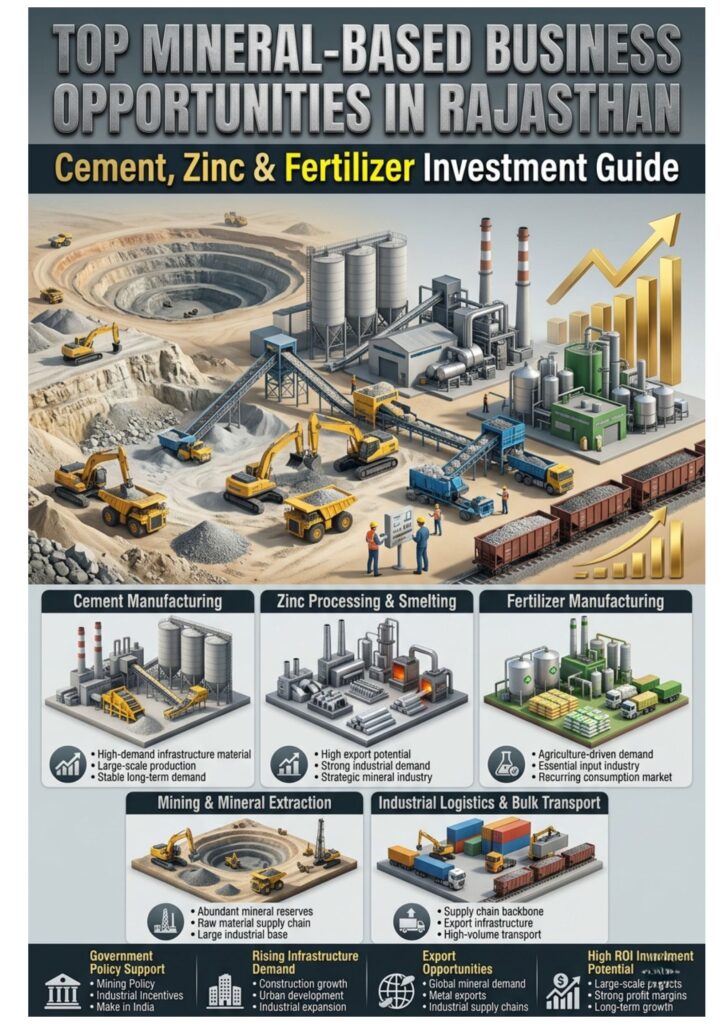
Cement manufacturing is one of the most important industries in Rajasthan because of the huge reserves of limestone in the state. Demand for cement shows no signs of immunity throughout India with the rapid expansion of infrastructure projects, housing construction and urban development. This steady demand ensures long-term market stability to the cement producers.
Setting up a cement plant or grinding unit near the limestone deposits offers a great cost advantage as the transportation costs are kept at a minimum. Modern production technologies have also made production more efficient, enabling producers to produce higher volumes with a controlled operational cost.
Some of the typical cement business opportunities are:
- Mini cement plants for regional markets
- Cement grinding units close to urban centres
- Ready-mix concrete production facilities
Most of the mid-size cement projects become profitable in three to five years, which makes them an attractive industry for long-term investors.
Get Detailed Project Report (DPR): Zinc Oxide Manufacturing Plant
Zinc Processing and Alloy Manufacturing: An Increasing Industrial Opportunity
Zinc is a critical industrial metal used in the construction, transportation and manufacturing sectors. It is important in the protection of steel against corrosion by galvanization. India will require zinc products for many years because its infrastructure development activities continue to expand.
The dominance of Rajasthan in the production of zinc is a great advantage for businesses in metal processing. The availability of raw materials in the same place helps to reduce the risks of supply and thereby guaranteeing these stable production capacities.
Promising zinc-based business segments are:
- Zinc oxide manufacturing
- Galvanizing Services for Steel Products
- Zinc alloy casting & fabrication
Zinc usage in renewable energy systems and battery technology has increased, which enables entrepreneurs to identify new business prospects within this particular industry.
Fertilizer Manufacturing: A Steady and Necessary Industry
Fertilizer production is strongly related to agricultural productivity and it is one of the most sure shot industries in India. Rajasthan phosphorite reserves are excellent base for setting up fertilizer units which can cater to the farmers all over the country.
Demand is consistent for the fertilizers as agriculture requires regular supply of nutrients to maintain the crop yields. Government subsidy programs increase the financial feasibility of fertilizer manufacturing operations. The combination of these elements makes the industry resistant to economic downturns because it create.
Emerging Prospects of Rare Earths and Strategic Minerals
The role of rare earth minerals in modern technological industries has grown increasingly vital to contemporary technological industries. They are being used in electric vehicles, renewable energy systems, electronics, and advanced manufacturing. Countries that increase their investments in clean energy and digital technologies will create a higher demand for these minerals.
Rajasthan mineral belt is currently being explored for rare earth resources. The early investors of this developing sector will gain strong growth possibilities. The establishment of processing and beneficiation facilities during initial development phases enables businesses to create dominant market positions through production increases.
Financial Planning and Profitability Considerations
Launching a mineral-based project needs careful financial planning and realistic cost estimation. Investors need to consider production capacity, energy use and market demand before making investment decisions. Energy costs are of a special significance as they constitute a major part of the operating costs of heavy industries.
A well-prepared feasibility study helps businesses get an idea about the risks that may occur and determine which production strategy would be most efficient. It also presents clear financial projections to help in decision-making and enhance investment confidence.
Key financial factors to consider include:
- Capital investment requirements
- Energy and fuel costs
- Raw material supply agreements
- Market demand forecasts
- Break-even analysis and return on investment analysis
Proper financial planning goes a long way toward improving the odds of long-term business success.
Export Potential and Market Expansion Opportunity
Rajasthan’s geographical location has certain great advantages for export-oriented industries. The state is well connected with the western ports and manufacturers can easily ship the products to the international market. Exporting of processed minerals and industrial products can lead to significant revenue and business competitiveness.
As global demand for construction materials and industrial metals continues to develop Rajasthan-based manufacturers are well placed to move into new markets. Companies that pay attention to quality production and efficient logistics can develop a successful export network and attain sustainable growth.
Future Outlook of Rajasthan’s Mineral Economy
The future of Rajasthan’s mineral industry appears to be very promising as a result of the on-going industrial development and infrastructure development in India. Government initiatives focusing on promotion of manufacturing to reduce import dependence are expected to open up new opportunities for mineral-based industries. Technological advancements are also making production more efficient and environment friendly.
For entrepreneurs and investors, Rajasthan is a strategic location, with good scope of growth. Businesses using modern technology and operating at an efficient level are likely to profit from the state’s growing industrial economy.
Frequently Asked Questions (FAQ)
- Is Rajasthan good for small scale mineral processing businesses?
Yes, Rajasthan offers good scope for small and medium level enterprises especially lime industry, cement grinding and metal processing industry.
- Which industry is most profitable in Rajasthan which is mineral based?
Limestone-based industries like cement and lime industries are regarded to be one of the most profitable industries because of constant demand with a supply of raw materials.
- What is the average investment of a mineral based project?
Investment is a function of plant size and technology, but most small and medium projects need moderate quantities of capital compared to the large industrial facilities.
- What is the average payback period for mineral based industries?
Most projects pay for themselves in three to five years if operations are efficiently managed.
- What are the greatest risks in mineral based industries?
The main risks are fluctuation of energy costs, compliance with regulations and variations in the demand on the market.


