


Introduction: Biochar Production Plant Cost in India
In the last few years biochar has become a very promising green business in India. The country generates an amount of agricultural waste every year and a lot of this waste is burned in open fields causing pollution and harming the environment. At the time farmers are looking for ways to make their soil more fertile and reduce the cost of fertilizers. Biochar offers an profitable solution to both of these problems.
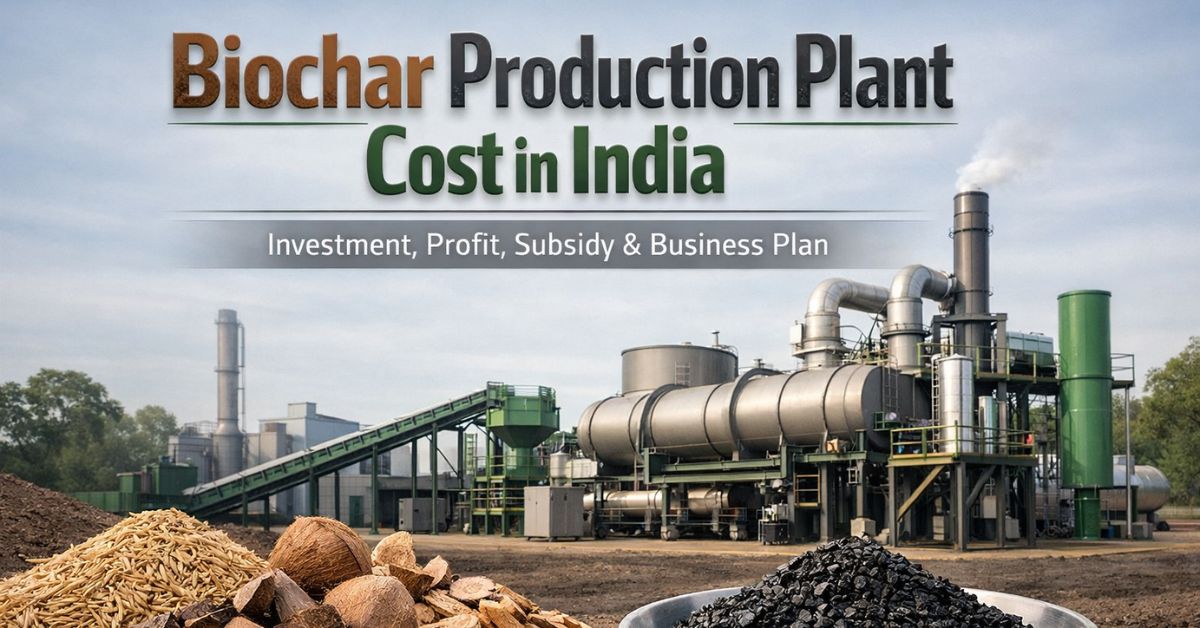
Biochar production requires heating biomass materials in low-oxygen conditions with rice husk and coconut shells and wood chips and agricultural residues as feedstock. The process converts waste materials into a carbon-rich substance which benefits soil health and boosts agricultural productivity while capturing atmospheric carbon. Because of these benefits the demand for biochar is increasing rapidly in agriculture, industry and export markets.
For people who want to start their business this trend represents a strong opportunity with long-term growth potential.
Biochar Production Plant Setup Cost in India
The amount of money needed to start a biochar production plant depends on how much you want to produce how automated you want the process to be and what kind of infrastructure you need. However compared to other manufacturing industries the startup cost is moderate and manageable.
Small-Scale Biochar Plant
A small-scale plant is perfect for new entrepreneurs or rural businesses that want to enter the biomass sector with limited capital. The unit produces goods to meet the needs of customers in its immediate area.
The establishment expenses for a plant range between ₹25 lakh and ₹80 lakh.
The main things you need to spend money on include:
- A pyrolysis kiln or reactor
- A biomass crusher and dryer
- Preparing the land and building a
- Installing electricity and utilities
- Initial working capital
Plant operations enable most small facilities to achieve their financial goals within two to three years when they maintain steady production levels.
Read More: Business Plans / Project Profiles
Medium-Scale Biochar Plant
A medium-scale plant operates at higher production capacity while achieving better efficiency throughout its operations. The plants implement manufacturing methods which decrease operational expenses while enhancing product quality.
The establishment expenses for a medium-scale plant range between ₹1.5 crore and ₹4 crore. The main components of a medium-scale plant include:
- A carbonization system
- Better emission control equipment
- Automated material handling
- Higher production efficiency
Entrepreneurs who want to provide products to agricultural markets or export markets should use this operational level.
Large-Scale Automated Biochar Plant
Production facilities at large scale operate both for manufacturing purposes and for international distribution. The plants use advanced technological systems combined with their dedicated quality assurance processes.
The establishment expenses for a large-scale plant range between ₹8 crore and ₹12 crore. The projects contain three main components which consist of automated systems and environmental protection technology and unified processing facilities. The production capacity will increase significantly with higher investment costs which will enable more profitable operations.
Read More: Project Reports & Profiles
Raw Materials Required for Biochar Production
India has an advantage when it comes to biochar production because biomass is widely available and relatively inexpensive. The choice of material plays a big role in determining the quality of the product and the production cost.
Some common raw materials used to make biochar include:
- Rice husk
- Coconut shell
- Sugarcane bagasse
- Wood chips
- Bamboo waste
- Corn cobs
The cost of biomass is generally between ₹1,000 and ₹3,500 per tonne making India one of the cost-effective places to manufacture biochar.

Machinery Required for a Biochar Production Plant
The success of a biochar business depends heavily on the quality and reliability of the machinery. Modern equipment improves efficiency reduces emissions and ensures product quality.
A standard biochar plant typically needs essential machines working together to complete the production process.
Some key machinery required includes:
- A pyrolysis reactor or kiln
- A biomass shredder or crusher
- A rotary dryer
- A cooling system
- A conveyor system
- A cyclone separator
- A packing machine
Some equipment that can increase profit includes:
- An activated carbon furnace
- A pellet machine
- A bio-oil recovery system
The extra units enable entrepreneurs to create products with higher value through their optional systems, which help them generate more income.
Read More: Startup Selector
Profit Margin and Income Potential in the Biochar Business
The profitability of a biochar business depends on production efficiency, raw material cost and market demand. However the overall profit margin is generally considered attractive compared to other manufacturing businesses.
Biochar is sold in both international markets and prices vary depending on quality and certification.
The typical selling price of biochar is:
- ₹15 to ₹40 per kg in the market
- ₹50 to ₹120 per kg in the export market
- Up to ₹150 per kg for premium certified biochar
The plant produces 300 tonnes of output every month which generates considerable revenue for the company. The operating expenses which include workforce costs and power expenses and equipment upkeep costs result in a net profit margin that typically ranges from 25 percent to 35 percent.
Government Subsidies and Support for Biochar Plants
The government of India strongly supports energy and waste management industries. The state provides funding opportunities which help entrepreneurs establish their biochar production facilities.
These schemes reduce the burden and improve project feasibility.
Some major government support options include:
- MSME subsidy programs
- Startup India benefits
- CGTMSE loan guarantee scheme
- Biomass energy incentives
- State industrial subsidies
Project financing requires businesses to pay for their projects, but they can get financial help which covers up to 35 percent of total project expenses.
Market Demand for Biochar in India
The market for biochar keeps increasing because farmers and industries implement new agricultural methods which require its use. The market for biochar is expanding because of environmental regulations and rising awareness about climate change.
Biochar serves multiple industries as its main product which makes it an efficient and dependable material.
Some major buyers of biochar include:
- Farmers and agricultural companies
- fertilizer manufacturers
- Water treatment industries
- Export traders
- Environmental organizations
The business attracts customers from diverse markets, which allows it to maintain its market position for extended periods.
Additional Revenue Opportunities in the Biochar Business
The biochar industry provides businesses with the chance to develop new product lines, which requires them to maintain their existing facilities.
The production of value-added products together with biochar production will help entrepreneurs develop their business profits.
Some popular additional business opportunities include:
- carbon manufacturing
- Organic fertilizer production
- Carbon credit trading
- Biomass pellet production
- Bio-oil and wood vinegar sales
The organization achieves higher business profitability through its additional income sources, which also help to minimize its operational risks.
Step-by-Step Process to Start a Biochar Production Plant
Success in starting a biochar business demands both strategic development and effective implementation. The method provides a framework that enables organizations to achieve their objectives while minimizing errors.
The basic steps to start the business are:
- Do market research
- Select the plant capacity
- Prepare a business plan
- Arrange for land and utilities
- Purchase machinery
- Obtain licenses and approvals
- Start production and marketing
With management most plants become stable within the first year of operation.
Role of NPCS in Setting Up a Biochar Production Plant
NPCS (NIIR Project Consultancy Services) is a leading industrial consultancy company in India which offers detailed project reports and feasibility studies and technical support services to manufacturing companies.
Services Provided by NPCS
- Project report preparation
- Plant setup guidance
- Machinery selection support
- Cost estimation and financial planning
- Market research and feasibility analysis
- Business licensing and documentation assistance
Entrepreneurs who are new to manufacturing can benefit from professional consultancy services to reduce risk and improve project success rates.
Conclusion: Is Biochar a Profitable Business in 2026?
The biochar industry provides environmental benefits to companies which simultaneously create financial gains for their operations. The Indian agricultural market presents strong business opportunities because of its increasing demand and government support and availability of raw materials.
Business success requires entrepreneurs to invest in technology while they maintain their operational standards. The demand for biochar products will increase because international markets are progressively shifting towards sustainable environmental practices.
Frequently Asked Questions (FAQ)
What is the minimum investment required to start a biochar plant in India?
Small-scale plant operations require a minimum investment that starts at ₹25 lakh and goes up to ₹80 lakh.
How much profit can a biochar production plant generate?
A medium-scale plant can generate monthly profits between ₹5 lakh and ₹12 lakh based on its production capacity and market demand.
Which raw material is best for biochar production?
Rice husk and coconut shell serve as the most effective and commonly used raw materials.
How long does it take to recover the investment?
Most biochar plants recover their investment within two to four years.
Is the biochar business suitable for beginners?
Yes. With proper planning and reliable machinery, the biochar business is suitable for new entrepreneurs and small manufacturing companies.


