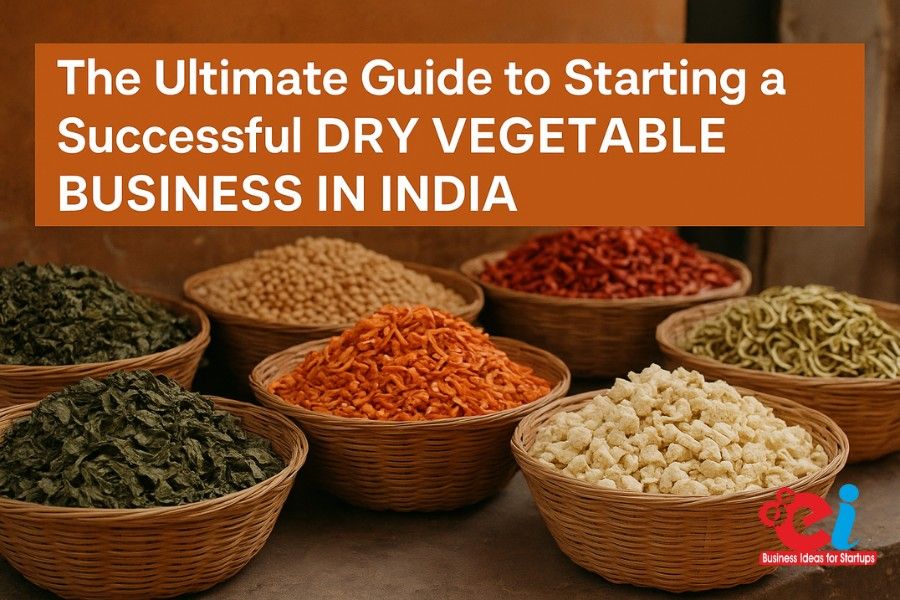



With its multifaceted agro-climatic features, India is one of the world’s highest-ranking countries of vegetables. Regrettably, a conspicuous fraction of fresh produce surpluses, due to the absence of proper storage facilities, logistics, and seasonal oversupply. In these circumstances, starting a dry vegetable business in India is highly advantageous as well as sustainable. The markets, both domestic and international, highly benefit from dehydrated vegetables since they not only improve shelf life but also provide significant opportunities.
Consumption of dried vegetables comes from almost every segment in the economy, including urban consumers, hotels, ready-to-eat manufacturers, and even exporters. If you’re a budding entrepreneur in search of a Dry Vegetable Business that is still untapped yet growing quickly, this guide will provide you the needed insight with help from NIIR Project Consultancy Services (NPCS) on market study, market research consulting, necessary equipment, investment strategies, and even how to maximize profits.
Reasons Why Start A Dry Vegetable Business
1. High Profit With Low WASTE
Vastly reducing post-harvest losses makes dehydration of vegetables significantly beneficial. The drying process of dehydration increases the shelf life of vegetables from a couple of days to a year which changes perishables into high-end, long-lasting commodities.
2. Increased Interest for Ready-to-Cook Items
The demand for convenience foods, along with the use of pre-dried and processed vegetables in instant noodles, soups, spice mixes, and travel foods, is growing with the rise in urban dual-income households.
3. Potential for Export
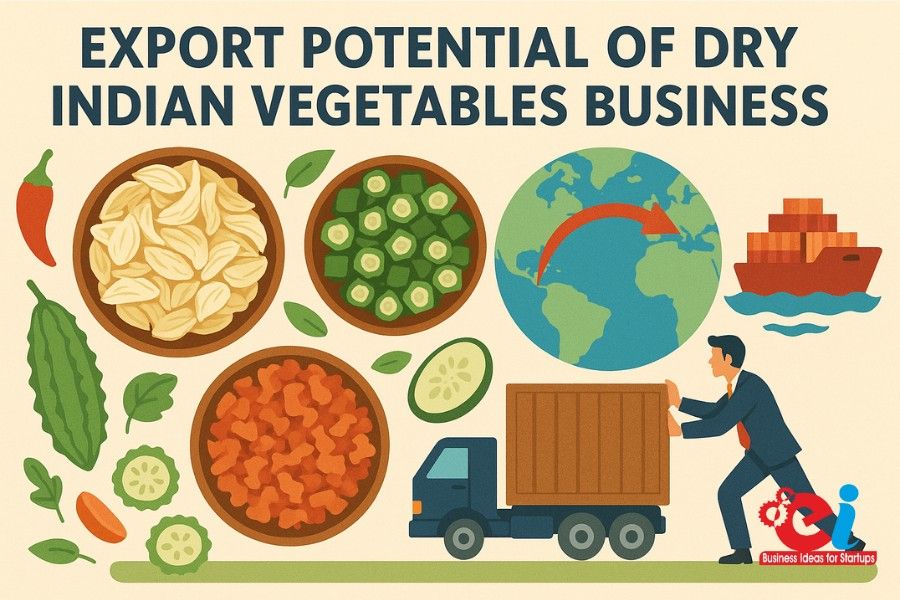
India’s exports of dried vegetables like onion, garlic, carrot, and spinach are being consumed in Europe, Middle East, and Southeast Asia. There is an estimation that the global market for dried vegetables will reach 9.8 billion usd by 2030. This creates immense scope for Indian industries to expand internationally.
4. Support from Government
The Government of India provides financial and technological assistance to food processing units under schemes like PMFME (Pradhan Mantri Kausal Vikas Yojana ) and MoFPI (Ministry of Food Processing Industries). NPCS also assists in the identification of appropriate subsidy grants and other funding paths.
Market Overview
Snapshot Of India’s Dry Vegetable Business
Although the industry is in its nascent stage, India’s dried vegetable industry exhibits exceptional growth prospects. Other commonly dehydrated vegetables include onion, garlic, tomato, okra, carrot, green peas, and spinach.
Recent reports suggest:
- The Indian market for dehydrated foods is growing at a CAGR of 6.8%.
- Ready-to-eat brands followed by exporters make up the largest consumers.
- India enjoys the merits of having plentiful crude materials and low wage rate workers.
Exporters & Target Customers
- Cloud kitchens and fast-food outlets
- B2B marketers of organic food
- Grocery and retail chains
- Online health shops
Related: Vegetable Processing Industry
Guide to Starting a Business Selling Dried Vegetables
Step 1: Business Model and Marketing Research
Research: Understanding your market is vital often supported by market research consulting companies before starting a dry vegetables business. In-depth research will include:
- Demand Assessment: Which vegetables have greater demand in terms of imports and exports? Which ones have higher competition?
- Spying: Adapting to your competition is crucial, find out who USP’s are, the leaders in the market and also their pricing.
- Sales Distribution: Will you sell directly to retailers, wholesalers, online stores or export.
Choose from these categories:
- Mass B2B sales
- Select your tag private label production line
- Manufacture and sell under your brand insignia
- Focus mainly on exporting and manufacturing
Step 2: Setting Up Infrastructure Guidelines With Regards To the Facility Location
For small to medium equipped set up usually planned with industrial consultancy services
- Required Land Area: (sq feet) 2K-5K
- Facilities include: sorting and washing sections, drying rooms, storage, packaging unit, and administrative office.
- Power requirements range: 25-50 kW for the entire facility or plant, depending on its size.
- Clean water supply: 3,000—5,000 liters a day.
- Waste management: peels and other waste can be composted and/or recycled.
Step 3: Row Material Procurement
For this section, you will need a reliable and steady supply of raw vegetables such as:
- Onion and garlic, tomatoes
- Green peas, beans, carrots
- Spinach, fenugreek, okra
Best sourcing methods include:
- Purchase straight from the farmers with contract farming
- Tie-ups with local APMC markets
- Cooperatives of farmers
Step 4: Drying Process and Technology
- Hot Air Drying: the most used technique
- Freeze Drying: best for premium dry goods, costs money
- Vacuum Drying: for heat-sensitive vegetables
- Microwave Drying: fast but expensive
Manufacturing Process:
- Washing and cleaning
- Sorting and slicing
- Optional roasting, blanching for color or texture
- Tray dryers or tunnel dryers
- Cooling
- Packaging, sealing, finished product
NPCS provides project reports with custom tailored process flow diagrams and optimization techniques.
Machinery & Equipment
Essential Equipment
| Equipment Name | Purpose |
| Vegetable washer | Initial Cleaning |
| Slicer/Dicer | Uniform Cutting |
| Blancher | Pre-Treatment |
| Dehydration | Hot Air Tray Dryer |
| Sealing and Ppacking | Packaging Machine |
| Weighing Scale | Accurate Measurement |
Estimated Machinery Cost: ₹12-₹35 lakhs (for small to medium setup)
NIIR Project Consultancy Services can assist you in finding dependable suppliers of the equipment and calculating CAPEX & OPEX.
Related: Production of Dehydrated Vegetables, Mushroom and Soup
Investment & Financial Breakdown
Capital Expenditure (CAPEX)
| Component | Approx. Cost (INR) |
| Land & building (rented/owned) | ₹5-20 lakhs |
| Plant & Machinery | ₹12-35 lakhs |
| Setup & Civil Work | ₹3-10 lakhs |
| Furniture & Office Setup | ₹1-2 lakhs |
| Miscellaneous | ₹2-5 lakhs |
Total: ₹25-70 lakhs
Working Capital Requirements
- Raw Material: ₹3-6 lakhs/month
- Utilities: ₹1 lakh/month
- Labour & Salaries: ₹1.5-2 lakhs/month
- Packaging & Logistics: ₹1 lakh/month
Initial Working Capital Needed: ₹8-10 lakhs
Revenue & Profitability
- Dehydrated Onion Flakes: (₹280-₹350/kg)
- Dried Tomato Slices: (₹400-₹450/kg)
- Spinach Powder: (₹600-₹750/kg)
Projected Revenue:
- Monthly Sales: ₹8-15 lakhs
- Monthly Expenses: ₹5-7 lakhs
- Monthly Profit: ₹2.5-6 lakhs
Break-Even Period
Most units reach break even within 18-24 months depending on scale and marketing.
Marketing and Branding
Core Focus Areas
- Engage in AEFI and SIAL India food expos (attend)
- Amazon and/or Flipkart ecommerce site creation and sales through these platforms
- Bulk customers through B2B platforms such as IndiaMART (target)
- AGMARK, FSSAI, and APEDA brand registration (obtain)
Rules, Regulations, and Policies
- Operating License of FSSAI – Required for food business (compulsory)
- MSME/Udyam Registration – Access available subsidies and schemes (to get)
- NOC Pollution Control
- Export Industries Code (IEC) – Export purposes only
NIIR Project Consultancy Services Provided
NPC Services or NIIR Project Consultancy Services (NPCS) prepares for you:
- Comprehensive cataloging of market surveys, as well as tech-research economic analyses
- Tailored designs for facility layouts
- Strategies for finance with assessments on profitability
- Identifying vendors that offer machinery and necessary raw materials
- Subsidy licensing guidance and also on brand registration with government
Having prepared over 300+ feasibility reports on agro and food processing projects including vegetable dehydration plants, NPCS provides them with schedules on production, detailed investment plans, and the project’s technical documentation based on client demands.
NPCS reports irrespective of the client; private entrepreneurs, cooperatives, or mature companies and clients are provided with set structured and unambiguous documents trusting for reliance guides for dry vegetables business ensuring best advisory consulting is deployed.
Conclusion
Embarking upon a dry vegetable business opportunity within India is not only financially viable, but also contributes towards cutting down on food wastage, increasing agricultural income, and meeting the global market demand. There has never been better opportunity to enter this sector, with government aid, advanced drying technology, and demand at an all-time high.
To transform your innovative concepts into tangible business opportunities with support from project report consultancy services, consult the experts at NIIR Project. With the correct strategies, your dry vegetable business can shift your organization from local to international trade level.




बहुत अच्छा लगा.
जानकारी काफी अप्रेसियेबल है❤