


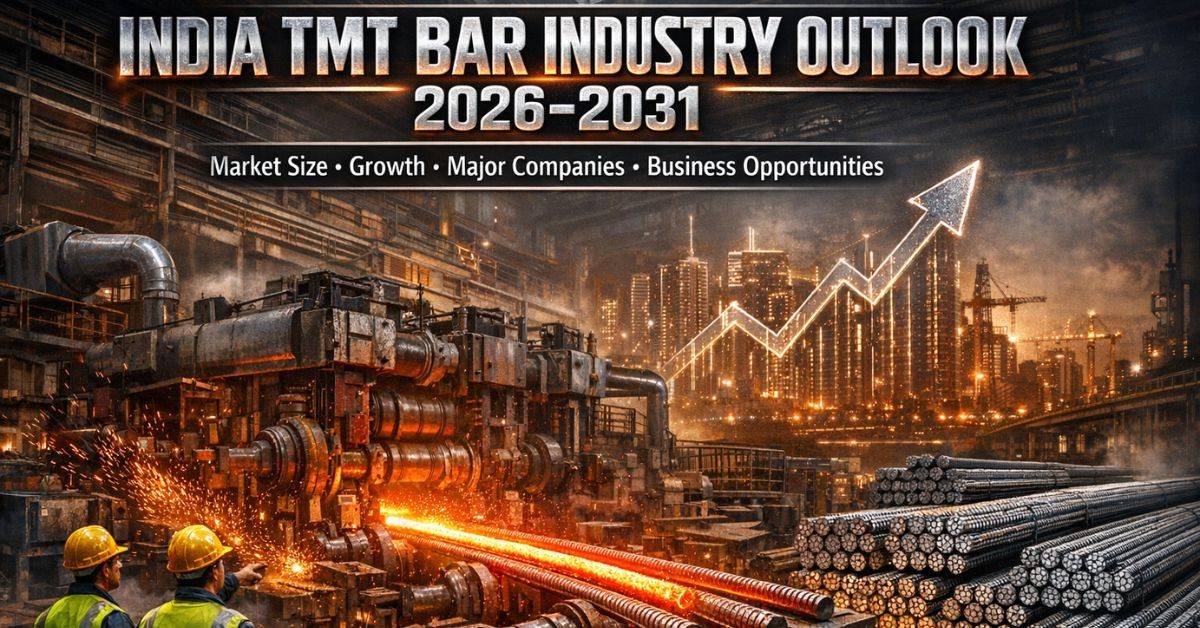
India TMT Bar Industry Outlook 2026-2031
India’s infrastructure industry and construction sector is booming at an unprecedented rate with all possible industry sectors where this process is successfully implemented is the TMT bar (Thermo-Mechanically Treated bar). These high strength reinforcement bars are widely used in modern construction projects which include residential building, bridges, highways, metros, industrial facilities.
As India continues to invest heavily in infrastructure development and urban housing, there is an expected significant increase in the demand for TMT bars in the next decade. The Indian steel industry already produces over 140 million tonnes of crude steel per year, and the country ranks among the main steel producers in the world. The production process creates most of its output which supports the manufacturing of reinforcement steel bars.
The construction and infrastructure industries in India showed high demand for TMT bars during fiscal year 2023 because Indian TMT bar consumption exceeded 50 million tonnes. With active government projects and the rising level of urbanization, the outlook of the TMT bar market is very promising for the period 2026-2031.
Table of Contents
ToggleRead More: Top 10 Profitable Steel Manufacturing MSME Business Opportunities in India
What Are TMT Bars and What Is Their Importance?
TMT bars are reinforcement steel bars which have been processed by a special thermo-mechanical treatment process. The process creates a protective exterior which covers the bar and its inner core develops ductility to make the steel withstand extreme stress and heavy structural weight.
TMT bars provide multiple construction benefits because of their unique structural design:
- High tensile strength and durability
- Better earthquake resistance
- Improved bonding with the concrete
- Resistance to corrosion, rust
- Greater flexibility in stress
The essential function of TMT bars exists in contemporary reinforced concrete structures because of their specific physical attributes.
Market Size and Growth Outlook (2026-2031)
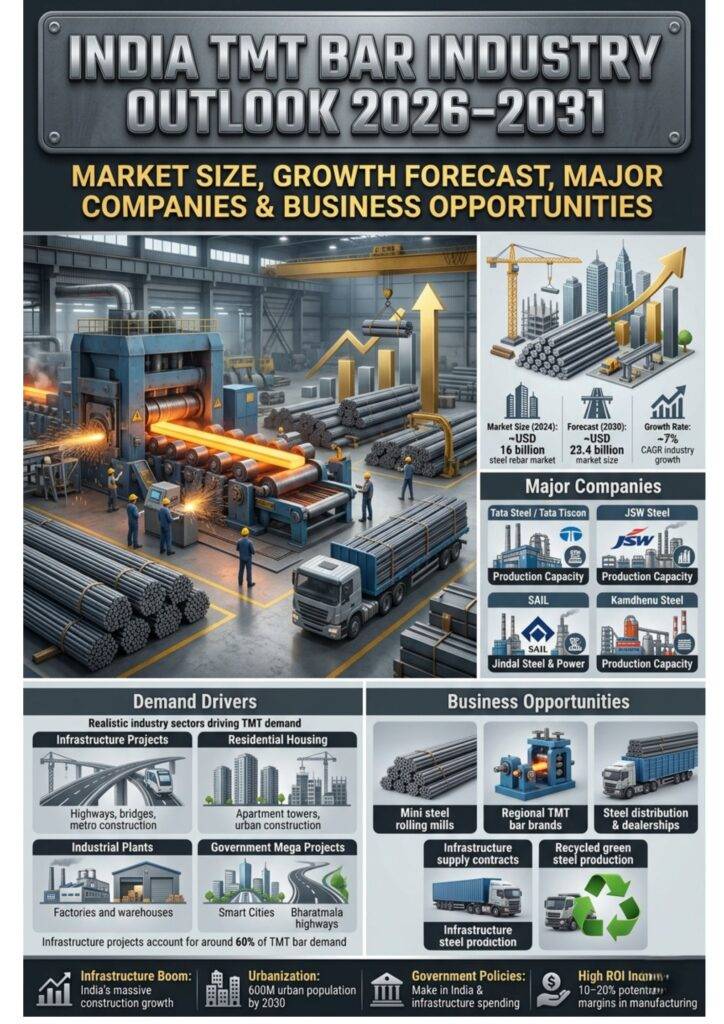
The Indian TMT bar market has been showing steady growth in the last 10 years. Rising infrastructure investments, housing need and industrial development have contributed significantly to the increasing consumption of reinforcement steel.
Recent industry information shows the growth of market:
- FY 22 TMT bar consumption: Volume of around 46 million tonnes
- FY23 consumption: more than 50.3 million tonnes
- Domestic production capacity: about 51 million tonnes
Although, on a national scale, production is approximately proportional to demand, regional gaps in supply and logistic challenges remain. These gaps open up the opportunity for regional manufacturers and new businesses entering the market.
Industry experts are expecting steady annual growth in TMT bar demand between 2026 and 2031, backed by large scale infrastructural development projects and rapid urban expansion.
Read More: Our Books
Driving Factors behind TMT Bar Demand in India
Several structural factors are leading the TMT bar market in India. The most important drivers are, among others, government infrastructure spending, city housing demand, and industrial expansion.
Some of the major growth drivers are:
- Infrastructure Development projects like highways, railways, metro systems and airports
- Arousal of social and economic forces in the housing sector, including: – Affordable housing initiatives under government schemes such as PMAY
- For this reason, new World Bank Urban Climate Risks Paper says, “Urbanization and expansion of Tier-2 and Tier-3 cities is occurring rapidly.”
- Industrial growth in the form of factories, warehouses, and logistics parks
- Solar and wind energy installations
As the economy in India continues to grow, these factors will ensure that there is a continuing demand for reinforcement steel for many years.(India TMT Bar Industry)
Demand and Supply Dynamics
Even though India produces enough TMT bars on the whole, the market is still facing some supply challenges. The local supply chain problems together with logistical difficulties and needs for special steel grades have created repeated challenges for them.
Infrastructure projects require high-strength rebars which include Fe-550D and all superior grades. The special products need only a small number of manufacturers which can cause product shortages when demand reaches peak levels.
Important supply challenges include:
- Limitations: – Limited availability of premium grade TMT bars
- Delays in transportation and logistics
- Lodging: – Fluctuating raw material costs
- Energy and power supply problems for manufacturing steel;
The regional rolling mills together with small manufacturing plants make essential contributions to maintaining product availability because of these challenges.
Price Trends for Indian TMT Bar Market
The pricing of TMT bars depends on various economic factors and industrial elements which influence their production costs. The final cost of reinforcement steel includes three components which are raw material expenses and transportation expenses and seasonal construction activity.
The primary elements which establish TMT bar prices include the following major factors:
- Iron ore and coking coal price
- Scrap steel availability
- Transportation & logistics cost
- Construction demand cycles
- Global market conditions to be considered for steel
The primary TMT bar market establishes an average price of ₹57,800 per metric tonne in early 2026 but different regions and brands show price variations.
For businesses that are involved in steel manufacturing or trading, it is important to have a grasp on these price fluctuations to ensure that you are able to stay profitable.
Major TMT Bar Manufacturers in India
India’s TMT bar industry is made up of large integrated steel companies as well as a large number of regional manufacturers. Large producers will operate extensive steel production facilities that use state-of-the-art technology while smaller enterprises will focus on serving local markets.
The following companies represent the leading firms in the Indian TMT bar industry:
Steel Authority of India Limited (SAIL)
SAIL operates as a government-owned steel manufacturer through various integrated production facilities that exist across India. The company provides reinforcing steel for large infrastructure projects.
JSW Steel Ltd.
JSW Steel is one of the largest private steel companies in India and continues to add to the production capacity due to the increasing demand.
Jindal Steel & Power Ltd. (JSPL)
JSPL have large steel plants in operation and manufactures High Strength TMT bars that is used in infrastructure and industrial construction projects.
Apart from these big corporations, there are hundreds of mid-sized rolling mills located in different areas, supplying TMT bars to local construction markets.
Read More: Project Reports & Profiles
Startup Opportunities in TMT Bar Industry
Despite the stiff competition of the big manufacturers, the industry of TMT bar manufacturing still holds opportunities for entrepreneurs and small businesses. The regional niche segments need to be identified through the process of discovering supply gaps.
Some of the promising opportunities include:
- Establishing regional TMT rolling mills to serve the local construction markets
- Manufacturing premium high strength TMT grades
- Developing eco-friendly steel production with Scrap-based furnaces
- Providing rebar processing services including cutting, bending, and shaping
Businesses that are focused on quality products and efficient logistics can develop good relationships with builders and infrastructure contractors.
Important Investment Considerations
Before entering TMT bar manufacturing sector, investors need to consider several important factors. Steel manufacturing involves large capital investment, and one should plan in order to be profitable in the long run.
Some important considerations are:
- Investment of rolling mill machinery and production equipment’s
- Reliable supply of raw materials (billets or scrap steel)
- Power infrastructure and energy costs
- Is 1786 quality standards compliance
- Strategic location of the factory close to hub of construction or industrial corridors
By addressing these factors, new manufacturers can improve their operational efficiency and compete effectively in the market.
Conclusion
The Indian TMT bar industry will experience continuous growth between 2026 and 2031 because infrastructure projects and urban development will keep expanding. India requires over 50 million tonnes of reinforcement steel each year which makes this material a vital part of the construction industry in the country.
The market remains mostly controlled by large integrated steel producers. However, regional steel producers and specialized steel production facilities and service companies that operate within the steel supply chain still have chances to compete in the market.Businesses that produce high-quality products and use advanced technologies with effective supply chain management methods can successfully establish themselves in this expanding market.
The Indian infrastructure and housing development projects which receive ongoing funding will create constant demand for TMT bars because this material serves as an essential component in construction work which makes this sector appealing to both investors and business owners.
Frequently Asked Questions (FAQs)
What is a TMT bar?
Buildings and bridges and infrastructure projects use TMT bars as their standard thermo-mechanical treatment steel reinforcement bars which provide strength to concrete structures.
How big is the TMT bar market size in India?
India uses over 50 million tonnes of TMT bars every year and is one of the largest markets for reinforcement steel in the world.
What is the driving force of demand for TMT bars in India?
The major drivers are infrastructure development, urban housing construction, industrial growth, and by projects of the government such as highways and metro.
Who are the big TMT bar manufacturers in India?
Leading manufacturers are SAIL, JSW Steel and Jindal Steel & Power Ltd. and there are many steel rolling mills in the regions.
Is the TMT bar business a good business opportunity?
Yes, the industry is providing the opportunities in terms of manufacturing, regional supply, premium grades of steel, and steel processing services owing to consistent demands in the construction industry.


