


Manufacturing Business Ideas in India
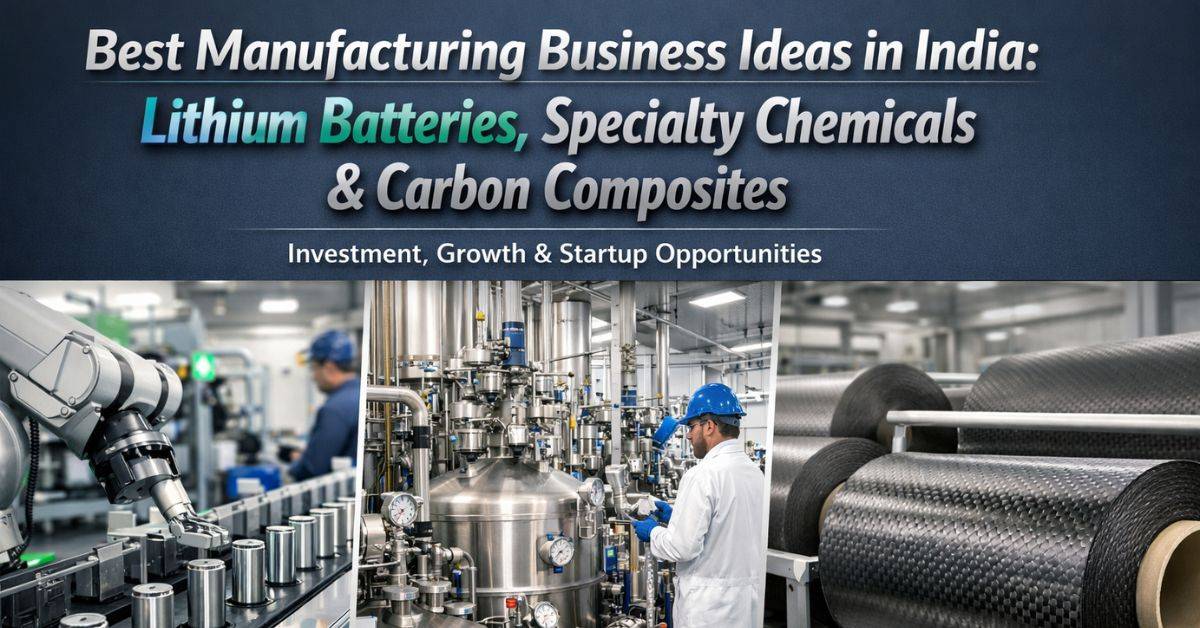
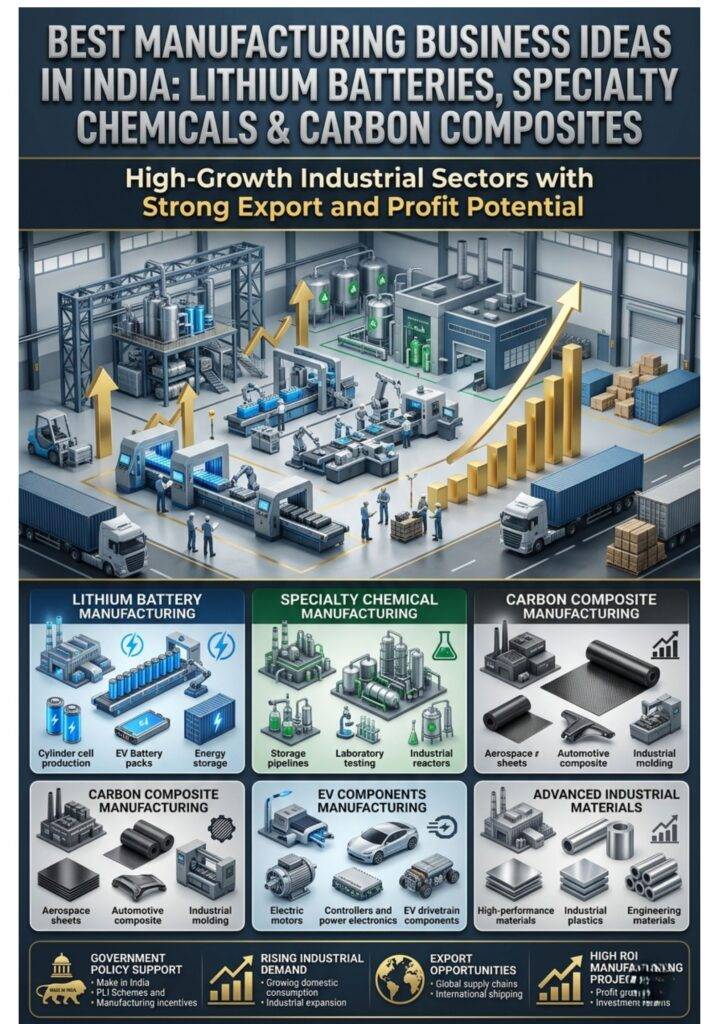
India’s manufacturing ecosystem is rapidly developing from conventional industries to high-value industries and technology-driven sectors. Entrepreneurs these days increasingly move towards businesses with scalability, stable demand and export potential. The most promising business sectors for 2026 show battery solutions through lithium-ion technology and chemical production through specialty chemicals as well as carbon composite manufacturing.
These industries are not only aligned with the direction of the India’s economic path but they also have high domestic consumption as well as import substitution potential. If approached strategically, they can provide both short-term stability and long-term growth.
Table of Contents
ToggleManufacturing Lithium-Ion Batteries (18650 NCM Cells)
The lithium-ion battery industry is growing at a spectacular rate driven by the growth of the electric vehicles and renewable energy storage sectors. The 18650 cylindrical cell, in particular with NCM chemistry, has seen very widespread use due to its reliability and more established manufacturing ecosystem.
These batteries are now used in many applications:
- Electric two wheelers and three wheelers
- Solar energy storage systems
- UPS and inverter backup
- Power tools, portable electronics
- Medical backup equipment
The manufacturing process is quite technical and needs to be strictly controlled at each phase. It involves electrode preparation, cell assembly, electrolyte filling, sealing and testing. A controlled environment, especially low humidity conditions, is essential so that the product quality can be maintained.
From a business perspective, this is a sector that demands a larger amount of investment than most manufacturing industries. The business exhibits substantial expansion capacity which will continue throughout upcoming years.
Access Complete Business Plan: Lithium Ion Battery (Battery Assembly)
Key business highlights:
- Investment range: ₹15–50 crore
- Profit margins: 12%–20%
- Demand primarily from EV and energy sectors
- Best suited for long term, scalable ventures
For new entrepreneurs, getting in through battery packs assembly can be a practical way to start before advancing into the full scale manufacturing of cells.
Sodium Sulfite & Sodium Metabisulfite Manufacturers
The specialty chemicals business provides sodium sulfite and sodium metabisulfite as dependable and stable business opportunities. Essential industrial processes drive their demand across multiple sectors which makes their market need predictable throughout the year.
These chemicals are widely used in industries such as water treatment, food processing, textiles, and pharmaceuticals. Since a lot of these applications are not disposable in nature, demand does not drop even during economic slowdowns.
The production process is not that complicated compared to manufacturing batteries. It involves chemical reactions, controlled absorption, crystallization and drying. While safety and compliance are important, the technical barriers are currently moderate.
Major benefits of this business:
- Stable and predictable demand
- Moderate investment requirement
- Easier to scale up compared to high tech industries
- Strong opportunities for exports
Normally, a medium scale plant setup requires an investment of between Rs 5 crores and Rs 15 crores with a profit margin of 12 per cent to 18 per cent. The major cost component is raw material, so efficient sourcing is of vital importance to profitability.
This sector is especially suitable for first generation entrepreneurs seeking balance between risk and return.
Read the Complete Book Here: Handbook On Chemical Industries (Alcohol Based)
Carbon Composite Tennis Badminton Rackets
The sports goods industry in India is consistently growing, with increasing awareness of fitness and the consequent growth in the number of sports such as badminton, tennis, etc. Carbon composite rackets are a high-end market in this business, and they have good margins.
Manufacturers create these rackets with modern materials that include carbon fiber and graphite because these materials deliver superior strength and durability together with improved performance when compared to standard materials. The Indian market experiences high demand for premium rackets yet domestic manufacturers face strong competition from imported products which creates a major growth opportunity.
The process of manufacturing carbon composite materials includes molding, curing and finishing carbon composite materials to a precise standard. While the technology need is moderate, there is a critical need to maintain quality consistency.
Why it's an attractive business:
- Investment range: ₹3–10 crore
- Profit margins: 20%–30%
- High demand in premium sports segment
- Opportunity to build a great brand
Many businesses start out as OEMs and suppliers to established brands. The process of developing their own brand identity enables them to achieve high profitability together with increased market value.
Choosing the Right Manufacturing Business
Selecting the appropriate opportunity depends on your financial ability and technical skills as well as your long-term objectives. Every sector comes with specific advantages and particular difficulties.
Lithium-ion batteries hold huge growth potential in the future but need high investment and high technology capabilities. Chemical manufacturing provides stability and consistent returns and is ideal for beginners. Carbon composite products represent a compromise between good margins with moderate investment, particularly for those looking to the brand and consumer market.
Understanding your strengths and appetite for risk is important before a decision is made.
Key Factors for Success
Regardless of the type of industry you opt for, there are some basics that are essential to succeeding in manufacturing.
- Strong process control to provide consistent product quality
- Cost management – protects margins from fluctuations of raw materials
- Regulatory compliance is the key to long-term sustainability
- Technology adoption enables better efficiency and scalability
Entrepreneurs who are looking in these areas are more likely to create sustainable and profitable businesses.
Conclusion
The manufacturing sector in India has entered a period of rapid expansion which presents business opportunities for entrepreneurs who want to make long-term investments. Lithium-ion batteries represent the future of energy supply while specialty chemicals bring market stability and carbon composites create high-margin prospects that stem from consumer requirements.
Manufacturing success depends on selecting the right industry but it requires disciplined execution together with quality maintenance and strategic growth. The right approach will enable these sectors to achieve financial success while creating lasting growth throughout upcoming years.
Frequently Asked Questions (FAQ)
Which manufacturing business is best in India for start-ups?
Chemical manufacturing is typically the most suitable choice for beginners because of its stable demand and moderate complexity.
Is Lithium battery manufacturing profitable?
Yes but it needs high investment and technical expertise. Profitability is increased with scale and integration.
How much investment is required to start chemical business?
A medium scale plant requires a medium investment of Rs. 5 crore to Rs. 15 crore.
Can any of these products be exported?
Yes, all three sectors are good for exports provided the standards of quality and compliance are met.
Is branding important in sports manufacturing?
Yes, branding is very important for long-term success and greater profit margins.
What are the major risks?
The biggest risks are the raw material price fluctuations, regulatory issues and competition.
How much time does it take to break even?
The time to reach break-even point for most businesses in these sectors ranges from one to four years based on their operational size and execution methods.


