


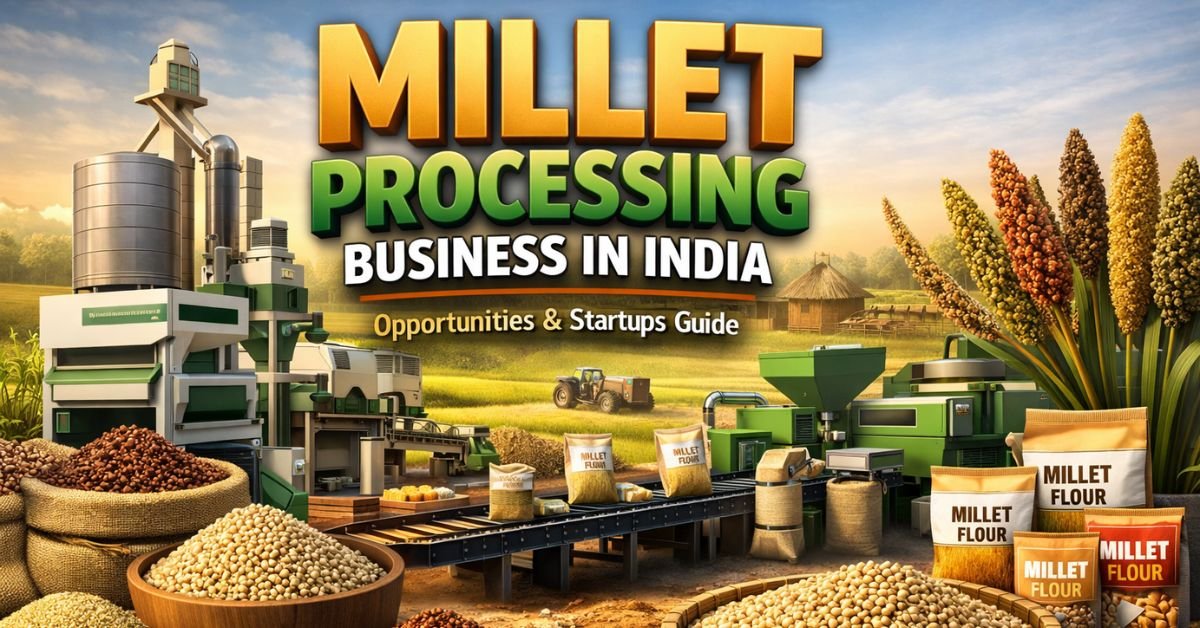
Millet Processing Business in India
The story of millets in India is rapidly changing. Once viewed as a drought-resilient, low-value crop, millets (sometimes referred to as Shree Anna by the government in its policies), are now becoming a high-potential agricultural and industrial commodity. With the growing awareness among consumers on health, the focus on climate-resilient agriculture, the support of the government and higher demand in the global market, millets are no longer a staple crop – it has become a lucrative opportunity for startups and MSMEs seeking to enter the value-added food segment.
In this article, we discuss the topic of why processing millet is a sunrise area, the opportunities in the product, trends in the market, scalability potential, and strategies for founders to set up their 1st venture.(Millet Processing Business in India)
Table of Contents
ToggleRead More: Millet Production, Processing and Value-Added Products Handbook
Why Millets Is A Strategic Crop For Agri Industrial Startups
Millets possess several advantages for them to be considered a unique crop for value addition:
- Nutritional Benefits
Millets are high in fibre, micronutrients, and antioxidants and have a low glycaemic index. The increasing worldwide need for nutritious functional foods makes millets valuable because they contain healthful properties which make them suitable as health-focused food choices.(Millet Processing Business in India)
- Environmental Sustainability
Millets are climate resilient crops. They need less water and minimal chemical inputs that would suit sustainable agriculture practices. With climate change affecting traditional crops, millets have become an attraction for the domestic and international market.
- Policy & Promotion Support
The Indian government has been actively promoting millets through initiatives such as the “International Year of Millets “and various export promotion programs. Policies in favor of Shree Anna have led to startups putting more effort into processing, branding and exporting millet-based products, and has been making it easier for new entrepreneurs to enter the market.
- Global Market Demand
Processed millet products – including flours, snacks, beverages, and ready-to-eat (RTE) foods – are making inroads around the world, especially in North America, Europe, the Middle East, and Southeast Asia. This world hunger translates into millets being not only an opportunity domestically but also an avenue for high-value exports.(Millet Processing Business in India)
Read More: Business Plans / Project Profiles
Market Trends Supporting Millet Processing Startups
The domestic and international Millet market is booming:
- “Urban health-conscious consumers are willing to pay a premium for gluten-free, high-fibre and nutrient dense foods.
- E-commerce platforms are creating new opportunities for branded millet flours, cereals and snacks.
- Exporters note rising orders for processed millet products, indicating good world demand.
The market currently shows demand for startups that develop branded value-added products from raw millet.(Millet Processing Business in India)
Reasons Why You Should Start Millet Processing Business Now
Entrepreneurs seeking to enter the millet processing business should take care of three pillars:
- Ready Raw Material Supply
Millets are widely cultivated in Rajasthan, Maharashtra, Karnataka and Gujarat providing a stable and good supply of raw material. Contract farming and working with Farmer Producer Organizations (FPOs) helps to ensure quality and consistency.(Millet Processing Business in India)
- High-Value Addition Potential
The price difference between raw millets and the processed products is huge. By making flours, RTE foods, snacks, and beverages, the start-ups can make bigger profit margins. Processing also extends shelf life, thereby reducing wastage and improving the efficiency of distribution.
- Branding & Differentiation
Companies use premium branding to achieve higher prices through their health-focused products which provide quality and traceability. Urban consumers as well as global buyers are willing to pay premium for branded, certified millet products over bulk grains and give startups a clear pathway to competitive advantage.(Millet Processing Business in India)
Read More: Project Reports & Profiles
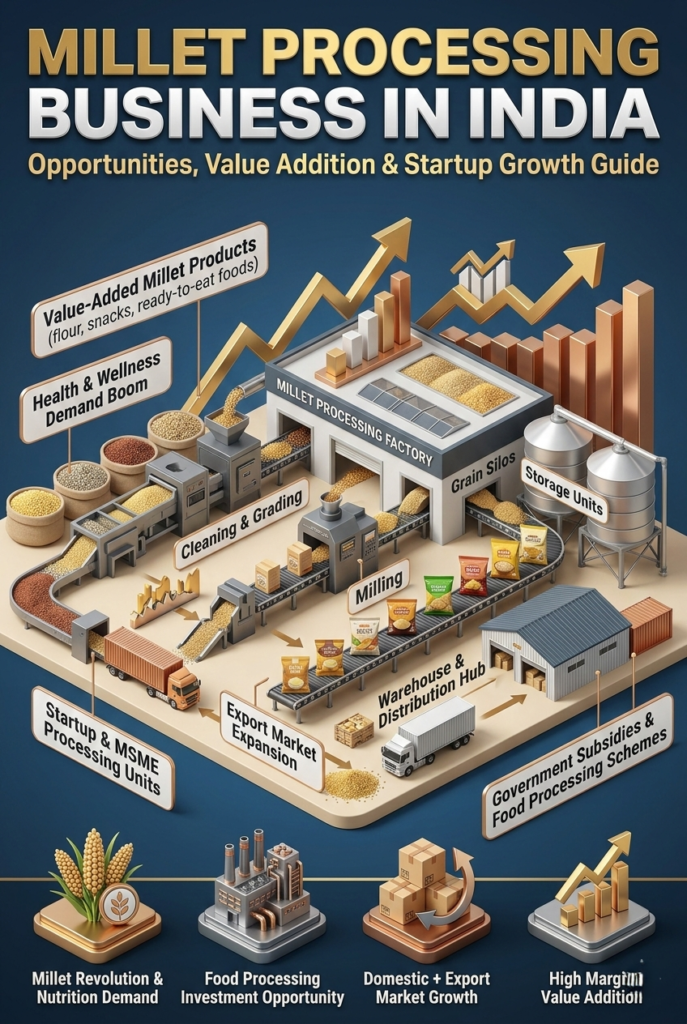
Best Value Added Millet Products to Launch
Each of the following lines of products can be a mini-business on its own:
- Millet Flour Processing
The conversion of raw millets into flour is the basis of value addition. Key points:
- Produce multi-grain, health-oriented flours.
- Provide organic, gluten-free or fortified versions for the premium segments.
- Sell through e-commerce’s, retail chains and health stores.
- Ready-to-Eat (RTE) Millet Foods
Urban markets obtain product differentiation through RTE products that include breakfast cereals and energy bars and biscuits and savory snacks because these products deliver both nutritional value and convenient dining options. The establishment of multiple SKUs at one location enables businesses to generate different income streams.(Millet Processing Business in India)
- Millet Based Beverages & Fermented Beverages
Export-ready niche markets find innovative beverages that include millet smoothies and probiotic drinks and traditional fermented drinks which appeal to wellness and functional food markets.
- Organic & Specialty Export Centre
Setting up packaging and certification hub for organic millets for better pricing in export markets. International buyers assess products based on their ability to track product origins and product quality and their compliance with organic certification standards.
- Integrated Millet Processing Park
Startups can construct processing parks at large scale which will contain milling and RTE production and packaging and quality testing facilities. This cluster model helps in cutting fixed costs, increases efficiency and is attractive for investors.(Millet Processing Business in India)
Export opportunities & advantages
India is a leading producer of millets in Asia. While raw grain exports are low margin, processed and branded millet products bring:
- Higher returns per unit.
- Brand India has a recognition in health food.
- Access to markets where there is high demand for gluten-free grains and low demand for climate-smart grains.
Matching the processing quality to international standards of food safety guarantees long-term contracts with institutional buyers in other countries.(Millet Processing Business in India)
Lessons from Successful Millet Startups
- 24 Mantra Organic (Founder: Mohit Malik) – Organic certifications and supply chain control functions as the main focus for trust-based brands development.
- Sresta Natural Bioproducts (Founder: Subhash Shirodkar) – The company uses branding and product diversification and packaging innovation to establish itself as a premium brand which occupies space on retail shelves.
Key takeaway: branded products, quality assurance, and operational efficiency are equally important for success as startups.(Millet Processing Business in India)
Strategic Resources of the Entrepreneur
- Millet Production & Value Added Products Handbook – niir.org
- Business plans on processing of cereals –entrepreneurindia.co
- Organic and health food products guides – entrepreneurindia.co
- Exports strategy & advanced processing projects report – niir.org
These resources reveal in detail the feasibility, machinery, raw material planning, and market strategy.(Millet Processing Business in India)
Conclusion
Millets are no longer just a subsistence crop — they are a strategic agri-industrial opportunity. Startups can build successful businesses through value addition and branding and exports because market demand and nutritional needs and sustainability drive their operations.
The first-generation entrepreneurs in millet processing facilities because the industry provides them with safe business operations which enable them to produce multiple products that can be sold at high market rates. The Shree Anna value-added market becomes accessible to businesses through their establishment of proper strategic frameworks and necessary operational setups and their development of effective brand identities.(Millet Processing Business in India)
Founder-focused FAQs: Millet Processing Business
Q1: Is the processing of millet profitable for first-time startups?
Value-added products together with branded products demonstrate higher sales potential when compared to raw grain products.
Q2: What are the best products for the highest margins?
RTE foods, drinks and export-oriented packaged foods are more successful than basic flour sales.
Q3: What kind of infrastructure is required?
Cleaning, milling, quality testing laboratories, packaging lines, cold storage for processed products.
Q4: How to get stable raw supply?
Join forces with FPOs or have contract farming agreements.
Q5: Is there any opportunity for exports?
Absolutely – there is a growing demand for health-oriented millet products around the world.


