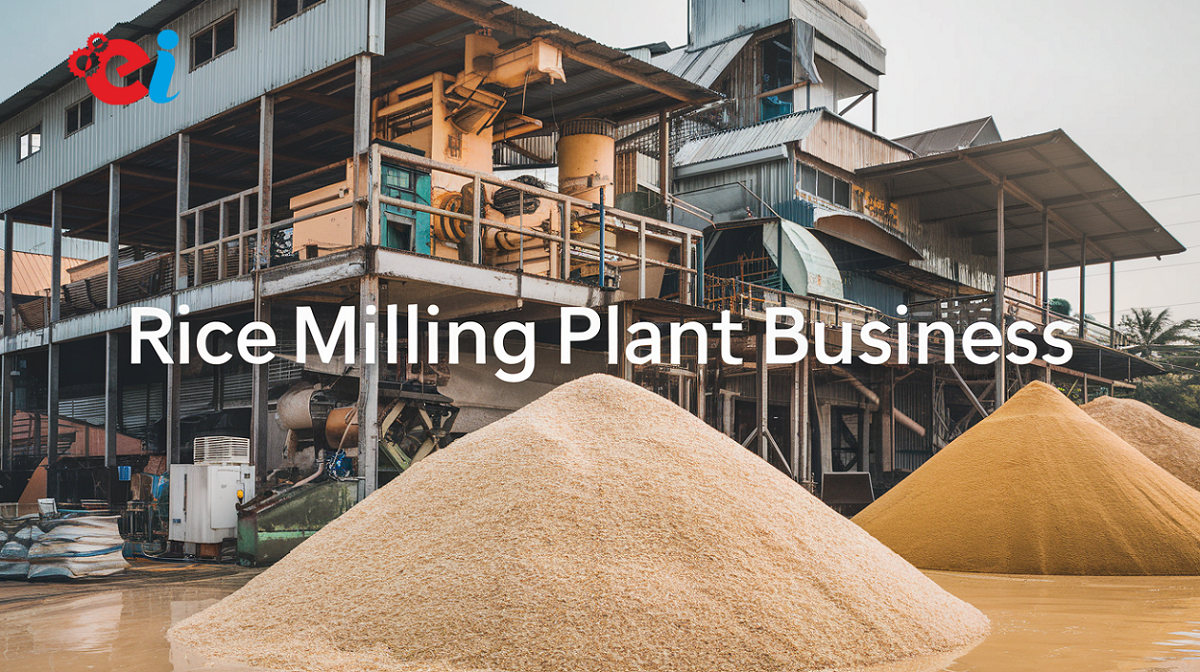



Starting a rice mill business at a commercial plant provides both motivation and financial rewards to investors. The worldwide human population, consisting of more than 50 percent, relies on rice as their primary food source. Operation of a rice milling factory can be a profitable business because of rising market demand for high-quality rice products. An essential economic sector exists to transform paddy from its harvested state into edible rice products. We will examine in this article how a rice milling plant represents an excellent business possibility while also analyzing market requirements and essential processes to launch an effective operation.
The business sector of Rice Milling Plants requires thorough examination
Harvested paddy goes through processing at rice mills to create edible forms of rice. A series of operations constitutes the rice milling production method. Techniques for rice processing consist of dehusking, whitening, and polishing, then gradation and packaging. Every rice milling plant serves a vital role by converting unprocessed paddy into market-ready, high-grade rice suitable for commercial sale. Rice mills operate at different scales of capacity according to customer needs and production needs.
Market Demand and Growth Potential
Rice demand keeps ascending because of higher population numbers combined with shifting food choices in the market. The worldwide rice industry maintains a current value of $287.45 billion during 2021. The market expects this industry to expand through a compound annual growth rate (CAGR) of 2.2% between 2022 and 2028. Rice producers maintain the highest levels in India and China, followed by Southeast Asia. As the demand rises with steadily increasing population, the necessity for rice milling plants will remain strong.
Key Drivers of Market Growth
1. Population Growth and Urbanization
Population growth around the world drives up the need for rice throughout the market. The ongoing process of urbanization causes people to increase their rice intake. This, in turn, drives the demand for processed rice. Rising customer requirements force farmers and millers to boost their operations through improved and efficient milling methods. Casualties behind the increased demand for rice will make this area an optimal location for establishing a rice milling facility.
2. Advancements in Milling Technology
Modern advances in milling operations have produced better production techniques for rice processing. Rice processing plants today use innovative equipment that manages the cleaning and polishing tasks for grain preparation. The application of new technology has elevated both the processed rice yield and its overall quality levels. Plant owners who integrate contemporary technologies will achieve better production efficiency as well as deliver advanced product quality. Businesses that acquire the latest equipment become leaders in the competitive market environment.
3. Export Opportunities
Rice milling facilities have the potential to enter international markets. A high number of nations depend on external sources to meet their rice requirements. Milling rice for export to different international markets enables businesses to generate additional income. Different parts of Africa, together with Europe and the Middle East, purchase considerable amounts of rice each year. Rice milling plants obtain new business possibilities through their entry into export markets.
Related Books:- Rice Cultivation And Processing Industry, Manufacturing Of Value Added Products From Rice Husk (Hull) And Rice Husk Ash (RHA)
Profitability of Rice Milling Plant Business
Multiple conditions within the rice milling plant business enable it to remain profitable.
1. High Demand for Rice
Rice functions as a fundamental food that people consume all across the globe. An increasing number of people and new cities emerge every year as drivers of continuous rice product demand. The market demand for rice milling services will persist because humans will continue eating rice. The rice mills benefit from a consistent market situation due to sustained demand.
2. Value Addition
Milling enhances rice quality. Premium rice production through milling provides increased market value, which enables companies to increase their selling prices. Rice mills increase their value by developing specialty rice products, including organic rice and basmati rice as well as jasmine rice. This added value increases profitability.
3. Byproducts for Additional Income
The production process of rice milling creates two essentials, which are rice husks and bran. The plant byproducts have two different uses; they function both as animal feedstock as well as renewable fuel materials. The business produces extra earnings, which improve overall financial performance. Rice husks generate power that helps decrease production expenses in the plant facility.
4. Export Opportunities
Business revenue can rise through exporting rice to nations that buy significant quantities of imported rice. Higher profits can be obtained through international market sales. A rice milling venture capable of executing an effective export strategy stands to access the profitable market segment.
Related project: – RICE MILLING UNIT
Steps to Start a Rice Milling Plant Business
Succeeding in starting a rice milling plant needs both detailed preparation and strategic implementation. Specifically, the following sequence describes how to begin a thriving rice milling operation.
1. Conduct Market Research
Prior to starting a business, proper market research needs a fundamental examination. The business needs to identify both potential customers for rice products and their expected purchasing patterns. An in-depth analysis of competitor products in addition to their markets should occur. Examine three different groups of prospective suppliers, which include wholesalers, retailers, and companies that export rice. Research the market price fluctuations of milled rice.
2. Develop a Business Plan
Business success depends on an extensive business design. Outline business goals, strategies, and financial projections. A market research section with operational instructions regarding rice milling and packaging will be included in the business plan. A business projection should consist of capital funding and revenue prediction alongside anticipated profit rate estimation.
3. Secure Funding
You must establish how much capital the business needs. The business needs money to buy infrastructure and equipment and cover operation costs. Bank loans, together with investor funding and government grants, need consideration for potential funding sources. The funding application requires a business plan that provides full support.
4. Obtain Licenses and Permits
Legal compliance requires that all essential licenses, together with permits, must be acquired. The first business step is to complete the local authority registration process. The business must follow all requirements set by food safety and environmental regulatory bodies. The entire listing of requirements should be examined with regulatory bodies.
5. Set Up the Milling Plant
Identify the location that will serve best for constructing the milling plant. The selection of your facility needs to have proper access to raw materials and transportation networks. The plant needs to have operational storage spaces and machine placement done efficiently. The facility should acquire new processing technology that handles rice as well as cleaning and polishing machinery.
6. Hire and Train Staff
Recruit skilled staff for various roles. The business should recruit workers for machine operation along with technical specialists and quality inspection experts. Staff members should receive complete training about how to use equipment safely and about both quality control measures and safety regulations.
7. Marketing and Distribution
Develop an effective marketing strategy. Strengthen your brand identity through marketing promotions combined with advertisement campaigns. Your business should create relationships with distributors and wholesalers together with retailers. Develop enduring partnerships with clients for maintaining regular business sales.
Conclusion
The establishment of a rice milling plant creates ample commercial potential. A profitable business opportunity exists due to rising rice consumption alongside technological progress in milling technology alongside export possibilities. The correct path to create a thriving rice milling plant begins with market investigations and business planning and ends with financial acquisition.
Using byproducts to generate new revenue streams together with product quality superiority provides a strong competitive advantage to businesses. Niir Project Consultancy Services (NPCS) will assist you to navigate the approach so your rice milling plant business succeeds against market competitors.