


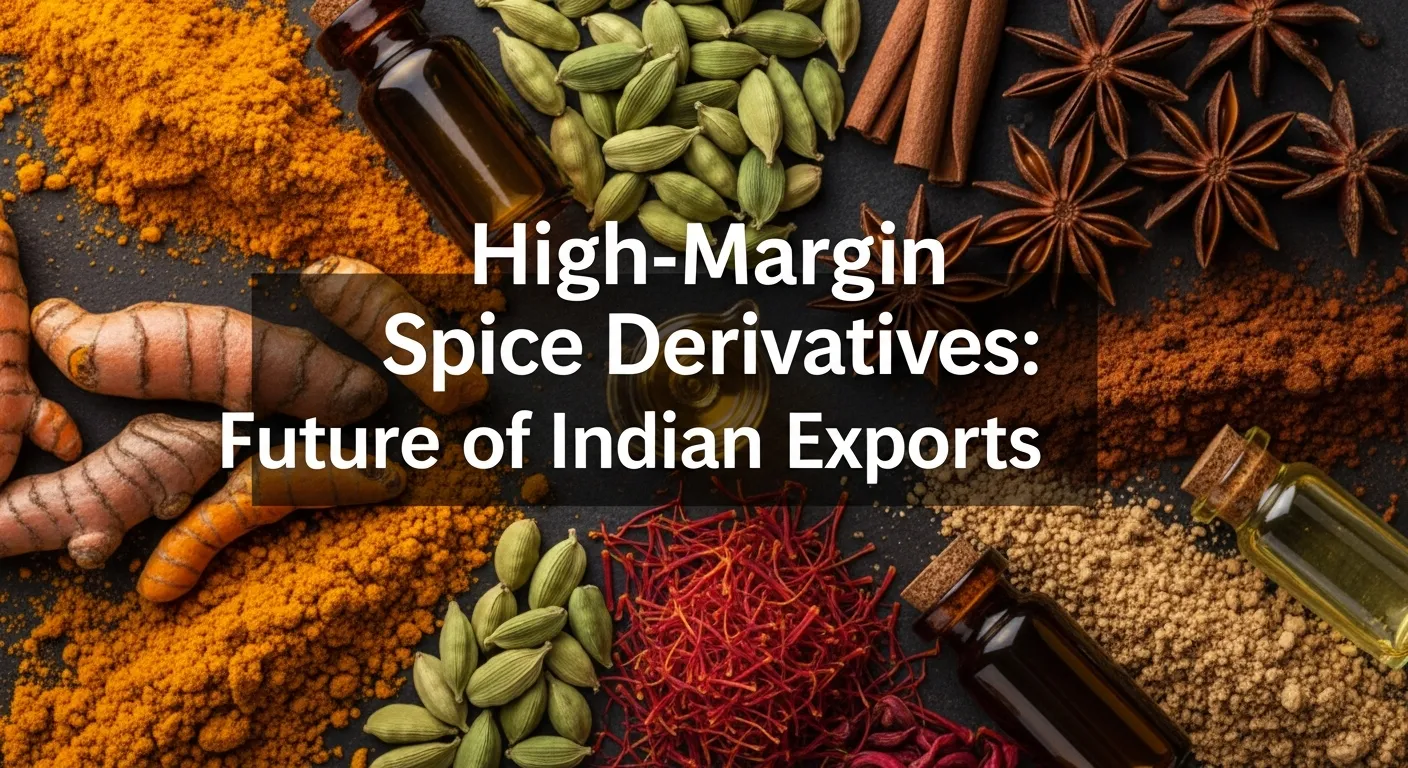
Spice Derivatives Manufacturing: The spice industry in India has been moving from raw whole spices to highly valued derivatives. This pivot has been driven by the global markets’ growing demand for oleoresins, essential oils, extracts, and blended seasonings.
As per the Spice Annual Report 2023-24, India has exported spices worth over ₹1.25 trillion, and with each passing year, the share of these derivative spices continues to grow. This development encourages startups to break away from the low-margin trading in spices and focus on manufacturing spice derivatives(Spice Derivatives Manufacturing).
This paper aims to assist new entrepreneurs in starting in the spice business by explaining the extraction of spices, helping the entrepreneurs find the market gaps, helping them narrow down to the high-margin products, and finally, helping them organize the production with the backing of Niir Project Consultancy Services (NPCS).
Read More: Profitable Spice Extract and Oleoresin Business Opportunities
Market Overview-Spice Derivatives Manufacturing
India has been the 1st in the production and export of spices. In the year 2023-24, the country was able to export 15.3 million tonnes of spices for a total of over ₹1.25 trillion. The country has also been growing traditional spices like pepper, chilli, turmeric, cumin, ginger, and cardamom(Spice Derivatives Manufacturing).
The new area for growth has been the production of added value products like oleoresins, essential oils, and nutraceutical extracts along with other specialty blends. The food industry and cosmetics industry along with nutraceuticals has been growing to prefer clean label products made with natural ingredients. This has resulted in growth in the demand for products made with spice derivatives.
Why Spice Derivatives
- Whole spices often provide margins of about 5 to 10 percent.
- Products like essential oils, oleoresins, and encapsulated flavors have margins ranging from 25 to 40 percent.
- They are highly demanded for export, are durable for long periods, and have versatile uses in food, drinks, perfumes, and dietary supplements.
- Due to the concentrated products, new businesses do not have to spend a lot for storage and transportation.
- Major Spice Derivative Opportunities for New Businesses
Read Our Book: Click Here
Chili and Turmeric Oleoresins-Spice Derivatives Manufacturing
- Oleoresins retain all the potency in a spice, including the full essence, smell, and pigmentation.
- Chili and turmeric oleoresins are the highest in demand globally as they are ingredients in numerous snacks, sauces, and processed foods, as well as in nutraceutical supplements.
- The process involves quality control through measures of solvent extraction and evaporation.
- The demand for turmeric oleoresins has been rapidly increasing because of its inflammatory properties in dietary supplements.
- New businesses are encouraged to create medium-sized units to extract oleoresins, collect raw materials from groups of farmers, and offer them to buyers in the US, EU, and Middle East.
- Exports of these products are supported with APEDA incentives.
Oils From Cardamom, Clove, And Pepper-Spice Derivatives Manufacturing
- Essential oils are obtained through the process of steam distillation.
- Flavored and scented products, cosmetics, and pharmaceuticals all use oils from cardamom, clove, and pepper.
- New businesses can use waste from spices to distillation units to keep their costs low.
- Almost a third of the nation’s spice export value comes from spice oils and oleoresins.
- The ministry of MSME assists in technology upgrades for these ventures.
Read Our Project Report: Click Here
Encapsulated Spice Flavors
- Encapsulation refers to the process of turning liquid extracts into powdered form.
- This enhances stability and allows the product to be even more functional in instant foods and beverages.
- The ministry of food processing industries PMKSY scheme, assists in the purchasing of spray drying and micro-encapsulation technologies.
- Startups are positioned to serve overseas markets and domestic packaged food manufacturers.
Value-Added Spice Blends-Spice Derivatives Manufacturing
- The blended seasonings sector, especially in ready-to-cook spice blends and marinating blends, is highly lucrative and growing rapidly.
- These products require less capital to produce and have great para potentials.
- Startups are eligible to sign contracts with bulk food supply businesses and enjoy the benefits of the GeM and MSME.
- Import-Export Guidance: Making Use Of India’s Trade Edge-Spice Derivatives Manufacturing
- The spice annual report 2023-2024 is an indication of the huge export volumes for spice extracts, chilled, turmeric, pepper, cumin, and celery.
- Startups should aim to establish in-country extraction units and, therefore, be more competitive with imports of capsicum oleoresin and pepper oil.
- Exports opportunities for natural flavors and plant-based food ingredients are abundant in Europe, North America, East Asia, and the Middle East(Spice Derivatives Manufacturing).
The Support NPCS Offers Entrepreneurs
NPCS assists new manufacturers in gaining comprehensive project planning.
This is done when the NPCS team creates innovative techno-economic feasibility reports which detail the production process, and equipment required, the supply of raw materials, factory layout, and market research.
NPCS gives entrepreneurs tool to make projections and estimates and also strategies. These projections, estimates, and strategies help entrepreneurs assess profitability and create scalable business plans.
Successful Businesses and MSME Entrepreneurs in Spice Derivatives
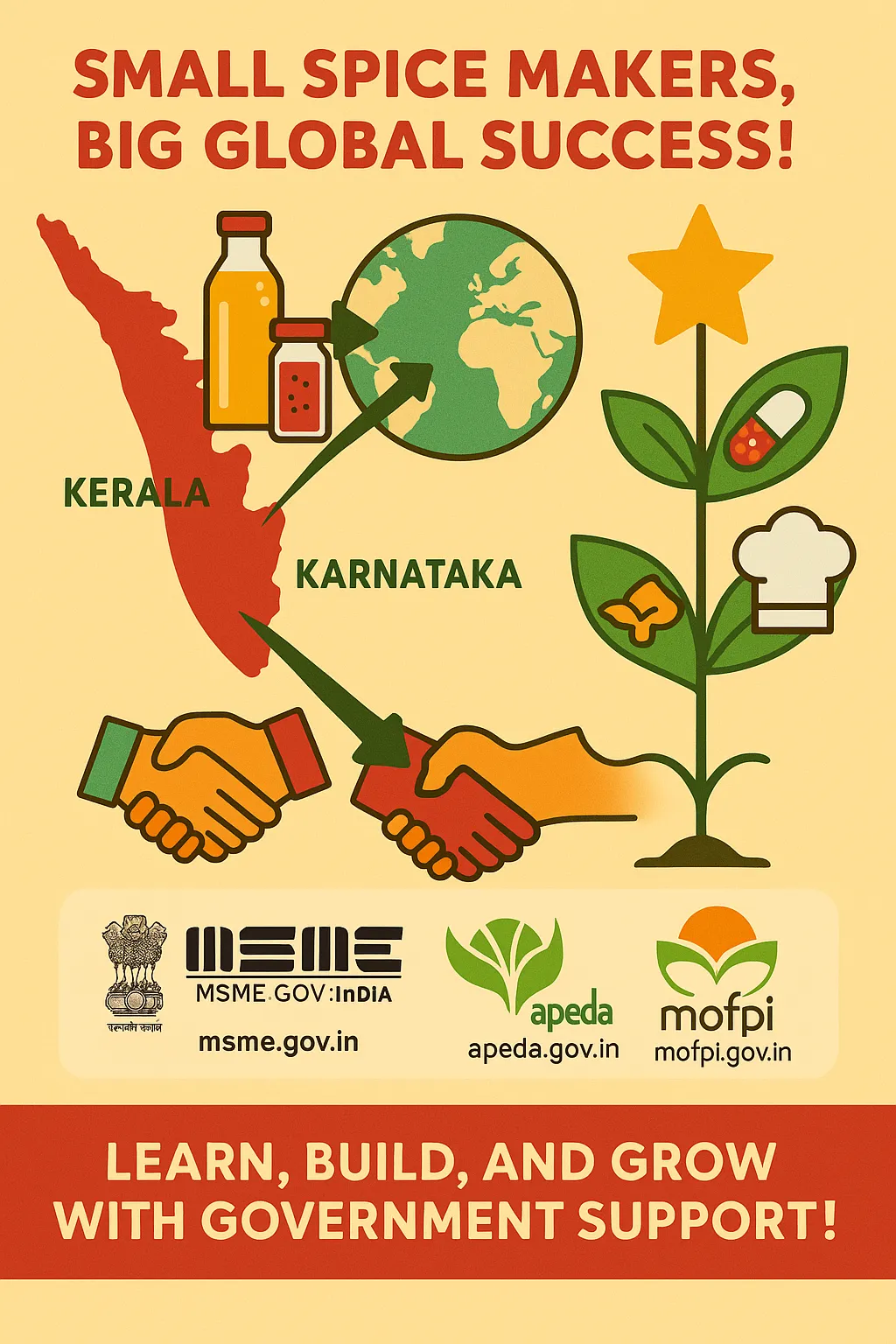
- Oleoresins and essential oils are now globally exported by many small scale units in Kerala and Karnataka.
- Many of these units started as contract manufacturers and branched out to their own developed brands in the nutraceutical and flavoring businesses.
- These success stories encourage the new market entrants to scale up quickly by acquiring the right technical know-how and strategic market positioning.
- Significant assistance, encouragement, and export information are provided by MSME (msme.gov.in), APEDA (apeda.gov.in), and MoFPI (mofpi.gov.in) Government Websites.
Read More: Cultivation, Growing, Processing and Extraction of Spice and Condiments
Guide for New Manufacturers-Spice Derivatives Manufacturing
- Work with NPCS to perform a feasibility study that identifies the most lucrative derivative.
- Apply for assistance available through MoFPI or MSME technology schemes.
- Procure spices through farmer producer organizations (FPOs).
- Build export connections through APEDA-supported trade fairs.
- Obtain critical certifications such as FSSAI, ISO, HACCP, and IndGAP.
Find the Best Idea for Yourself With our Startup Selector Tool
Conclusion: Profitability with Spices
There are many opportunities for new manufacturers in the market due to India‘s shift from whole spices to spice derivatives.
The spice derivatives sector also offers new manufacturers high profitability and steady growth due to the increased government support, rising demand for spices, and natural shift among many ingredients globally(Spice Derivatives Manufacturing). With strong connections to supply-chain systems that are backed by well-planned feasibility studies, entrepreneurs can transform India’s spice legacy into a sustainable industry.
Frequently Asked Questions-Spice Derivatives Manufacturing
- Why are spice derivatives considered a good business?
A. Because spice derivatives are concentrated, stable, and used across a wide range of industries, they tend to have high margins.
- Which spice derivatives are in greatest demand?
A.Turmeric oleoresin, chilli oleoresin, clove and pepper oils, and cardamom oil are major players in the international marketplace.
- How are essential oils created?
A.Through the steam distillation of either spices or byproducts from spices, essential oils are created.
- What can new businesses do to access the spice derivatives business?
A.New businesses can start by establishing distillation or extraction units, collaborating with farmer groups to obtain the necessary raw spices, and then focusing on buyers in the exporting marketplace-Spice Derivatives Manufacturing.
- What can NPCS do to support new manufacturers?
A.To assist you in starting and growing your manufacturing unit, NPCS provides feasibility studies, project formulation, machinery specifications, marketing studies, and financial studies.


