





Biotech Products Manufacturing Business
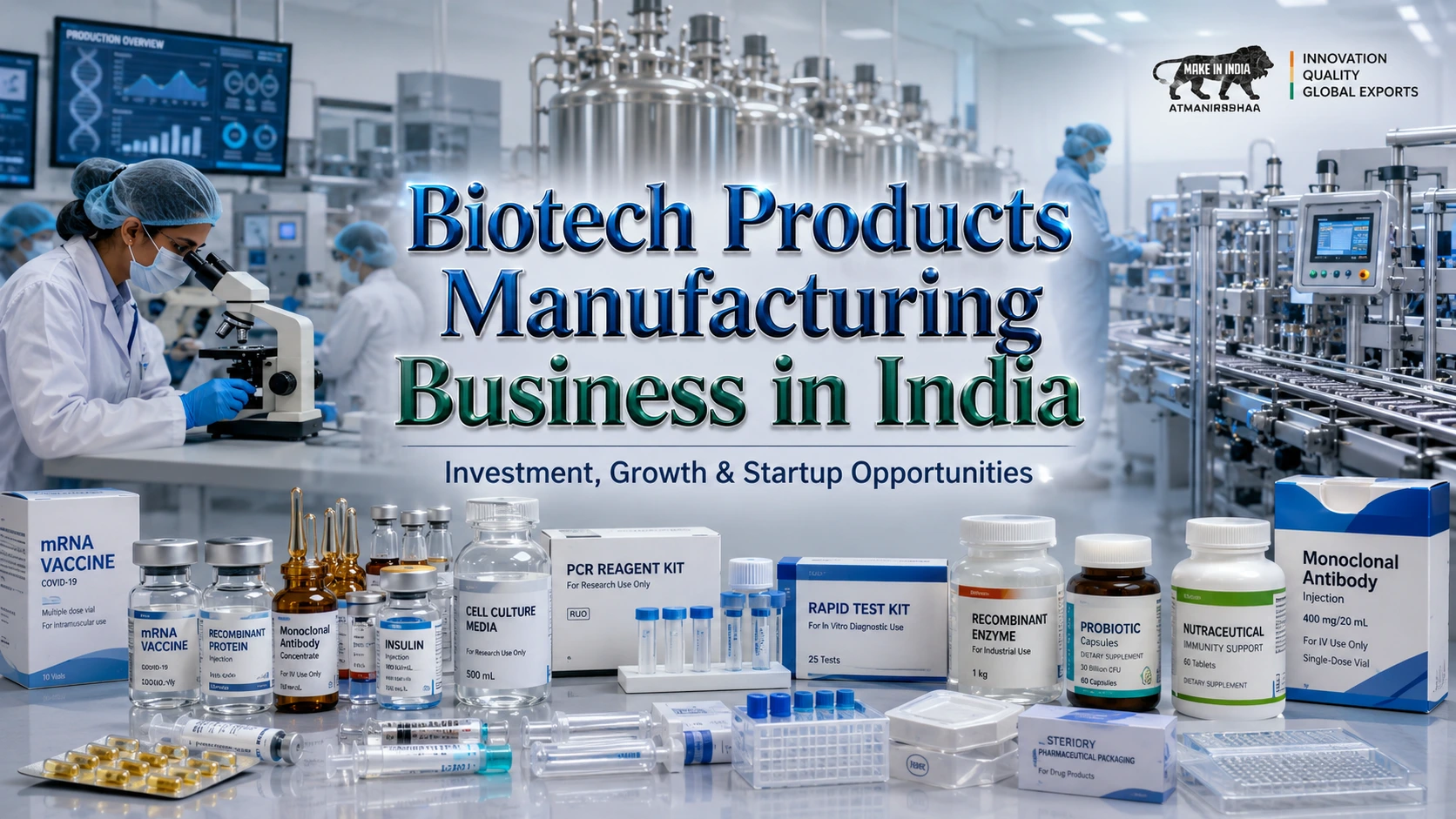
The biotechnology manufacturing is one of the highest revenues earning business ideas in the pharmaceutical and life sciences industry of India. Biopharmaceuticals — like medicines, which are made from a biological source such as proteins, monoclonal antibodies, vaccines, and biosimilars — are the fastest-growing sector of the global healthcare industry. The Indian biotech industry is already in a class of its own with players such as Biocon and Serum Institute and the government is actively nurturing a new generation of biotech manufacturing entrepreneurs via the Department of Biotechnology (DBT), PLI Scheme for Biopharma and Pharmexcil’s biotech export promotion framework. Among Indian pharma, biotech manufacturing provides the best returns on investment for investors with a strong technical team and a capital of ₹5 crore to ₹50 crore.
Why Biotech Manufacturing Is India’s Next Pharma Frontier
In numerous disease areas, biologic and biosimilar drugs are increasingly taking the place of small molecule drugs. Biologic drugs are used to treat cancer, autoimmune disorders, diabetes and rare genetic diseases and they cost between 10 and 100 times more than traditional small molecule generic medicines. When a patent for an original biologic has expired, the biosimilar manufacturers (or companies making close copies of the original biologic that can be sold at a lower price) have tremendous market opportunities.
The reasons for India being one of the biggest suppliers to the world of biosimilar products are: scientific capabilities, cost-advantage, and enhancing the credibility of regulatory bodies. Particularly, the role of Pharmexcil is for the biotech products, which clearly shows that the government is recognising biotech as the next phase of India pharmaceutical export evolution.
Read the Complete Book Here: Biotech & Pharmaceutical Handbook
Government Policies Supporting Biotech Manufacturing
Biopharmaceuticals are considered as a priority under the PLI Scheme for Pharmaceuticals, which is administered by the Department of Pharmaceuticals. Financial incentives of 4% to 10% of incremental sales over 6 years are available for biosimilar manufacturers and the innovative biologic producers. High capital costs of biomanufacturing drive the higher minimum investment requirements for biotech PLI compared to conventional pharmaceuticals.
Department of Biotechnology (DBT) offers support to biotech start-ups and manufacturing companies in the form of grants, equity investment (BIRAC – Biotechnology Industry Research Assistance Council) and technology transfer. DBT’s SPARSH and PACE programmes cater to the scale-up phase of Indian biotech companies from the lab to manufacturing.
Under the export mandate of the Pharmexcil Biotech Export Promotion, vaccines, recombinant proteins, monoclonal antibodies and biosimilars are all included in the scope of exports. Pharmexcil has been conducting biotech specific buyer-seller meets since long and has been enabling Indian biotech manufacturers to attend international conferences like the BIO International Convention and CPhI Worldwide.
In India, biotech drug approvals follow the regulatory process outlined in the CDSCO New Drugs and Clinical Trials Rules. New biotech manufacturers will have clarity with the guidelines defining a comparability exercise and data requirements for biosimilars.
Business Ideas in Biotech Manufacturing
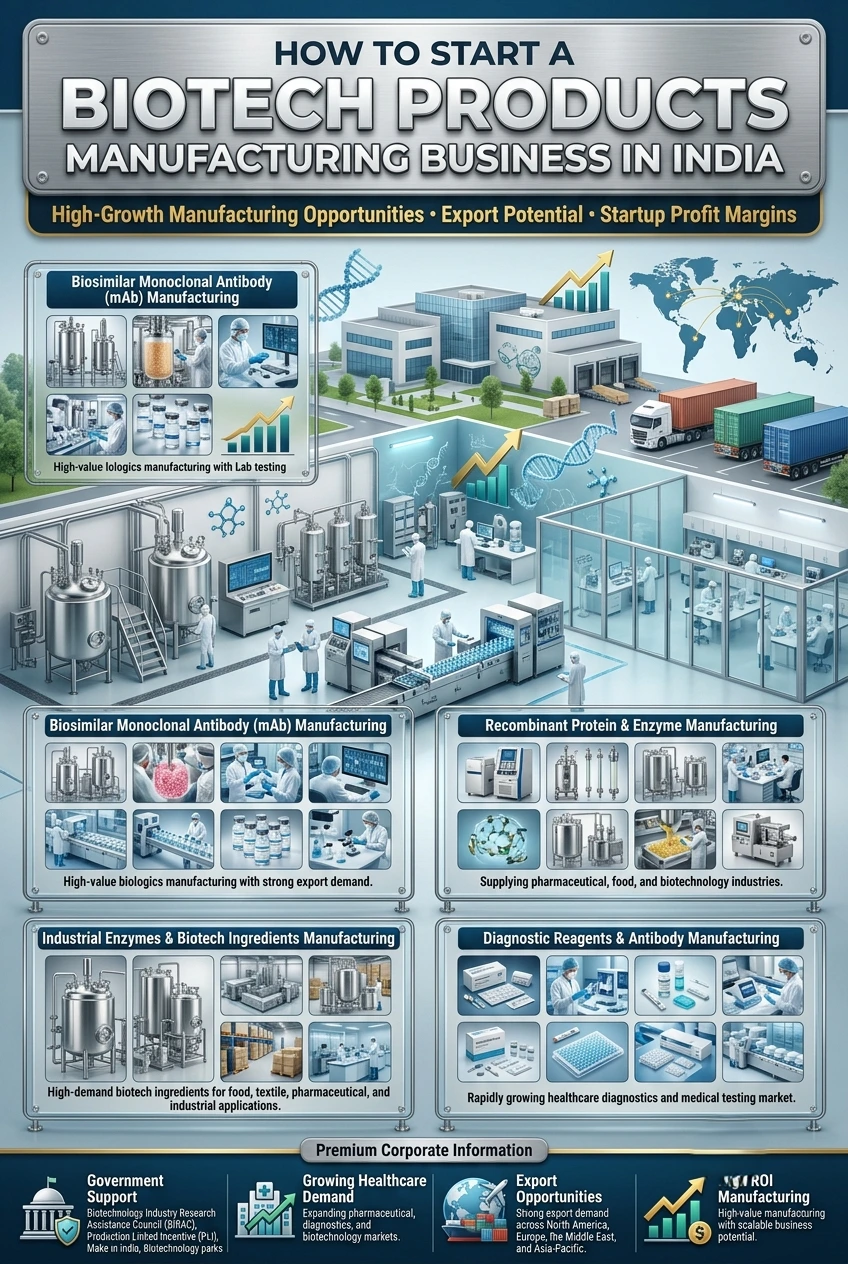
1. Biosimilar Monoclonal Antibody (mAb) Manufacturing
The world’s top-selling biologics — monoclonal antibodies — include Trastuzumab ($30 billion), Bevacizumab ($30 billion), Rituximab ($25 billion), and Adalimumab ($25 billion) — all of which are prescribed to treat breast cancer, multiple cancers, lymphoma, and autoimmune diseases, respectively. Once these patents expire worldwide, the biopharmaceutical companies that are able to make a bio-similar product at a much lower price will have huge opportunities in the market. Indian companies have proved that they can get their biosimilar mAbs WHO-prequalified by pursuing their own programmes for Oncobiologics and biosimilar programmes. This is a large-cap opportunity, with an investment estimated to be between ₹50 crore to ₹200 crore in setting up a mAb manufacturing facility; smaller biosimilar opportunities lie in the nearby biologics.
Get Detailed Project Report (DPR): Complete Guide to Biotechnology and Industrial Biotechnology
2. Recombinant Protein and Enzyme Manufacturing
Therapeutic proteins like Insulin, Erythropoietin (EPO), human growth hormone, and therapeutic enzymes are synthesized using fermentation in an engineered microbial/ cell culture system. Some of these proteins are off patent and have proven biosimilars manufacturing routes. A mid-market recombinant protein manufacturing plant for recombinant human Insulin or EPO can be set up at an investment of ₹15 crore to ₹40 crore. The products have been successfully prequalified by WHO and have been promoted in Africa and Southeast Asia by government health programmes. Indian biosimilar insulin manufacturers are already catering to several African markets.
3. Industrial Enzymes and Biotech Ingredients Manufacturing
Industrial enzymes, as opposed to pharmaceutical biologics, are a more palatable biotech manufacturing entry point for food processing, textile finishing, paper, detergent and animal feed. There is a simpler regulatory path, the required investment is lower (₹2 crore to ₹8 crore for a medium scale enzyme manufacturing unit) and the global market size and growth is huge. Novozymes (Denmark) and DSM (Netherlands) are the two major importers of industrial enzymes to India. Industrial enzymes production in the country for food, textile and animal feed market provide import substitution and export opportunity.
4. Diagnostic Reagents and Antibody Manufacturing
Diagnostic-grade antibodies, enzyme-linked immunosorbent assay (ELISA) kits, lateral flow assay (LFA) reagents, and PCR reagents are a high-margin biotech manufacturing segment and require moderate investments of ₹1 crore to ₹5 crore to set up a well-equipped production facility. India’s capability in manufacturing diagnostic tests and a strong demand for domestic manufacturing of diagnostic reagents emerged during the COVID-19 pandemic. The diagnostic reagent export markets for Africa and Southeast Asia are booming in hand with their expanding laboratory diagnostic infrastructures.
Turn your budget into a successful business plan
Import-Export Opportunity Analysis
The biotech export path of India is in a good shape. Indian vaccines, recombinant proteins and biosimilars, particularly those from Indian companies like Serum Institute, Biocon and Bharat Biotech, have proven that Indian biotech products are able to get regulatory approvals and export volumes in the global market. Data on export promotion in Pharmexcil showed a steady rise in export value of biotech products.
On the importation side, India continues to import substantial number of proprietary biologics for its domestic healthcare requirements particularly monoclonal antibodies. Each biosimilar granted domestic approval and acceptance is a victory in the fight against imported products and an effective product for export. There is a benefit for new biotech manufacturers to establish a regulatory track record on the domestic market before going after export markets.
Indian Success Stories in Biotech Manufacturing
Biocon, founded by Kiran Mazumdar-Shaw, is India’s most internationally recognised biotech manufacturing success. Starting with industrial enzymes and progressively moving to pharmaceutical biologics — insulin, monoclonal antibodies, and biosimilars — Biocon demonstrated a stepwise biotech capability building model that is replicable by smaller companies starting in less complex biologics before moving to more sophisticated products.
Serum Institute of India, the world’s largest vaccine manufacturer by volume, built a global export business serving 170+ countries by focusing on manufacturing scale, cost efficiency, and WHO prequalification. This vaccine capacity proved India’s ability to rapidly scale up biotech manufacturing capabilities where it needed to.
Bharat Biotech, founded by Krishna Ella, created a globally leading vaccine and biotech manufacturing company in Hyderabad through a consistent drive to get WHO prequalification on various vaccines and significant investment in world class facilities, including facilities in India and elsewhere in the world, a drive that led them to develop COVAXIN proving that Indian biotech can invent new biologics rather than just make existing ones.
Related Article: Biotechnology Manufacturing in India: Business Ideas, Growth Opportunities & Strategy
How NPCS Supports Biotech Manufacturing Business Planning
We at Niir Project Consultancy Services (NPCS) provide professional consulting for the preparation of Market Survey cum Detailed Techno-Economic Feasibility Reports (DPRs) for setting up new biotech products manufacturing businesses. Our reports include fermentation and cell culture process documentation, bioreactor and downstream processing equipment specifications, market research and export demand analysis, regulatory pathway mapping, and complete project financials with profitability analysis. Our objective is to help entrepreneurs evaluate feasibility, profitability, and long-term scalability before investing.
Biotech Manufacturing: Key Data Overview
| Biotech Segment | Investment Range | Key Regulation | Target Markets | Margin Range |
| Biosimilar mAbs | ₹50 Cr – ₹200 Cr | US-FDA / EMA | US, EU, Global | 40–70% |
| Recombinant Proteins | ₹15 Cr – ₹40 Cr | WHO Prequalification | Africa, SE Asia | 35–60% |
| Industrial Enzymes | ₹2 Cr – ₹8 Cr | ISO 9001 / FSSAI | US, EU, India | 25–45% |
| Diagnostic Reagents | ₹1 Cr – ₹5 Cr | CDSCO / CE Mark | Africa, SE Asia, ME | 35–60% |
| Biosimilar Insulin | ₹20 Cr – ₹60 Cr | WHO-GMP / PQ | Africa, SE Asia | 30–50% |
Frequently Asked Questions (FAQ)
1. What is the difference between a biosimilar and a generic drug?
Generic drugs are exact chemical copies of small-molecule drugs with identical active ingredient, dose, and route of administration. Biosimilars are highly similar — but not identical — versions of approved biological medicines. Due to the complexity of biologics, perfect copying isn’t possible, but regulatory agencies have to see no clinically significant differences.
2. What government support is available for biotech startups specifically?
The DBT’s BIRAC offers grants (up to 50 Lakhs for early stage), equity and tech transfer help to biotech startups. The SPARSH initiative aids manufacturing scale-up. The biotech fund of SIDBI and DBT-administered biotech incubators also help in financing early-stage biotech firms.
3. Can a small company enter biotech manufacturing?
Yes, in certain sectors. There are small scale opportunities in industrial enzymes, diagnostic kits, plant derived products. There are big investment & regulatory opportunities in pharma biologic development. If one had capital constraints it is possible to begin in industrial biotech before targeting pharma biotech.
4. What is WHO prequalification for biologics?
WHO prequalification for biological products certifies that a specific biologic product — including its manufacturing process, specifications, and clinical data — meets WHO standards for quality, safety, and efficacy. Prequalification is required for procurement by UNICEF, GAVI, PEPFAR, and the Global Fund, which collectively purchase billions of dollars of biologics annually for global health programmes.
5. How long does it take to get a biosimilar approved in India?
The CDSCO approval process in India to get your biosimilar approved typically takes three to seven years to complete, and this timing is greatly dependent upon the extensiveness of your comparability data requirements and how easy it was to conduct a comparability study.
6. Is a clean room mandatory for biotech manufacturing?
Yes. Biopharmaceutical manufacturing requires classified clean rooms — typically ISO Class 7 and 8 for non-sterile bioprocessing, and ISO Class 5 for sterile fill-finish operations. Clean room construction and qualification is a significant component of biotech manufacturing capital investment.
Conclusion
Biotech products manufacturing represents the highest-value tier of India’s pharmaceutical business ideas — and the government’s focused support through DBT, PLI Scheme for Biopharma, and Pharmexcil’s export promotion framework is creating conditions for a new wave of Indian biotech manufacturers. The investment threshold is higher than conventional pharma, but so are the margins, the market scale, and the competitive defensibility. Entrepreneurs who build systematic capability — starting in accessible biotech segments and progressively moving toward more sophisticated biologics — will find that India’s scientific talent base, improving regulatory infrastructure, and global demand for affordable biologics create a generational business opportunity that only a handful of countries in the world can access.


