





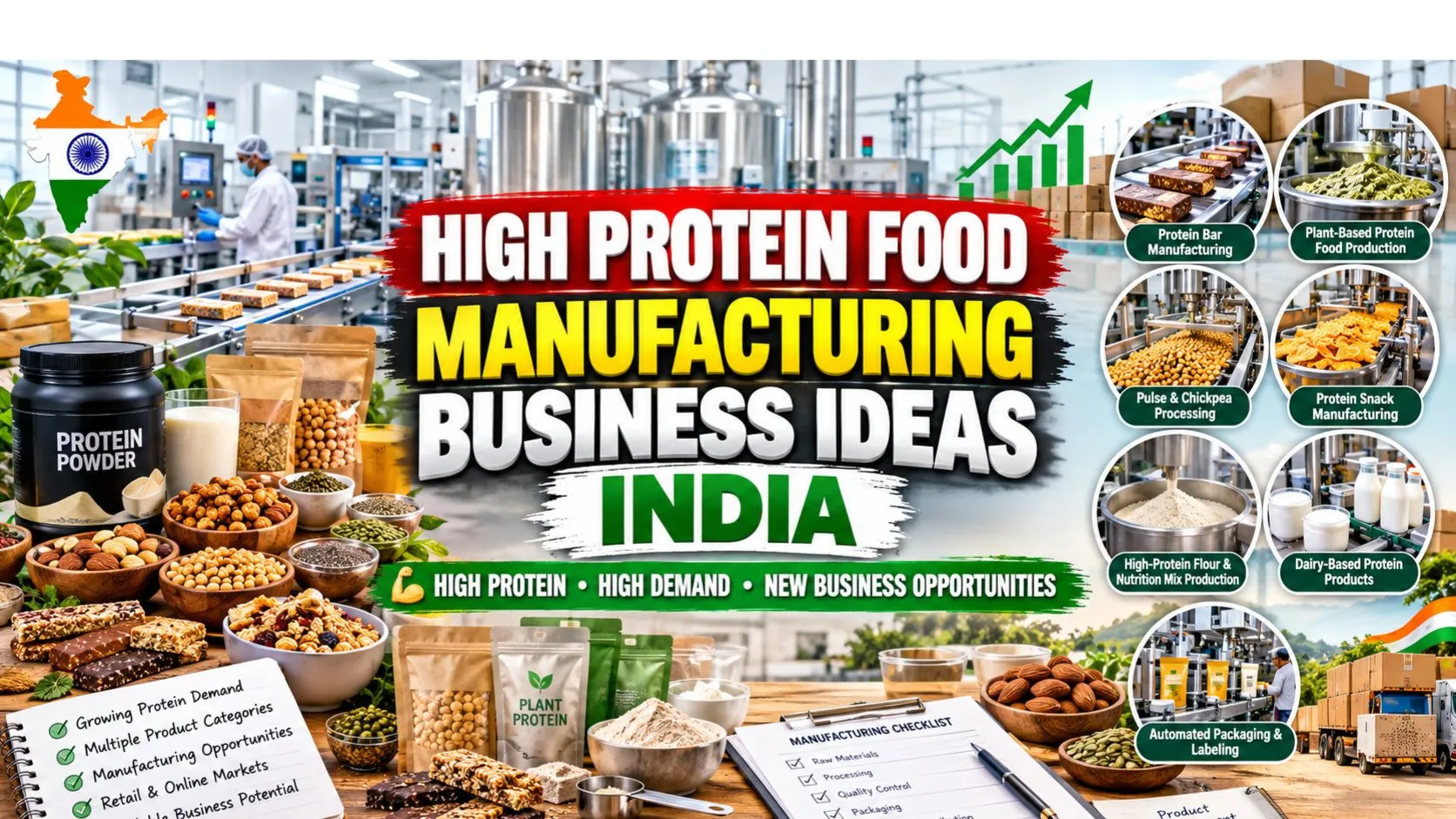
Walk into any modern retail store in a big Indian city and you will find a quiet change on the shelves. The word ‘protein’ now adorns chips, cookies, peanut butter, milkshakes, muesli and even paneer. A few years ago, protein belonged to the gym aisle. Today it has moved into the everyday snack basket. For first-generation entrepreneurs, this shift has opened up some of the most practical food processing business ideas in the country.
But the opportunity is more nuanced than the hype suggests. A protein bar that tastes like chalk won’t earn a second purchase. A whey plant that cannot match imported quality will lose on price. And a label that overstates protein content can invite regulatory trouble. This article looks at high protein food manufacturing the way a feasibility consultant would. We start with demand logic, then move to policy support, product choices, trade gaps and lessons from Indian founders who have already built brands in this space.
Why High Protein Foods Rank Among the Best Food Business Ideas Today
Most food categories in India grow with population and income. High protein foods are different. They are growing because a nutritional gap is finally becoming visible to consumers, and because the product formats that fill that gap have become convenient enough to buy on impulse.
A Protein Gap Hiding in Plain Sight
Indian diets are skewed to rice, wheat. As a result, a large part of daily protein comes from cereals, which are lower in quality and digestibility. National survey estimates suggest that close to three out of four Indians do not meet their daily protein need. Worse, more than nine out of ten people do not know how much protein they actually require.
The Dietary Guidelines for Indians issued by ICMR-National Institute of Nutrition recommend getting good-quality protein through smart food combinations, such as cereals with pulses, dairy, eggs and nuts. Interestingly, the same guidelines caution against long-term heavy use of protein powders for muscle building. For a manufacturer, that is an important signal. The larger and safer market lies in everyday foods with better protein, not only in supplement tubs sold to bodybuilders.
The Urban Consumer Has Changed Faster Than Supply
A large urban survey by LocalCircles, with over two lakh responses from 25 districts, found that nearly 60% of city dwellers do not eat protein-rich food every day. About 85% do not track their intake at all. Respondents named affordability as the biggest barrier, followed by taste and vegetarian dietary limits.
Read that list again, because it is essentially a product design brief. Consumers want protein that is affordable, tasty and vegetarian-friendly. Meanwhile, large FMCG and dairy companies have started adding protein variants to their portfolios. Even quick-service restaurants now advertise protein add-ons. When big brands enter a category, they spend heavily to educate buyers. Smaller manufacturers can ride that education wave with sharper, regional and value-priced products.
Market Size and the Profit Logic Behind It
According to the India Brand Equity Foundation’s analysis of India’s protein market, the protein supplement segment alone is valued at around ₹7,461 crore and is expected to cross ₹13,000 crore within the next decade. Plant-based protein is estimated at roughly ₹8,594 crore. These numbers exclude the much larger pool of protein-enriched everyday foods, such as dairy, snacks and bakery.
The profit logic is straightforward. Consumers pay a clear premium per kilogram for a credible protein claim. Therefore, gross margins in protein snacks and powders are usually healthier than in regular namkeen or biscuits. However, that premium survives only when the claim is lab-verified and the taste holds up. In our experience with feasibility studies, the projects that fail in this category rarely fail on machinery. They fail on formulation, raw material cost control, or weak repeat purchase.
Table 1: Key demand signals for high protein food manufacturing in India
| Market Signal | Indicative Figure | What It Means for a Manufacturer |
| Indians falling short of daily protein need (survey estimate) | About 73% | A very large, under-served consumer base |
| Urban Indians not eating protein-rich food daily | Nearly 60% | Demand for convenient, ready-to-eat formats |
| Protein supplement market size | Around ₹7,461 crore | Premium segment with strong D2C and gym pull |
| Plant-based protein market size | Around ₹8,594 crore | Vegetarian-friendly products have room to scale |
| Share of supplement-grade whey that is imported | Roughly 80–90% | Clear import-substitution window |
| ICMR recommended protein intake for adults | 0.83 g per kg body weight per day | Useful benchmark for portion and pack design |
With demand this visible, the next question is whether the policy environment makes it easier to enter. Fortunately, it does.
Government Policies and Incentives for Protein Food Manufacturers
Protein foods are in the food processing sector, which enjoys some of the strongest policy support among Indian manufacturing categories. The key is to pick schemes that match your unit size and product type rather than chasing every incentive on paper.
PMFME Scheme for Micro Units
The PM Formalisation of Micro Food Processing Enterprises scheme offers a 35% credit-linked capital subsidy on the eligible project cost of individual micro units, subject to a ceiling. It follows the One District One Product approach, so a unit processing a district’s notified crop, such as pulses, millets or milk, may find approvals smoother. The scheme also supports branding, marketing, and handholding for FSSAI and Udyam registration. For a small roasted snack, sattu or peanut butter unit, PMFME is often the first scheme worth checking.
PLI Scheme for Food Processing
The Production Linked Incentive Scheme for Food Processing Industry rewards incremental sales in ready-to-eat and ready-to-cook foods, including millet-based products. It also has a separate component for innovative and organic products of SMEs, along with reimbursement support for branding abroad. Admittedly, most first-time entrepreneurs will not meet the sales thresholds on day one. Even so, the scheme matters indirectly. Large PLI beneficiaries often outsource production, which creates contract manufacturing work for well-run MSME plants.
FSSAI Rules You Must Build Around
Regulation shapes this category more than most founders expect. Protein powders, meal replacements and several fortified products fall under FSSAI nutraceutical framework, which governs permitted ingredients, additives, dosage and labelling. The FSSAI FAQ on the Nutraceutical Regulations is a useful starting point before you finalise a formulation. Separately, any ‘high protein’ or ‘source of protein’ claim on pack must meet the thresholds in FSSAI’s advertising and claims rules. Build lab testing into your budget from the first batch, because an unsupported claim is the fastest way to lose both a licence and consumer trust.
Credit and Registration Support
Beyond sector schemes, protein food units can use the general MSME toolkit. Udyam registration unlocks priority-sector lending and delayed-payment protection. The Credit Guarantee Fund Trust for Micro and Small Enterprises helps banks lend without heavy collateral. First-time micro entrepreneurs may also qualify for margin money support under PMEGP, run by KVIC. Additionally, Startup India recognition can help D2C protein brands with compliance relief and access to funding networks.
State-Level Incentives Worth Comparing
State policies can change project economics significantly, so compare two or three locations before buying land. For example, the Uttar Pradesh Food Processing Industry Policy offers capital subsidy on plant, machinery and technical civil work, stamp duty exemption on land, mandi fee relief and a freight subsidy on exports. Uttar Pradesh also leads the country in milk production, which matters for dairy protein projects.
Madhya Pradesh makes a strong case for soy-based protein. The state is India’s largest soybean producer, and its industries department lists soybean and milk value addition among its agribusiness and food processing priorities. Consequently, a soy protein or textured vegetable protein unit in the Indore-Ujjain-Dewas belt sits right next to its raw material and processing ecosystem.
Policy support lowers the cost of entry. However, your product choice decides whether the business survives. Let us look at the options.
High Protein Food Manufacturing Business Ideas for Startups
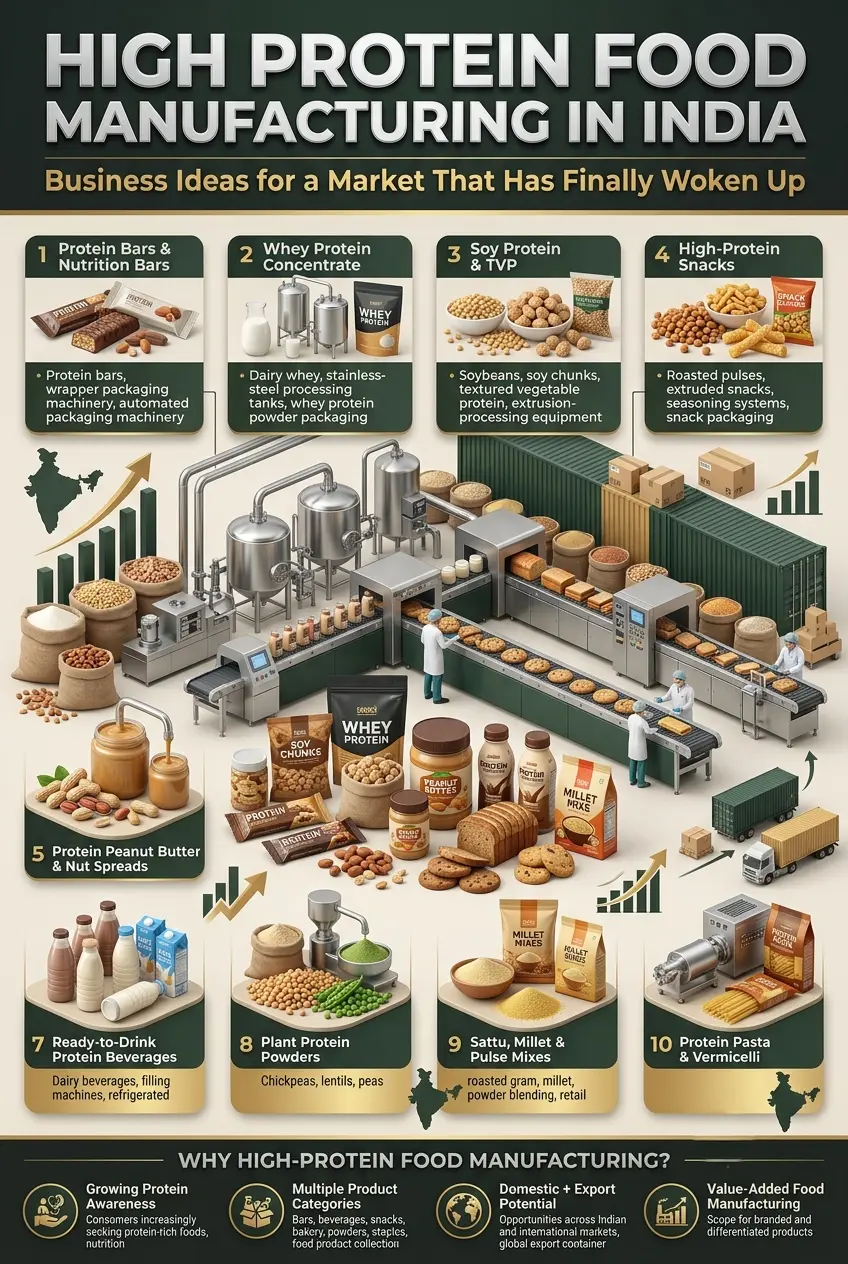
Each idea below targets a different buyer, uses a different raw material, and carries a different level of technical difficulty. Choose based on your market access and team strength, not just on what looks popular on social media.
1. Protein Bars and Nutrition Bars
Protein bars are the most visible product in the category and often the first idea founders consider. A typical bar blends whey or soy protein with nuts, dates, oats, binders and a chocolate or yogurt coating. The process involves mixing, cold forming or slab cutting, enrobing and flow-wrap packaging. The real challenge is not machinery but formulation. High-protein bars tend to harden over their shelf life, and many Indian consumers still find them too dry or too sweet. Successful brands solve this through careful protein blends, humectants and moisture control.
Distribution is also crowded, so a new entrant should think about a clear angle. Options include affordable bars priced for everyday snacking, regional flavours such as coconut-jaggery or chikki-style bars, and private-label supply to gyms, pharmacies and corporate canteens. Because bars are compact and high-value, they also suit D2C and quick commerce channels well.
2. Whey Protein Concentrate from Dairy Whey
This idea addresses one of the sharpest gaps in Indian food manufacturing. India produces more milk than any other country, yet most supplement-grade whey is imported. Every paneer, chhena and cheese plant generates liquid whey, and much of it is still discarded or sold cheaply as animal feed. A whey protein concentrates unit uses clarification, pasteurisation, ultrafiltration and spray drying to turn that liquid into WPC35, WPC60 or WPC80 powder.
The technology is demanding, and consistent quality needs strict process control. Therefore, this project suits entrepreneurs with dairy experience or a tie-up with a cheese or paneer cluster that can guarantee steady whey supply. The payoff is significant. Domestic whey can serve supplement brands, bakeries, dairy beverage makers and infant nutrition formulators who currently depend on imports and exchange-rate swings.
3. Soy Protein Isolate, Soy Chunks and Textured Vegetable Protein
Soy is India’s most affordable plant protein, and it is grown at scale in Madhya Pradesh, Maharashtra and Rajasthan. Soy chunks, granules and textured vegetable protein are already household staples, which means the demand is proven. A unit can start with food-grade defatted soy flour and move into extrusion to produce chunks and mince-style textured protein.
More advanced projects can produce soy protein isolate, which carries about 90% protein and is used in meat analogues, beverages and supplements. Isolate production requires alkaline extraction, acid precipitation, neutralisation and spray drying, so the capital and technical depth are higher. Meanwhile, textured protein for plant-based meat brands and HoReCa buyers is a faster-growing niche. Proximity to soybean processing plants gives a clear raw material cost advantage.
4. Roasted and Extruded High-Protein Snacks
This is where Indian taste habits work in the entrepreneur’s favour. Roasted chana, roasted moong, masala peanuts and pulse-based puffs already sell in every kirana store. By upgrading formulations with pulse blends, soy crisps or dairy protein, a manufacturer can offer snacks with credible protein claims at mass-market prices. Extruded protein puffs and chips made from chickpea, lentil and soy flour are also gaining shelf space in modern trade.
The process is relatively simple, the machinery is widely available within India, and the product fits existing namkeen distribution networks. Because consumers already understand the base product, marketing costs stay lower. Institutions such as CSIR-CFTRI have developed nutrient-enriched traditional snacks such as spirulina chikki, which shows how familiar formats can carry better nutrition without asking consumers to change habits.
5. High-Protein Peanut Butter and Nut Spreads
Peanut butter has moved from a niche import to a mainstream Indian breakfast item within a short time. India is a major groundnut producer, which keeps raw material local and relatively affordable. A basic unit needs roasting, blanching, grinding, mixing and filling equipment, making it one of the more accessible projects in this category.
To stand out, manufacturers now add whey or pea protein, reduce sugar, or introduce jaggery and dark chocolate variants. The main quality risks are oil separation, rancidity and aflatoxin, so raw material testing and proper stabilisation are essential. Beyond retail jars, there is steady B2B demand from bakeries, bar makers and cloud kitchens for bulk peanut paste. As a result, a well-run unit can balance branded retail with private-label and bulk supply.
6. High-Protein Bakery: Cookies, Rusks and Bread
Biscuits and rusks are among the most consumed packaged foods in India, from metros to villages. That makes them an ideal carrier for protein. A protein cookie typically replaces part of the refined flour with whey, soy, oat or pulse flour, and reduces sugar where possible. The challenge lies in texture, because added protein can make cookies hard and bread dense. Nevertheless, bakers who solve this can target both health-focused urban buyers and institutional channels such as hospitals, school nutrition programmes and corporate cafeterias.
Existing bakery units can often add a protein line with modest changes, which makes this a smart diversification idea too. High-protein rusks, in particular, fit the Indian tea-time habit and remain an under-served format.
7. Ready-to-Drink Protein Shakes and High-Protein Dairy
High-protein dairy is one of the fastest-growing corners of the market. Products include protein milkshakes, high-protein lassi, Greek-style yogurt, high-protein curd and protein-enriched paneer. These formats appeal to consumers who distrust powders but happily drink a flavoured milk bottle after a workout or during a commute. Ready-to-drink shakes usually need milk protein concentrate, UHT processing and aseptic packaging, so they demand serious technical capability.
Strained yogurt and high-protein curd are simpler but need a reliable cold chain. Consequently, this idea works best for existing dairy processors, milk cooperatives and entrepreneurs located inside strong dairy belts. Quick commerce has made chilled high-protein products far easier to distribute in large cities than before.
8. Plant Protein Powders from Pulses
Vegan and lactose-intolerant consumers are pushing demand for plant protein powders made from pea, moong, chana and rice. Globally, pea protein dominates this segment, and Indian brands still source a large share of it from overseas suppliers. India, however, is the world’s largest pulse producer, which creates a logical opportunity for domestic protein extraction. The process involves dehulling, milling, wet or dry fractionation, and drying to produce concentrates or isolates.
Taste and solubility are the main technical hurdles, since pulse proteins can carry a beany flavour. Entrepreneurs who crack clean-tasting moong or chickpea protein may find strong demand from supplement brands, plant-based dairy makers and bakery formulators. This is a technology-led idea, so partnering with a food technology institute early is wise.
9. Sattu, Millet and Pulse-Based Protein Mixes
Not every protein product needs a modern label. Sattu, made from roasted chana, has been a protein staple in Bihar, Uttar Pradesh and Jharkhand for generations. Today it is finding new buyers in metros as a natural, affordable protein drink. Similarly, blends of millets, pulses and nuts can be packaged as instant breakfast mixes, health drink powders and multigrain protein atta. These products need simple roasting, milling, blending and packing lines, which keeps entry barriers low.
They also fit the government’s push for millets and the ICMR emphasis on cereal-pulse combinations. For rural and semi-urban entrepreneurs, this idea offers a realistic path to a branded product without heavy technology risk. Export demand from the Indian diaspora adds another sales channel.
10. Protein-Enriched Pasta and Vermicelli
Pasta, vermicelli and noodles are everyday convenience foods, especially among young households. Replacing part of the semolina with pulse flour, soy flour or dairy protein can raise protein content meaningfully without changing the cooking experience. CSIR-CFTRI has already developed a fortified protein-rich vermicelli technology available for commercial transfer, which reduces the research burden for a new unit.
The production line involves mixing, extrusion, drying and packaging, all of which are well understood in Indian food processing. Shelf life is long and distribution is straightforward through general trade. School meal suppliers and institutional caterers are also potential bulk buyers. For entrepreneurs who want a low-risk protein product with mass appeal, this is worth serious evaluation.
Import–Export Opportunity Analysis for New Protein Food Units
Trade data in this sector tells a surprising story. India is a large exporter of raw protein sources and a large importer of refined protein ingredients. That mismatch is where much of the startup opportunity lies.
The Whey Import Paradox
Despite being the world’s largest milk producer, India imports an estimated 80-90% of its supplement-grade whey, mainly from the United States, Europe, Australia and New Zealand. Industry reports suggest annual whey imports now exceed 20,000 tonnes and continue to rise. Global whey prices have climbed, and a weaker rupee makes imports costlier still. For domestic manufacturers, this creates a genuine import-substitution window. Brands that currently buy imported whey would welcome a reliable Indian supplier, provided quality and consistency match.
Soybean Meal Leaves the Country as Feed
On the other hand, India exports around 20 lakh tonnes of soybean meal in a typical year, according to the Soybean Processors Association of India. Most of it goes to buyers such as Germany, France, Nepal, Bangladesh and Kenya, largely for animal feed. Yet soybean meal is the same raw material that can be upgraded into food-grade soy flour, textured protein and isolate. Converting even a small share of this volume into higher-value food protein would capture margins that currently leave the country.
Export Markets for Indian Protein Foods
Indian-style protein snacks have natural export appeal. Roasted chana, makhana-protein blends, sattu drinks and millet-protein mixes already sell in ethnic stores across the UAE, the United Kingdom, the United States, Canada and Australia. Additionally, plant-based and vegetarian protein products suit global consumers moving away from meat. The branding support component of the PLI scheme can help established exporters build shelf presence abroad. New entrants should, however, check the labelling and claims rules of each importing country early, because protein claims are regulated differently across markets.
Indian MSME Success Stories in High Protein Foods
Several Indian founders have already shown that this category can build valuable companies. Their paths differ, but the decision logic behind their growth offers practical lessons.
Yoga Bar: Sisters Who Built a Clean-Label Brand
Sisters Suhasini Sampath and Anindita Sampath Kumar founded Sproutlife Foods in Bengaluru and built the Yoga Bar brand around nutrition bars made with natural ingredients and no artificial additives. They later expanded into muesli, oats, peanut butter and breakfast cereals. The brand grew through a digital-first model with strong online sales before building offline presence.
Its success eventually drew ITC, which agreed to acquire the company in phases to strengthen its healthy foods portfolio. The key decision was to start with bars, a high-value and giftable format, and then extend into breakfast categories with larger volumes. For new entrepreneurs, the lesson is clear. A focused hero product with a sharp brand promise can open doors that a wide, unfocused range never will.
RiteBite Max Protein: Patience in a Young Category
Vijay Uttarwar’s Naturell (India) started commercial operations and then moved into healthy snacks well before protein became fashionable. Under the Ritebite and Ritebite Max Protein brands, the company built a range of nutrition bars, protein cookies, protein chips, spreads and powders. Rather than relying on a single product, it spread its bets across formats and channels, including modern trade, pharmacies and online platforms. Zydus Wellness later acquired the company to enter the healthy snacking space. The decision logic was patience. Naturell stayed in the category long enough for consumer demand to catch up with its products. The lesson for founders is that category building takes time, and staying power often matters more than first-mover buzz.
The Whole Truth: Transparency as a Moat
Shashank Mehta built The Whole Truth on a simple but disruptive idea: print the full ingredient list on the front of the pack. At a time when many protein products used complex additives and hidden sugars, this transparency became the brand’s biggest differentiator. The company started with protein bars and expanded into whey protein, peanut butter and other clean-label foods. Its content-led marketing educated consumers about reading labels, which built trust and repeat purchase. The lesson here is powerful for any MSME. In a category full of exaggerated claims, honesty itself can become a competitive advantage that bigger players find hard to copy.
How NPCS Helps Entrepreneurs Evaluate Protein Food Projects
Stories like these are inspiring, but every successful plant starts with a sober assessment of numbers, raw material access and market fit. At Niir Project Consultancy Services (NPCS), we prepare Market Survey cum Detailed Techno-Economic Feasibility Reports for entrepreneurs setting up new industries. Our reports cover detailed manufacturing processes, market research and demand analysis, process flow diagrams, product mix and capacity planning, machinery and raw material details, and complete project financials with profitability analysis. The aim is simple: help founders judge feasibility, profitability and long-term scalability before committing capital.
For entrepreneurs exploring dairy-based protein ingredients such as whey and casein, NPCS has published a detailed printed reference book covering technology, processing and applications: Handbook on Milk and Milk Proteins.
For a detailed techno-economic Project Report on setting up a protein bar manufacturing unit, including plant economics, machinery lists, financial projections and applicable government incentives, see the NPCS Project Report: Energy / Protein Bar – Manufacturing Plant, Detailed Project Report, Profile, Business Plan.
High Protein Food Segments Compared: A Quick Planning Table
The table below compares the main product options discussed above. Protein values are indicative industry ranges per 100 g and will vary with formulation.
Table 2: Indicative comparison of high protein food product options
| Product | Indicative Protein (per 100 g) | Core Raw Material | Main Buyers | Process Complexity |
| Protein bars | 20–30 g | Whey/soy protein, nuts, dates | Urban adults, gyms, D2C | Medium |
| Whey protein concentrate | 35–80 g (WPC35 to WPC80) | Liquid whey from paneer/cheese | Supplement brands, bakeries | High |
| Soy protein isolate | About 90 g | Defatted soy flakes | Food and beverage processors | High |
| Soy chunks / TVP | About 50 g | Defatted soy flour | Households, HoReCa | Medium |
| Roasted and extruded snacks | 18–25 g | Chana, moong, soy, pulse flours | Mass retail, kirana | Low to Medium |
| High-protein peanut butter | 25–30 g | Groundnut, whey/pea protein | Retail, bakeries, cloud kitchens | Low |
| High-protein cookies and rusks | 10–20 g | Flour, whey/soy, oats | Retail, institutions | Medium |
| RTD protein shakes | 15–30 g per bottle | Milk, milk protein concentrate | Quick commerce, modern trade | High |
| Pulse protein powders | 70–85 g | Dry peas, moong, chana | Supplement and vegan brands | High |
| Sattu and millet protein mixes | 18–22 g | Roasted chana, millets, pulses | Tier-2/3 towns, diaspora | Low |
Conclusion
High protein food manufacturing is no longer a niche built around gyms and bodybuilders. It is becoming a mainstream food category shaped by a real nutritional gap, rising consumer awareness and strong policy support. India’s advantage is clear. It has abundant milk, pulses, soybean and groundnut, yet it still imports refined protein ingredients and exports raw protein as animal feed. That gap is exactly where new manufacturers can create value.
Success, however, depends on disciplined choices. Pick a product that matches your raw material access and technical strength. Treat formulation and taste as core engineering, not afterthoughts. Build regulatory compliance and lab testing into the plan from day one. Finally, validate the numbers through a proper feasibility study before committing capital. Entrepreneurs who follow this path will find that protein is not a passing trend but a long-term growth story in Indian food processing.
Your Investment Deserves the Right Opportunity
Every serious investment begins with choosing the right sector and the right business model. With hundreds of industrial opportunities available across India’s manufacturing and clean-energy landscape, making the most informed choice is critical. NPCS Startup Selector tool helps entrepreneurs, MSMEs, and investors identify the most suitable business opportunities based on their investment capacity, location, and interests — so your capital is directed toward a venture with the strongest fit and potential.


