


Introduction: A Big Opportunity in India’s Industrial Growth
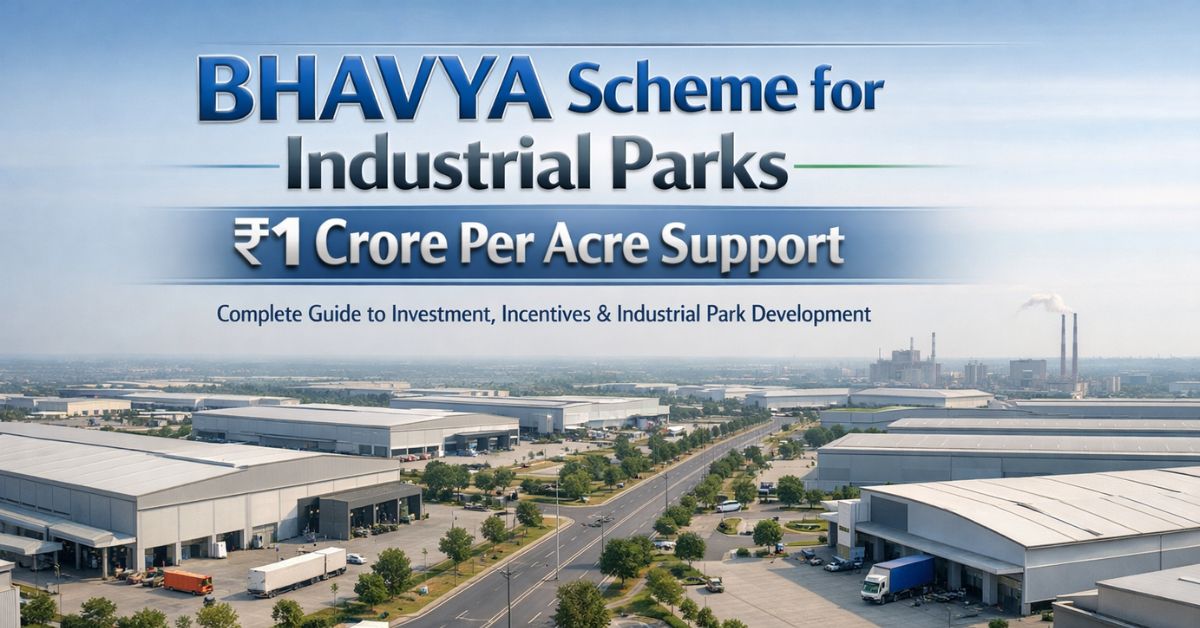
India is fast developing its manufacturing and infrastructure industry, which is opening new business opportunities to the entrepreneurs and investors. The BHAVYA industrial park scheme, which focuses on creating modern plug and play industrial parks throughout the country, is one of the most influential projects that have contributed to this growth.
The government has also made significant investments in terms of funding industrial parks development and minimizing delays in land, utility, and approvals. This scheme is a viable alternative to business owners aiming to create long term revenue by investing in industrial infrastructure.
Manufacturing companies are increasingly resorting to industrial parks due to their ready infrastructure and minimized risk of operations. With the increasing demand of industrial space, it is expected that the early investors will benefit most.
Table of Contents
ToggleWhat is the BHAVYA Scheme?
The BHAVYA scheme will help in the rapid development of industries by establishing fully equipped industrial parks that a business can set up at a fast rate. Companies no longer have to take years to construct infrastructure, but they can go directly into prepared facilities.
The program provides financial assistance to developers, and it eases the approval process, thus making industrial investment more available than ever before.
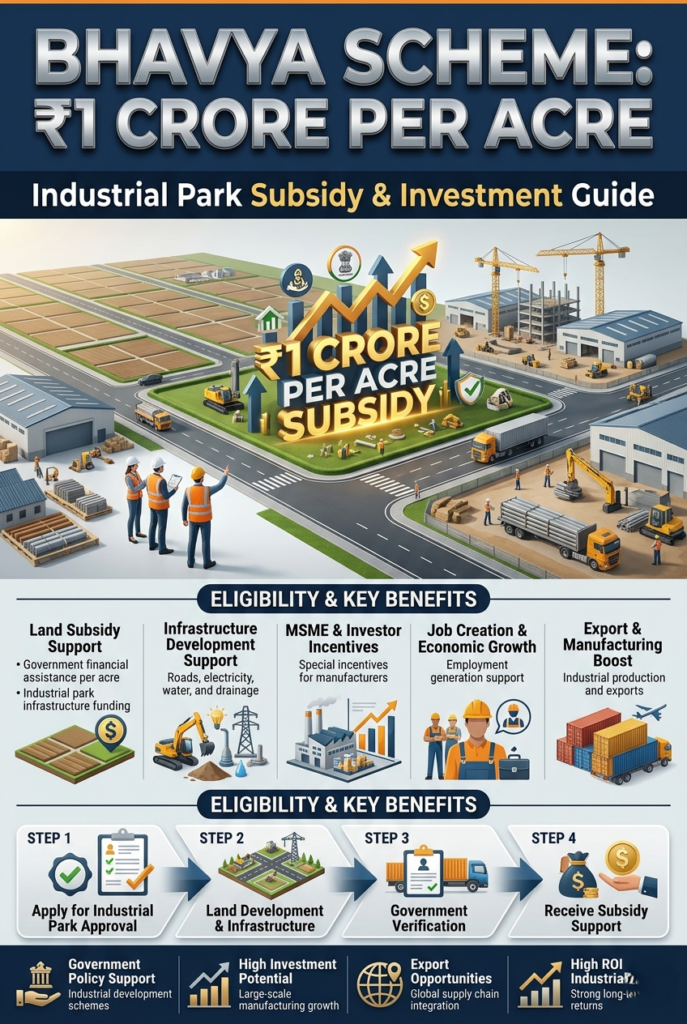
Key Features of the Scheme
- Government funding up to ₹1 crore per acre
- Prepared infrastructure such as roads, power and water.
- Single-window system to speed up approval process.
- Favouring MSMEs, startups and large industries.
- Less project risk and accelerated business start-up.
These characteristics render the scheme appealing to new business people as well as seasoned investors.
Why Industrial Parks Are a Profitable Business
Industrial parks are also earners of constant income since they cater to several businesses simultaneously. The developers also generate revenue through land, rent, and services, as opposed to depending on a single product or customer.
With the growth of manufacturing, the need of an organized industrial space is also growing. This brings about financial security among developers and investors in the long run.
Businesses in industrial parks generally receive revenue as a result of:
- Leasing industrial plots
- Renting factory buildings
- Providing utilities and maintenance services
- Providing storage and logistics services.
Revenue is sustainable and predictable once the occupancy reaches a stable level.
Financial Potential of an Industrial Park
An average-sized industrial park can give good returns in the long run. Although the initial investment can be considered high, government support is a major factor of reducing financial risk.
As an illustration, a large project of 200 acres of industrial park can get huge infrastructure investments, and the developers will be able to concentrate on the construction of the facilities and the attraction of tenants.
Typical Financial Snapshot
- Project size: 200 acres
- Total investment: ₹200–280 crore
- Government assistance: ₹200 crore.
- Annual income: ₹18–30 crore
- Payback period: 5-8 years.
The industrial park development is among the surest infrastructural investments in India because of this structure.
Get Detailed Insights from This Book: Our Books
The Importance of a Detailed Project Report (DPR)
Every industrial project is based on A Detailed Project Report. It outlines the business plan, financial projections and technical requirements in a systematic format. This document is used by the government authorities and investors to assess the feasibility of the project.
The chances of approval are much reduced in the absence of a professional DPR. The prepared report demonstrates that the project is realistic, profitable, and well planned.
A Strong DPR Usually Includes
- Project idea and goals.
- Market demand analysis
- Planning of infrastructure and layout.
- Financial estimates and investment proposal.
- Risk management strategy
- Employment generation estimates
This paper serves as the guide to the whole project.
Role of NPCS in Industrial Project Development
NIIR Project Consultancy Services (NPCS) is a renowned company that assists entrepreneurs to plan and establish industrial projects. The company, having decades of experience, offers technical and financial advice to companies in the various industries.
They have services to facilitate processes, which are complex like feasibility analysis, government approvals and project planning.
Services NPCS provides.
- Preparation of Project Report.
- Techno-economic feasibility studies
- Market research and industry analysis.
- Plant layout and infrastructure design.
- Budgeting and costing.
- Support in government schemes applications.
Professional consultants are relied upon by many entrepreneurs since proper planning will help minimize risk and increase likelihood of approval.
Get Detailed Project Report (DPR): Project Reports & Profiles
Industries that have High Space Demand in an Industrial Park.
There are a number of industries that are expanding at a high rate and this needs a good infrastructure. Such industries will be the demand drivers of industrial parks in the next years.
High-Growth Sectors
- Food processing
- Textile manufacturing
- Pharmaceuticals
- Electronics production
- Logistics and warehousing
The centralized infrastructures and enhanced transportation connectivity in these industries are advantageous to the businesses.
Future Growth of Industrial Parks in India
The Indian industrial sector is projected to expand quickly as a result of increasing domestic demand, growth of exports and development of infrastructure. Government programs that encourage manufacturing and logistics will keep spurring the need to have organized industrial space.
The new opportunities in developing industrial parks are the industrial corridors, smart cities, and logistics hubs. Areas that have good transportation systems and industrial policies will have the most rapid growth.
Early entrants in the market will be able to enjoy appreciation of land values and long term rental income.
Conclusion
Industrial Park development is becoming one of the most promising business opportunities in India’s infrastructure sector. The current investment environment benefits from governmental assistance and increased demand for manufacturing and enhanced logistics systems.
BHAVYA scheme-cum-assistance makes financial help available and helps some entrepreneurs to build up industries. However, success depends on proper planning and professional documentation.
A well-prepared Detailed Project Report remains the most important step toward securing funding and building a profitable industrial venture.
Frequently Asked Questions (FAQ)
What is the minimum land required for an industrial park?
The majority of industrial park projects demand a minimum of 100 acres of land that can be legally owned and well documented.
What is the time taken to complete a project on an industrial park?
Depending on the size of the project and the complexity of the infrastructure, the development period is typically three to five years.
Are industrial parks beneficial to small business?
Yes, small and medium business can rent pre-ready factory space and begin business without having to invest a lot of infrastructure.
Why is professional project planning important?
Professional planning guarantees correct financial forecasts, correct infrastructure design and increased success rates in approvals.
Is investment in industrial parks profitable?
The rent, services and infrastructure use are long-term earnings of industrial parks, which makes them a stable and scalable business model.


