


Diabetic food manufacturing business in India
The food industry in India is in the process of a tremendous change since the level of health awareness in the nation is on the upswing. The growing trend in diabetes and lifestyle related diseases has generated a high and steady demand of specialized food products. There are currently over 100 million diabetics in India and millions of people are susceptible to diabetes in the years to come. This has presented a major opportunity to entrepreneurs who desire to initiate a lucrative manufacturing firm.
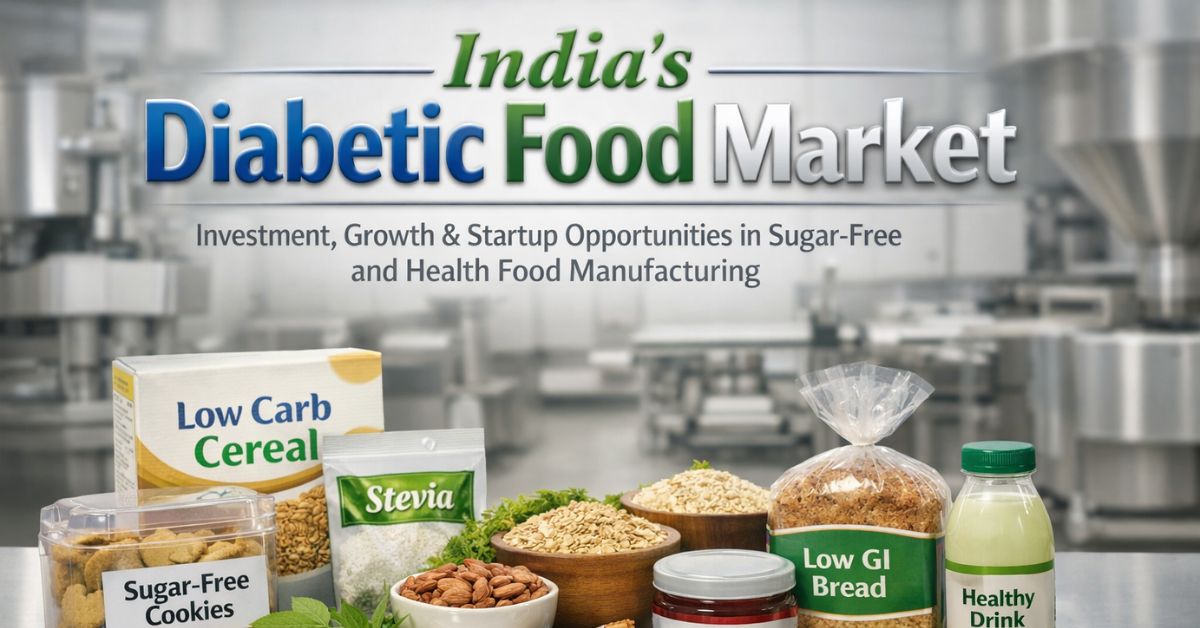
Dietary food of diabetics is no longer a small niche market. It has emerged as a rapidly expanding market in the food processing market. Biscuits that are sugar free, cereals with low glycemic index, healthy snacks, and functional drinks are now popular with diabetic patients as well as with health conscious consumers. To business owners and investors, this market will be providing long term demand, high price and consistent revenue potential.
Table of Contents
ToggleRead More: Manufacture of Food & Beverages with Project Profiles (3rd Edn.)
Why the Demand for Diabetic and Sugar-Free Foods Is Growing Rapidly
Diabetic-friendly foods are on rising demand due to the shift in lifestyles, dietary patterns, and understanding of the consumers. The urban population is increasingly aware of sugar consumption and nutrition in general. Individuals are now exploring healthier options which will assist them to control weight and normal blood sugar levels.
The other key demand driver is the movement to preventive healthcare. Before they fall sick, consumers are not waiting to switch their diet. They are instead taking the initiative of taking healthier foods in order to prevent health complications in the future. The trend has broadened the customer base of the diabetic foods to include not only the patients but also the fitness enthusiasts, working professionals and the aged.
The following are some of the key drivers of market growth:
- The increasing cases of diabetes in India.
- Raising the awareness of healthy eating habits.
- Expansion of online grocery and health food stores.
- The presence of natural sugar substitutes.
- Food processing industries: Government subsidies.
Such drivers will keep the demand of diabetic food products high over a number of years.
Read More: Diabetic Food Manufacturing Plant
Why 2026 Is the Right Time to Start This Manufacturing Business
The existing level of the diabetic food market represents a special chance of novice entrepreneurs. The demand is increasing rapidly, yet the market remains new, so there is still an opportunity to introduce new brands and manufacturers and secure a place in the market.
The benefits of launching a manufacturing facility today are that it can enable businesses to take advantage of the growing consumer demand and the competition remains controllable. Moreover, there has been an ease in financing and technical assistance due to government programs in favor of small and medium enterprises.
Business wise, this industry has a number of benefits:
- Stable demand due to medical demand.
- Better profit margins than regular food products.
- Long shelf life of the majority of products.
- Good brand building prospects.
- Local and international sales.
All this makes the diabetic food industry one of the most appealing sectors that new manufacturers would want to invest in.
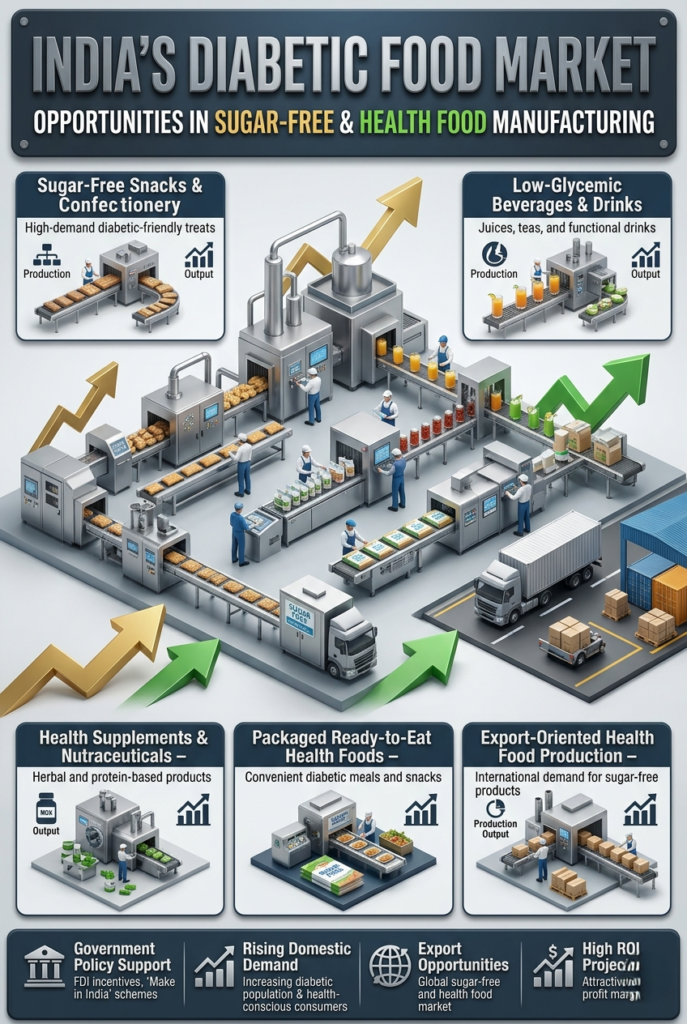
Food Industry product Diabetic Foods profitable opportunities.
The diabetic food industry has a number of product categories that have high profitability and start up costs that can be easily handled. The selection of the appropriate product is dependent on investment capability, production prowess, and target market.
Sugar-free biscuit production is one of the most favored entry modes into this industry. These products are well accepted by the consumers and need production technology which is already present in the market. Through the right branding and quality control a small manufacturing unit can soon amass a loyal following of customers.
A second prospective opportunity is the manufacture of natural sweeteners. With consumers decreasing their level of sugar intake, the market demand of other alternatives like stevia and erythritol is on the rise. These products may be sold directly to the consumer or to other food producers generating several sources of revenue.
Other lucrative product alternatives are:
- Multigrain porridge mixes and low-GI breakfast cereals.
- Roasted healthy foods like makhana and chana.
- Protein bars and high-fiber snack foods.
- Sugar-free chocolate and confectionaries.
- Nutrition drinks and beverage mixes (Diabetic).
All these products are in high demand in the market and can be used to earn a continuous income.
Read More: Project Reports & Profiles
Profitability and Investment in this Industry.
The financial performance of the diabetic food manufacturing industry is one of the key factors that have enticed entrepreneurs into the industry. The industry has good pricing power and profit margin as compared to the traditional packaged food businesses.
The majority of manufacturing plants in this industry demand moderate startup capital and can attain profitability in a viable time. Precisely, the cost will be determined by the level of automation, level of production and type of product.
The common financial assumptions of a small to medium manufacturing unit are:
- Investment scope: between 80 lakh and 4 crore rupees.
- Profit margin: 15-25 percent is average.
- Payback period: 3-5 years on average.
- Demand growth rate: at approximately 12 to 15 percent per annum.
The numbers also render the industry profitable to both new and experienced investors.
Read More: Startup Selector
Government Support and Subsidies for Food Manufacturing Businesses
The Indian government is also promoting investment in food processing and health related industries. Entrepreneurs can use a number of schemes to minimise the cost of starting up and enhancing viability of business.
These programs offer financial aid, technical support and marketing advice to small businesses. They are also intended to encourage entrepreneurship and provide job opportunities in the country.
The most crucial government schemes are:
- The PM Formalisation of Micro Food Processing Enterprises (PM FME) Scheme.
- Food Processing Production Linked Incentive (PLI) Scheme.
- MUDRA Loan Scheme to small businesses.
- State-level MSME subsidy programs.
Using the schemes can help to cut down the cost of initiating a manufacturing unit by a big margin.
Exporting opportunities of Diabetic Food manufacturers.
The world is moving towards healthy and diabetic friendly food products. The major export markets are countries where the Indian population is high, including the United States, the United Kingdom, Canada, and the United Arab Emirates.
The customers in these areas usually want known foodstuff that satisfies the cultural and health needs. The competitive advantage of Indian manufacturers is due to lower costs of production and availability of high quality raw materials.
Even exporting a part of the production may result in a number of benefits:
- Higher revenue potential
- International access in the markets.
- Increased brand reputation
- Less reliance on the domestic demand.
Companies that prioritize on quality and appropriate packaging can easily penetrate the export market in a couple of years.
About Niir Project Consultancy Services (NPCS)
Niir Project Consultancy Services popularly referred to as NPCS is a major industrial consultancy firm in India. The firm also offers technical advice to those entrepreneurs who are interested in initiating manufacturing firms in different sectors, such as food processing, chemicals, pharmaceuticals and consumer products.
Through the provision of technical and financial details, NPCS assists investors to transform business ideas into viable and lucrative projects. Their knowledge enables entrepreneurs to know the demand of the market, production needs, and dangers of investment, and thus they can decide to start a business.
Some of the most important services offered by NPCS are:
- Preparation of Detailed Project Reports (DPR)
- Market research and market feasibility.
- Selection of machinery and equipment.
- Planning and cost estimation of production.
- Financial projections and profitability analysis.
Through the professional advice of the highly trained consultants, business people can now venture into business with more confidence and clarity.
Conclusion
The diabetic food manufacturing business within India is one of the most promising businesses presently. Increased health awareness, diabetes number growth, and effective government assistance have established a positive environment to new manufacturing enterprises. Current investors in this industry will be able to enjoy a long demand and predictable growth in revenue.
In this business, one needs to plan well, produce quality and have a clear picture of the trends in the market. Companies that prioritize customer confidence, reliability of products and compliance with regulations will most probably experience sustainable growth and profitability. A business of manufacturing diabetic food can be a powerful and good investment with proper planning and expert advice.
Frequently Asked Questions (FAQ)
How much does it take to start a business of manufacturing diabetic food?
Minimum investment normally begins at about 80 lakh rupees and may reach 4 crore rupees, according to the size of the manufacturing unit.
Is the diabetic food business the right one to start with?
Yes, new entrepreneurs can venture in this industry due to the fact that most of the products in this market have simple production processes and high demand in the market.
Which is the most demanded product of the diabetic food market?
Healthy snacks, natural sweeteners, and sugar-free biscuits are also some of the most demanded and consumed products at the moment.
Will I require an FSSAI license in order to commence this business?
Yes, the FSSAI license is required to all food manufacturing companies in India.
What is the time to break even in this business?
The period of profitability of most businesses within this sector takes between three and five years based on the level of sales and the level of efficiency in operations.


