


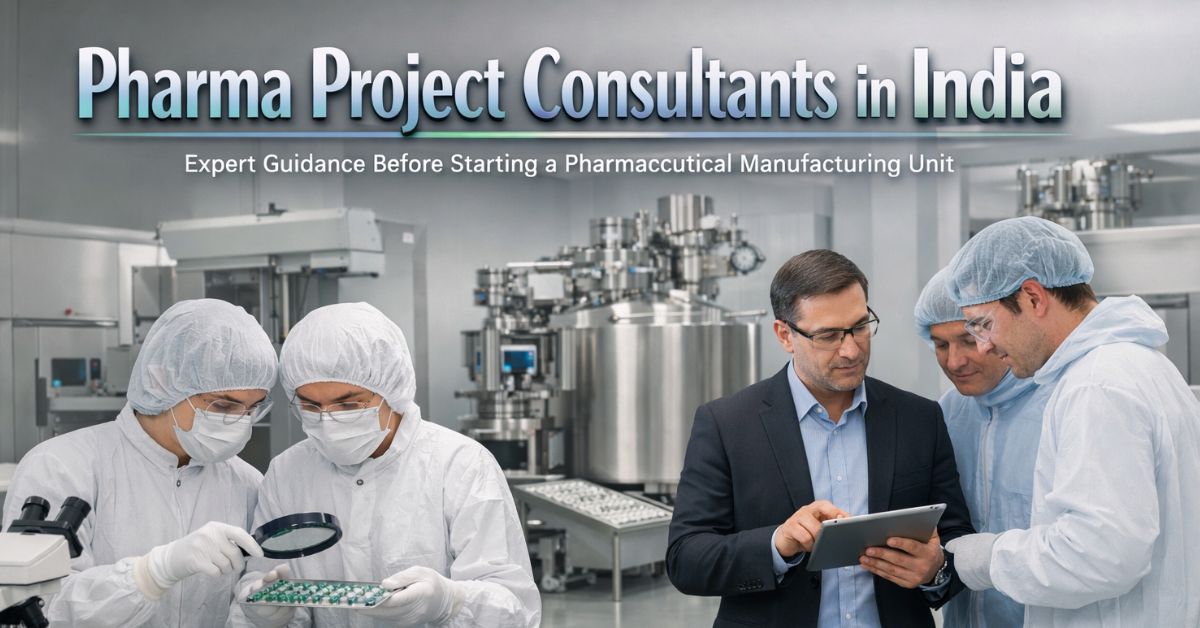
Pharma Project Consultants in India
The pharmaceutical industry in India has emerged as one of the fastest developing manufacturing industries in the globe. Since generic medicines up to nutraceutical products, the need to manufacture pharmaceuticals has been on the increase each year. This expansion has prompted numerous business people to venture in the industry. But the idea of opening a pharmaceutical manufacturing unit is not an easy venture. It involves technical planning, regulatory compliance, and good financial management.
Due to these complexities, professional consultancy has emerged to be one of the success factors of new businesses. Some of these organizations include NIIR Project Consultancy Services, which assist entrepreneurs in planning, designing, as well as starting pharmaceutical units with proper documentation and compliance assistance. Their systematic direction minimizes risk and makes the projects proceed without any hitches.
Table of Contents
ToggleGet Detailed Insights from This Book: India Active Pharmaceutical Ingredient (API) Market
Why Many Pharma Startups Struggle in the Beginning
The majority of the first-time entrepreneurs hold the view that it will be easy to open a manufacturing unit once there is funding to finance it. As a matter of fact, pharmaceutical companies are highly regulated and undergo several checks and balances before they can start manufacturing. Approvals can be slowed down even by minor mistakes in documentation or design of the facilities.
The key issues that new pharma businesses have to encounter are:
- Unfinished or inadequately prepared project reports.
- Incorrect financial planning
- Failure to get regulatory approvals on time.
- Lack of technical knowledge about GMP standards
- Problem with getting bank funding.
These issues tend to cause project delays of a number of months, escalating costs and decreasing profitability. To prevent such problems, it is better to hire an experienced consultant that will make sure that every requirement is solved in the beginning.
The Growing Opportunity in the Pharmaceutical Industry
The Indian pharmaceutical market is still growing owing to the increasing healthcare need, population growth and the growing awareness regarding medical care. The hospitals, clinics, and pharmacies have a constant need of the medicines, which makes the demand of the manufacturers stable.
This growth is being fuelled by a number of factors:
- Growing rate of obesity and chronic diseases like diabetes and hypertension.
- Expansion of health insurance coverage
- Investment of government in healthcare infrastructure.
- Increasing exportation of generic medicines.
These tendencies suggest that the pharmaceutical production industry will be profitable over the next several years. When entrepreneurship is done properly, entrepreneurs can develop long-term businesses by venturing into the industry.
Get Detailed Project Report (DPR): Pharmaceutical Drugs & Bulk Drug Intermediates Guide
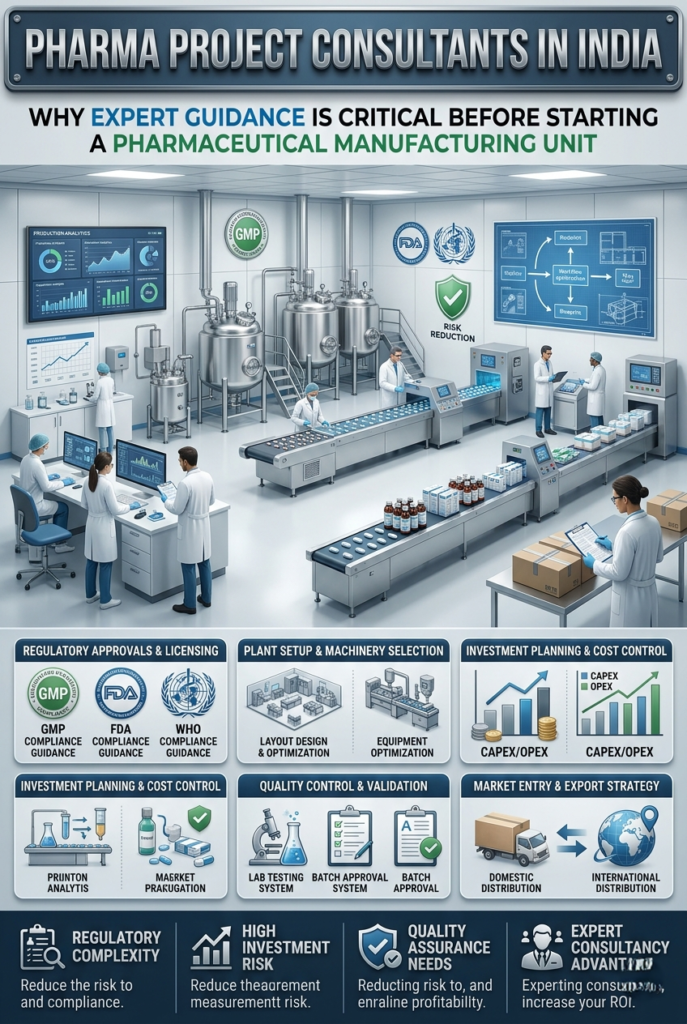
Investment Required to Start a Pharmaceutical Manufacturing Unit
The expenses of establishing a pharmaceutical production facility will be based on the nature of products and production capacity. Small enterprises can be launched on an intermediate investment, whereas bigger plants demand considerable funds.
Common investment values are:
- Micro nutraceutical or herbal unit: 50 lakh to 80 lakh INR.
- Small manufacturing unit of tablets/capsules: 5 crore to 3.5 crore INR.
- WHO-GMP certified formulation plant: 8 crore to 25 crore INR.
- API production plant: 15 crore INR and higher.
These estimates incorporate land, construction of buildings, equipment, and laboratory equipment as well as working capital. Financial planning should be accurate since unforeseen costs may interfere with the operations in the early phases of operations.
Key Steps to Start a Pharmaceutical Manufacturing Business
The establishment of a pharmaceutical unit has a number of steps. All phases must be thoroughly planned and coordinated among various departments.
1. Planning Business and product selection.
The initial stage is to determine the kind of product you wish to produce. This choice dictates the level of investment, choice of machinery, and authorization.
The typical product lines are:
- Tablets and capsules
- Liquid medicines and syrups.
- Nutraceutical supplements
- Veterinary medicines
- Ayurvedic products
The selection of the appropriate product group is important as it influences the profitability and the market demand.
2. Land and Infrastructure establishment
Manufacturing of pharmaceuticals needs a plant with high standards of hygiene and safety. The facility has to have separate production, storage, quality testing, and administration spaces.
Typical space requirements:
- Small unit: 3,000 to 5,000 square feet
- Medium unit: 8,000 to 15,000 square feet
- Large unit: 15,000 square feet or more
Preferably industrial locations are chosen as they are characterized by availability of amenities like water, power and transport.
3. installation of machinery and equipment
Machines are very important in maintaining uniformity in the quality of the products. The type of pharmaceutical products manufactured determines the choice of equipment.
A tablet manufacturing unit requires:
- Tablet compression machine
- Granulation equipment
- Coating machine
- Blister packaging machine
- Water purification system
- Laboratory testing equipment
Machinery should be installed and calibrated properly to comply with the regulations.
Regulatory Approvals Required for Pharma Manufacturing
Before pharmaceutical companies can commence production, they are required to come up with several licenses. The approvals verify that the facility is adhering to quality and safety standards.
Among the important licensing decisions are:
- Drug Manufacturing License
- GMP (Good Manufacturing Practice) certification.
- Pollution Control Board permit.
- Factory license
- Fire safety certificate
- GST registration
These approvals may take a number of months. Professional consultants assists in the preparation of documents and organize inspections, which minimizes delays.
Government Support and Financial Assistance
India has a number of schemes that are offered by the Government to help the pharmaceutical entrepreneurs. These programs assist in lowering the start up expenses and enhance the accessibility to finance.
Noteworthy government plans are:
- PLI Scheme: Incentive schemes on growth of production.
- PMEGP Scheme: Provides subsidies to small manufacturing units.
- CGTMSE Scheme: offering collateral-free loans to MSMEs.
- MUDRA Loan Scheme: Assists micro enterprises.
The choice of the appropriate scheme will depend on the project size and the kind of products to be produced. The consultants assist entrepreneurs to comprehend the eligibility requirements and make applications.
Role of NIIR Project Consultancy Services (NPCS) in Pharma Projects
NIIR Project Consultancy Services is a well-known consultancy firm in India with a lot of knowledge in the planning of industrial projects. The organization has assisted thousands of entrepreneurs to start manufacturing firms in various industries, pharmaceuticals included.
The types of services they provide are usually:
- Detailed Project Reports (DPR)
- Market feasibility studies
- Plant layout design
- Planning and costing of machinery.
- Regulatory documentation support
- Financial projections
Their reports are in line with industry standards and therefore, they are usually accepted by banks and other financial institutions when evaluating a loan.
Profit Potential in Pharmaceutical Manufacturing
An efficient operation of a pharmaceutical manufacturing business can bring some stability in the income. The profitability is dependent on the capacity to produce, quality of the product and market demand.
An average small pharmaceutical unit can have the following financial performance:
- Monthly operating expense: 12 lakh to 20 lakh INR.
- Full capacity monthly revenue: 38 lakh to 55 lakh INR.
- Net profit margin: 14-22 percent.
- Payback: 4-6 years.
Contract manufacturing is a commonplace start-up in many businesses as they seek to establish a stable cash flow before they release their own brand products.
Common Mistakes to Avoid When Starting a Pharma Business
The manufacture of pharmaceuticals is a complicated process that new entrepreneurs may not take seriously. The time can be saved as well as money by avoiding typical mistakes.
There are common mistakes such as:
- Underestimating startup costs
- Ignoring regulatory requirements
- Selecting inappropriate product category.
- Poor financial planning
- Delaying professional consultation
These are the lessons which aid entrepreneurs to develop better businesses and ensure that they are in line with the industry standards.
Conclusion
The pharmaceutical manufacturing business provides enormous business expansion to entrepreneurs, who are not afraid to invest in meticulous planning and adherence. Medicine demand is on the increase and government subsidy system eases the entry of new production plants. Nevertheless, the industry is a matter of preparation, technical skills, and financial discipline to succeed.
The collaboration of trained consultants like NIIR Project Consultancy Services will give an easy guide on how to go about the idea to production. Their knowledge assists business people minimize risk, obtain funding and develop successful pharmaceutical enterprises.
To anyone intending to venture into the pharmaceutical industry, coming up with professionally designed project plan is the best place to start.
Frequently Asked Questions (FAQs)
- How do many investments are needed to establish a pharmaceutical manufacturing unit?
Cost of the investment usually varies between 50 lakh to 3.5 crore INR in small-scale units depending on the type of product and output.
- What is the duration of the pharma manufacturing business start up?
Average pharmaceutical projects take 9-18 months to be constructed and get approvals.
- Does a consultant need to commence a pharmaceutical business?
A consultant is not a legal necessity, but professional advice helps a lot to avoid delays and increases the chances of success in the approval.
- Does a non-pharmacist have an opportunity to found a pharmaceutical manufacturing company?
Yes, the ownership does not need pharmaceutical qualifications. Nevertheless, laws demand competent personnel to oversee production and quality management.
- What are the services offered by NPCS?
NIIR Project Consultancy Services offer project reports, feasibility study, regulatory advice, and support in the implementation of manufacturing businesses.


