


Plastic Parks Scheme India
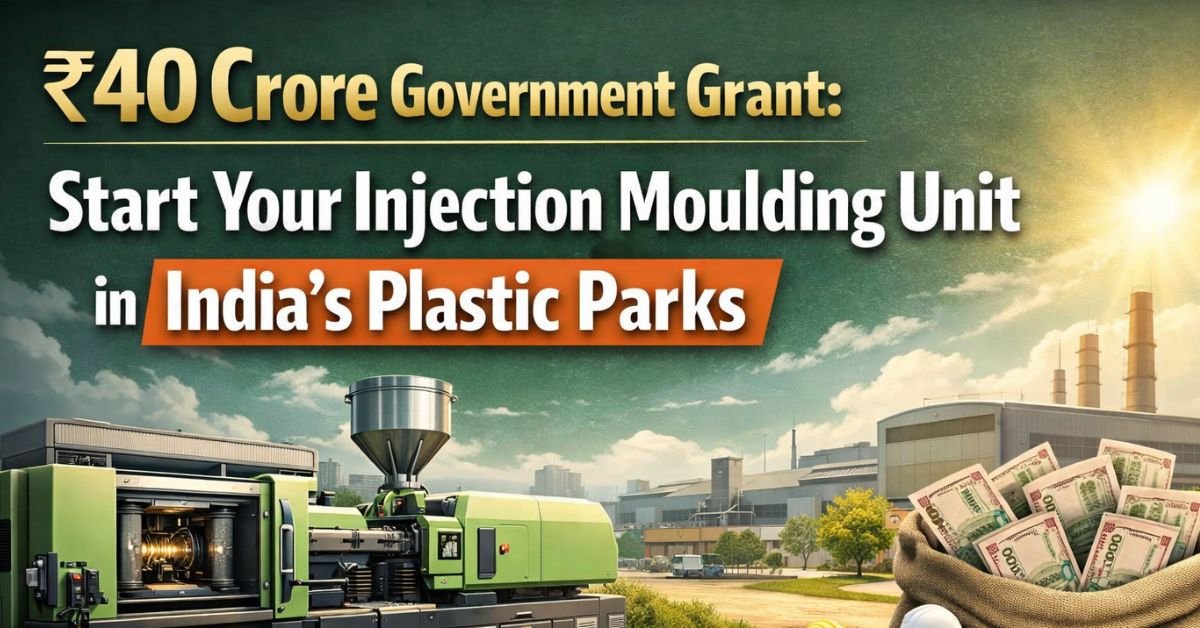
The plastics industry of India is changing at a fast pace and providing unprecedented opportunities for entrepreneurs. The Plastic Parks Scheme run by the Ministry of Chemicals & Fertilizers supports government-backed infrastructure, common facilities, and grant support up to 40 crore for every park, and brings down the entry barrier for injection moulding MSMEs to a great extent. For startups, this initiative means a combination of lower risk of investment, access to raw materials and proximity to logistic centres, leading to a fertile environment for growth.(Plastic Parks Scheme India)
Table of Contents
ToggleRead More: Modern Technology of Plastic Processing Industries (2nd Edition)
Understanding the Plastic Parks Scheme
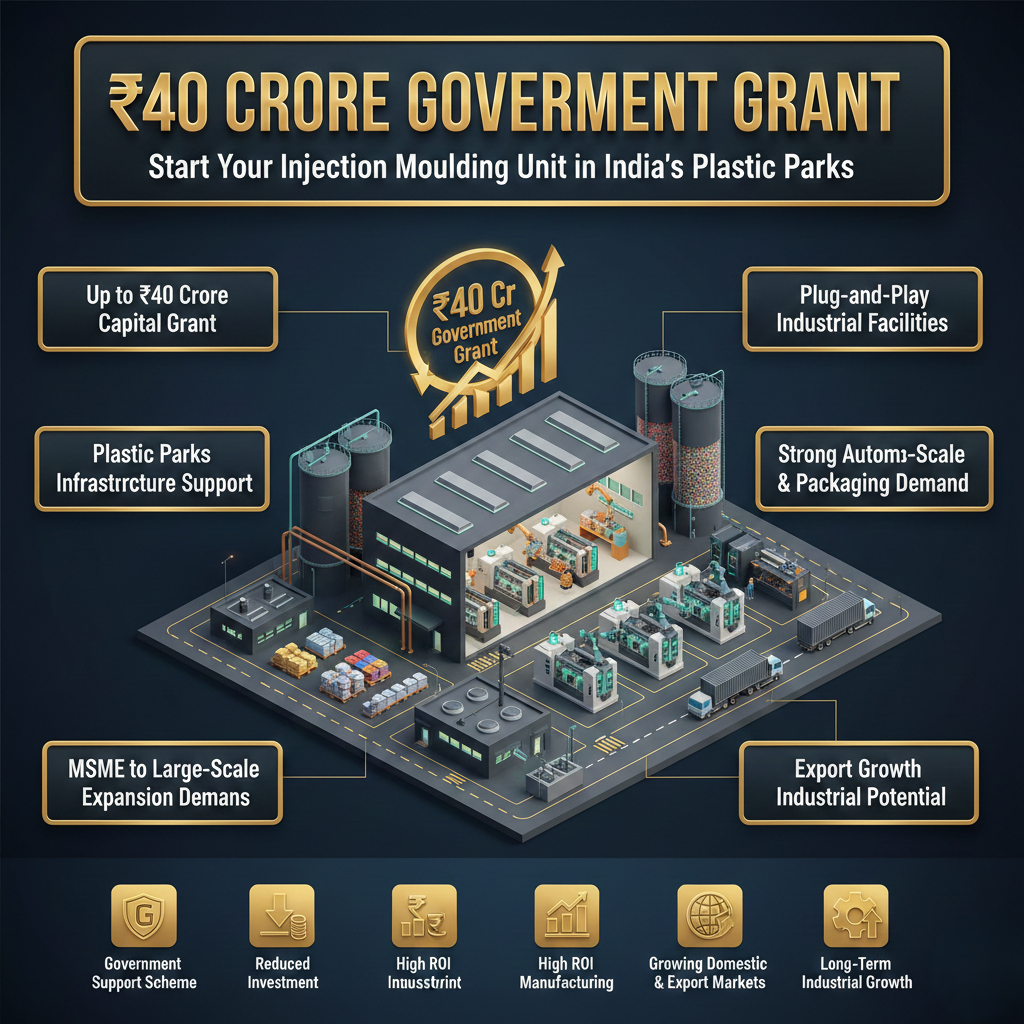
The focus of the Plastic Parks initiative is to bring the fragmented downstream plastics industry in India together as organized clusters. The scheme provides:
- Developed land plots with plug and play utilities such as power, water and effluent treatment.
- Shared facilities such as tool rooms, testing labs, packaging units and training centers.
- Government co-investment of 50% of the cost of the projects (up to Rs 40 crore) reducing initial capital expenditure on projects
Ten already approved plastic parks in states like Madhya Pradesh, Odisha, Jharkhand, Tamil Nadu, Uttarakhand, Chhattisgarh, Assam, Uttar Pradesh and Karnataka. For MSMEs, these parks provide an immediate benefit in terms of mitigating the risks of infrastructure at the early stage, and ensuring a reliable source of polymer feedstocks.(Plastic Parks Scheme India)
Why Injection Moulding is the Wise Choice
Injection moulding has command over 35% of India’s plastics processing capacity and is the most versatile and scalable production method. Modern machines that have high cavitation, all-electric clamping systems are reducing energy consumption by 15 – 20% and decreasing production cycles, which is ideal for high-volume production.(Plastic Parks Scheme India)
The market outlook is positive. The Indian injection moulded plastics market is estimated at USD 27.84 billion in year 2024 and expected to evolve at a CAGR rate of 5.5% from 2020 to 2030 due to urbanization, e-commerce, increasing disposable incomes and government initiatives such as Make in India. The demand applies across a number of key sectors:
- Electronics and electrical 29% revenue
- Packaging, automotive and household goods: Over 60% applications.
- Medical devices and pharmaceuticals: Increasing demand for syringes, vials and caps.
High performance materials e.g. HDPE, PP and glass fibre reinforced PP in growing demand for applications from EV components to rigid foods containers (trends towards lightweight, durable and recyclable products).(Plastic Parks Scheme India)
Read More: Business Plans / Project Profiles
India Polymer Supply Gap: Opportunity for MSMEs
Despite growth, the import of polymers in India is millions of tonnes per year. Domestic production is below production targets by about 3.8 million tonnes per annum, causing supply gaps for LLDPE, HDPE, LDPE, PP, and PVC. Key deficits include:
- LLDPE + HDPE: 2.07 million tonnes
- PP: 867,000 tonnes
- PVC: 645,000 tonnes
- LDPE: 205,700 tonnes
This gap permits domestic injection moulding units to gain market share, negotiate long-term offtake agreements and to mitigate risks linked to imports and price volatility in the international market.(Plastic Parks Scheme India)
Lessons Learned from the Rajkot Plastic Cluster
The Rajkot plastic industries cluster, administered under the GIDC estates, is a good example of the power of micro-scale industrial ecosystems. About 300 small units produce PVC pipes, household articles, packaging materials and injection moulded articles.(Plastic Parks Scheme India)
Some key insights:
- A total of 55 units make household moulded products for 38,900/year.
- Average turnover per unit is between 2-5 crore.
- Cluster has employed about 10,000 people in the process.
While these MSMEs are benefiting from co-location and access to suppliers, there are many that do not have access to modern machinery, energy-efficient tools and design support. Plastic parks can help in upgrading these clusters with training centers, testing labs and tool rooms and make them globally competitive.(Plastic Parks Scheme India)
Financial Feasibility of MSEs
Launching a medium scale injection moulding unit involves investment in machines, mould making, granule storage and utilities. A 20-tonne per month unit costs around Rs15-20 crore depending on the level of automation. By creating within a park of plastic:
- Entrepreneur only pays for leased plots and building infrastructure.
- Government grants – 50% of the cost of developing the park
- Payback periods less than five years are possible for medium scale projects.
This combination of lower capital expenditure and plug-and-play utilities make injection moulding a very attractive investment.(Plastic Parks Scheme India)
Business Models and Revenue Stream
MSMEs in plastic parks can go in more ways:
- Contract manufacturing: Providing Electronics, Automotive, and FMCG brands.
- Private label production: Household items such as storage items, furniture, buckets, etc.
- Automotive and EV components: Lightweight and high-performance components for electric two-wheelers.
- Medicine and pharmaceutical equipment: Injection moulded syringes, vials, tamperproof caps.
Entrepreneurs who provide quality and consistent goods are able to make long-term contracts with clients, both in the country and internationally.(Plastic Parks Scheme India)
Mitigating Risks
Challenges such as volatility of raw materials, regulatory changes and obsolescence of technology may affect profit. Strategies include:
- Signing long-term supply contracts with domestic producers of polymer
- Feedstock Exploration and Chemical Recycling Solutions: –
- Upgrading to energy-efficient all-electric injection moulding machines.
- Employing a shared park facility for tool maintenance, design enhancement, and environmental compliance
NPCS: A Partner for Success
Niir Project Consultancy Services (NPCS) assists entrepreneurs to navigate through plastic park opportunities. Their Detailed Techno-Economic Feasibility Reports (DPRs) include:
- Step by step manufacturing process flows.
- Young (2003) defines this as “the study of market attitudes, buying and selling, including demand and supply.”
- Machinery specifications and sourcing of raw materials
- The information that is used in financial projections, profitability evaluation, and funding support is as follow
NPCS ensures that MSMEs make well-informed investment decisions while availing all benefits and facilities of plastic parks.(Plastic Parks Scheme India)
Conclusion
The Plastic Parks program of India provides injection-moulding startups with government assistance together with access to modern facilities and operational benefits from their business network. MSMEs can build successful businesses through their domestic market expansion and ongoing plastic material shortages and increasing export capabilities. Entrepreneurs use plastic parks to decrease business risks, speed up their company development, and establish a solid presence in India’s fast-growing plastics market.(Plastic Parks Scheme India)
Frequently Asked Questions (FAQ)
What are the incentives for Plastic Parks scheme?
Government has been paying up to 50% of the cost of infrastructure in park (max. cost: Rs 40 crore). MSMEs have access to ready plots, shared facilities and training centers which mitigate the risk of upfront investment.
Which polymers have the widest demand-supply gaps?
LLDPE and HDPE (more than 2 million tonnes), PP (867,000 tonnes), PVC (645,000 tonnes) and LDPE (205,700 tonnes) are the biggest domestic shortages.
Why focus on injection moulding?
It comprises 35.45% of the processing capacity and caters to a wide variety of sectors such as packaging, electronics, automotive and medical devices. Modern machines lower energy costs and cycle times while providing for high volume production.
How can volatility of raw materials be controlled?
Long-term domestic supply contracts, recycled feedstocks and circular economy initiatives help reduce price and supply risks.
How does NPCS help entrepreneurs?
NPCS prepares DPR’s with information related to process flows, market information, capacity planning, machinery selection, raw material sourcing, and financial projections for feasibility and financing purposes.(Plastic Parks Scheme India)


