



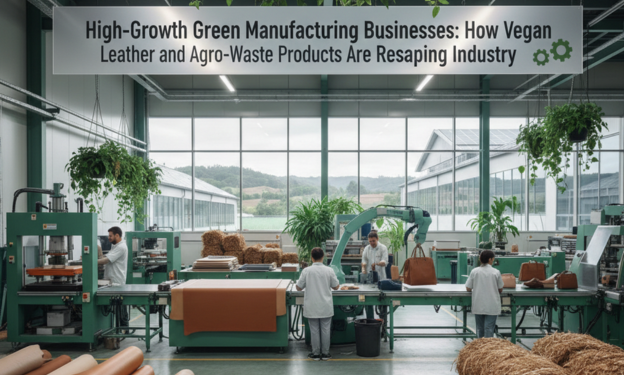
Green Manufacturing Businesses: The manufacturing environment in India is gradually but conclusively changing. The increasing price of raw materials, climatic and regulations associated with climate, as well as shifting consumer demands, is compelling business owners to seek alternative inputs other than petrochemical and forest-based products. Agricultural by-products that were previously viewed as disposal issues are currently supplying whole industrial chains of values. Vegan leather, furniture made of rice husks, and panels made of agricultural waste that are based on each other in the field of chemistry, materials science, and scalable manufacturing logic are among the most commercially viable segments.
This article discusses these three product categories as stand respectively business opportunities as prepared through the factory floor but not a policy brochure. It is still about demand realism, processing complexity, cost behaviour, long-term scalability exactly the factors that investors and first-generation manufacturers must be aware of.
Vegan Leather: From Ethical Alternative to Industrial Material

Product Overview and Applications
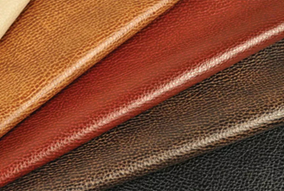
Vegan leather will no longer be restricted to accessories. Industrial-wise it is a composite substance which usually corresponds to polyurethane (PU) bio-based polymers or plant-based fibres designed to replicate the tensile strength of leather, surface texture, and abrasion resistance. It is applied today in the automotive upholstery, footwear, luggage, furniture and more often in interior architectural panels.
The most rapid adoption is in automotive OEM supply chain and in mid-range furniture manufacturers, where consistency, thickness control, and colour stability are more important than the natural variation of the grain pattern.
Manufacturing and Production Insights
The base technology is what dictates production. PU based vegan leather consists of laying substrate fabrics (polyester, microfiber, or cotton blends) between layers of polymer, embossing them and letting them cure. Bio-based versions use pineapple fibre, cactus pulp or polymers made out of corn, but remain based on controlled chemical bonding and calendaring.
The intensity of capital is average. A middle-sized production facility will need coating and drying tunnels, embossing rollers and inspection systems. Recovery of waste and solvents are of paramount importance to the compliance of regulations.
Read Also: 10 New Manufacturing Business Opportunities in India for Startups and MSMEs
Raw Materials and Processing Considerations
Polymer resins, fabric backings, plasticizers, pigments as well as release papers are key inputs. Bio-based lines incorporate such pre-processing stages as fibre extraction and slurry formulation. The predictability of the margins is often established by the sourcing stability of raw materials rather than by the market prices.
Demand Drivers and End-Use Industries
Global brands that have decided to adopt animal-free supply chains are creating a long-term demand. At home, suppliers of organized furniture and auto parts are incorporating vegan leather to achieve ESG standards. MSMEs which are export-oriented have the advantage of a favorable interest of the buyer in low-carbon materials.
Market Outlook and Profitability
The Indian vegan leather is projected to grow at an average of 8-10 percent per year with the export-related companies registering EBITDA margins of 18-25 percent after the volumes stabilize. The second coating line gives sharp improvement in scalability as the fixed costs level off.
Furniture from Rice Husk: Turning Crop Residue into Structural Value


Product Overview and Applications
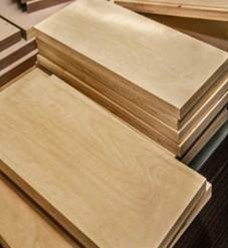
Rice husk furniture is not rustic chic. Bonds made of husks bonded with resins create boards that are used in modular furniture, cabinetry, partitions and institutional seating. These products are competing directly with the particle board and low-density plywood.
Their greatest strength is moisture resistance and a lack of immunity to termites- two persistent issues of the traditional wood furniture in the damp Indian climate.
Read our book
Manufacturing and Production Insights
The manufacturing process entails cleaning of husks, grinding, resin mixing, hot press and finishing. Furniture units may either backward integrate with board production, or may obtain husk boards out of composite manufacturers.
Board density and load-bearing capacity are based on the pressing technology and optimization of resin. The majority of plants use batch presses, but continuous presses are better in terms of scale.
Raw Materials and Processing
The supply of rice husk is also geographically high; particularly in Punjab, Haryana, West Bengal and Andhra Pradesh. The problem is logistics and homogeneous sizing of particles. Phenol formaldehyde or isocyanate resins are in common use with more trials on bio-resins.
Demand Drivers and End-Use Industries
Key drivers of demand include government housing programs, institutional consumers and econometric modular furniture branding. The benefits of fire resistance and lower formaldehyde emission rating enhance acceptability in the urban projects.
Market Size and Growth
The furniture and panel segment that has been based on husks is increasing in the range of 6-7 percent every year, majorly as a replacement. The profit margins are in the range of 12-18 which is better when there is an integration of assembly of furniture and manufacture of boards.
Industry Support Perspective
At this point, it will be interesting to mention the contribution of structured project planning in such undertakings. Niir Project Consultancy Services (NPCS) develops Market Survey cum Detailed Techno-Economic Feasibility Reports which entail manufacturing procedures, sourcing raw materials, layout plan of the plant, equipment choice, and financial estimates. These reports assist the entrepreneur to give a non bias judgement of the viability of establishing new industries or increasing the size of available ones, particularly on the emergent sectors where technical and market factors have to be brought into precise equilibrium.
Panel Boards from Agricultural Waste: The MDF Alternative
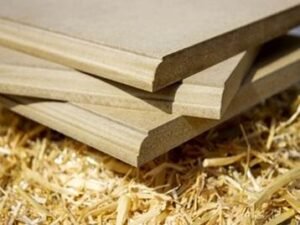
Product Overview
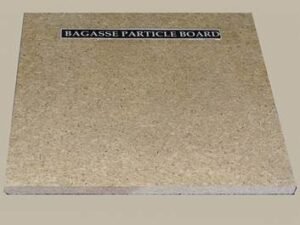
These boards are made using bagasse, wheat straw, coconut coir, or mixed agri-residue to manufacture MDF like panels. They can be used in interior furniture, doors, wall panels and packaging structures.
In contrast to the traditional MDF, these boards will minimize the use of forest timber and will be less weighty with a similar machinability.
Manufacturing Insights
The procedure is similar to MDF production: the raw material is fiberized, blending of resin is made, hot press, sanding and trimming. The technical issue is the capability to control fibre variability and moisture content in various crop residues.
Plants will have high initial investments but will be able to enjoy large scale market when standardized grades have been met.
Raw Materials and Processing
The sugar mill bagasse is the most consistent input followed by wheat straw. Storage planning is needed due to the seasonal availability. Resin systems have to be adjusted to the individual fibre.
Demand and Market Outlook
Uptake is being pushed by interior contractors and prefab housing firms. The segment is expanding by 9 percent per annum, and it has a high potential for import substitution. Mature plants record an EBITDA of 20% + since efficiencies are volume based.
NPCS prepares Market Survey cum Detailed Techno-Economic Feasibility Reports
Their reports are manufacturing process, raw material, plant layout and financials. NPCS assists business people to determine whether to establish new industries or businesses.
Market Enablers and Policy Environment
The Ministry of Micro, Small and Medium Enterprises aids manufacturing enterprises based on agriculture by providing cluster development and technology up gradation projects, which can be found on its official portal https://msme.gov.in.. Entrepreneurs that are in line with the utilization of waste are usually assisted in quicker clearances and financing schemes.
Indian Industrial Leaders and Practical Lessons
Various Indian entrepreneurs have been able to create scalable businesses out of sustainable materials.
Another interesting example is Ecosoul Home which was encouraged by Rachit Agarwal to be turned into a globally exported lifestyle item out of agro based materials. They have succeeded because of their early use of eco-material, export and good design integration.
On the same note, Greenpanel Industries under Saurabh Mittal showed how other fibre boards can grow profitably when supported by technology and distribution power. The moral of the story to the new entrepreneurs is quite simple: sustainability is best suited with industrial discipline and access to the market.
Scalability and Investor Perspective For Green Manufacturing Businesses
In terms of an investor, vegan leather has better asset turns which are faster, whereas agri-waste boards have the capacity to utilize the existing assets in the long run. Rice husk furniture is located in between, it is not as capital heavy but it requires the strength of distribution.
Read Also: Green Manufacturing Certification Guide: Process, Requirements, and Business Benefits
Frequently Asked Questions
Is there a threat of raw material in the agri-waste industries?
There is seasonality, which is treated successfully through diversified sourcing and storage planning.
What is the most suitable segment of first-generation entrepreneur?
Furniture made of rice husks is less entry-barred and can access the market quicker.
Are such products export-viable?
The acceptance of vegan leather and panel boards is high as far as export is concerned, particularly in ESG-oriented markets.
How long before break-even?
3-5 years, normally, based on the level of capacity used and funding arrangement.
Conclusion: Production Where the Rubbish Meets the Demand.
These 3 product lines are indicative of a more fundamental change in the Indian manufacturing towards extraction-based growth to material intelligence. This is where business people can create their own strong business out of knowing process control, supply chain discipline, and positioning in the market. The opportunity is not a speculative one but structural. The earliest who comes with the seriousness of operations are the ones that are capable of defining the next decade of sustainable industrial growth.


