





Materials Processing Business India
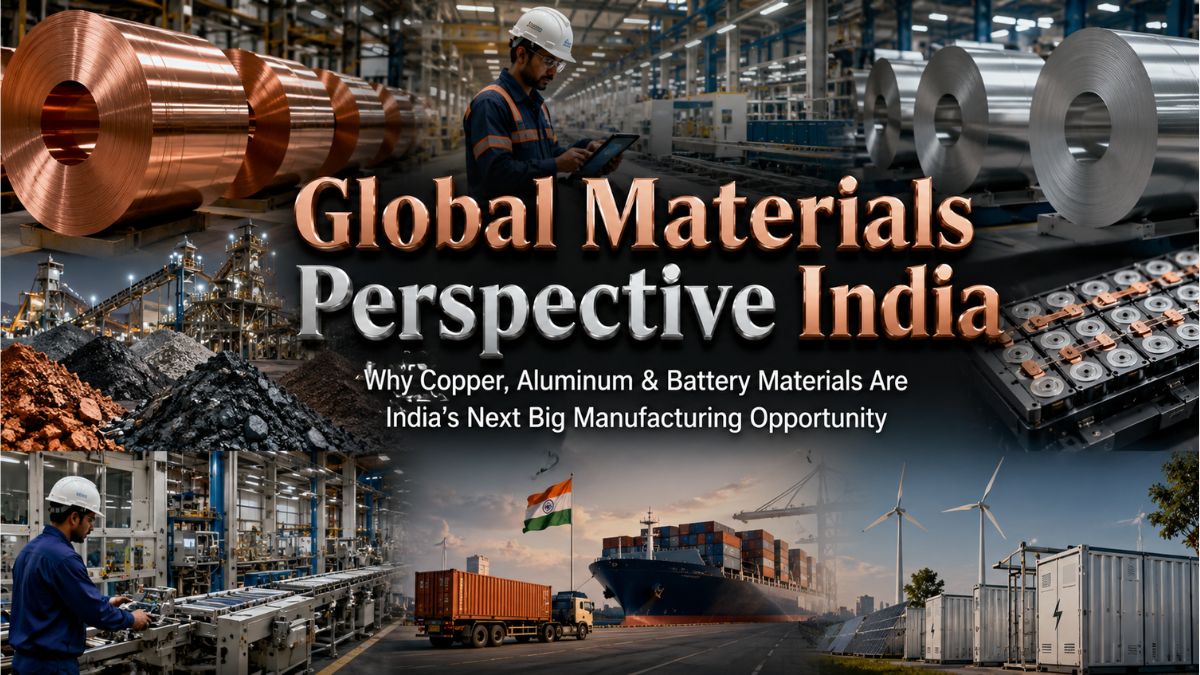
India is about to embark on a new industrial growth cycle. Industrial transition to EVs, renewables, defense industries, and smart infrastructure is driving a global surge in demand for copper, aluminum, battery materials, and specialty alloys. This global shift is bringing in significant opportunities for Indian MSMEs and manufacturing startups.
This is no more an industrial trend for the Indian entrepreneurs. It’s an opportunity to create businesses that can grow in industries that are projected to continue being viable for the next 10 years. While the world’s major companies seek to diversify their concentrated supply chains, India is gaining ground as a manufacturing hub for processed metals, alloys and strategic materials.
The biggest change is occurring in the profit pools. Low margin commodity driven industries are slowly giving way to valuable materials associated with future technologies. Today, copper, aluminum, battery chemicals, and rare earth elements play critical roles in the manufacturing of EVs, renewable energy systems and power infrastructure, as well as current electronics.
Table of Contents
ToggleWhy India is in a Strong Position
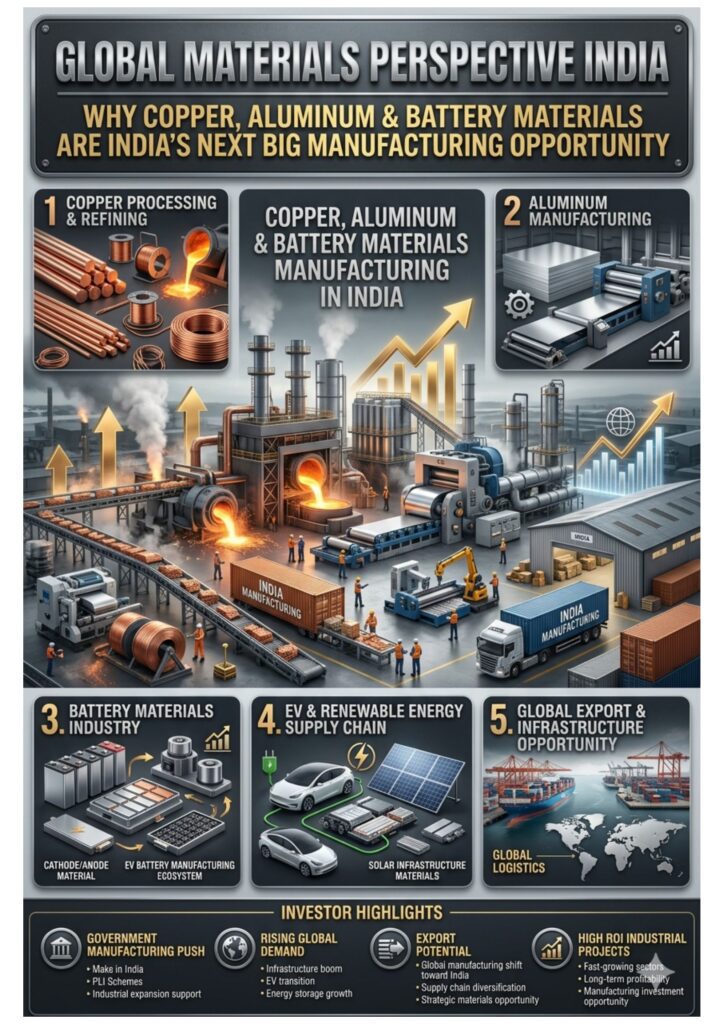
India gets numerous benefits simultaneously. The government is proactively encouraging home manufacturing with industrial policies and financial incentives. The Production Linked Incentive (PLI) scheme, make in India, and National Critical Mineral Mission are all promoting the development of domestic processing facilities.
This sector is attractive for some major reasons such as:
- Rising global demand for critical materials
- Increasing focus on import substitution
- Business friendly policies and regulations
- The growth of the EV and renewable energy markets
- Global buyers who want to purchase goods from a source other than China
India continues to import significant amounts of refined metals, battery chemicals and specialty materials. As each item is replaced with something locally produced, a new enterprise will arise for the local manufacturers.
Copper Processing: One of the Best MSME Opportunities
Copper’s demand is rising due to its key role in virtually all modern industries of infrastructure. Copper is used in electric vehicles, in charging stations, in solar plants, in data centres, in industrial automation systems, in transmission networks and more.
Thus, copper processing is one of the most viable business sectors for start-ups in India.
Popular Copper Business Models
Copper Wire Rod Drawing
This is one of the most convenient ways for MSME entrepreneurs to enter.
Key Advantages:
- Strong domestic demand
- Moderate investment requirement
- Easy scalability
- Long-term industrial buyers
Main Buyers:
- Cable manufacturers
- Electrical utilities
- EPC companies
- Transformer manufacturers
Estimated Investment:
INR 5–12 crore
Expected Margin:
8%–14%
The businesses that become more involved in cable manufacturing can benefit in terms of their margins greatly.
Access Complete Business Plan: Copper and Copper Products and Projects
Aluminum Alloy Manufacturing is Growing Fast
The automotive and EV sectors are adopting aluminum due to its lightweight properties which enhance efficiency and performance. There is scope for new participants in the secondary aluminium processing industry in India in India as it is still not organised in large scale MSME players.
The secondary aluminium alloy production unit can provide auto OEMs, casting companies and engineering manufacturers.
Why Aluminum Alloy Manufacturing Works
- Demand from EV manufacturers is rising
- When recycling scrap, the profitability is enhanced.
- Excellent domestic buyer network
- Export potential is increasing
Typical Project Details
Segment | Details |
Investment | INR 10–20 crore |
Production Scale | 1,000–3,000 TPA |
Gross Margin | 12%–16% |
Main Buyers | Auto OEMs, Castings |
Gujarat, Pune, Rajkot and Coimbatore are noted as areas with good industrial clusters for this business.
Battery Materials: India’s Future Industrial Boom
The battery industry is poised to become one of the most important manufacturing industries in India in the coming decade. The EV market is growing fast in the country and India continues to import the majority of battery-grade precursor materials.
This opens up possibilities in:
- Cathode precursor chemicals
- Lithium processing
- Battery recycling
- Electrolyte materials
- Nickel and manganese compounds
Why This Sector is Important
The battery manufacturers backed by India’s PLI scheme are actively seeking local suppliers. Early capitalization of production capability might provide long-term production agreements.
Project Overview
Segment | Details |
Investment | INR 25–45 crore |
Margin Potential | 18%–25% |
Main Buyers | EV & Battery Manufacturers |
Risk Level | High but scalable |
The sector demands technical expertise and good process control, and has a very high potential for long-term growth.
Get Detailed Insights from This Book: Lithium-Ion and Lead-Acid Battery Production & Recycling
Rare Earth Processing: High Risk, High Reward
REEs are essential for:
- EV motors
- Defense electronics
- Wind turbines
- Magnets
- Semiconductor applications
India has substantial quantities of rare earth elements, and shortage of processing facilities. This gap is an opportunity for the industrial entrepreneurs in the longer run.
Key Challenges
- Environmental approvals
- Technical complexity
- Regulatory compliance
- Higher capital requirement
Potential Advantages
- Strong export demand
- Strategic importance
- Limited competition
- High operating margins
Early entrants to the market may reap substantial rewards as demand for products and services increase in the global market.
Specialty Steel & Defense Manufacturing Opportunity
The growing emphasis on defence manufacturing in India is driving a rise in demand for high specification steel and alloy components. India’s defence manufacturing drive is giving a boost to the demand for high specification steel and alloy components. MSMEs that meet the certification requirements may qualify to become suppliers of defense PSUs and aerospace companies.
Why This Sector is Attractive
- High margins
- Stable buyer contracts
- Lower competition
- Long-term demand visibility
Project Snapshot
Segment | Details |
Investment | INR 3–8 crore |
Margin Range | 20%–30% |
Main Buyers | Defense PSUs & Tier-1 Suppliers |
While certifications can take time, once approved suppliers can enjoy a long life of business for years.
Biggest Risks in Materials Processing Businesses
The prospects are good, but manufacturing companies need to be well planned. Business owners often find themselves stuck with a project that they are overestimating the financial and other operational demands.
Major Risks Include:
- Price volatility of raw materials
- Delays in environmental approvals
- A poor working capital position.
- Technology ramp-up failures
- The absence of long-term buyer contracts
The best manufacturing companies are typically the ones that invest only after making a lot of planning.
Why Feasibility Reports Matter
Many entrepreneurs only see the demand for the market and don’t pay attention to unit economics. The success of a manufacturing business depends on the right selection of machinery, sourcing strategy, location of the plant, cost of power and financial planning.
A feasibility report for a professional can be used to assess:
- Project viability
- Machinery requirements
- Market demand
- ROI projections
- Break-even timelines
- Financial sustainability
This is particularly relevant if they are applying for:
- Bank loans
- Government incentives
- Investor funding
- Industrial approvals
About NPCS
Niir Project Consultancy Services (NPCS) is one of the top industrial consultancy firms in India that assists entrepreneurs in discovering a profitable manufacturing business in various industries such as Metals, Battery Materials, Chemicals, Engineering Products and Industrial Processing.
NPCS provides:
- Detailed Project Reports (DPR)
- Techno-economic feasibility studies
- Market research reports
- Plant setup guidance
- Machinery recommendations
- Financial modeling support
Business planning for first-timers in manufacturing can minimize funding pitfalls and raise the credibility of funding.
Conclusion
The materials processing sector in India is poised for robust growth with the growth of the EV industry, the demand for renewable energy, the defense manufacturing and diversification of the global supply chains. Copper Processing, Aluminium Alloys, Battery Materials, Specialty Steel Machining, and Rare Earth Processing are significant opportunities for MSME and Industrial Start-ups.
The successful entrepreneurs in this area will be those that target:
- Value-added manufacturing
- Strong buyer relationships
- Quality certification
- Financial discipline
- Long-term scalability
The sectors are likely to give rise to India’s next generation of manufacturing leaders as the demand for critical materials around the world grows.
FAQs
Q1. What business opportunity in the materials sector is most suitable for an MSME entrepreneur?
A copper wire drawing business, an aluminum alloy production, and a specialty steel machining shop are considered to be most practical and capable of scaling up.
Q2. What would be the investment for setting up a copper processing unit?
Setting up a medium-sized copper processing plant costs around INR 5-12 Crores depending on capacity and degree of automation.
Q3. Does manufacturing of battery materials give a good return?
Yes. Battery precursor material business would have very high growth prospects due to the growing demand for EVs and Government support.
Q4. Which states are the most suitable for manufacturing materials in India?
Gujarat, Maharashtra, Tamil Nadu, Andhra Pradesh, Rajasthan, and Odisha are among the top industrial states in the country.
Q5. Why should one obtain a feasibility report?
An entrepreneur can comprehend a project’s expenditure, revenue potential, machinery requirements, market demand, and the financial feasibility before investing capital.


