





Paper Plate Manufacturing Business
Disposable plastic plates, cups, cutlery, and straws disappeared from India’s shelves almost overnight on July 1, 2022, when the government’s ban on single-use plastic items came into force nationwide. The banned list ran to nineteen categories — straws, cutlery, earbuds, packaging films, and disposable crockery including plates, cups, and trays — all prohibited from manufacture, import, stocking, distribution, and sale. Every one of those banned plastic items needed a replacement, and for plates and crockery, the replacement industry was already sitting right there: paper.
A Policy That Created a Market Overnight
When the executives of the paper industry perceived this opportunity, they jumped on it. One paper manufacturing director at the time described the plastic ban as a “new horizon for the paper industry” as customers and businesses rushed to find plastic ban substitutes in disposable paper boxes, cups, straws, bags and food packaging. At the time, India was producing approximately 14 million tonnes of plastic waste annually and had very few formal structures in place to manage the waste efficiently – the ban was no simple tweak, it was a structural change in what India could legally serve food on.
Three years later, enforcement has been inconsistent in some areas: Small vendors and informal markets are taking longer to comply than organised retail and food services but the trend has not been reversed. Awareness and enforcement efforts have both been strengthened since 2022, and the ban itself is drafted for a decade, providing manufacturers with a multi-year time horizon, and not a policy that could quietly expire.
Get Detailed Insights from This Book: Modern Technology of Pulp, Paper and Paper Conversion Industries
Why Paper Plates Specifically Are the Easy Entry Point
In the entire range of plastic replacement categories, paper plates come up with one simple reason – and that is the barrier to entry is extremely low, even by the standards of the already accessible small-manufacturing sector of India.
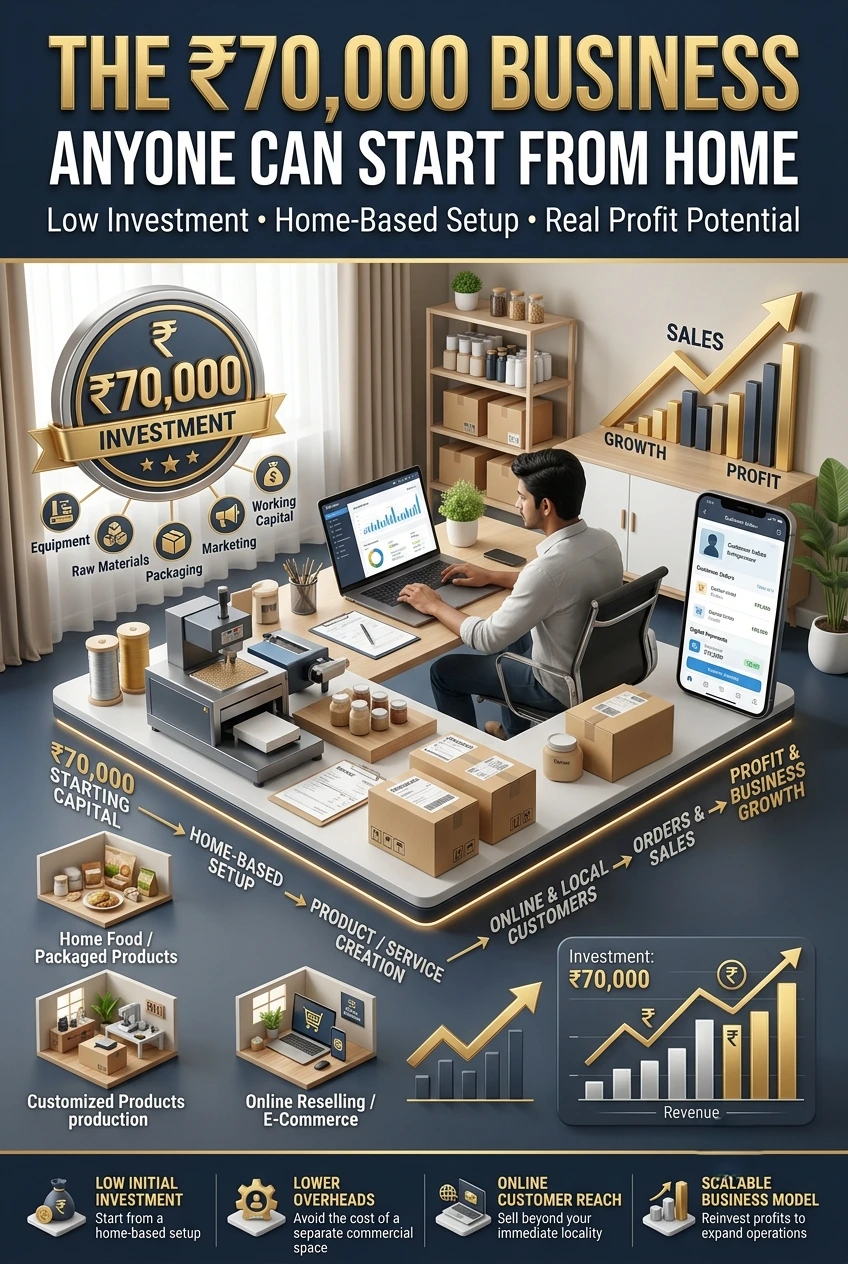
This simple manual paper plate making machine costs as little as ₹70,000 and many entrepreneurs are able to run the entire operation from home, with no high technical expertise and very limited infrastructure. It is clearly labeled for people who are new to entrepreneurship, homemakers or small business owners who have a need for steady income but don’t require special training or significant capital investment.
The technique involved in the production is relatively simple, as the paper paper sheets or rolls are formed by using a set of dies and moulds of different sizes, usually from four to fourteen inches, by applying heat and pressure. Scaling up to a semi-automatic machine this runs a few thousand plates a day, but can be scaled up again to 1,000-2,500 plates an hour, or even more.
View Full Project Details: Paper Industry & Manufacturing Guide
What the Numbers Actually Look Like
| Metric | Detail |
| Entry-level investment | ₹70,000–₹2,00,000 (manual to semi-automatic machine, home-based) |
| Larger unit investment | ₹8–30 lakh (dedicated workshop, higher automation, working capital) |
| Typical selling price | ₹0.50–₹2 per plate depending on size and finish |
| Profit margin | 20–40%, depending on raw material cost and production efficiency |
| Break-even timeline | 6–12 months with consistent order flow, for a small entry-level unit |
| Key licences | MSME/Udyam registration; GST registration depending on turnover and interstate supply |
A small-scale unit producing 10,000-15,000 plates per day can earn Rs. 15-20 Lakhs per year with net monthly cash flow of Rs. 40,000 to 50,000 per month after expenses, when the operation starts. A business that can be started on a bare floor in a spare room or small workshop with less than Rs. 1 Lakh investment.
The Real Reason This Business Doesn’t Stall Out
The vast majority of manufacturing concepts that involve little investment are the same kind of failure: You have a great idea to start, but it doesn’t have an ongoing demand, and you’re left with a hundred identical little manufacturers competing on price. Paper plates bite the dust for two structural reasons.
First, demand is non-discretionary. Paper plates are eaten every day, in the process of food service, at events, street vendors, religious activities and especially, more and more, at homes, without depending on single purchases, daily and daily. Second, it is still a regulatory tailwind and not a headwind. The new EPR regulations actively encourage brand owners, ecommerce and large retailers to seek and publish plastic-alternative materials and take control of the process of its use, moving up even more the institutional buyers towards choosing paper suppliers instead of consumers.
Related Article: Paper Cup & Disposable Products Manufacturing: A Low-Investment Guide for First-Gen Entrepreneurs
Machine Choice Matters More Than It First Appears
There are three types of machines and the kind that the entrepreneur should choose is solely dependent on the manner in which he or she intends to sell rather than budget. Manual machines are the least expensive and most labour-intensive, and are appropriate to truly small-scale, home-based projects that are selling in the local market.
Semi-automatic machines can make a significant production improvement and are not prohibitively expensive for a first-generation business owner, and are typically the sweet spot for those wanting to supply beyond their immediate neighbourhood. Fully automatic machines offer higher production capacity and require less human involvement, but they require a higher capital investment, and are more appropriate for an entrepreneur with proven demand from a smaller machine.
Because the entry investment is so modest, most entrepreneurs fund it through personal savings or a small MSME loan rather than large-scale institutional financing. That said, machinery loans and industrial equipment finance options exist specifically to spread machine costs over manageable instalments, which matters for someone who wants to start with a semi-automatic machine but doesn’t want to commit their full working capital to the equipment alone, leaving nothing for raw material stock or the first few months of operating expenses before revenue stabilises.
The Financing Reality
The entry investment is low and most of the entrepreneurs fund it from their own savings or from small MSME loan as opposed to big institutional loans. However, machinery loans and industrial equipment finance are available specifically to help those who wish to invest in a semi-automatic machine but do not wish to plow their working capital into just equipment with no buffer for raw material inventory or the first few months of operating costs until their revenues are realised.
Where the Real Money Is: Moving Beyond Commodity Plain Plates
The problem in this business is that it is considered as a commodity business — production of simple white plates, and playing a game with rupees-per-piece against each other small business in the district. The units that make better businesses at a better price are those who differentiate in a few key ways, such as offering caterers and event users laminated or printed plates, offering compostable and higher grade biodegradable finishes to premium, eco-conscious buyers, and offer direct supply relationships with caterers, wedding planners and canteen operators over wholesale traders who squeeze margins.
A modest increase in the cost of a standard plate line makes a significant impact in capturing a portion of this, by simply including a printing or laminating step in the process — even at home.
A Sensible Way to Start
The safest route for a true novice is to begin with a single manual or semi-automatic machine, get a couple or three local customers (a caterer, a wholesale trader, a local event supplies shop) and then graduate to a second machine or more automation. The cost of entry is extremely low, especially in comparison to manufacturing, which means the risk of trying out a market and making a financial decision is quite small – unusual for most manufacturing ventures, and it’s why this is one of the most recommended first businesses for a beginning entrepreneur with a limited budget.
Identify high-growth industries before others do
The Compliance Angle Nobody Mentions
One detail worth knowing before investing: enforcement of the plastic ban has been genuinely uneven since 2022, with noncompliance persisting due to inconsistent enforcement and continued availability of illicit plastic alternatives in some informal markets. This matters practically for a new manufacturer’s sales strategy — organised retail, institutional caterers, e-commerce platforms, and large hospitality chains are the buyers most reliably locked into compliance by Extended Producer Responsibility rules and their own brand risk, and they’re consistently the more stable, better-paying customer base compared to informal street-vendor markets where cheap illegal plastic alternatives still occasionally undercut paper products on price.
The idea that operating in the informal market, which offers the lowest prices, but also the thinnest margins and least compliance driven demand, is preferable to building relationships with organised buyers from day one is more suitable for new entrants.
For a more comprehensive comparison of disposable-tableware machine options and financing options available, entrepreneurs can also read in detail about paper plate manufacturing units and their set up and profit breakdowns – as they take a tour of manual, semi-automatic and fully automatic setups side by side.
Other business ideas that fall under the same plastic ban notification from 2022: Paper cup manufacturing (which shares the same core business process with paper plates, but with different die and mould set); areca leaf and sugarcane bagasse plate manufacturing (premium biodegradable segment with higher price point); paper straw manufacturing (which benefits from the same plastic ban tailwind, but is also currently under-supplied domestically); corrugated food box and takeaway container manufacturing; and paper bag manufacturing for retail, for the other major category banned under the same notification.
The Bigger Pattern
Paper plates are a helpful reminder to those who are considering manufacturing that not every opportunity requires a factory, a big loan and years of technical training. A business which takes the plunge into a new product opportunity after the announcement of a policy change may find themselves forging years of customer relationships before the bigger, better capitalised competitor even realises that the market opportunity could exist.
The same opportunity applies to other related disposable items that are also banned, such as paper cups, paper straws and paper-based food containers, which all follow a similar investment and margin profile, and perhaps an entrepreneur already operating a paper plate business might be able to add a paper cup business to his existing operations without having to start a new business from scratch because of the similar die-cutting and moulding processes.


