

• Latest
  • Trending
  • All
Revolutionizing the Textile Industry with Natural Dyes and Sustainable Fabrics

Revolutionizing the Textile Industry with Natural Dyes and Sustainable Fabrics

May 22, 2026
Water Park Business in India – Investment Cost, Profit Margin and Project Report Guide

India’s Water Park Market Is Growing 10% Annually — Here’s Why

May 30, 2026
Green Manufacturing Business Ideas in India 2026

Entrepreneur India May 2026 Green Manufacturing Revolution— 7 Sustainable Startup Businesses Turning Waste into Wealth

May 29, 2026
Project & Profile
India startup revolution showing young entrepreneurs building startups in India

India’s Startup Revolution: How First-Gen Founders Are Building ₹100 Crore Businesses from Scratch

May 29, 2026
ALMM solar manufacturing India 2026 policy and government approved solar industry growth

ALMM Mandatory June 2026: India Solar Cell Opportunity

May 29, 2026
Construction Materials in India

Construction Materials in India: Market Boom, Business Opportunities & an Essential Knowledge Resource

May 28, 2026
Biofertilizer production process showing microbial culture fermentation and manufacturing setup in organic farming industry

The Complete Business Guide to Biofertilizer Manufacture and Organic Farming

May 28, 2026
Ayurvedic medicine manufacturing

Ayurvedic Medicine Product Lines from the Handbook on Herbal Medicines That Can Generate ₹80 Lakh/Year

May 28, 2026
Best Factory Business Ideas Afghanistan using local raw materials like saffron, dry fruits, marble, cashmere, and sesame industries

Best Factory Business Ideas in Afghanistan Based on Local Raw Materials and Market Demand

May 23, 2026
Entrepreneur India Magazine April 2026 manufacturing business ideas

10 Profitable Manufacturing Business Ideas You Need to Know Right Now — From Entrepreneur India April 2026

May 23, 2026
Nylon 6 Manufacturing in India: Automotive & Textile Import Substitution Guide

Nylon 6 Manufacturing in India: Automotive & Textile Import Substitution Guide

May 19, 2026
HDPE PP woven sack manufacturing plant in India

HDPE/PP Woven Sack Manufacturing: Fertilizer & Cement Packaging Demand in India

May 19, 2026
Public health chemical spraying for malaria mosquito control in Africa

How to Export DDT and Public Health Chemicals from India

May 18, 2026
  • About
  • Advertise
  • Privacy & Policy
  • Contact
Wednesday, June 3, 2026
  • Login
Entrepreneur India Blog
  • Home
  • About
  • Books
  • Business Ideas
  • Contact
No Result
View All Result
Entrepreneur India Blog
No Result
View All Result
Home Textile Industry Business

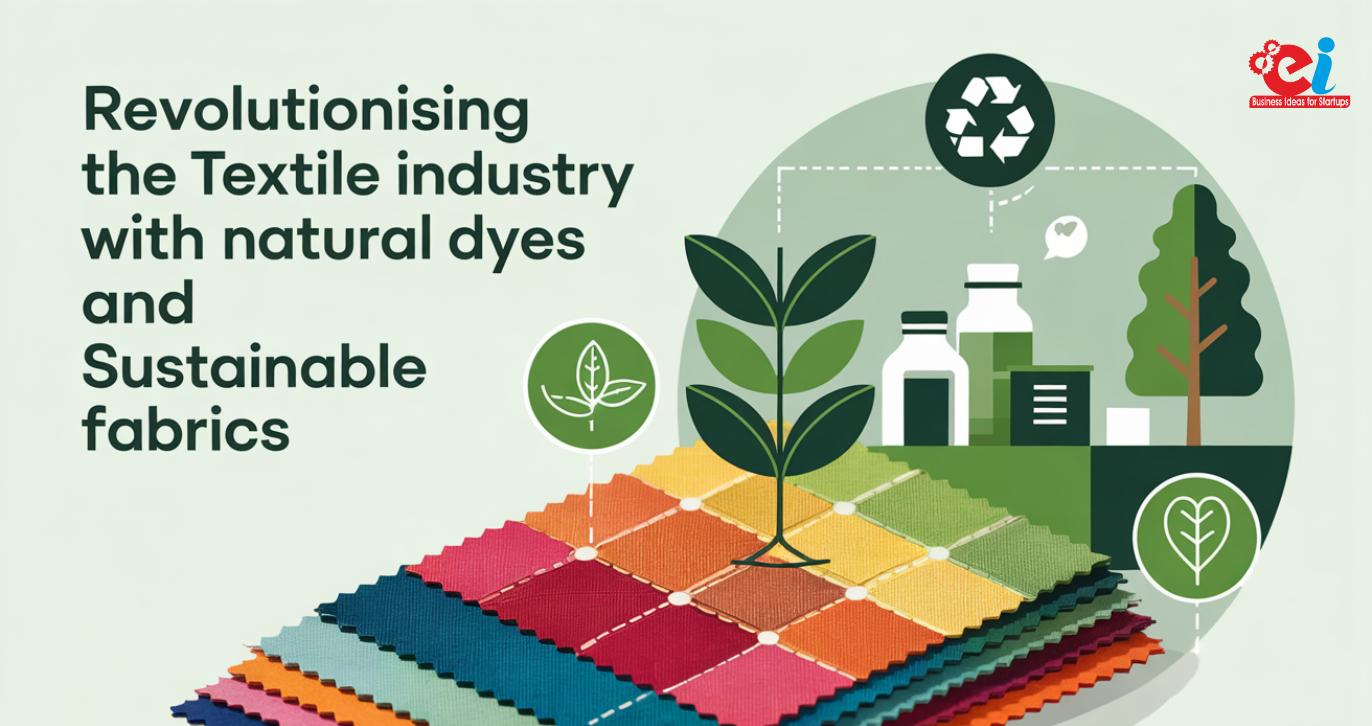
Revolutionizing the Textile Industry with Natural Dyes and Sustainable Fabrics

by P.K. Chattopadhyay
in Textile Industry Business
0
Revolutionizing the Textile Industry with Natural Dyes and Sustainable Fabrics
513
SHARES
1.5k
VIEWS
Share on FacebookShare on Twitter

The textile industry has always been synonymous with pollution and waste, even for global disasters. By the grace of God, the last few years have seen a gradual global shift toward increasing emphasis on sustainability in the textile industry, with the most apparent use of natural dyes and eco-friendly fabrics. The green revolution is not all good for consumers, besides the planet, but has piqued their interest in more healthy and ethical options.

Table of Contents

Toggle
  • The Synthetic Dye-and-Wear Issue in Textile Industry
  • The Natural-Dyes Hump Textile Industry
  • Sustainable Fabrics: A Step Towards Greener Fashion
  • The Role of Ethical Brands in Fashion
  • Ways to Consumer-contribute towards Sustainable Fashion 
  • Closing Thoughts

The Synthetic Dye-and-Wear Issue in Textile Industry

For many decades, synthetic dyes and chemically treated fabrics had gloriously supported the textile industry. These materials are the source of bright and lasting hues, yet the reality is quite the opposite when one must discuss the prices.

1. Water Pollution

Huge amounts of water are consumed in dyeing with synthetic dyes, and the effluent is then drained away into rivers and lakes. Thus, such a process causes the contamination of water resources with the living organisms and local people.

2. Toxic Chemicals

The synthetic dyes are loaded with several toxic compounds within themselves, like lead and mercury, as well as formaldehyde. Such a situation has dire consequences on factory workers’ health and gives skin irritations or allergic reactions to many people.

3. Non-biodegradable

Polyester, nylon, and acrylic, for example, belong to this category of plastic-based fibers. Fibers do not decompose fast, thus forming huge heaps in segmented landfills.

The Natural-Dyes Hump Textile Industry

Dyes have been derived from plant, mineral, or insect sources, naturally, since the beginning of civilization with all possible techniques for producing textiles. Today, it stands as a testimony to the renaissance of this art since its usefulness has been admired by many as very advantageous in general.

Also read : Modern Technology of Textile Dyes & Pigments 

1. Green and Compostable

These dyes are non-hazardous so that they biodegrade easily without polluting water bodies, unlike synthetic dyes. 

2. Allergy Effect Nullify Against Skin 

Naturally dyed cloth is safe for skin so that allergies tend to reduce and irritate less. It is also said to be non-toxic to textile workers, who have a safer environment.

3. Beautiful Shades Interiorly

Natural dye will indeed acquire very rich, earthy hues that synthetic dyes cannot even compare to these days since every batch is different from one another. Customer exclusivity will be assured, thus alluring the fashion consumer in the hunt for originality. 

Sustainable Fabrics: A Step Towards Greener Fashion

Sustainable textiles, apart from natural dyes, are crucial for reducing the environmental impact of the textile industry. These textiles adopt biodegradable materials and eco-friendly processes.

1. Organic Cotton

Organic cotton production in today’s world uses none of the synthetic pesticides and fertilizers that are conventionally used in cotton farming.

2. Hemp

Durable with minimum water consumption and basically grows on its own, without having to use pesticides, hemp is that type of fabric. Naturally breathing and being biodegradable makes it an excellent utility.

3. Linen

Linen is cool and absorbent, biodegradable textile derived from flax plants. Production is much less water and chemical consuming compared to cotton.

4. Bamboo Fabric

One of the fastest-growing plants without chemicals and pesticides, so that the fabric sustainability is unquestionable. It is supple, wicking moisture, and is also a natural anti-bacterial thing.

5. Tencel (Lyocell)

Sustainability is guaranteed by making Tencel out of usually eucalyptus tree wood pulp but mostly out of sustainably available wood pulp, whereby production is made using a closed-loop process whereby solvent and water are recycled.

The Role of Ethical Brands in Fashion

Some of the fashion brands are today adopting into their collection the sustainability of using natural dyes with their eco-friendly fabrics to a green future. 

1. Patagonia

Patagonia pioneered its path in sustainable fashion by wearing organic cotton, hemp, and recycled materials with clothes, which preaches ethical brands with promoting standards of fair labor.

2. Eileen Fisher

This company specializes in organic fabric, natural dyes, and circular practices to reduce waste.

3. People Tree

An early promoter of ethical fashion, it uses organic cotton and natural dyes while aiding fair trade communities.

4. Pact

It is a label that produces the most affordable line of sustainable clothing made from pure organic cotton and non-toxic dyes and gets eco-fashion into the market for the widest audience possible.

Ways to Consumer-contribute towards Sustainable Fashion 

Investment in individual consumer behavior could greatly influence the speed of the transition to sustainability. The following are ways consumers may help in the effort:

1. Natural and Organic Fabrics

Choose garments woven from organic cotton, hemp, bamboo, and linen instead of the synthetic ones.

2. Look for Natural Dyes

Check clothing labels for natural dye information. Most ethical brands emphasize this point in their product descriptions.

3. Buy from Sustainable Brands

Buy from fashion brands that respect ecology, just wages, and ethical production.

4. Adopt Slow Fashion

Invest in good-quality classics instead of buying into fast-fashion trends. That curtails waste and promotes sustainable consumption.

5. Recycle and Upcycle

Donate, resell, or repurpose clothes instead of throwing them out. Upcycling gives a second life to garments, thus reducing landfill waste.

Closing Thoughts

Currently, natural dyes and sustainable fabrics have been the hottest topic in the textile industry. What eco-friendly materials, ethical brands, and slow fashion quite drastically reduce the bitter environmental side of clothing production is apparent. As the awareness grows and technology innovates, sustainable fashion will continue to mold the industry’s future to become more stylish yet responsibly forward-looking. It’s about changing ourselves: every purchase counts much toward a greener planet.

Tags: Natural DyesSustainable FabricsTextile industry
Share205Tweet128
Previous Post

Starting a Zero-Waste Store: A Guide to Sustainable Retail Business

Next Post

How to Start a Successful Herbal and Organic Cosmetics Brand?

P.K. Chattopadhyay

P.K. Chattopadhyay

P. K. Chattopadhyay is a seasoned Project Consultant with over 45 years of hands-on experience in project consultancy across diverse industries. He has guided hundreds of companies and entrepreneurs through project planning, feasibility studies, and industrial setup — turning business ideas into practical, scalable ventures. A prolific author of business and startup-focused books, P. K. Chattopadhyay brings together real-world industry data, actionable insights, and proven execution strategies tailored for entrepreneurs and investors at every stage of their journey. His core expertise spans manufacturing projects, market analysis, and business viability assessment — making his work an indispensable resource for anyone building a sustainable and profitable business from the ground up.

Next Post
How to Start a Successful Herbal and Organic Cosmetics Brand?

How to Start a Successful Herbal and Organic Cosmetics Brand?

Leave a Reply Cancel reply

Your email address will not be published. Required fields are marked *

Contact Us

    Categories

    • Agri Business Opportunities
    • Chemical Industry Business Opportunities
    • Cosmetics and Personal Care Business
    • Eco Friendly Sustainable Business
    • Entrepreneurship Leadership and Startup Growth
    • FMCG Consumer Products Business
    • Food Processing Business Industry
    • Future & Emerging Industries
    • Government Schemes Policies for Business
    • Import Export Business Opportunities
    • Industrial Project Reports Business Guide
    • Investment Funding for Startups
    • Manufacturing Business Ideas for Startups
    • Market Research Trends for Business
    • MSME & Small-Scale Industries
    • Paper Pulp Industry Business
    • Pharmaceutical Industry Business
    • Plastic & Packaging Business
    • Renewable Energy Startups
    • Startup Business Opportunities
    • Startup Business Planning and Strategy
    • Technology & Automation Business
    • Textile Industry Business
    • Uncategorized
    • Waste Management & Recycling Business
    • Water & Environmental Business
    Entrepreneur India Blog

    Copyright © 2026 Entrepreneur India

    Navigate Site

    • About
    • Advertise
    • Privacy & Policy
    • Contact

    Follow Us

    Welcome Back!

    Login to your account below

    Forgotten Password?

    Retrieve your password

    Please enter your username or email address to reset your password.

    Log In
    No Result
    View All Result
    • Home

    Copyright © 2026 Entrepreneur India

    Are you sure want to unlock this post?
    Unlock left : 0
    Are you sure want to cancel subscription?
    Call Us
    Whatsapp