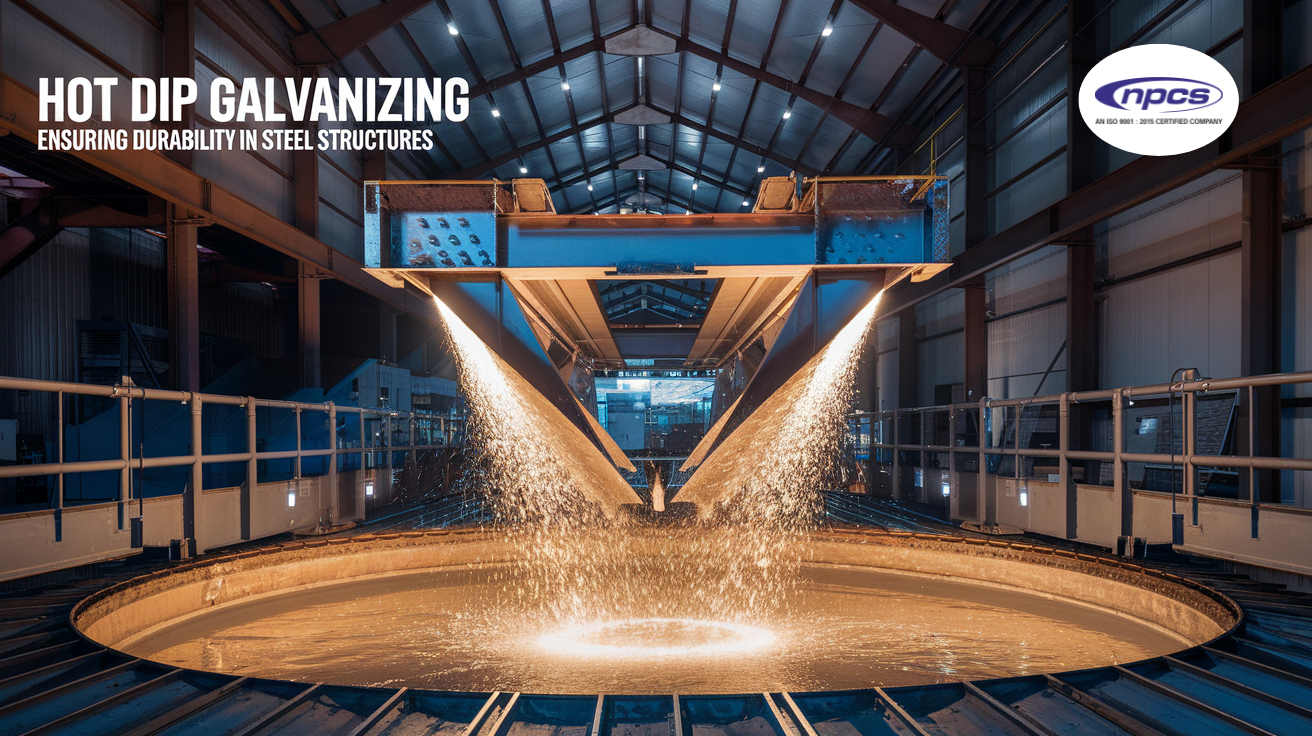






Hot dip galvanizing stands as an extensively used method to protect steel structures by preventing corrosion, thus extending their operational life and maintaining structural integrity across different industries. The durability of steel acts as the foundation for contemporary infrastructure, which directly affects project safety as well as sustainable development. The article explores hot dip galvanizing elements through scientific measurements and subjective observations based on industry studies, together with practical applications and analytical insights that demonstrate its important role.
Hot dip galvanizing operates through a scientific process for steel protection
The hot dip galvanizing technique requires dipping steel into zinc, which has reached 450°C (842°F) molten state for processing. The molten zinc reacts with steel to form zinc-iron alloy layers that build an effective environmental barrier. A key advantage of hot dip galvanizing over painting and electroplating occurs when the protective layer bonds with steel during processing because this produces a stronger material resistant to environmental damage and mechanical impacts.
Hot-dip galvanization operates under the combination of cathodic protection alongside barrier protection principles. Hot dip galvanization utilizes zinc protective layers in two ways: first by physically blocking corrosive agents and second by its sacrificial nature that enables zinc to corrode before steel when the coating is damaged. The combination of zinc coating layers forms a vital protective system, which drives industry selection of hot dip galvanizing for long-term durability needs.
Also Know More About : Hot Dip Zinc Galvanizing Manufacturing
Corrosion Resistance and Durability: A Data-Driven Perspective
The problem of corrosion impacts both economic expenses and construction aspects substantially. The National Association of Corrosion Engineers (NACE) reports that corrosion expenses in the United States surpass $276 billion with damage to infrastructure comprising most of this amount. Laboratory tests demonstrate that galvanized steel reduces these maintenance expenses because of its outstanding ability to resist corrosion.
The American Galvanizers Association (AGA) research confirms that galvanized steel structures have lifespans extending beyond 75 years in rural regions, while suburban locations sustain them for 50–75 years and urban and coastal environments last 25–50 years. Bridges, together with highways and industrial facilities, benefit from extensive durability because of aggressive environmental exposure.
The performance evaluation in “Journal of Materials in Civil Engineering” between galvanized steel and painted steel presented findings for marine exposure conditions. The research conducted claimed galvanized steel lasted for 40 years without failure, yet painted steel needed periodic repainting intervention every 5 to 10 years because of deterioration. Galvanizing proves more cost-effective than other protection methods because it needs fewer maintenance costs and results in lower replacement expenses.
Economic Advantages: A Lifecycle Cost Analysis
Society often debates whether hot dip galvanizing requires additional spending when compared to coating methods due to the initial cost disadvantage. Although galvanizing costs 20 to 35 percent more than conventional painting during initial installation, the total cost evaluation shows a different reality.
The Steel Construction Institute (SCI) investigated the maintenance expenses of steel bridge protectants during 25 years by contrasting paint cover versus galvanizing treatment. The painted bridge needed three maintenance cycles that drove its overall expenses to become four times greater than galvanizing its steel structure once in its lifetime. The actual costs between construction materials become greatest when maintenance access requires costly logistical solutions, particularly in areas with high logistical risks.
The time a system remains inactive stands as a primary determinant of financial expenses. The duration of maintenance activities at sites within the energy, telecommunications, and transportation industries leads to revenue diminution through operational interruptions. Galvanized steel needs little, which allows businesses to save substantially on their operational budget.
Sustainability and Environmental Impact
Materials for construction and infrastructure projects need to consider sustainability as their main evaluation factor. The sustainability principles of global initiatives find strong support from hot dip galvanized manufacturing processes because the material recycles effectively with small resource requirements and extended life spans.
Extreme research has been conducted to analyze the environmental impact of hot dip galvanizing. Rediscovery by the International Zinc Association (IZA) found that when replacing unsustainable steel elements with zinc coated steel, operators can decrease their raw material utilization by 50%. The recycling value of zinc reaches 100% while it accounts for 30% of the worldwide zinc supply through recovering materials.
Hot dip galvanizing systems result in considerably low waste levels. Hot dip galvanizing produces material collected to serve multiple industrial needs while reducing landfilled waste. Paint-based coatings generate more volatile organic compounds (VOCs) than galvanic coatings, so they increase environmental pollution levels.
Case Studies: Real-World Applications
Frequent repainting as well as maintenance became necessary because the steel components of the Golden Gate Bridge in California (USA) did not receive galvanizing treatment. The recent refresh of key structural elements involved hot dip galvanization to enhance longevity and decrease operational spending. The implementation of hot dip galvanization brought both durability benefits and reduced maintenance costs, resulting in savings reaching the millions.
The Millennium Bridge (UK) employs hot dip galvanization for its steel components to extend their resistance against moist conditions and city pollutants. The galvanized segments have demonstrated excellent resistance to corrosion in the span of twenty years.
The Australian Galvanizing Institute ran tests on galvanized guardrails installed in coastal highways and verified their outstanding structural durability, which exceeded 50 years more than painted alternatives, which failed after just 10 years due to rust formation.
Innovations in Hot Dip Galvanizing
The field of galvanizing technology develops continuously to boost the process effectiveness. Recent developments add aluminum and magnesium as alloying elements to zinc coatings, which enhance the resistance to corrosion. The Fraunhofer Institute in Germany discovered that zinc-aluminum-magnesium protective coatings outlast normal zinc coatings by 20–30% based on research findings.
The implementation of controlled atmosphere galvanizing (CAG) alongside other precision galvanizing methods has standardized zinc coating distribution, which significantly reduces possible weak areas in steel constructions. Modern engineering continues to use hot dip galvanizing because of these innovative improvements.
Project Report On : Hot Dip Galvanizing Plant Structural
Conclusion: A Long-Term Investment in Structural Integrity
Hot dip galvanizing has proved its dedication through detailed studies in addition to its real-world success while demonstrating unparalleled durability alongside economic advantages and environmental sustainability. Steel structures in various industries should opt for hot dip galvanizing coatings despite initial cost premiums since they deliver long-term savings and minimal maintenance requirements while providing robust corrosion protection.