





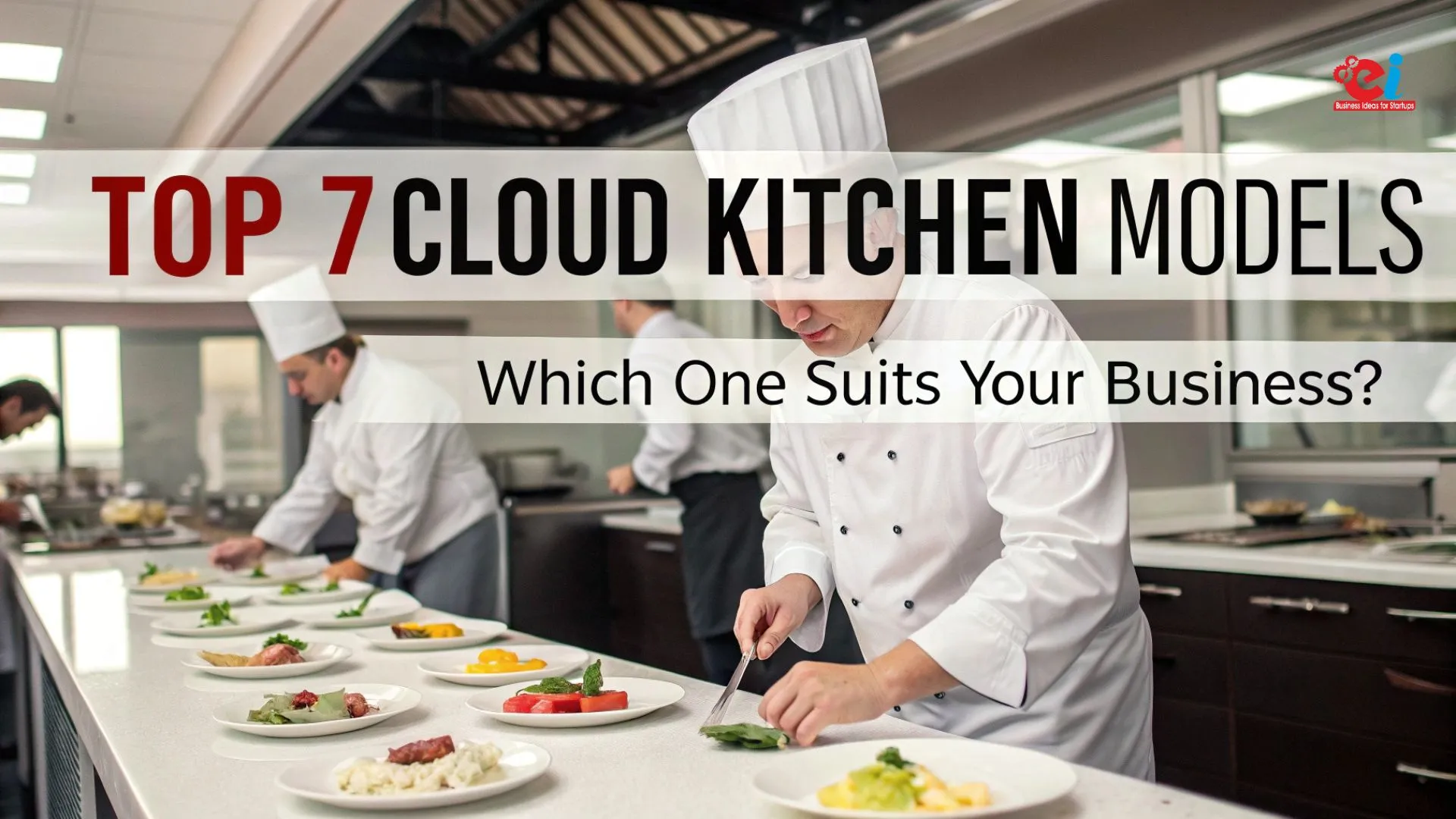
The Indian food-delivery business keeps racing ahead, and cloud kitchens, which some people call ghost kitchens or virtual restaurants, have gone from being a gimmick to the way many new food entrepreneurs start. Urban crowds, bigger wallets, and a love for hassle-free dinners are pushing the trend forward, drawing in everyone from first-time cooks to restaurant veterans.
For anyone opening a Cloud Kitchen Model, for a consultant, or an industry veteran peeping into this hot market, picking the right cloud kitchen model can make the difference between just breaking even and thriving. Each option has its mix of scale, control, cost, and risk, and not every model suits every dream.
This article maps out seven main cloud kitchen model that are carving the Indian landscape, shares demand numbers, sketches a quick step-by-step rundown, and shows how each approach lines up with your goals.
Cloud Kitchen Industry: Market Overview and Demand Forecast
India’s cloud kitchen model is one of the speediest stories in the wider food-service scene. Hungry shoppers shifted online after Covid, and the swell of hyperlocal riders turned empty kitchens into hot profit centers almost overnight.
India Cloud Kitchen Market Forecast (2025–2030)
| Year | Estimated Market Size (INR Cr) | YoY Growth Rate | Key Drivers |
| 2025 | ₹7,300 | 17% | Expansion of delivery platforms, tech adoption |
| 2026 | ₹8,540 | 17% | Menu innovation, Tier-II city penetration |
| 2027 | ₹10,000 | 17% | Cost-efficiency of cloud kitchens |
| 2028 | ₹11,700 | 17% | Demand for health-conscious meal formats |
| 2029 | ₹13,600 | 16% | B2B meal prep, cloud catering |
| 2030 | ₹15,500 | 14% | AI-driven kitchen automation, regional focus |
What is a Cloud Kitchen?
A cloud kitchen is a type of restaurant that cooks food only for delivery. There are no tables to sit at and no front-of-house staff, so everything runs from a back-end kitchen. Customers place orders through apps such as Zomato or Swiggy, or directly on the brand’s own website.
Because they skip the high cost of real estate and dining space, these kitchens can test new menus without big risk. The model is lean, agile, and relies heavily on data. With several versions of cloud kitchens now on the market, entrepreneurs have more room to pick a setup that fits their idea.
Related: Cloud Kitchens – The Secret to Running a Successful Food Business with Low Investment
Top 7 Cloud Kitchen Model Explained
1. Independent Cloud Kitchen
The independent Cloud Kitchen model is the classic cloud kitchen, easy to set up and still quite common. A single kitchen serves its own small team, filling orders with third-party apps or by phone when customers call directly.
Ideal for:
- First-time entrepreneurs
- Home chefs ready to scale
- Niche cuisine offerings (like Bengali, vegan, or keto)
Key Advantages:
The owner controls every detail — branding, menu changes, and even customer chats. Still, juggling cooking, marketing, and delivery can be a lot for one small crew to handle.
Manufacturing Process Snapshot:
- menu planning and recipe standardization
- Sourcing fresh and semi-processed ingredients
- meal prep in a semi-automated kitchen
- packaging and handing over to delivery partners
2. Multi-Brand Cloud Kitchen (Hub and Spoke Model)
In this setup, a single hub Cloud kitchen Model spins out several virtual brands from one address. Each brand targets a different craving, meal type, or price range, giving the kitchen more chances to sell.
Ideal for:
- Restaurant chains want to offer more types of delivery food
- Entrepreneurs aiming at several customer groups at once
Why it Works:
The setup uses one set of ingredients, staff, and equipment to run multiple brands, boosting kitchen output and return per square foot. Operators can test new menus or ideas with far lower risk because they spend only what they need for each concept.
3. Aggregator-Owned Cloud Kitchens (Shared Kitchen Model)
In this Cloud Kitchen model, big delivery platforms such as Swiggy’s Access or Zomato’s Kitchens rent out ready-to-use kitchen stations to partner restaurants. Owners bring their own recipes and crew, while the rest is already done.
Ideal for:
- Well-known restaurants moving into fresh delivery areas
- Chains trialing new regions before committing full outlets
Manufacturing Process Snapshot:
Multiple brands share the same tech and tools, but each still cooks with its own secret recipes.
Often, the aggregator takes care of the delivery drivers as well.
Key Benefits:
Because the kitchen comes fully loaded, startup costs drop and brands can launch much faster.
The trade-off is that customers rarely see a shopfront, which can weaken the brand’s presence.
4. Co-Working Kitchen Spaces (Kitchen-as-a-Service)
This setup is like WeWork, but for food builders. Kitchens and CloudKitchenIndia give chefs and brands a shared kitchen that comes with cleaning, Wi-Fi, security, and all the tech already plugged in.
Great for:
Teams with tight budgets
Franchise owners of cloud kitchens
Regional brands trying new areas
Perks:
Owners skip big equipment bills so they can pour money into food taste and marketing. Contracts are often month-to-month and grow with the kitchens size or hours cooked.
Related: Profitable Indian Kitchen Spice Business
5. Franchise Cloud Kitchens
In this Cloud kitchen model, a venture runs a well-known food brand through delivery-only orders. The franchisor supplies recipes, marketing materials, training staff, and links to delivery partners.
Ideal for:
- New entrepreneurs who lack a menu-development background
- Teams wanting a set playbook and clear step-by-step tasks
Benefits:
Because an established name takes the spotlight, overall risk shrinks.
Profit margins still get shared, yet daily operations follow a proven guide.
Most franchisees stick to the prep charts and cooking methods that the parent company provides.
6. Cloud Commissary Kitchen (B2B Meal Prep)
This set-up uses one big, public-health-approved kitchen to make meals that go out to other brands, offices, dorms, or clinics, not directly to diners.
Ideal for:
- High-volume catering firms
- Food truck operators looking for a stable center kitchen
- Meal-plan apps that want subscriptions but need bulk production
Why It Matters:
Here, success comes from speed and cost, not from a catchy logo.
Keeping food safe still demands strict HACCP checks, fridges that never break, and packaging lines that run fast and smooth.
7. Hybrid Model: Cloud + Dine-in or Takeaway
Many new cloud-kitchen owners now mix things up by adding a small dine-in area or a takeaway counter next to the delivery kitchen. This half-and-half setup lets them greet customers in person, cross-sell menu items, and still keep the quick delivery system running smoothly.
Ideal for:
- Urban spots with heavy foot traffic
- Brands that want street visibility and stronger customer trust
Key Features:
- The dine-in area is tight — often just a handful of tables or a quick-pickup counter — while most sales still come from delivery.
Key Considerations Before Choosing Your Model
Every kitchen model has pluses, but picking the right one hinges on a few big questions:
- Scale of Operation: Small batch or high-volume capacity?
- Brand Vision: One signature brand or several menu concepts?
- Budget Flexibility: Can you invest in equipment, or would you rather lease?
- Location Strategy: Tier-I hustle or Tier-II growth windows?
- Target Customer Segment: Premium diners, niche foodies, or mass crowds?
Lots of startups start small, maybe with a shared space, and later level up to multi-brand kitchens or even franchises as they grow.
Cloud Kitchen: Basic Manufacturing Process Overview
No matter the setup, nearly all cloud kitchens share the same step-by-step cooking flow:
Ingredient Procurement & Storage
Sourcing comes from B2B suppliers, local mandis, or trusty wholesalers.
Solid refrigeration, cold shelves, and dry racks keep everything fresh and safe.
Recipe Standardization & Kitchen SOPs
Every dish begins with a carefully written recipe. To give every customer the same great taste, each recipe is scaled so every new batch matches the last.
Semi-automatic tools like dough mixers, tandoors, and combi ovens do much of the heavy lifting. These machines cut prep time and help cooks focus on flavor.
Preparation & Cooking
The kitchen is split into hot and cold prep zones. This keeps cross-contamination low and speeds up order turn-around.
Well-trained staff follow a batch-sheet guide, working in sync to prepare, cook, and store each item.
Quality Check & Packaging
Before packaging, each dish must pass three simple tests:
- A quick look
- A taste
- A check of its temperature
Tamper-proof packs made for each food’s journey protect flavor and keep ingredients safe no matter how far they travel.
Order Dispatch & Last-Mile Delivery
Cloud kitchens link every order straight to the delivery app and the point-of-sale system.
Once a rider is assigned, real-time tracking, feedback tools, and even a plan for returning empty boxes keep service smooth.
Growth Opportunities and Future Trends in Cloud Kitchens
Customer tastes keep changing, and that opens new doors for cloud kitchens. Here are a few trends on the horizon:
- AI-Based Kitchen Optimization: Smart software can forecast what dishes will sell well, so stock never runs low.
- Regional Cuisine Focus: Local brands that stir up nostalgia are popping up everywhere and winning loyal fans.
- Cloud Catering & Bulk Orders: Companies plan parties and events from their homepage, making bulk orders a hot category.
- Hyper-automation: Robotic arms, voice-guided chefs, and machines that pack on-demand are swapping out repetitive tasks.
- Tier-II and Tier-III Market Penetration: Cities like Indore, Surat, Nagpur, and Lucknow are seeing rising demand and new hubs opening every month.
How NIIR Project Consultancy Services (NPCS) Can Help
NIIR Project Consultancy Services (NPCS) is a trusted name for entrepreneurs, startups, and business consultants looking to assess the technical, financial, and commercial feasibility of new ventures.
- NPCS prepares Market Survey cum Detailed Techno Economic Feasibility Reports for a wide range of industries, including food services and cloud kitchens.
- Their reports offer complete insights into manufacturing processes, raw material sourcing, plant layout, and financial modeling.
- With decades of experience, NPCS helps businesses evaluate risk, plan capacity, and set up their food production or delivery businesses with confidence.
Conclusion: Which Model is Right for You?
The beauty of the cloud kitchen revolution lies in its flexibility. Whether you’re a home chef, a seasoned restaurateur, or an investor aiming to scale a portfolio of food brands, there is a model that fits your ambitions and budget.
Independent kitchens offer control, multi-brand setups maximize ROI, franchise models reduce risk, and co-working kitchens lower entry barriers. Evaluate your long-term goals, resource availability, and target customer base before committing.
The cloud kitchen is not just a food business it’s a tech-enabled, data-driven, logistics-sensitive ecosystem. Choosing the right model is your first big recipe for success.


