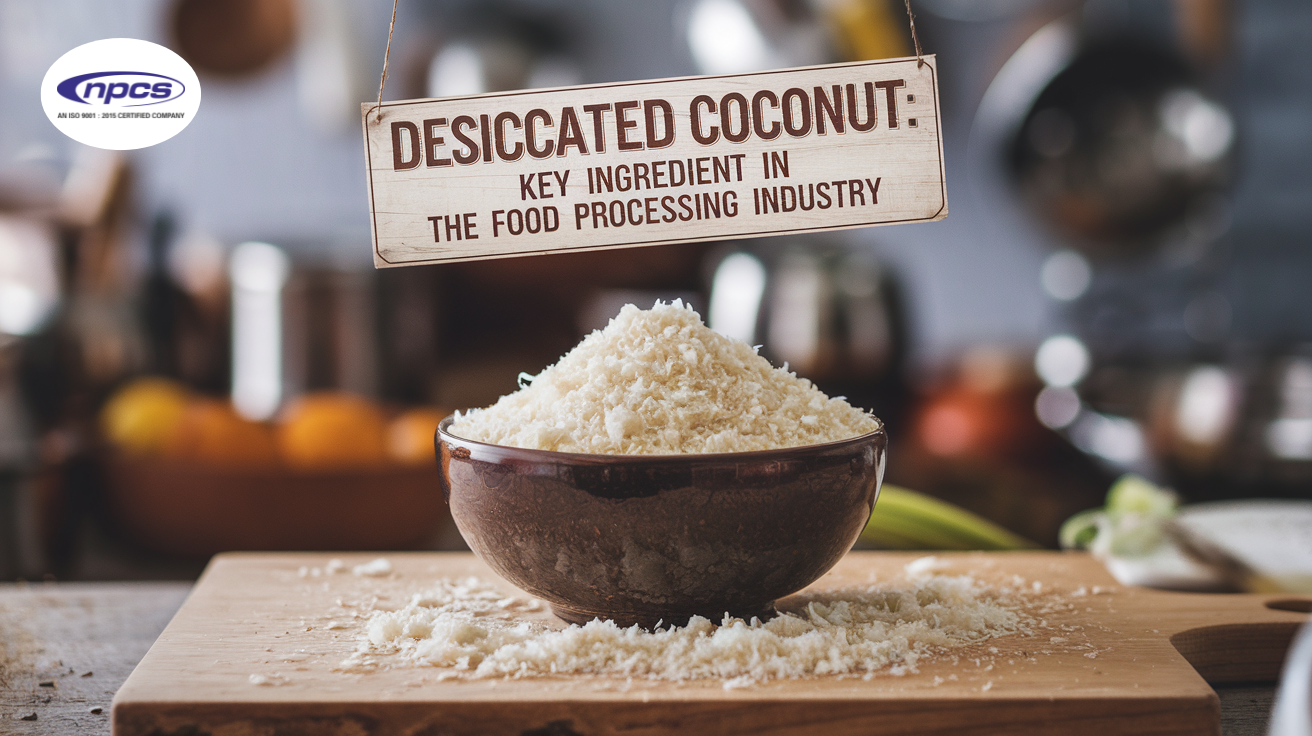






Financially grated dried coconut flesh, known as desiccated coconut, stands as a vital input throughout the worldwide food manufacturing operations. The diverse food industry depends on desiccated coconut as an essential ingredient, which finds applications in confectionery, bakery, dairy, and ready-to-eat meal sectors. The market for desiccated coconut grows steadily since natural and plant-based ingredients develop more consumers, thus becoming a vital ingredient for traditional and innovative food products.
Global Market and Consumption Trends
Market statistics indicate that the international desiccated coconut market shows strong expansion due to expanding coconut product demand among consumers. The market estimation shows that it reached a value of USD 5.5 billion in 2022, while experts predict 6.8% annual compound growth from 2023 to 2030. Countries in the Asia-Pacific, especially the Philippines, Indonesia, Sri Lanka, and India, control the major production, followed by export activities. The world gets its coconut supply from these nations, which represent more than 80% of international shipments and serve customers in North America along with Europe and the Middle East.
As public knowledge about desiccated coconut’s wellness advantages grows, so does its consumption throughout North America along with Europe because this product fits into vegan and gluten-free food practices. The confectionery and bakery industries throughout Western Europe and North America continue to choose desiccated coconut as an ingredient for creating chocolate coatings along with granola bars because this trend supports food choices that are natural and organic.
Read More About : The essential guide to desiccated coconut
Nutritional and Functional Benefits
The food ingredient it appeals to consumers not only through its delectable flavor but also through its important array of nutrients. This product functions as a dietary fiber source together with healthy fats and contains important nutrients, including iron, magnesium, and potassium. Medium-chain triglycerides in coconut help boost metabolic processes, thus providing fast energy for people concerned about their health.
Food manufacturers seek It because it provides valuable functional properties for their products. It serves as both a binding material for foods in baked products and provides distinctive chewy texture attributes to multiple food applications. The product works as a natural thickening agent, which expands its applications in soups, curries, and dairy products throughout various food industries.
Applications in the Food Processing Industry
The food processing industry adapts desiccated coconut into various applications. The bakery and confectionery industries consume the most desiccated coconut as an essential ingredient for creating texture and flavor profiles in their pastries and cookies. Dairy businesses use desiccated coconut to enhance yogurts as well as ice creams and non-dairy milk options.
It serves as an essential ingredient for producing energy bars and protein snacks as well as cereal-based snacks in the snack food segment. The growing vegan consumer movement triggers increased applications of desiccated coconut in vegan cheese products as well as dairy-free spreads and meat alternatives. The ready-to-eat and packaged food industry incorporates desiccated coconut into their meal kits and instant curries as well as tropical-flavored products because contemporary consumers value convenience features.
Also Know More About : Coconut and Coconut-Based Products
Quality Standards and Processing Techniques
Manufacturers must focus on quality standards because these standards protect both the safety and uniformity of it used within food processing. The manufacturing procedure requires personnel to gather mature coconuts, followed by husk removal of the brown testa layer until the kernel reaches fineness through controlled drying heat. Desiccated coconut produced this way maintains its shelf stability by reaching less than 3% moisture content, thus blocking microbial growth and enabling long-term food formulation use.
International food safety standards administered by the FDA EU regulations and Codex Alimentarius control the processing along with packaging of desiccated coconut. The process of ensuring product integrity depends heavily on getting HACCP certifications and also requires obtaining ISO 22000 and organic certifications. Food processing manufacturers adopt sustainable farming techniques because of the rising consumer demand for organic and non-GMO desiccated coconut thus increasing the product’s economy in food applications.
Market Challenges and Future Prospects
Despite its several benefits, the desiccated coconut business encounters supply systems breakdowns, price fluctuations and environmental conditions which impact coconut production Market rates face critical stability risks because raw material pricing is affected by weather instability and rising worker fees in key production regions. The market for desiccated coconut faces changing dynamics since alternative plant-based ingredients, including almond and oat products, enter the marketplace.
Going forward, desiccated coconut demonstrates prospective business opportunities. The combination of modern processing methods together with better logistics systems and environmentally friendly coconut farming practices will drive efficiency improvements and fulfill the rising global coconut market needs. Fat content penetration within health-focused and functional foods demonstrates that desiccated coconut prospects for further market development are robust.
Project Report On : Coconut processing
Conclusion
The food processing industry considers it as its essential ingredient because it offers flexibility combined with its nutritional properties and extensive usage possibilities. The consumption of it becomes possible across multiple food sectors, including bakery items, dairy products, confectioneries, and snacks, showing its capability to adapt to various formulation needs. High-quality it stands to experience increased market demand since consumers show increasing interest in natural plant-based ingredients. Modern technological breakthroughs combined with quality control methods and eco-friendly practices will drive the permanent position of desiccated coconut as a vital food processing component.