





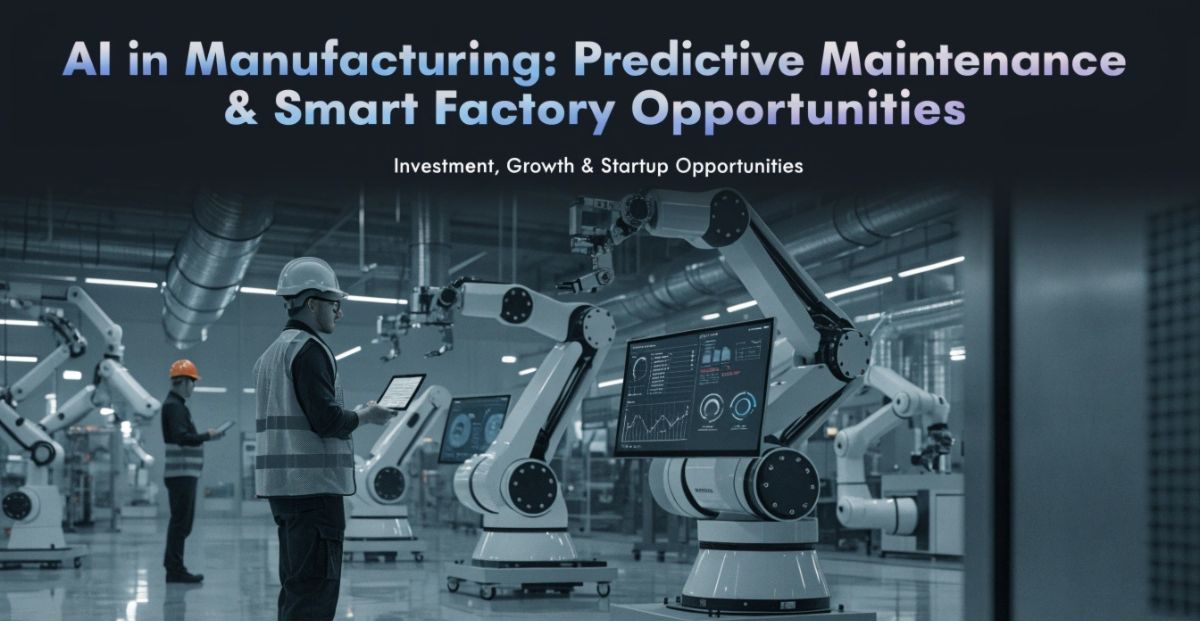
Introduction: AI in Manufacturing Predictive Maintenance
Manufacturing has always been an industry in which efficiency, reliability, and costing determine success. In industries like automotive, steel, cement, and heavy engineering, machines are the backbone for the production. When equipment ceases to operate unexpectedly, the effects are much more far-reaching than the cost of repair. Production schedules are upset, deliveries delayed and customer relations can suffer.
Artificial Intelligence (AI) is now transforming the way factories handle equipment and operations in factories. Instead of reacting to failures after they have occurred, companies are utilizing AI systems to monitor how their machines are performing all the time and predict potential problems in advance. This shift is helping manufacturers reduce downtime, improve productivity and control operational expenses.
Predictive maintenance and agentic aftermarket services are turning out to be two of the most important uses of AI in modern manufacturing. These technologies are not only optimizing performance for the industrial performance, but are also creating new business opportunities for (startups and) entrepreneurs.
What Is Predictive Maintenance in Manufacturing?
The predictive maintenance method uses artificial intelligence and sensors and data analytics techniques to monitor equipment health through real-time machine health assessments. Predictive systems monitor equipment through their data analysis which decides the proper maintenance schedule.
The data operational output from factories reaches its highest level during their daily operations. AI software analyzes this information to detect patterns indicative of wear, stress, or malfunction. The system sends out alerts when it detects something abnormal which informs maintenance teams about the required equipment maintenance work before equipment breaks down.
Common Data Sources Used In Predictive Maintenance
The predictive maintenance systems will monitor multiple types of machine data which includes:
- Temperature levels
- Vibration patterns
- Electrical current and voltage
- Pressure readings
- Motor speed and load
- Lubrication condition
The AI system uses these parameters to detect mechanical failures at their initial stages and produces recommendations for required maintenance activities.
The Evolution of Strategies for Maintenance in Industry
Maintenance strategies in manufacturing have changed dramatically over the years with ongoing advancements in technology. Understanding this evolution is helpful to understand why predictive maintenance is gaining its foothold in today’s factories.
1. Reactive Maintenance
Factories used reactive maintenance methods in their operations until the present. Machines received repairs only after they experienced breakdowns. The approach required minimal planning but resulted in production halts and expensive repairs.
2. Preventive Maintenance
Manufacturers developed preventative maintenance systems to reduce unexpected equipment failures. Machines were serviced at regular intervals no matter what their condition was. This method was more reliable, but at times resulted in unnecessary servicing and additional operational costs.
Access Complete Business Plan: Project Reports & Profiles
3. Predictive Maintenance
Predictive maintenance is the latest in maintenance management. I Maintenance schedules use equipment performance data to create maintenance schedules. AI systems can evaluate live data to determine optimal maintenance times which will result in better operational efficiency and reduced equipment downtime.
The transition from reactive maintenance to predictive maintenance represents the most essential technological advancement which exists in contemporary manufacturing processes.
The Next Step Forward: Agentic Aftermarket Services
Predictive maintenance serves to find equipment faults yet advanced industrial systems deliver more than advanced monitoring capabilities. Agentic AI systems are built to not only detect problems, but act out of them on their own.
These systems act as the intelligent digital manager of an equipment’s health and the coordination of maintenance activities without constant human supervision.
What Agentic AI Systems Can Do
Agentic aftermarket service platforms can automatically:
- Monitor Machine performance in real-time
- Detect faults and diagnose the root causes
- Generate maintenance work orders
- Order replacement spare parts
- Service technicians schedule service technicians
- Maintain digital maintenance records
This kind of automation turns conventional maintenance operations into a smart ecosystem that takes care of itself.
Why AI Maintenance Services Are a Good Startup Opportunity
One of the biggest reason entrepreneurs are moving into the AI manufacturing sector is because of the potential for predictable and recurring income. Manufacturers who follow traditional production methods depend on single equipment sales which creates unpredictability in their financial revenue. In contrast, AI-based maintenance services provide steady income thanks to long-term service contracts.
The operational factory machines around the globe include a considerable quantity of old equipment. Many of these machines were installed years ago and don’t have the ability to be monitored digitally. Rather than replacing them, companies can upgrade existing equipment with sensors and AI software.
Revenue Sources Important for AI Maintenance Businesses
Startups in this sector can earn their income from a variety of streams, including:
- Equipment monitoring subscriptions
- Maintenance service contracts
- Spare-parts supply contracts
- Remote diagnostics services
- Software licensing fees
These recurring revenue models are one of the primary reasons why investors are showing a strong interest in AI-driven services in the industrial sector.
New Business Opportunities in AI Manufacturing
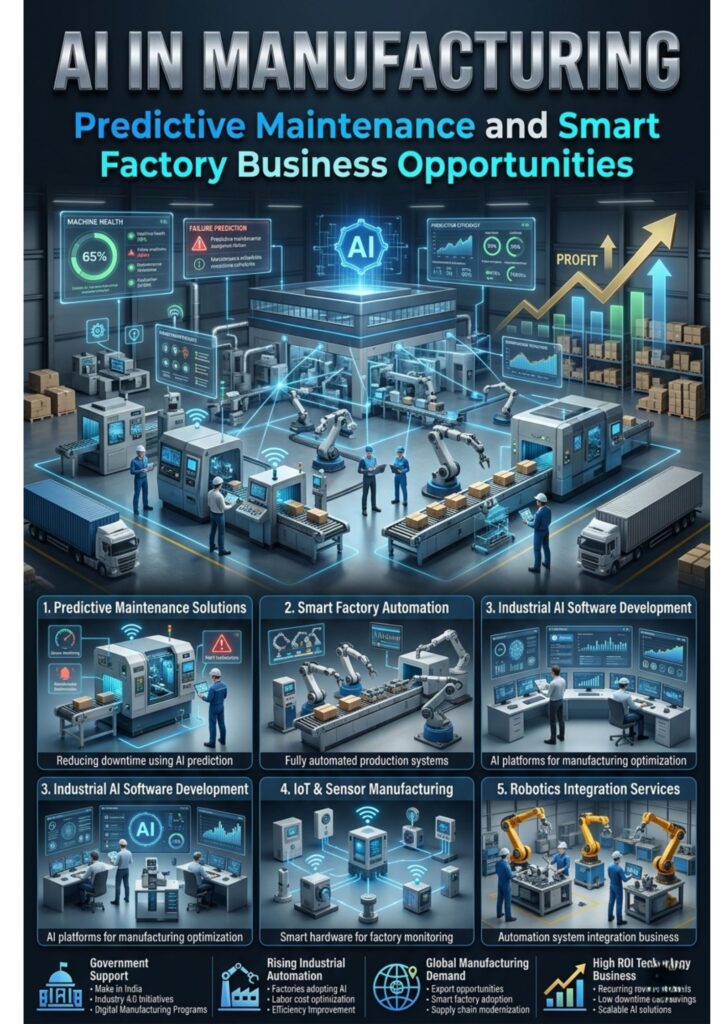
The AI manufacturing industry creates various business opportunities which entrepreneurs and engineers can pursue. The predictive maintenance software development approach serves as the most common method for entering the market. The platforms use machine data to create operational efficiency insights which factories can implement to improve their performance.
Another growing opportunity is the manufacturing of smart sensors and IoT devices used to monitor the conditions of equipment. As factories use more digital technologies, the need to properly monitor the factory hardware is rapidly growing.
Digital twin technology is also of interest. A digital twin is a digital replica or “twin” of a physical machine, but it provides a way for engineers to figure things out without shutting production down. This technology is helping manufacturers to be more efficient and to minimize operational risks.
High-Demand Industries For AI Maintenance Solutions
Certain industries adopt predictive maintenance technology at higher speeds because they require ongoing operational capacity.
The following sectors are part of these industries:
- Automotive manufacturing
- Steel and metal processing
- Cement production
- Oil and gas equipment
- Textile manufacturing
- Mining operations
Entrepreneurs who are specializing in these industries can find high demand for AI maintenance solutions.
Government Support for AI and Industry 4.0 in India
The Indian government has started various programs and policy initiatives to support digital transformation projects in the manufacturing industry. The programs aim to boost productivity while increasing export capacity and fostering new technological advancements.
Programs like Startup India, Make in India, and Digital India are offering great support to technology-driven startups. Entrepreneurs in the fields of AI and industrial automation can take advantage of financial support, training programmes and support in the form of business incubation services.
Kinds of Government Supports Available
Government initiatives generally provide:
- Startup funding and grants
- Technology development support
- Research and innovation programs
- Incentives for manufacturing modernization
- Export facilitation assistance
This support helps reduce the financial risk, and helps startups to scale their operations more quickly.
Skills Needed To Start An AI Manufacturing Business
The establishment of a successful AI manufacturing company requires business expertise together with technical knowledge. The need for programming skills varies between tasks which require specific programming skills to complete multiple tasks. Successful startups develop their products through collaboration with software developers and engineering teams.
Entrepreneurs who possess knowledge about industrial operations together with consumer behavior understanding will achieve greater success in the industry. Strong communication, problem-solving, and project management skills are also essential to managing complex industrial projects.
Important Skills for Entrepreneurs of this Sector
Some of the most valuable skills are:
- Industrial engineering knowledge
- Data analytics and automation
- Mechanical maintenance knowledge
- Business planning and financial management
- Customer relationship management
These skills help entrepreneurs sketch practical solutions and forge long-term partnerships with industrial clients.
The Future of AI in Manufacturing
The future of manufacturing will be shaped by intelligent systems with the capacity to function autonomously and make decisions based on real-time data. Factories are slowly evolving to fully automated environments in which machines monitor their own performance and arrange maintenance activities with no human intervention.
Manufacturers will achieve better production results through emerging technologies which include robotics machine learning and advanced analytics because these technologies help them produce products with lower energy consumption and reduced waste. Supply chains will become more sensitive while production processes will gain increased adaptability.
Companies that implement artificial intelligence solutions during their initial operations will establish substantial market advantages against other organizations in domestic and international markets.
Conclusion: Why AI in Manufacturing is High-Growth Business Sector
Artificial intelligence has transformed manufacturing processes by introducing smarter operations and better resource management systems. Predictive maintenance and agentic aftermarket services are helping companies reduce downtime, improve productivity and increase profitability.
Entrepreneurs can now establish scalable businesses which emerge from industrial technological developments that currently exist. The demand for dependable maintenance solutions together with intelligent monitoring systems and automated service platforms will continue to rise because digital technologies are being adopted across multiple factory environments.
AI in manufacturing represents one of the most promising business prospects that will emerge during the next ten years for startups and engineers and investors.
FAQ: AI for Manufacturing and Predictive Maintenance.
What is manufacturing predictive maintenance?
The predictive maintenance method uses artificial intelligence together with machine data to forecast equipment failures which enables companies to schedule machine repairs effectively.
Is manufacturing artificial intelligence a profitable business?
Yes, AI maintenance services are a profitable sector as they generate recurrent revenue from subscription and service contracts and equipment monitoring solutions.
Which Industries Require Predictive Maintenance
Industries like automotive, steel, cement, oil and gas, textile, and mining industries have high manufacturing needs and hence, the greatest demand for predictive maintenance systems.
Can small startups stand up to large companies in this sector?
Startups have the potential to succeed when they focus on specific industries and machine categories to create specialized solutions that solve actual operational problems.
What is the future for AI in manufacturing?
The manufacturing sector will need artificial intelligence solutions because companies plan to implement automated systems and digital monitoring tools and advanced production technologies to achieve better operational performance and lower their manufacturing costs.


