





Polymer Startup Funding India
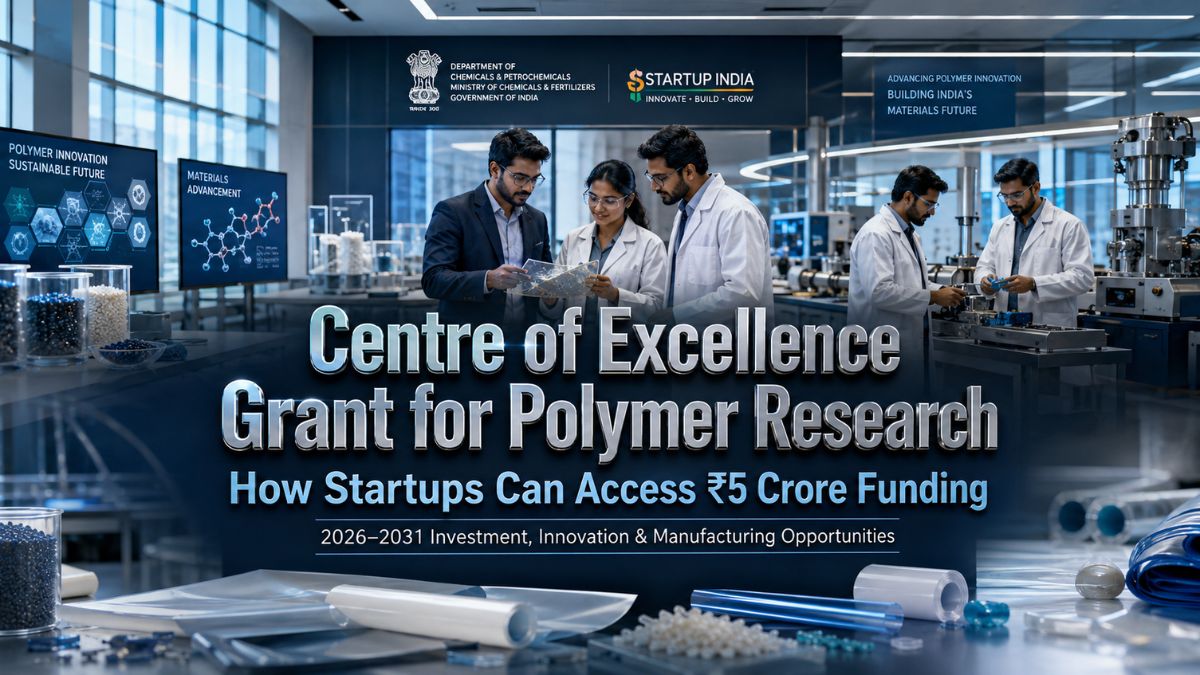
India’s startup ecosystem is growing beyond software and digital startups. Specialty polymers, biodegradable plastics, advanced packaging materials and industrial chemicals are among the biggest emerging opportunities today. Although numerous businessmen are still thinking about the saturated online market, the Government of India has established a significant funding framework for polymer innovation with the Centre of Excellence (CoE) scheme operated by the Department of Chemicals and Petrochemicals.
Official Ministry Website:
Ministry of Chemicals and Fertilizers
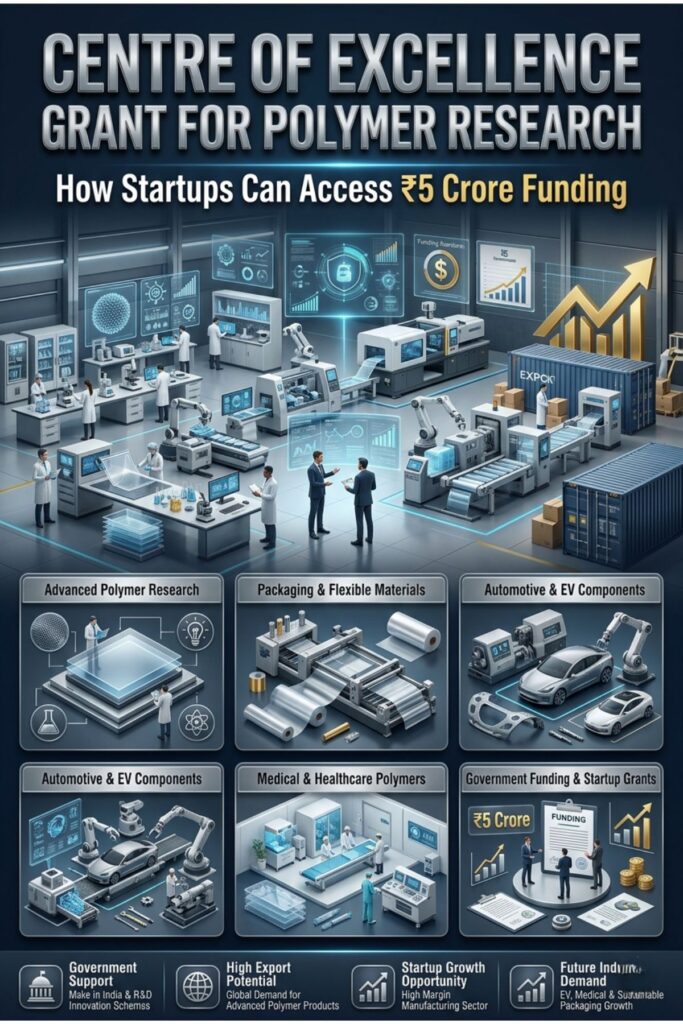
As per this scheme, institutions such as IITs, CSIR laboratories and CIPET centres are allocated grants of up to ₹5 crore to study and develop polymer technologies. This grant cannot be applied for directly by startups, but as a partner to these institutions through technology licensing, sponsored research, incubation support, or manufacturing collaboration.
It presents a significant opportunity for the Indian startups and MSMEs to avail this advanced technology created in the public funded research and get into high margin manufacturing segments.
Table of Contents
ToggleWhy the Polymer Industry Is a Big Opportunity in India
The polymer and petrochemical industry are one of the fastest-growing sectors in India. The demand in various industries is growing, including:
- Sustainable packaging
- Automotive manufacturing
- Electronics
- Defence materials
- Consumer products
- Construction chemicals
For startups, the highest point is that there’s still a considerable import of specialty polymer products into India from nations like Germany, Japan, Korea, and Taiwan. This implies that domestic manufacturers have lots of opportunities for import substitution.
The regions that are growing the fastest are:
- Biodegradable packaging materials
- Engineering plastics
- Specialty additives
- Polymer composites
- High-performance films
- Sustainable compounds
Early movers into these segments can create businesses with high margins and that have a long-term future.
What Is the Centre of Excellence (CoE) Scheme?
The Centre of Excellence scheme is run by the Department of Chemicals and Petrochemicals, Ministry of Chemicals and Fertilizers.
The scheme aims to help institutions develop advanced polymer technologies through financial assistance for the following:
- Research infrastructure
- Pilot plants
- Testing laboratories
- Material innovation
- Industrial technology development
Key Highlights of the Scheme
- Allotments up to 50% of project costs covered by government support.
- Maximum grant amount of ₹5 crore
- Involve in application of industrial research
- Promotes partnership of startups and MSMEs
- Supports technology commercialization
The key point that founders need to get is that the grant is awarded to the institution and not straight to the start-up itself. The start-up gains from the development of the technology under the programme and its use or licensing.
Major Approved Centres of Excellence
There are a number of approved CoEs that have direct commercial manufacturing opportunities.
IIT Madras – Biodegradable Packaging
This centre concentrates its efforts on compostable and sustainable packaging materials.
Business Opportunities
A start-up may produce:
- Compostable food containers
- Eco-friendly packaging films
- Biodegradable carry bags
- Agricultural mulch films
The demand for biodegradable products is rising rapidly among FMCG companies, restaurants and e-commerce companies due to the growing restrictions on single use plastics.
Get Detailed Project Report (DPR): Biodegradable Plastic Bag Manufacturing Industry
IIT Kanpur – Specialty Chemicals
This CoE is focused on the creation of advanced specialty compounds and industrial polymer formulations.
Potential Startup Areas
- Engineering plastics
- Glass-filled nylon compounds
- Automotive polymer blends
- Specialty ABS compounds
This segment is more profitable for commodity plastic processing companies because customers care more about performance and consistency than price.
Get Detailed Insights from This Book: Handbook On Chemical Industries (Alcohol Based)
CSIR-NIIST – Sustainable Polymers & Performance Chemicals
This centre is engaged in the development of high-performance industrial chemicals and polymer systems.
Manufacturing Opportunities
- Flame retardants
- Polymer stabilizers
- Processing aids
- Specialty industrial additives
India continues its imports of many such products, leading to high opportunities for domestic manufacturing startups.
How Startups Can Use the CoE Ecosystem
For most first-time entrepreneurs, it is believed that they need to develop their own R&D systems prior to entering into manufacturing. This is a paradigm shift with the CoE model.
There is a better way for startups to participate in research activities, rather than taking years to get to research, they can instead work with institutions and concentrate on commercialization.
Typical Startup Entry Routes
- Technology licensing
- Sponsored research projects
- Incubation partnerships
- Joint development agreements
- Commercial manufacturing collaborations
This helps to save product development time, and enhance manufacturing credibility.
Why Technology Access Matters More Than Machinery
Because they make commodity products, many small manufacturers compete basing their offering on low pricing. Typically, however, specialty businesses or those with proprietary technology will realize:
- Higher margins
- Better customer retention
- Export opportunities
- Reduced competition
- Premium pricing
This is the very path on which successful Indian industrial firms grew to specialty businesses.
Arvind Goenka contributed to the growth of SRF’s specialty chemicals and advanced materials business by investing continuously in technology.
Hiten Bheda has grown Plastiblends to become a specialty additive masterbatch supplier to industrial sectors.
Rajesh Bhatia made Uflex a big name in the packaging technology industry by emphasizing on the use of advanced materials and innovations.
Their success indicates that manufacturing growth over the long term is more about the ability to use technology than simply having the processing power.
Why a Detailed Project Report (DPR) Is Important
Entrepreneurs need to create a fool-proof project feasibility report before coming to the IITs, banks, investors, or government agencies.
The Detailed Project Report is used to help demonstrate:
- Manufacturing viability
- Market demand
- Financial feasibility
- Machinery requirements
- Profitability projections
- Break-even analysis
- Raw material planning
Niir Project Consultancy Services (NPCS) provides industrial project report preparation, market survey, techno-economic feasibility studies, business planning and business proposals for the manufacturing industries.
The following list highlights some of the key uses for these reports:
- Bank loan applications
- Institutional partnerships
- Investor presentations
- Government approvals
- Technology transfer discussions
For the first generation of promoters, having a professional DPR may be the initial step in getting finance and industrial partnerships.
Future of Specialty Polymer Manufacturing in India
All of the following are likely to boost India’s need for specialty polymer products:
- Electric vehicle manufacturing
- Sustainable packaging regulations
- Defence production growth
- Electronics manufacturing expansion
- Import substitution policies
In parallel, demand for sustainable and advanced polymer products is growing from the Southeast Asian and African markets.
This makes the Centre of Excellence system one of most valuable industrial opportunities for start-ups today.
The early entrepreneur who develops a technology-based manufacturing enterprise may provide long-term benefits which commodity manufacturers might not be able to easily duplicate.
FAQs
Q1. Is there a direct application process for CoE grant for startups with an investment of ₹5 crore?
No. The grant is given to the institutes such as IITs and the CSIR labs. Startups get involved in technology transfer, licensing, or research collaborations.
Q2. Which of the polymer industries is the most promising?
The fastest growing sectors are:
- Biodegradable packaging
- Engineering plastics
- Specialty additives
- Automotive compounds
- Sustainable polymer materials
Q3. How much investment is needed for a polymer start-up?
The initial investment required for small specialty compounding units could be at the cost of ₹ 4-8 crore, whereas an advanced manufacturing plant for producing biodegradable or composite units would need an investment of ₹ 10-20 crore.
Q4. What is the benefit of technology licensing to startups?
Technology licensing gives startups access to the industrial research they need without the time commitment required to undertake years of R&D development.


