





BioE3 Policy India
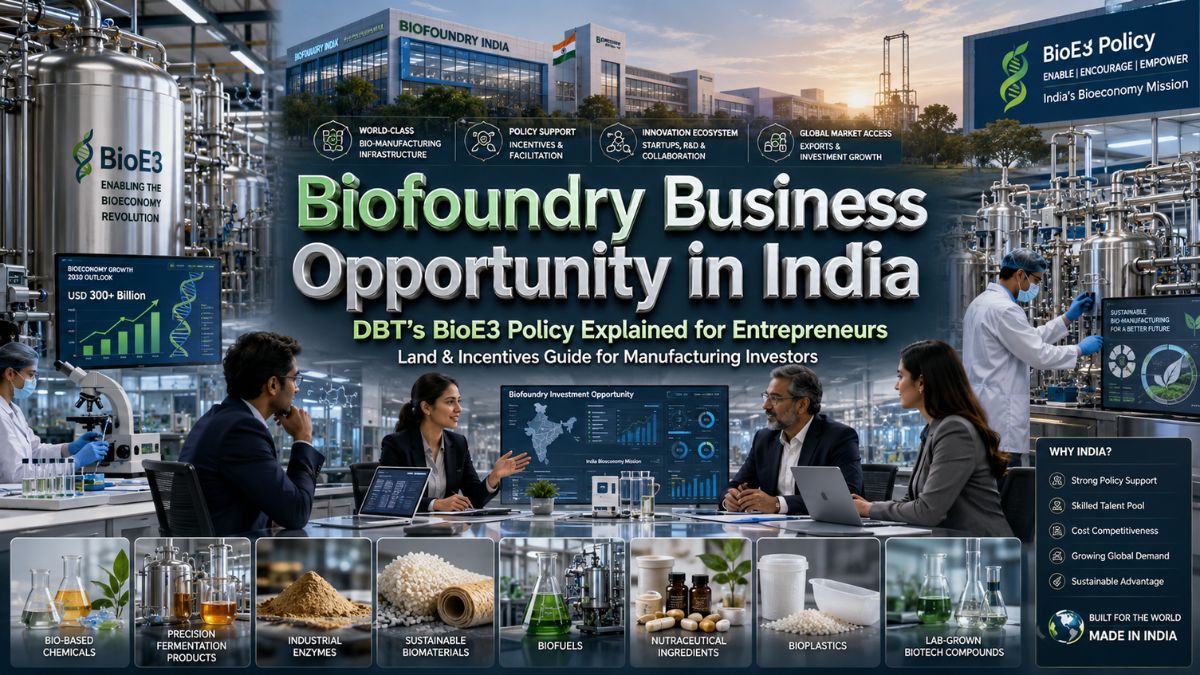
As India’s biotechnology industry is starting a new phase of industrial growth, the government’s BioE3 policy is emerging as one of the largest prospects for entrepreneurs in the biotech startups and manufacturing space. The Department of Biotechnology has launched BioE3 (Biotechnology for Economy, Environment and Employment). The policy is geared towards making India a global bio-manufacturing hub, bio-chemicals, industrial enzymes and sustainable agricultural products.
This bio foundry India BioE3 policy is no ordinary policy announcement for entrepreneurs. It’s a business opportunity, with funding, a supportive government, export demand, and increasing industrial demand. There is a significant import of specialty enzymes, bio-chemicals and advanced agricultural biological products into India. The government now wants domestic firms to encourage these imports to be made at home.
A clear indicator was the DBT funding of Institute of Pesticide Formulation Technology (IPFT) for biofoundry facility. This Project will enhance the capacities of India in research, development and bio-manufacturing of bio-pesticides as well as fermentation. This provides opportunities for private sector contract manufacturing, R&D support sharing, and technical cooperation.
The Indian chemical industry is already big enough to facilitate this change. India’s chemicals industry saw robust year-on-year growth and recently crossed the turnover of ₹15 lakh crore, the ministry of Chemicals and Fertilizers has said. The significance of this is the fact that bio-manufacturing companies can produce and deliver products directly to established industries like agriculture, food processing, medicine and textiles.
Get Detailed Insights from This Book: Just For Starters: How To Start Your Own Export Business
Why Bio-Manufacturing Is Growing Fast in India
The demand for sustainable and bio-based products is growing very quickly around the world. European and North American nations are restricting the use of synthetic chemicals and pesticides. Today, consumers are looking for safer and eco-friendly options.
This presents an excellent opportunity for Indian manufacturers as India already has:
- A good chemical manufacturing base has been provided.
- Low-cost skilled manpower
- Expanding biotech ecosystem
- Growing export connectivity
- Government-backed biotech policies
BioE3 policy is intended to assist in development of industries that will develop:
- Employment
- Export growth
- Import substitution
- Sustainable manufacturing capacity
This is the government’s effort to promote businesses that are early adopters in the bio-manufacturing segment, especially MSMEs and startups.
Best Business Opportunities Under BioE3 Policy
Bio-Pesticide Manufacturing
Right now, bio-pesticides are one of the most viable prospects for the first generation of entrepreneurs. The demand is rising because there is a trend towards residue-free farming by farmers, exporters and the government’s agriculture programmes.
Common products include:
- Trichoderma formulations
- Bacillus thuringiensis (Bt)
- Neem-based pesticides
- Microbial fungicides
The expenses to set up a small manufacturing unit are likely to range between ₹50 lakh to ₹80 lakh, depending on the level of production and automation.
The largest customers are:
- Agriculture departments
- Farmer Producer Organizations (FPOs)
- Agri-input distributors
- Organic farming companies
Bio-products can fetch premium prices; they are often more profitable than conventional agrochemicals.
Get Detailed Insights from This Book: Biopesticides Handbook
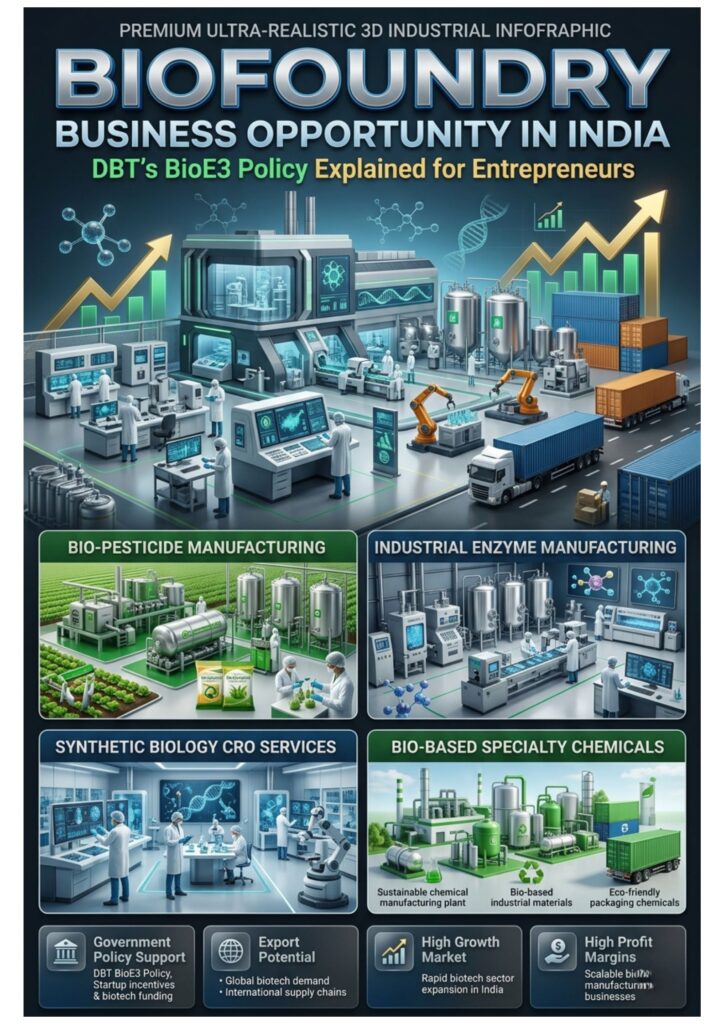
Industrial Enzyme Manufacturing
Industrial enzymes, which is another segment under BioE3, is a high-growth segment. Many enzymes are still imported in India for the following uses:
- Textile processing
- Leather treatment
- Food manufacturing
- Pharmaceuticals
This presents a very good opportunity for import substitution.
The cost of investment in a mid-scale enzyme production unit is in between ₹1.5 crore and ₹3 crore. The margins generally are stronger since the industrial client will need a long-term supply contract, but the initial investment is higher.
The industrial contacts can have a positive impact on the growth of the business for the entrepreneurs who have those contacts already.
Related Article: Textile Manufacturing Business Ideas in India – High Profit MSME Opportunities with Low Investment
Synthetic Biology CRO Services
Synthetic biology CROs provide services of biotechnology research and process optimizations to pharma and biotech companies.
Typical services include:
- Strain development
- Fermentation optimization
- Scale-up support
- Process engineering
CRO models are different to manufacturing companies’ business models because they earn money with research contracts. This helps to minimise inventory risk and can enhance cash flow.
Technical skills, being the value driver, often result in these margins being quite high.
Bio-Based Specialty Chemicals
Bio chemicals are gaining ground in the global market. European and Japanese companies are especially looking for sustainable suppliers due to stricter environmental regulations.
Products expected to have a high demand for the future are:
- Lactic acid
- Bio-surfactants
- Fermentation-derived chemicals
- Bio-based aromatic compounds
Early entrants in the segment from India could reap long-term benefits in exports if the world becomes increasingly stringent with its sustainability standards.
Access Complete Business Plan: Lactic Acid Manufacturing Project Report
Government Funding and Support for Biofoundry Startups
Policy support is one of the biggest perks of joining this sector at this time. There are a number of government agencies that provide funding and incentives to entrepreneurs.
Significant assistance is available in the following forms:
- DBT bio-manufacturing support
- BIRAC startup funding
- CGTMSE collateral-free loans
- The state’s policies regarding biotech startups
Telangana, Karnataka and Maharashtra are actively encouraging biotechnology manufacturing by providing incentives and infrastructure.
Indian Companies Already Showing the Potential
Biocon is a case in point as to how industrial biotechnology can be scaled up to become a global business. The company was established by Kiran Mazumdar-Shaw, and was started with the production of enzymes before diversifying to pharmaceuticals.
Likewise, Dhanuka Agritech has prioritized bio-pesticides, as the world moves in the direction of sustainable inputs for agriculture.
The examples demonstrate the bio-manufacturing is far from a passing fad. It’s becoming a long-term shift toward industry.
Identify high-growth industries before others do
Why Feasibility Studies Are Important
Bio-manufacturing businesses need to be technically planned as fermentation, quality control, regulatory approval and consistency of the production systems are involved.
Entrepreneurs need to consider the following before investing:
- Machinery requirements
- Production economics
- Regulatory timelines
- Raw material sourcing
- Break-even projections
- Market demand
This is where NPCS (Niir Project Consultancy Services)proofs helpful for new entrepreneurs.
NPCS assists businesses to get ready:
- Detailed project reports
- Techno-economic feasibility studies
- Manufacturing process analysis
- Financial projections
- Market research studies
The company has been involved in thousands of industrial manufacturing projects across the country in India and has guided the entrepreneurs to see the true commercial viability of projects before investing funds.
Final Thoughts
The biofoundry India BioE3 policy is one of the best opportunities in the current manufacturing policy in India. Government support, export markets, sustainability and industrial development all make bio-manufacturing a viable business opportunity for the long-term.
As an early-stage entrepreneur, you can benefit from:
- Lower competition
- Government incentives
- Growing global demand
- Import substitution opportunities
- Export market expansion
The coming five to ten years hold a significant potential for the growth of the bio-economy of India in particular, with the bio-pesticide, bio-enzymes for industrial applications, bio-chemicals using fermentation and services segment expected to grow at a considerable pace.
If your entrepreneurial goals include creating manufacturing enterprises that can grow considerably in the future, then the BioE3 policy could be one of the biggest industrial opportunities of this decade.
FAQ
What is BioE3 Policy?
BioE3 is a Government of India initiative started in 2017 by the Department of Biotechnology for the development of bio-manufacturing, sustainable biotechnology and employment generation in India.
What is a biofoundry?
Biofoundry is a biotech manufacturing plant based on biological systems, enzymes and microbes to produce commercial products like bio-pesticides, enzymes, specialty chemicals etc.
What is the amount of investment needed to start up bio-manufacturing?
Small-scale bio-pesticide projects could begin with an investment of Rs 50 lakh, while enzyme and specialty chemical projects might need Rs 2–5 crore.
What is the best bio-manufacturing company to begin with?
Bio-pesticide manufacturing is one of the most promising business opportunities as it requires low investment and has a high demand.
What is the possibility of exporting bio-manufacturing?
Yes. Import of sustainable agricultural and bio-based industrial products is growing in Europe, Southeast Asian, Africa and North America.
How can NPCS help entrepreneurs?
NPCS (Niir Project Consultancy Services) offers feasibility report and financial analysis, market study and full project planning for manufacturing companies.


