





Market Insight
The Indian pharmaceutical industry is one of the most significant industrial success stories of recent Asian history. It is a world-famous country for producing more than 20% of the global generic medicines by volume and meeting more than 60% of global vaccine demand. The domestic market is poised for rapid growth to USD 145 billion by the early 2030s, with a CAGR of over 10%, with the current estimated value of USD 66–68 billion. In FY2024–25, pharmaceutical exports valued at USD 30.47 billion were sent to customers and healthcare systems in 191 countries, one-half of which went to the highly regulated markets of the United States and Europe.
Despite this export capacity, a critical structural weakness is still at the input end of the value chain – the demand–supply gap. India imports about 70% of its bulk drugs, Active Pharmaceutical Ingredients (APIs) and Key Starting Materials (KSMs) – mainly from China which supplies around 70-74% of India’s pharmaceutical raw materials import requirement. This deep-rooted import dependence creates unresolved demand-supply gap at the API and fermentation based intermediate level, which is one of the most commercially actionable investment gaps in the sector today.
India’s Pharmaceutical Sector: A Structural Giant with Strategic Blind Spots
The pharmaceuticals industry is one of the most iconic companies in Indian industry. It is home to more than 10,500 manufacturing facilities, directly and indirectly serves more than 2.7 million employees, and has one of the world’s largest networks of USFDA approved facilities outside the U.S. The India Brand Equity Foundation (IBEF) has stated that India is the third-largest global producer of pharmaceuticals by volume and the exports of pharmaceuticals have increased by 92% year-on-year, from ₹1,28,028 crore during FY2018-19 to ₹2,45,962 crore during FY2024-25.
But there’s a paradox here in the commanding presence on the world stage. But a nation that sells medicines to 191 nations still imports key ingredients – antibiotics and vitamins, fermentation-based biologics and chemical intermediates – largely from one geopolitical competitor. The risk and opportunity for investors, manufacturers, and MSMEs who will enter the pharmaceutical industry between 2026 and 2033 is defined by this paradox.
Rising of the domestic consumption pattern reinforces urgency. Indian Council of Medical Research (ICMR) estimates that India has more than 101 million diabetic population, about 220 million hypertension patients and a huge demand for cardiovascular, metabolic, anti-infective and oncology classes of drugs which is structurally sustained. The Indian Pharmaceutical Market (IPM) is recording double-digit value growth across its three therapeutic categories—respiratory, anti-infective and gastrointestinal. Take just one example of cardiac drugs – they have increased by more than half in five years, from ₹1,761 crore to ₹2,645 crore, as the lifestyle disease epidemic has rampaged through urban and semi-urban India.
Get Detailed Insights from This Book: Handbook on Active Pharmaceutical Ingredients (API), Drugs & Pharmaceutical Products
Market Size, Growth Trajectory, and Application Segments (2026–2033)
The Indian pharmaceutical industry is expected to reach USD 68 billion by 2033–2034 and grow to USD 145 billion to USD 175 billion based on the adoption rate of biosimilar drugs, the domestic availability of APIs and the international conditions for export. The CAGR for this forecast period is capped off at 10.5% to 11%, with one of the fastest growing pharmaceutical markets among emerging economies.
By Drug Type
The market can be segmented into two major categories, namely, biologics and biosimilars and small molecules or conventional drugs. The country has strong capabilities in the generics business, making small molecules the dominant players historically. The story of the next ten years, however, is clearly one of biologic growth. India’s biosimilar market accounts for about 19% of the biosimilar market, and is expected to grow at a CAGR of 15.8% faster than the market average.
Monoclonal antibodies, biosimilars of insulin, trastuzumab and oncology biologics are some of the fastest growing product categories. Indian biosimilar companies have already gained 22% of trastuzumab’s prescriptions in only a few years since its launch, a testament to the rapid uptake of these drugs in the Indian clinical market.
By Route of Administration
Oral products remain the most produced and consumed products with the highest portion both in domestic market and export volume. But parenteral (injectable) formulations are expanding at much faster rate, owing to the increasing demand for oncology, biologics and intensive care segments. This is especially true for startup investors, as parenterals demand sterile environments, aseptic fill-finish and regulatory-grade quality management systems, which present natural barriers for entry, benefitting the early movers.
By Application
The key growth application segments are:
- Cardiovascular and Anti-Diabetic drugs are growing at around 10-11% per annum and will be fueled by the chronic diseases burden in India.
- Anti-infectives and antibiotics: Structure is relatively high, but domestic raw materials supply still relies on Chinese raw materials for the key products such as Penicillin G, Amoxicillin, Azithromycin, etc.
- Oncology and immuno-oncology are among the fastest growing sectors and biosimilar oncology drugs present a USD 4 billion window of opportunity for Indian generic companies after the expiration of patents.
- Respiratory therapies: posting positive value growth over the past few market periods, fueled by increased awareness of post-pandemic respiratory care and pollution-related respiratory disease.
- Gastrointestinal and lifestyle drugs: These will have a substantial patent expiry event in 2026 with the GLP-1 agonists (including semaglutide) expected to experience an estimated 34% CAGR in this category from 2025 to 2030.
By Region (Domestic)
The domestic consumption is maximum in North India (around 30%), influenced by high population density and high concentration of healthcare infrastructure in states like Uttar Pradesh, Delhi NCR, Punjab etc. The west India region (Maharashtra, Gujarat and Rajasthan) has around 32% of the domestic pharma sales and the bulk of pharmaceutical manufacturing clusters in India, such as Ahmedabad, Mumbai and Pune. The fastest-growing region is South India, which has Hyderabad and Bengaluru as its anchor cities, and has a disproportionately large concentration of API manufacturing and biotechnology facilities. More than 1,400 special purpose manufacturing units are spread across these areas, which constitute the core of the export capacity of India.
SWOT Analysis: Indian Pharmaceutical Industry
Strengths
The Indian pharma industry is rooted in the strengths that are hard to replicate and hard to compete with in terms of cost and size. Indian manufacturers have a structural pricing edge in regulated generic markets, as manufacturing cost efficiency is 20–30% lower than China, and much lower than most Western manufacturers.
Another key virtue is regulatory track record. India has the most USFDA approved pharmaceutical manufacturing unit not in the USA and has 57% of APIs on the WHO’s pre-qualified list which are utilized in the manufacture of finished formulations. This places Indian manufacturers on the front foot with the global health agencies, bilateral health treaties and procurement providers.
In scope, India is the leader of generics export. Indian manufacturers supply more than 20% of the medicines consumed worldwide, and this is a testament of the consistent quality investment and regulatory engagement that have been made in the country over the last 30 years or more. In the meantime, the Production Linked Incentive (PLI) scheme has allocated ₹15,000 crore reserved for the pharma industry and an extra ₹3,420 crore has been allocated for the medical devices sector.
As mentioned in the Press Information Bureau – Government of India, the pharma sales under PLI have reached to Rs. 2.66 lakh crore in first three years, exports worth Rs. 1.70 lakh crore and domestic value addition with a figure of 83.70% till the latest reporting period.
Weaknesses
One of the most entrenched pain points in India’s pharmaceutical value chain is its reliance on imports of API. China accounts for the majority of India’s bulk drug imports, supplying around 70% of the country’s imports of bulk drugs and active Observer Research Foundation (ORF), pharmaceutical ingredients. In the case of antibiotic APIs alone, about 87% of the imported API value comes from China, up from about 60% 20 years ago. Pharmaceutical supply chains in India were severely impacted during the COVID-19 pandemic, as seen from the Chinese factories cutting back on production, compelling India to limit exports of 26 essential drugs such as Paracetamol by ORF.
Price control policies also squeeze margins. National Pharmaceutical Pricing Authority (NPPA) regulates about 928 medicines which reduces the revenue growth of companies selling essential medicines. The inclusion of its lead products on the essential medicines list has resulted in gross margin declines of more than 300 basis points for some companies that have reported such declines, which can impact investment and portfolio decisions.
Another obstacle for mid-tier manufacturers is regulatory compliance costs. Capital investment is necessary for the compliance with the USFDA, EU EMA and WHO-GMP standards. While the warning letter and import alert issued to Indian facilities will affect the bigger players in the industry, it will cause disproportionate disruption for medium-scale exporters.
Opportunities
The potential for untapped opportunity in the Indian pharma industry is huge on various fronts.
Structurally most interesting is the biosimilar boom. India’s manufacturers, who have established fermentation and bioreactor plants, are well-positioned to manufacture affordable biosimilars for the domestic market and regulated export markets as the major biologic drug patents expire, with billions of dollars in biologic sales going off-patent through the late 2020s. The home market for bio-similars is already worth more than USD 1 billion and expanding at double digits pace. This is also supported by the government’s ₹10,000 crore Biopharma SHAKTI scheme, which has been invested in the construction of three new National Institutes of Pharmaceutical Education and Research (NIPERs), the upgradation of seven institutions and more than 1,000 accredited clinical trial sites.
The other promising entry vector is Contract Development and Manufacturing (CDMO). Manufacturing partners are being sought by global biopharma companies outside China and India’s China+1 is appealing to western pharmaceutical MNCs. Bundled bioequivalence studies with dossier filing in India have brought the filing time from 36 months to 18 months, making filing timelines more efficient, and this ability advantage is gaining traction globally, with India being a prime instance of CDMO gaining international business.
The patent expiry of semaglutide (GLP-1) in March 2026 will likely drive an explosion in the demand for injectable genetics, which will provide an opportunity to Indian manufacturers who have the capacity to manufacture sterile injectable and peptide products.
Expansion of health insurance is also increasing the number of patients available. The latest data from the National Sample Survey shows that health insurance coverage in rural India has improved to 47.4% and in urban India it is 44.3%, which has been a major catalyst to the increased prescription drug consumption in these underserved regions.
Get Detailed Project Report (DPR): Pharmaceutical Drugs & Fine Chemicals Project Guide
Threats
The external threat is geopolitical conflict and concentration of supply chains. Further escalation of India-China trade disputes or a disruption in the supply of China’s pharmaceutical raw materials could lead to significant rises in input costs in India’s formulation market. This is no theoretical risk; In India, during the Pandemic, API Paracetamol’s price rose from approximately ₹250 per kg to ₹900 per kg before dropping when supply resumed. Indian manufacturers have not got a lot of options to replace Chinese API with similar cost in short term.
Another near-term worry is US tariff policy. Any further increase in tariff pressure on export of Indian pharmaceuticals, especially on export of generics to the US which contributes 30-50% in revenues for the top five companies, can have tangible impact on the profitability and export growth plans.
Smaller manufacturers are continually exposed to regulatory stringency. The revised GMP norms for the Schedule M area in India have already led to around 18% of the sites that have been inspected not fulfilling the new quality standards for sterility and data-integrity, indicating a consolidation wave in the local mid-tier manufacturing space driven by quality.
Demand–Supply Gap: The Strategic Investment Corridor
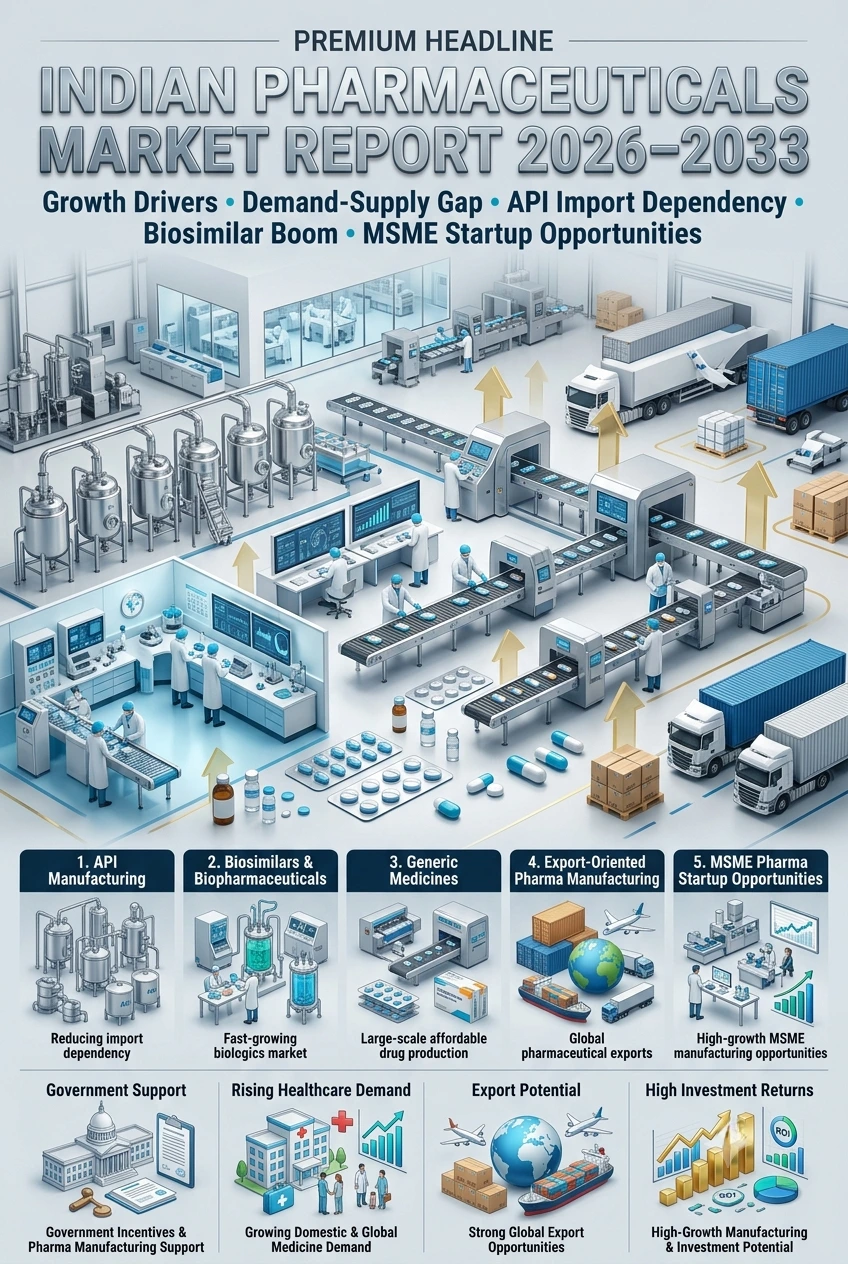
The most promising area in the Indian pharmaceutical value chain is at the upstream API and fermentation-based intermediate stage. APIs, bulk drugs and intermediates worth around USD 4.35 billion were imported into India in FY2024-25, with China contributing to nearly 73-74% of this import value. The Indian API market is estimated to be around USD 14.77 billion or ₹1,31,700 crore for the domestic formulation and international export market.
The structural deficit is especially large in:
- The fermentation-derived antibiotics (penicillin compounds, cephalosporins, macrolides)
- API solutions for vitamin, nutraceutical, and medicinal applications (Vitamin B12, Vitamin C and Vitamin D3).
- Steroid API intermediates
- Anti-cancer API intermediates
- Biological APIs & Biologics (including biosimilars)
The PLI scheme for bulk drugs has delivered meaningful early results. The government reports that domestic production capacity has been created for 26 APIs, KSMs, and intermediates, and the country has transitioned from a net importer of bulk drugs (with a ₹1,930 crore deficit in FY2021–22) to a net exporter (with a ₹2,280 crore surplus in FY2024–25). However, the industry acknowledges that this progress, while directionally significant, does not yet represent self-sufficiency. The gap between current domestic API capacity and the formulation industry’s raw material requirements remains substantial — and this gap is precisely where new manufacturing investment is both needed and financially viable.
Major Indian Players: Organized Sector Landscape
At the heart of India’s organized pharmaceutical industry is a group of companies that are the foundation of the industry’s capabilities in terms of size, regulatory history, and international presence.
Sun Pharmaceutical Industries is India’s biggest pharmaceutical firm in terms of market capitalization and market share (around 8%). Sun Pharma’s revenues for FY25 are at ₹52,041 crore, where the company has created a true ‘specialty pharmaceuticals’ business in addition to its generic business, with its innovative medicines business in the global market contributing more than 22% of total revenues. It has a U.S. business with annual sales of USD 1.92 billion, and is the market leader in oncology generics in the U.S. market.
Dr. Reddy’s Laboratories generates around ₹34,682 crore of revenues and sells nearly 46.9% of its revenues in the US market. It has been one of the busiest generic drugs (abbreviated new drug application) filers in the United States and has been developing a pipeline of biosimilar and differentiated generics in an aggressive way. Dr. Reddy’s has filed 12 first to file ANDAs for key patent expiry molecules, and has gained advantages of market entry.
Cipla Limited remains a strong player in its most dynamic therapeutic segment, respiratory therapy, and has a strong consumer health and branded prescription business. Cipla’s revenue is ₹28,351 crore and it has been growing its sterile injectables and biosimilar pipeline considering them as high growth verticals in addition to its branded generic strength.
The other big organized sector players are Aurobindo Pharma, Lupin, Biocon, Divi’s Laboratories, Torrent Pharmaceuticals and Alkem Laboratories. Biocon in particular, has become a global leader in the biosimilar space, accounting for 22% of trastuzumab prescriptions, and recently got included in the top 10 market cap biosimilar pharma companies on biosimilar momentum. Divi and Laurus Labs are the top players in the API manufacturing category, with Laurus Labs gaining more than 80% stock appreciation in 2025 due to its oncology injectables expansion and CDMO business growth.
Startup Opportunity: Where MSMEs and First-Generation Entrepreneurs Can Compete
Large corporates are not the monopoly of the Indian pharmaceutical industry. MSMEs are already an integral component of the value chain – from packaging, excipient supplies, cold-chain logistics, quality testing, toll manufacturing, to contract formulation. The new growth vectors for the 2026-2033 period offer new opportunities to smaller players with specific capabilities and regulatory discipline.
API Manufacturing for Niche Molecules: The PLI scheme has already proved to be a viable option for domestic API manufacture for niche molecules. MSMEs should look into APIs that have less competition from China such as fermentation intermediates APIs, plant-derived APIs, peptide synthesis etc. The entry level capital outlay for a niche API facility is in the range of ₹10–50 crore depending upon the complexity of technology and the risk-adjusted return gets enhanced significantly if the API product falls under government’s identified critical API list and qualifies for PLI incentives.
Contract Formulation & Toll Manufacturing: Seeking contract manufacturing partners with WHO-GMP & Schedule M compliant for the manufacturing of liquid, semi-solid & solid oral dosage forms in the field of pharma industry, both NOCs as well as MNCs are actively seeking. An MSME with a clean regulatory history and a flexible production capacity can generate a stable income by entering into long-term contract manufacturing agreements, without having to take on the commercial risk of building a brand.
Specialty Injectables and Sterile Manufacturing: The pharma logistics network in tier-2 and tier-3 cities continues to lack the infrastructure to support the storage and distribution of cold-chain products, such as GLP-1 injectables, oncology biologic drugs, and biosimilar products. In the context of the expansion of market access for rural manufacturing by domestic manufacturing companies and MNCs, MSMEs can secure distribution contracts if they have WHO-GMP certified cold-chain storage facilities, refrigerated logistic facilities and compliance documentation.
In parallel, the traditional medicine market of India, which includes both herbal and ayurvedic pharmaceuticals, is equally growing, while the export market for ayurvedic, unani and nutraceutical pharmaceutical formulations is gaining momentum in the regions like Southeast Asia, Middle East and Africa. An export-oriented business can be built at relatively lesser capital cost for startups having FSSAI/Ayush Ministry compliance.
The increasing convergence of pharmaceutical and diagnostic products – dubbed “theragnostic” – is opening up opportunities for start-ups to produce rapid diagnostics products for TB, dengue, malaria and chronic disease markers. Compliant MSME manufacturers have a secure demand anchor as the government purchase programmes via the Ministry of Health and Family Welfare.
India’s pharmaceutical export growth has been structurally sustained and diversifying both product-wise and geography-wise, says Pharmexcil (Pharmaceuticals Export Promotion Council of India). MSME manufacturers in regulated markets such as: Africa, ASEAN, Latin America can have a credible path to market by having a WHO-GMP or Schedule M certificate, with the assistance of the export council Pharmexcil for the compliance cost, which is much lower than the USA FDA or EU EMA registration.
The Department of Pharmaceuticals, Ministry of Chemicals and Fertilizers has also further enhanced the ecosystem of support for MSMEs in the pharmaceutical sector in the following manner: The Strengthening of Pharmaceutical Industry (SPI) scheme, with a sanctioned amount of ₹135.84 crore, has supported 142 MSME pharmaceutical companies to upgrade their quality standards. This is the type of institutional support infrastructure that can support pharmaceutical manufacturing, if a first-generation investor uses the right approach and a well-defined product niche with regulatory discipline.
Choose the right startup backed by real market demand
Regional Analysis: Manufacturing Hubs and Market Distribution
India is not a homogenous country for its geography for pharmaceuticals. Industrial clusters have developed “naturally” through access to raw materials, familiarity with regulations and specialization of the workforce.
The share of domestic pharma sales in West India (Maharashtra and Gujarat) is around 32% and the region has the highest number of formulation manufacturers. The Ahmedabad-Ankleshwar corridor of Gujarat is a key location for bulk chemicals and API intermediate production. There are big multinational as well as domestic formulation plants in the Pune-Nasik axis of Maharashtra.
South India (Andhra Pradesh, Telangana, Karnataka) is also the most technically advanced area for API manufacturing and biotech. The city of Hyderabad, which is known as a “Pharma City” in India, is home to an undue percentage of USFDA inspected API manufacturing facilities such as the Aurobindo Pharma campus at Genome Valley and the Divi’s Laboratories API manufacturing complex. More than 200 biotech and pharmaceutical companies have set up shop in Genome Valley, Hyderabad.
North India (Himachal Pradesh, Uttarakhand, Punjab) is important in terms of tax incentive-based formulation manufacturing, especially in Baddi (Himachal Pradesh) where the pharmaceutical manufacturers are highest in density in Asia. Historically, special category state incentives and excise benefits have encouraged the formation of clusters here, although some of those benefits have been levelled by the GST.
East India remains the least developed pharmaceutical manufacturing region but is an emerging consumption market, particularly for over-the-counter (OTC) drugs and primary healthcare products, as insurance penetration and government health schemes expand access in states like West Bengal, Odisha, and Bihar.
Government Policy Framework: Driving the Next Growth Phase
The Government of India’s attitude towards Pharmaceuticals is very pro-investment and pro-manufacturing. The Ministry of Chemicals and Fertilizers, Department of Pharmaceuticals have introduced a tiered incentive package to overcome the demand and supply side issues in this industry.
The PLI Scheme for Pharmaceuticals (₹15,000 crore outlay) promotes the manufacturing of high value products such as Biopharmaceuticals, Complex Generics, Patent drugs coming up for expiration, Auto-immune drugs, Anti-cancer drugs and Anti-diabetic drugs. PLI Scheme for Bulk Drugs focuses separately on domestic manufacturing of critical APIs, KSMs and drug intermediates, which are largely import dependent.
The Pradhan Mantri Bhartiya Janaushadhi Pariyojana (PMBJP) has increased to more than 14,000 Jan Aushadhi Kendras with sales of 1,000 crore rupees in one month, as an important channel for MSMEs, generic drug makers.
The recently announced Biopharma SHAKTI scheme of the Government of India with an outlay of Rs. 10,000 crore is the next frontier of government investments with a special focus on India’s Biologics and Biosimilars manufacturing ecosystem. The scheme provides funding for infrastructure for biomanufacturing, clinical trials capacity and development of regulatory science, which would constitute a policy tailwind for biosimilar and biologic start-ups that would be hard to miss.
Pharmaceuticals is not only an industrial vertical but also an integral part of the Viksit Bharat 2047 vision, and the Federation of Indian Chambers of Commerce and Industry (FICCI) has projected its industry will be worth ₹11,20,600 crore (USD 130 billion) by 2030 and ₹38,79,000 crore (USD 450 billion) by 2047.
Import–Export Dependency Analysis
The pharmaceutical trade represents two simultaneous stories in India. The export trend is favourable too: USD 30.47 billion during FY24-25 which is expanding by 0.9% year-on-year, of which 50% are being exported to regulated markets such as the US and Europe which have the highest quality standards. India’s total export earnings from pharmaceutical products now constitute about 6 percent of the total merchandise export earnings.
For imports, the account shows that there is a strong structural dependence. The total pharmaceutical and API imports in FY24-25 were around USD 4.35 billion and though the overall import bill of API has gone up in absolute terms, the government has created a net exporter of bulk drugs through investment under PLI scheme. According to data from Pharmexcil, the imports in the first two months of the current fiscal year (FY24-25) were up by 13.06% from the first two months of FY23-24.
For MSMEs and investors, this import-export imbalance is no longer just a policy issue; it’s a business indicator. Each USD 1 billion of successful API import substitution generates domestic manufacturing value, pulls foreign exchange out of circulation and employment opportunities in high-skill manufacturing. The government has identified 41 critical APIs for local manufacturing, which includes 28 APIs with manufacturing capacity established under the PLI scheme, thus making available a handy list of commercially validated APIs for import substitution.
Related Article: API MANUFACTURING: Setting Up an Active Pharmaceutical Ingredient Plant in India: The Complete Guide
Project-Driven Manufacturing Opportunities: Feasibility Perspective
The industry has the flexibility to invest different amounts of money (₹10–20 crore in small scale oral solid dosage formulation plant and ₹150 crore or higher in biological or API manufacturing plant) and to have projects of different scale and complexity for entrepreneurs who want to invest in pharmaceutical manufacturing. The key parameters which determine feasibility of a project are regulatory time, product selection and positioning in a supply chain.
Some of the main elements of a pharmaceutical manufacturing DPR (Detailed Project Report) are:
- Product selection according to priority of import substitution, consumption and competitive situation of products
- Technology and process selection (fermentation, synthetic chemical, semi-synthetic, or recombinant)
- Capacity planning in accordance to domestic demand projections and export potential.
- Regulatory pathway (CDSCO, WHO-GMP, Schedule M, USFDA depending on target market)
- The raw material sourcing and diversification of the supply chain strategy.
- Financial modelling, including capital cost, operating cost, working capital cycle and profitability horizon
The project returns for identified API and high-value pharmaceutical products are boosted significantly through the application of the government’s PLI incentive structure, creating an effective capital recovery period of 20-30% less as compared to the period of recovery without the PLI incentive.
NPCS: Professional Feasibility Consulting for Pharmaceutical Ventures
A professionally prepared Market Survey cum Detailed Techno-Economic Feasibility Report is a prerequisite for every entrepreneur or investor considering pharmaceutical manufacturing as a business opportunity seriously and is a crucial base for making a credible investment decision.
Niir Project Consultancy Services (NPCS) — www.niir.org — is a reputed industrial and management consultancy service organization with focus on Detailed Project Reports (DPRs) for manufacturing projects in various industries such as Pharmaceuticals & Chemicals, Food Processing & Agro-based industries, and others. NPCS has a depth of knowledge and experience in assisting project investors, entrepreneurs, MSMEs, banks, financial institutions, and government agencies.
In pharmaceutical projects, typically the reports of NPCS contain:
- Manufacturing process documentation: Detailed manufacturing process documentation & process flow diagrams (PFD/BFD)
- Research and analysis of the markets for targeted products and services and of the demand for these products and services.
- Recommendations in relation to product mix and capacity planning
- Machine and raw material specifications and sourcing intelligence from vendors
- Import dependent analysis and domestic supply gap analysis.
Provide a financial analysis of the project (capital cost estimates, working capital, revenue and profitability projections)
Return on investment analysis, break even analysis, and sensitivity modelling
NPCS reports are regularly submitted for loan applications with banks, financing applications with SIDBI, MSME incentive applications with the state, and investor due diligence. An NPCS DPR gives first-time entrepreneurs entering the pharmaceutical manufacturing field without experience the technical assurance and financial foundation to deal with lenders, partners, and licensing authorities with confidence.
From niche API facility to a WHO-GMP contract formulation unit, herbal pharmaceutical production line or diagnostics manufacturing project, NPCS provides domain specific feasibility intelligence based on real market data and regulatory frameworks and operational realities – not just theory.
Frequently Asked Questions (FAQs)
Q1. What is the current size of the Indian pharmaceutical market, and how fast is it growing?
India is estimated to grow its current pharmaceutical market size of approximately $66-68 billion to $130-145 billion by 2030-33 with CAGR of 10.5-11%. Indian pharma exports hit $30.47 bn in FY24-25, with a growth rate of 9.4% and exports are spread over 191 countries.
Q2. What is the biggest structural weakness in India’s pharma sector for investors to be aware of?
The largest structural risk is the country’s import of nearly 70 per cent of the country’sAPI and bulk drug requirements from China, which has led to input cost volatility and supply chain risks. However, it also simultaneously makes it an attractive investment bet on domesticAPIand intermediates makers withPLIsupport.
Q3. Which pharmaceutical segments are growing fastest and offer the best investment potential?
Biosimilars (15.8% CAGR), GLP-1 injectables (34% CAGR predicted 2025-2030), oncology generics, contract manufacturing (CDMO), specialty injectables, and niche API manufacturing are highest growth commercial segments, and provide viable entry points for both large scale and mid-scale investors.
Q4. What government schemes support new pharmaceutical manufacturing investment in India?
Key schemes include the PLI Scheme for Pharmaceuticals (₹15,000 crore), the PLI Scheme for Bulk Drugs (targeting API domestic production), the Biopharma SHAKTI scheme (₹10,000 crore for biologics and biosimilars), the Strengthening of Pharmaceutical Industry (SPI) scheme for MSMEs, and the PMBJP Jan Aushadhi program. Details are available at the Department of Pharmaceuticals.
Q5. Can MSMEs realistically enter pharmaceutical manufacturing, and what entry points are most accessible?
Yes, there is MSME cluster and they are also there in the pharma space in India for quite some time. The entry points that are the easiest to access are the WHO-GMP or schedule M-compliant Oral solid Dosage formulation unit, Herbal/Ayurvedic formulations that you can export, diagnostic kits, pharmaceutical packaging material manufacturing and pharma cold chain and logistics to the tier-2 & tier-3 cities. Initial Capex would vary from 5 crore in the case of packaging to 20 to 50 crores for a dedicated formulation unit.
Q6. How do I validate the commercial feasibility of a specific pharmaceutical manufacturing project?
A Market Survey cum Detailed Techno-Economic Feasibility Report (DPR) from a professional firm like NPCS (www.niir.org) is the standard tool for project validation. It provides demand analysis, production cost benchmarking, regulatory pathway mapping, and financial projections — the full information package required for investor and lender confidence.
Summary Box: Key Metrics at a Glance
| Parameter | Data |
| Domestic Market Size | ~USD 66–68 billion (current) |
| Projected Market Size (2033) | USD 130–175 billion |
| Market CAGR (2026–2033) | ~10.5–11% |
| Pharmaceutical Exports (FY25) | USD 30.47 billion (191 countries) |
| API Import Dependency | ~70% of bulk drug imports from China |
| API Market Size (India) | ~USD 14.77 billion |
| PLI Scheme Outlay (Pharma + Bulk Drugs) | ₹15,000 crore + ₹3,938 crore |
| Biosimilar Segment CAGR | ~15.8% |
| Top Domestic Players | Sun Pharma, Dr. Reddy’s, Cipla, Aurobindo, Biocon |
| Fastest Growing Therapeutic Segments | Cardiovascular, Oncology, Respiratory, GLP-1 |


