





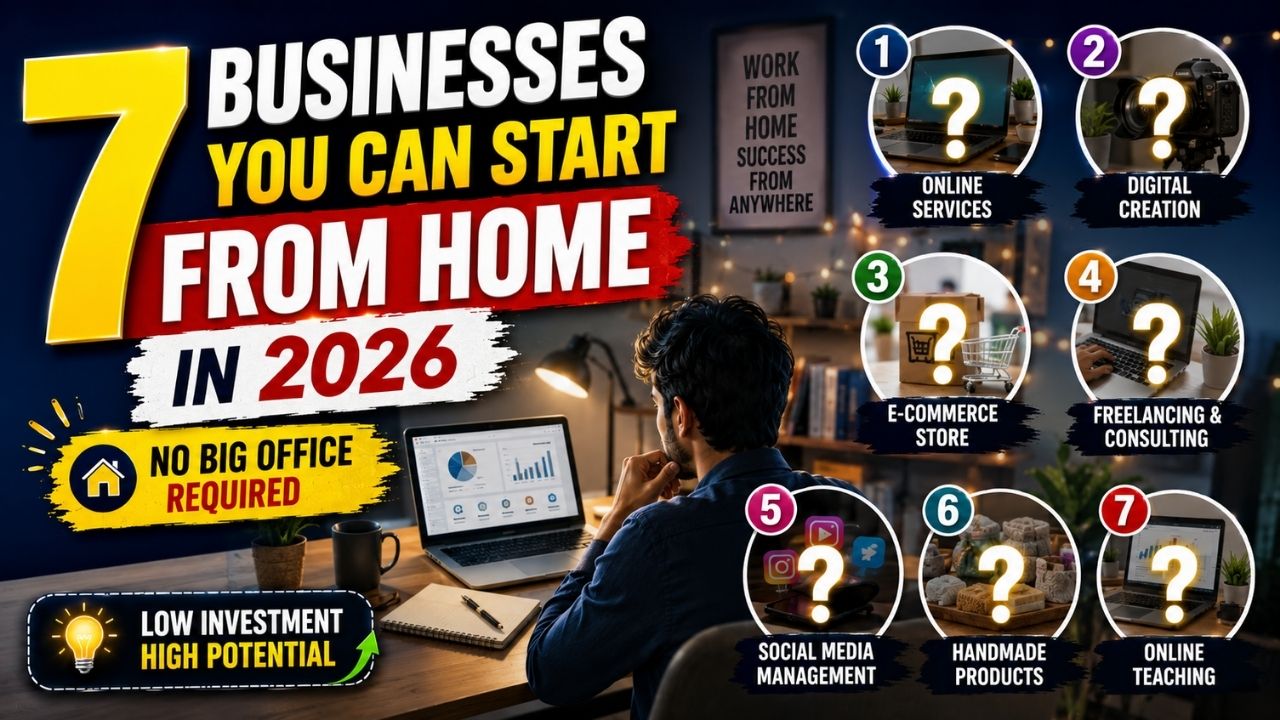
Starting a business no longer means renting a large office, hiring a big team, or spending a huge amount of money upfront. In 2026, many entrepreneurs can start from a spare room, home office, garage, or even a laptop.
The biggest opportunities are often in businesses that solve everyday problems. From AI services and online education to e-commerce and creative work, here are seven home-based business ideas worth considering in 2026.
1. AI Content and Digital Services
Small businesses are increasingly looking for practical ways to use AI, but many owners do not have the time or knowledge to figure everything out themselves. This creates an opportunity for people who understand AI tools and can use them to provide useful services. You could help businesses create social media posts, product descriptions, email content, website copy, simple videos, or other digital materials. The key is to sell a useful service rather than simply saying that you “use AI.” A business owner is more likely to pay when you can clearly show how your service saves time or helps them get more work done.
2. Home Bakery or Food Business
If you enjoy cooking or baking, a home-based food business can be a practical way to get started. Depending on local rules, you could focus on cakes, cookies, baked goods, prepared meals, snacks, or specialty foods. Starting with a small menu makes it easier to control costs and maintain quality. You can begin with local customers and build your reputation through repeat orders and word of mouth. Before starting, make sure you understand the food safety, licensing, labeling, and home-business rules that apply in your area.
3. Online Tutoring and Skill Training
You do not need a classroom to teach people anymore. A computer, webcam, and internet connection can be enough to start an online tutoring or training business from home. You could teach school subjects, English, computer skills, accounting software, digital marketing, video editing, or practical AI skills. The best approach is to focus on something you know well and teach it in a simple, useful way. As your customer base grows, you can add group classes, workshops, recorded lessons, or business training programs.
4. Niche E-Commerce Business
You can build an online store from home without keeping a huge inventory. Instead of trying to sell everything, consider choosing a specific product category or customer group. A focused store can make it easier to understand your customers and build a recognizable brand. You could sell handmade products, accessories, home goods, hobby-related products, or other items with a clear target audience. Start with a small selection and test what people actually buy before investing heavily in inventory. Remember to include shipping, packaging, returns, advertising, and payment costs when calculating your potential profit.
5. Video Editing and Creative Services
Businesses and creators need more video content than ever, especially for social media. If you know how to edit videos, you can turn that skill into a home-based service business. Potential customers could include local businesses, online sellers, YouTubers, real estate professionals, coaches, and other content creators. You can start with a computer and editing software and take on small projects while building a portfolio. As demand increases, you can offer additional services such as short-form videos, captions, thumbnails, basic motion graphics, or social media content packages.
6. Home-Based Digital Marketing Agency
Many small businesses know they need an online presence but do not have someone to manage it. This creates an opportunity for a small digital marketing agency that can operate entirely from home. You could help businesses manage social media, create content, improve their online presence, run digital campaigns, or attract local customers. It is usually better to start with one or two services rather than offering everything at once. Once you have proven results and regular clients, you can add more services or bring in freelancers to handle additional work.
7. Handmade and Customized Products
Customized products can be a good option for entrepreneurs who enjoy making things and want to create something different from mass-produced products. Depending on your skills, you could make personalized gifts, home decorations, accessories, artwork, or other specialty products. The biggest advantage is that customers may be willing to pay more for something made specifically for them. Start with a small number of products and focus on quality. Once you understand which products sell, you can expand your range and reach customers outside your local area through online sales.
How Much Money Do You Need to Start?
The cost depends heavily on the type of business you choose. Service businesses such as tutoring, AI services, digital marketing, and video editing can often be started with equipment you already own. Product-based businesses usually require money for materials, packaging, equipment, inventory, and shipping.
| Business | Main Startup Needs | Home-Based Potential |
|---|---|---|
| AI Services | Computer, internet, AI tools | High |
| Home Food Business | Kitchen equipment, ingredients, packaging | High |
| Online Training | Computer, webcam, internet | High |
| Niche E-Commerce | Products, packaging, online store | High |
| Video Editing | Computer and editing software | High |
| Digital Marketing | Computer, internet, marketing skills | High |
| Handmade Products | Materials and basic equipment | High |
Which Home Business Should You Choose?
The best business is not necessarily the one that is trending the most. Look at your existing skills, budget, available time, and the type of customers you can realistically reach. If you already have a useful skill, turning that skill into a service can often be a simpler starting point than buying inventory and creating a product business.
You should also look at the problem you are solving. A business becomes easier to sell when customers clearly understand why they need it and what they will get in return.
Start Small Before Spending Big
One of the biggest mistakes new entrepreneurs make is spending too much money before finding customers. You do not need a perfect website, expensive equipment, or a large inventory on day one.
Start with a simple version of the business. Find a few customers, deliver the service or product, ask for feedback, and improve your process. Once you start seeing consistent demand, you can put more money into equipment, marketing, inventory, or additional help.
How Can a Home Business Grow?
A home business can eventually become a much larger company. Once the number of customers or orders increases, you can rent a workspace, hire employees, bring in contractors, purchase better equipment, or move production to a larger location.
For service businesses, growth can come from monthly packages, repeat customers, or hiring other people to handle parts of the work. For product businesses, growth can come from adding new products, improving packaging, expanding distribution, and reaching customers in new markets.
What Makes These Businesses Interesting in 2026?
Technology has made it much easier for a small business to reach customers without having a traditional office. A laptop, smartphone, online payment system, social media account, and internet connection can now support a surprisingly wide range of businesses.
AI is also changing how small businesses handle content, customer service, marketing, and everyday tasks. At the same time, online shopping and digital services continue to give small companies ways to reach customers beyond their local communities. The opportunity is not simply to follow these trends, but to use them to solve a specific customer problem.
The Bottom Line
Starting from home can reduce the cost and risk of launching a business, but it does not guarantee success. AI services, home food businesses, online training, niche e-commerce, video editing, digital marketing, and customized products are seven areas worth considering in 2026.
The smartest approach is to start with what you know, test the market before making a large investment, and focus on getting real paying customers. A small home business can stay small by choice, or it can become the starting point for a much larger company as demand grows.


