





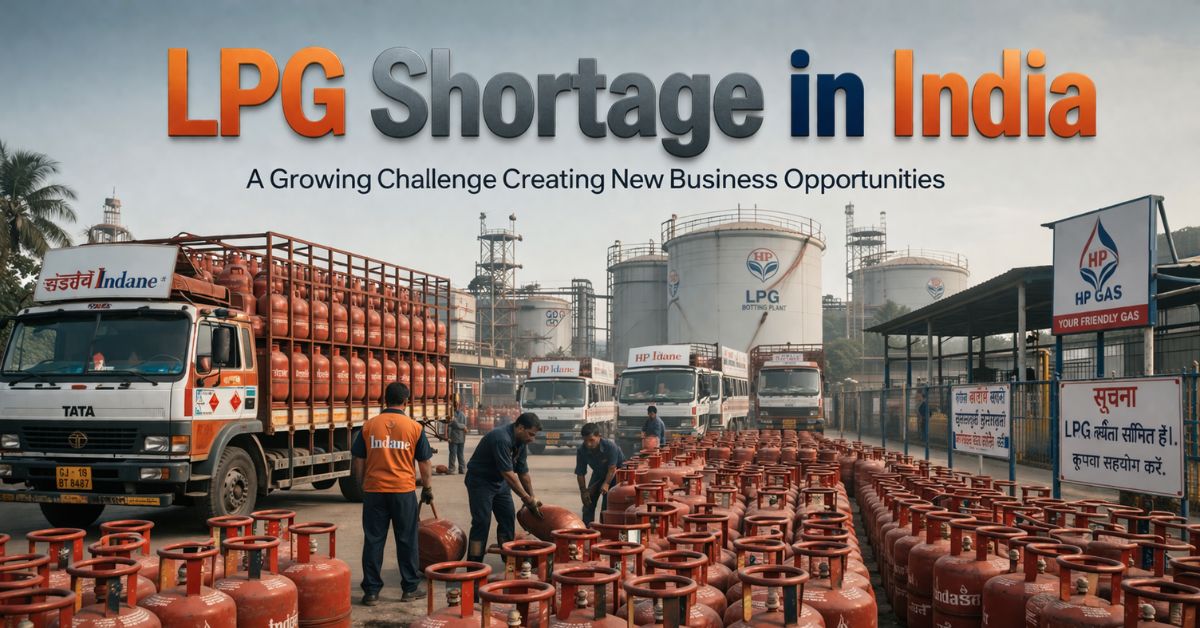
LPG shortage in India
India is facing a problem with LPG. The country needs a lot of cooking fuel and LPG is the fuel used by millions of households, restaurants and commercial establishments.. India still has to import a lot of LPG to meet this demand. When there are problems with supply routes or prices go up it affects the market right away.
People have started looking for reliable options. This is not a change it is a long-term shift towards different energy sources like biogas, electricity, solar power and piped natural gas. For people who want to start their businesses this change represents a great opportunity in India today.
The alternative fuel sector is growing fast because there is already a demand for it. Unlike industries where companies have to convince people to buy a new product this market is driven by necessity. People need energy solutions and they are willing to try new technologies that provide stability and cost savings.
Table of Contents
ToggleGet Detailed Insights from This Book: Global and India Type 4 Cylinders Market
Why the Alternative Fuel Industry Is Growing Fast in India
The growth of alternative fuel businesses is supported by economic and policy factors. The demand for LPG is increasing the population is. More people are moving to cities, which puts pressure on the existing supply system. The government currently promotes the creation of energy solutions which have cleaner and more sustainable characteristics.
The following factors explain the reasons which have led to this increase in employment:
- More people using LPG in households and industries
- Government incentives for energy projects
- Expansion of natural gas pipelines in areas
- More people becoming aware of energy efficiency and sustainability
- Better electricity availability in urban regions
The current conditions enable new companies to enter the market and achieve success through gradual growth.
Compressed Biogas Plant Business: A High-Potential Opportunity
Compressed Biogas has emerged as a viable substitute for LPG which Indian consumers now prefer. The product derives from agricultural waste and cattle dung and food waste materials. The processed gas serves multiple purposes including cooking and transportation and industrial usage.
India has an agricultural base, which means there is a lot of raw material available for biogas production. Despite this advantage there are not operational biogas plants compared to the countrys potential. The existing gap in the market provides entrepreneurs with opportunities to make their investments in the industry.
Compressed Biogas plant establishment requires three essential steps which include planning and site selection and acquiring dependable feedstock resources. The initial investment amount seems excessively high but the continuous revenue generation from clean fuel demand will demonstrate its value.
Typical Investment and Returns
- Small Compressed Biogas plant investment: ₹2 crore to ₹5 crore
- Government subsidy: 15–20 percent of project cost
- Payback period: Approximately 4 to 6 years
- Additional revenue from organic fertilizer sales
The businesses in this industry typically establish permanent supply contracts, which deliver them both revenue streams and financial security.
Get Detailed Project Report (DPR): LPG Valves Manufacturing Plant Project Report
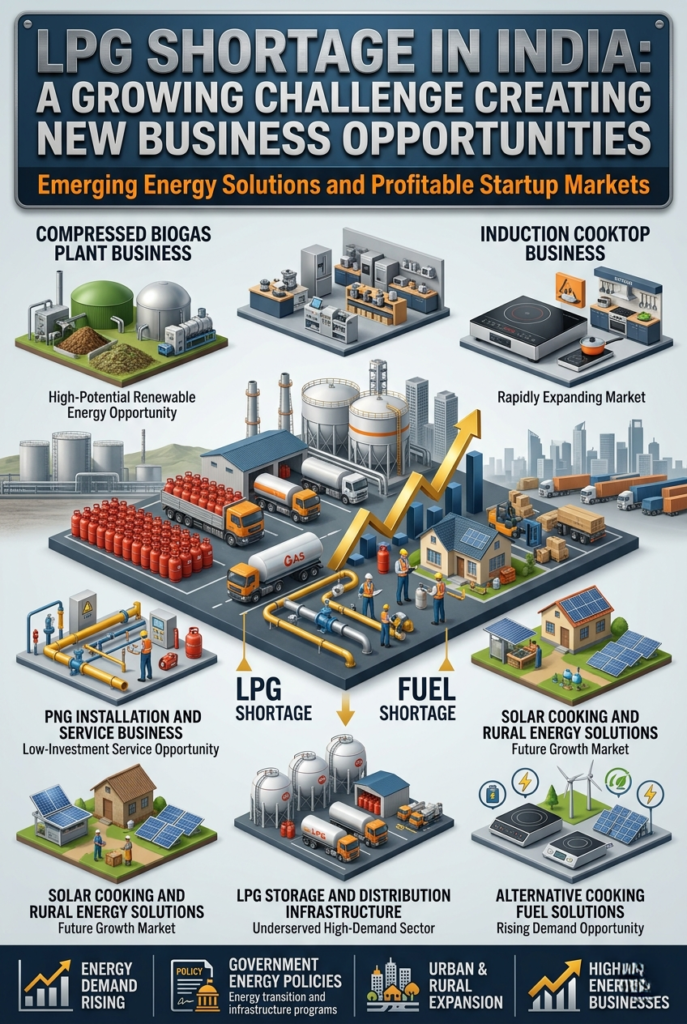
Induction Cooktop Business: A Expanding Market
Electric cooking appliances are becoming very popular in India. As electricity supply improves and technology becomes more efficient many households and commercial kitchens are switching to induction cooktops. The recent LPG supply challenges have accelerated this transition.
Business owners can establish their presence in this market through three pathways which include distribution and assembly and manufacturing operations. The distributor role serves as the most common entry point because it needs a smaller setup cost and fewer legal requirements. Manufacturing facilities enable companies to boost their profits while establishing their business identity through product creation.
Popular Business Models in This Segment
- Distribution of induction cooktops to retailers
- Supply of cooktops to restaurants and hotels
- Assembly or manufacturing of electric cooking appliances
- Maintenance and repair service centers
Induction cooking equipment demand will continue to expand because consumers want products which deliver both convenience and energy-saving benefits.
PNG Installation and Service Business: A Low-Investment Opportunity
Cities are adopting Piped Natural Gas as their main cooking fuel while they move away from using LPG. Governments are expanding city gas distribution networks to provide safer energy to households and businesses. As more connections are installed the need for installation and maintenance services is increasing.
Entrepreneurs find the sector appealing because it enables them to launch businesses with lower startup expenses than manufacturing enterprises. People can establish dependable service enterprises through training and certification which will result in consistent financial returns.
Once a company establishes trust with customers it can expand its operations by offering services such as safety inspections and equipment upgrades.
Advantages of This Business
- startup investment
- Growing demand in areas
- Regular maintenance income
- Opportunity to build long-term customer relationships
Solar Cooking and Rural Energy Solutions: A Future Growth Market
Solar energy is changing the way rural households access electricity and cooking fuel. As solar panel prices continue to decline solar-powered cooking systems are becoming more affordable and practical. These systems reduce dependence on LPG. Help families save money over time.
Entrepreneurs who focus on markets can build sustainable businesses by providing integrated energy solutions. Companies can create full product packages that combine solar panels with batteries and cooking devices into one solution. This approach simplifies the purchasing process. Increases customer satisfaction.
Government programs supporting energy adoption are expected to expand the market further in the coming years.
LPG Storage and Distribution Infrastructure: An Underserved Sector
Indias LPG storage capacity is still limited compared to consumption. During supply disruptions this shortage becomes more visible. The first sentence explains how these two groups face difficulties due to their need to expand their storage facilities. These two groups need additional storage space because their current capacity limits their ability to operate their businesses.
Business professionals who possess logistics expertise and engineering skills and industrial operation knowledge can enter this business sector. Businesses need to invest in storage facilities despite their high initial costs because these facilities provide essential support for ongoing supply operations.
Companies in this industry establish partnerships with distributors and commercial clients who provide them with contracts that generate revenue.
Steps to Start an Alternative Fuel Business Successfully
The energy business needs entrepreneurs to complete their work through both operational preparation and business development activities. Many entrepreneurs focus on the idea and overlook the importance of financial and technical analysis. To make an investment decision investors must first assess both market dynamics and business needs.
The process of launching a fuel enterprise consists of these fundamental procedures:
- Identifying the suitable business opportunity
- Conducting market research and demand analysis
- Estimating investment and operating costs
- Obtaining licenses and approvals
- Arranging financing or bank loans
- Installing equipment and launching operations
The procedure leads to decreased risk because it follows established guidelines. The procedure increases the probability of achieving success which lasts for an extended period.
About NPCS (Niir Project Consultancy Services)
Niir Project Consultancy Services, widely known as NPCS is one of Indias industrial consultancy organizations specializing in project planning and feasibility studies. The company has assisted thousands of entrepreneurs who started their businesses in multiple sectors.
NPCS offers services which assist entrepreneurs from the development of their first business concept until they complete their entire project. Their expertise covers manufacturing, renewable energy, food processing, chemicals and engineering sectors.
Key Services Offered by NPCS
- Detailed Project Reports (DPR)
- Techno-Economic Feasibility Studies
- Market Research and Demand Analysis
- Machinery and Equipment Selection
- Financial Planning and Profitability Analysis
- Business Startup Guidance
A prepared feasibility report from NPCS helps entrepreneurs understand risks estimate returns and secure bank financing more easily.
Future Outlook: The Alternative Fuel Market in India
Indias energy sector is undergoing a transformation. Demand, for sustainable cooking fuel will continue to grow as the population increases and urbanization accelerates. At the time technological innovation and government policy will encourage the adoption of cleaner energy solutions.
Over the decade alternative fuel businesses are expected to play a central role in the country’s economic development. Entrepreneurs who invest early and focus on quality service will be well positioned to benefit from this long-term growth trend.
Frequently Asked Questions (FAQ)
Q1. Which alternative fuel business makes the money in India?
Compressed biogas plants are really businesses because the government helps them people always need them and they make money in many ways.
Q2. How money do I need to start an alternative fuel business?
It depends on what kind of business you want to start. If you want to offer services you can start with an amount of money like a few lakh rupees.. If you want to make things or build something you will need a lot more money, like several crore rupees.
Q3. Does the government help people who start energy businesses?
Yes the government gives money and other benefits to people who start energy and clean fuel businesses.
Q4. How long does it take to start an energy business?
Small businesses can start working in three to six months.. Big projects, like biogas plants can take one to two years to start.
Q5. Why do I need a feasibility report before I start a business?
A feasibility report helps you figure out if your business is an idea and if it will make money before you invest.
Q6. What kind of help does NPCS give to people who want to start their businesses?
NPCS gives people reports, on projects studies to see if their business is a good idea and technical help to make sure their businesses work well.


