





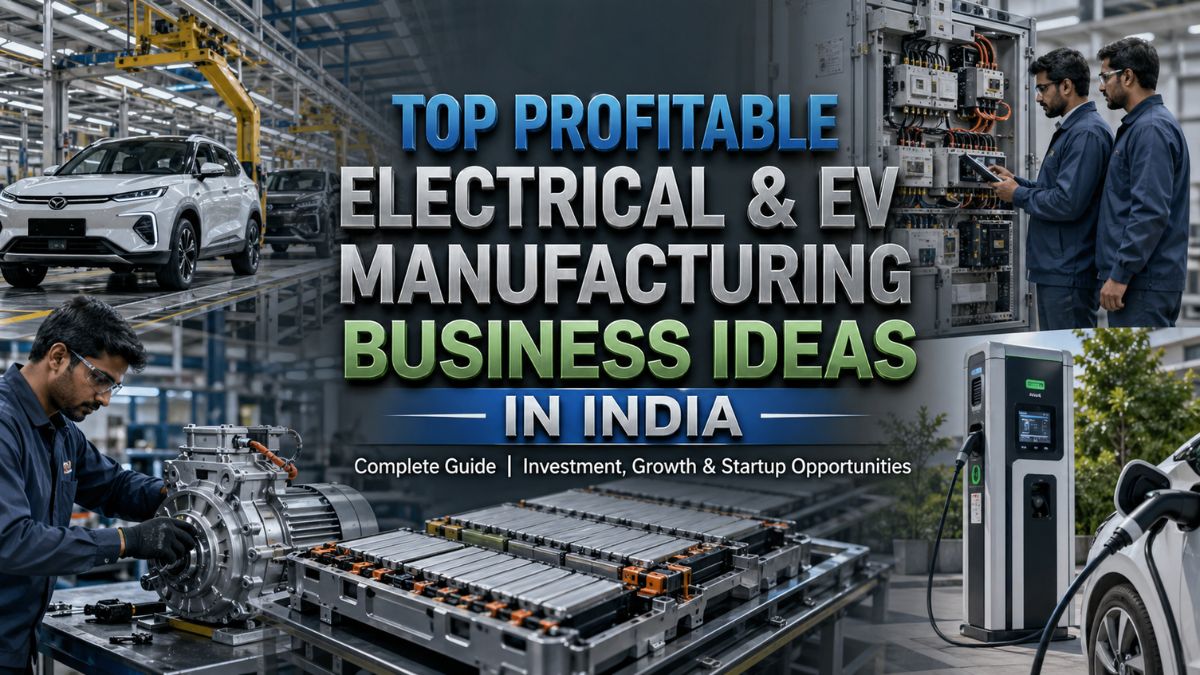
Introduction: Why Electrical and EV Manufacturing Is Growing Rapidly in India
The manufacturing industry in India is growing at a rapid pace. There is a growing need for electrical appliances, electric vehicles and smart technology products with growing urbanization, industrialization, and higher electricity demand. Companies producing vital electrical parts are now witnessing a steady flow of demand.
Government programs such as Make in India and various subsidies make it easier for businesses to start manufacturing operations. The initiatives support local production while decreasing the need for imported goods. Manufacturing businesses now attract new entrepreneurs who establish enterprises that achieve success.
Manufacturing is no longer exclusive to big enterprises. Through careful planning and product choice, small and medium-scale entrepreneurs can also set up manufacturing businesses.
Table of Contents
ToggleTop High-Demand Electrical and EV Manufacturing Business Ideas
1. LED Bulb Manufacturing Business
People prefer to use LEDs for lighting their homes and workplaces and industrial sites because LEDs consume less energy while lasting longer. As a result, LED bulb manufacturing is one of the most sought-after first-time manufacturing businesses in India.
LED manufacturing primarily involves the assembly of electronic components and packaging of the product. It’s also easy to operate, making it ideal for beginners.
Key Advantages of LED Manufacturing:
- Minimal capital required for setting up
- Strong consumer demand (Residential and Commercial)
- Fast return on investment
- Dealer and retailer friendly
This business requires an initial investment of between ₹20 lakh and ₹50 lakh, and many companies pay back this investment in two to three years.
2. Lithium-Ion Battery Pack Manufacturing
Electric vehicles and solar systems and electronic devices depend on lithium-ion batteries as their essential power sources. The transition to electric transportation will create a substantial increase in battery requirements during upcoming years.
Setting up a battery pack manufacturing unit is more capital-intensive than small assembly units, but has high future prospects. The government is encouraging battery manufacturing to boost local production.
The Future Outlook of the Business
- Rapid growth of electric vehicles
- Growing need for energy storage for renewable energy sources
- Subsidies for battery production
- Good scalability and export potential
The typical investment ranges from ₹5 crore depending on scale and automation.
Get Detailed Insights from This Book: India Lithium-Ion Battery Market Report (Forecast to 2027)
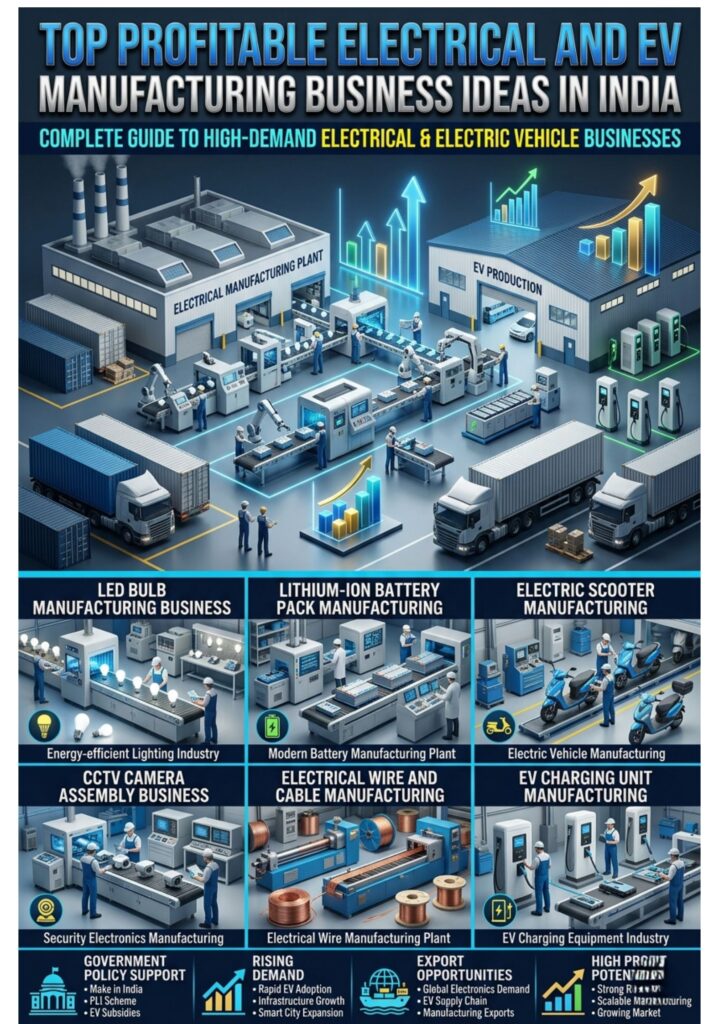
3. Electric Scooter Manufacturing
India experiences its fastest growing transportation method through electric scooters. People prefer electric vehicles for personal transportation because of expensive fuel costs and the requirement of environmentally friendly transportation options.
Electric scooter production needs manufacturers to install engines and batteries and frames and electronic components. The start-up cost is slightly more than small manufacturers, but the future market is bright.
Cities will increase their need for electric scooters because they want to establish environmentally friendly transportation systems while consumers look for low-cost travel options.
4. CCTV Camera Assembly Business
Closed-circuit television (CCTV) cameras are widely used in homes, offices, schools, warehouses and commercial properties. This has resulted in rising demand for CCTV cameras and systems in India.
It’s a good business idea for entrepreneurs to set up CCTV assembly units as they need moderate investment and have straightforward manufacturing processes.
Major Benefits of This Business:
- Increasing demand for security devices
- Affordable startup investment
- Quick production setup
- Good service and maintenance revenues
Small investors need to spend between ₹50 lakh and ₹2 crore to gain access to affordable capital.
5. Electrical Wire and Cable Manufacturing
Every infrastructure project which occurs in residential areas and commercial spaces and industrial zones needs wires and cables for its execution. The requirement for electrical wires and cables remains constant because they serve as essential components in all building projects.
This business involves machinery for wire drawing, insulation, and packaging. The business remains profitable and stable because the market demands the product despite price changes in raw materials.
Why This Business Is Stable:
- Demand from industry and construction
- Key product for infrastructure building
- Long-term business sustainability
- Regional distribution possibilities
The average capital investment is between ₹1-3 crore.
Access Complete Business Plan: Power Cable Manufacturing Business Plan & Feasibility Study
6. EV Charging Unit Manufacturing
EV charging is a vital segment of transportation. Charging is essential for electric vehicle use. As such, EV charger manufacturing is one of the most futuristic manufacturing prospects.
The level of technical expertise required will vary depending on the charger. Simple chargers are relatively simple to produce, but fast chargers demand more expertise.
Growth Drivers for EV Charger Manufacturing:
- Growing electric vehicle market
- Government EV infrastructure incentives
- Growing private sector investment in charging
- Increasing commercial and residential demand
It can range from ₹50 lakh and above.
Why Manufacturing Businesses Are Becoming More Profitable
Manufacturing companies achieve public recognition because they maintain steady operations which permit them to manage their production methods and set their product prices. Manufacturing companies create their own products which enables them to develop their own product brands.
The following reasons explain why manufacturing businesses in India generate high profits:
- Growing local market for electrical and electronics products
- Incentives and tax breaks for domestic manufacturing
- Increasing infrastructure and industrialisation
- Potential for exporting products overseas
Manufacturing creates new business opportunities which show potential when entrepreneurs strive to develop their businesses with environmentally sustainable methods.
How NPCS Helps Entrepreneurs Start Manufacturing Businesses
NIIR Project Consultancy Services (NPCS) is an industrial consultancy agency that helps entrepreneurs establish manufacturing ventures. The process of starting a business becomes difficult because of the need for technical planning and cost estimation and obtaining necessary permits. NPCS provides entrepreneurs with structured assistance which helps them to resolve their business challenges.
They offer services such as project reporting, market studies, plant layout, and sourcing machinery vendors. They also help entrepreneurs with production costs and profitability analysis.
Services Provided by NPCS:
- Comprehensive project reports
- Advice on machinery and equipment
- Cost estimation and financial planning
- Market demand analysis
- Business startup support
Engaging with professional consultants can help minimise the risks and enhance the likelihood of long-term success.
Conclusion
Manufacturing for electrical and electric vehicles (EV) is a great business opportunity for 2026 and beyond. The demand for LED bulbs and electric vehicle components and other electrical products continues to rise across domestic and commercial and industrial markets.
Success in manufacturing depends on selecting suitable products while maintaining production expenses and product excellence and developing successful distribution networks. Through effective strategic planning and hard work micro-investors can create successful manufacturing businesses.
Electricity and electric vehicles represent emerging industrial sectors which will shape the future of the aviation and energy and building systems markets. Entrepreneurs who make investment decisions today will establish their path to success in this emerging market.
Frequently Asked Questions (FAQ)
Q1. What is the easiest manufacturing business?
LED bulb, CCTV camera, and electrical wire are the best choices for beginners as they require a moderate amount of investment and have a strong market.
Q2. How much money is required to start manufacturing?
Depending on the product and capacity, small manufacturing businesses can be started with an investment ranging from ₹20 lakh to ₹2 crore.
Q3. How long to set up a manufacturing unit?
The average manufacturing unit takes 9-18 months to start production after planning and setting up.
Q4. Will manufacturing be profitable in 2026?
Yes. It will remain profitable because of a high demand for electrical appliances, electric vehicles and infrastructure.
Q5. Can a small entrepreneur make it in manufacturing?
Yes. Some large businesses began as manufacturing startups. Through careful planning, quality control and regular marketing, entrepreneurs can establish successful and growing businesses.


