




Introduction: PHA bottle caps manufacturing in India
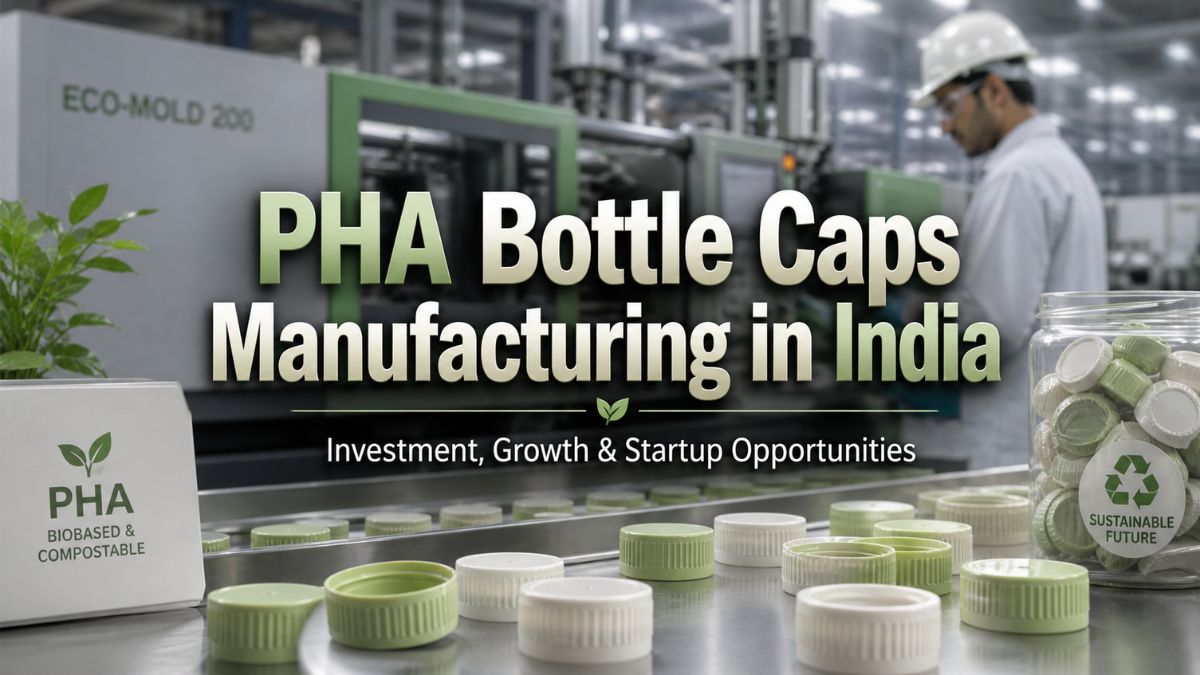
Take any plastic bottle surrounding you, and consider the top. It might seem a very small hole, yet it is one of the largest loopholes in the recycling system of India. Although bottles are highly recycled, the caps are mostly ignored because they are small in size and their recovery value is very low. As a result, thousands of tonnes of plastic caps end up polluting landfills and oceans every year.
This is where PHA (Polyhydroxyalkanoate) comes into the scene. This is a biodegradable polymer, synthesized by using natural sources such as sugar and vegetable oils. Unlike conventional plastics, PHA has no harmful side effects and degrades into nature soil, compost, and even into the sea.
With increasing green legislations, and growing consumer demand for a cleaner alternative, PHA bottle caps, is a business prospect in India poised to boom in the recent future.
Table of Contents
ToggleGet Detailed Insights from This Book: Bioplastics & Biodegradable Products Manufacturing Handbook
Why the Market Is Growing Fast
The development of this industry is not accidental-it is the result of the powerful structural changes. Companies are being pressured by government regulations, particularly under Extended Producer Responsibility (EPR) to reconsider their approach to packaging. Brands are currently in a frenzied attempt to locate green alternatives.
Meanwhile, the price difference between traditional plastic is decreasing. Recycled polypropylene is getting costly and unreliable and this increases the appeal of biodegradable materials.
Key demand drivers include:
- Packaged drinking water companies
- Beverage and dairy brands.
- Pharma and cosmetic exporters.
- Sustainable D2C brands
This regulatory/demand mix is generating a strong push towards PHA products.
Business Model Explained Simply
There is no need to produce PHA using a starting material. The majority of entrepreneurs work as converters, i.e. purchase PHA resin and convert it into caps with the help of injection moulding.
This simplifies the business to start and makes it less technical. The manufacturing process is not much different than the conventional manufacturing of plastic caps, and therefore the learning curve is not too steep.
The important thing in this business is not so much production – it is regular customers.
Get Detailed Project Report (DPR): Biodegradable and Compostable Plastics for Sustainable Packaging
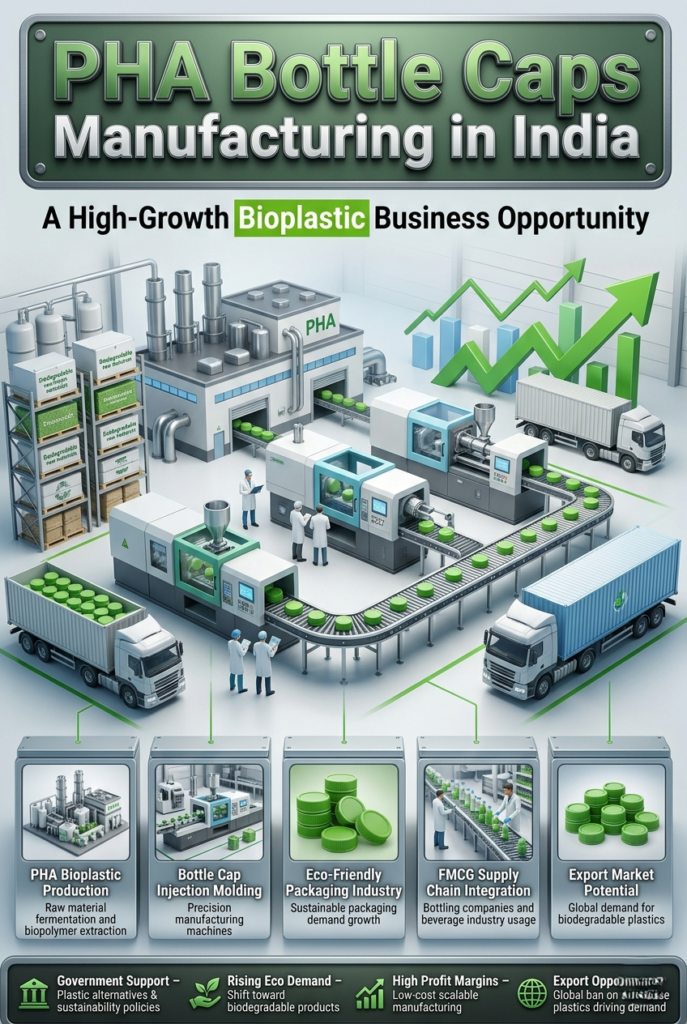
Investment and Setup
An intermediate PHA bottle cap unit will involve moderate investment as compared to heavy industries.
Basic setup overview:
- Investment: ₹1.8 crore to ₹4.5 crore
- Space: 4,000–6,500 sq. ft
- Capacity: 200–400 kg per day
Machinery required:
- Injection moulding machine
- Multi-cavity moulds
Dryer and cooling systems
- Mixing equipment
- Quality testing tools
The timeline of the set up can typically be around 5-7 months, subject to approvals and delivery of machines.
Raw Material Advantage in India
India is at a very advantageous position in terms of raw materials. Although a large portion of the PHA is currently imported, the nation has large natural reserves that can be used to produce the PHA in the future.
Key feedstock sources:
- Sugarcane molasses
- Agricultural waste
- Used cooking oil
With increased domestic production, the costs will be reduced, and the manufacturers will be able to make profit.
Profitability and Returns
This is a unique business due to its healthy margins relative to the traditional plastic production.
At a moderate level of production, a unit can produce a consistent income and at full capacity the unit can generate a great deal of income.
Financial highlights:
- Revenue potential: 1.2-2.6 crore every year.
- Gross margins: 30–40%
- Net profit margins: 16–22%
The profitability is even enhanced when long-term agreements with buyers are made.
Government Support and Subsidies
The government is also encouraging the production of environmentally friendly products, which will minimise the risk to the new entrepreneur.
Major schemes available:
- PMEGP (capital subsidy)
- CGTMSE (collateral-free loans)
- State MSME subsidies
- PLIS scheme of specialty chemicals.
An amalgamation of these schemes can go a long way in helping you lessen your investment load.
The Most Important Step: Getting Your First Buyer
There are too many people who concentrate on machinery and investment and the real success factor is demand.
You can contact potential buyers and inquire whether they would like to test biodegradable caps.
A simple approach:
- Contact 3–5 companies
- Offer trial samples
- Request a minor investment.
A single buyer will be able to transform the whole business perspective. It enhances your likelihood of obtaining loans and minimizes risk.
How NPCS Can Help You
To open a manufacturing business good planning and documentation is required. And here the NIIR Project Consultancy Services (NPCS) comes in handy.
NPCS assists businessmen since it offers:
- Detailed project reports (DPR).
- Cost and profitability analysis.
- Process and machinery advice.
- Market research
Such reports are particularly useful in situations where the bank loans or government subsidies are to be applied. They lend credibility and structure to your project.
Future Potential of PHA in India
The future of biodegradable plastics in India is very promising. With regulations tightening and increasing awareness, the trend will move further towards sustainable materials.
The great strength of PHA is that, it can decompose naturally in various environments, and thus, it is one of the most practical options to plastic.
The first movers in this market will be at the greatest advantage since there is still a relatively low level of competition.
Conclusion
The production of the PHA bottle caps is not only a business but a part of an even greater change towards being sustainable. It addresses an actual environmental issue and provides good financial performance.
With the right approach, proper planning and buyer validation, this business may expand to a stable and scalable business.
The trick is to begin clearly, assure demand and grow steadily.
FAQs
- What is the minimum amount of investment?
On a small scale, you can begin with around ₹80 lakh but a decent unit will cost ₹1.8 2.5 crore.
- Does PHA have a superiority to normal plastic?
PHA is biodegradable, and it does not cause microplastic pollution.
- What is the time required to set up?
Average of 5-7 months, approvals and installation of machinery.
- Does India really have a demand?
Yes, the demand increases because of regulations and the sustainability objectives.
- Is it possible to export this product?
Yes, and particularly to Europe and Japan where eco-friendly packaging is being sought after.
- What can NPCS do to assist me?
NPCS also provides project reports, technical consultancy and financial assistance to set up your unit.
- What is the largest risk?
The greatest threat is that it has started without certain buyers. Demand is to be always precedent.


