





Introduction: India Biosimilars Market
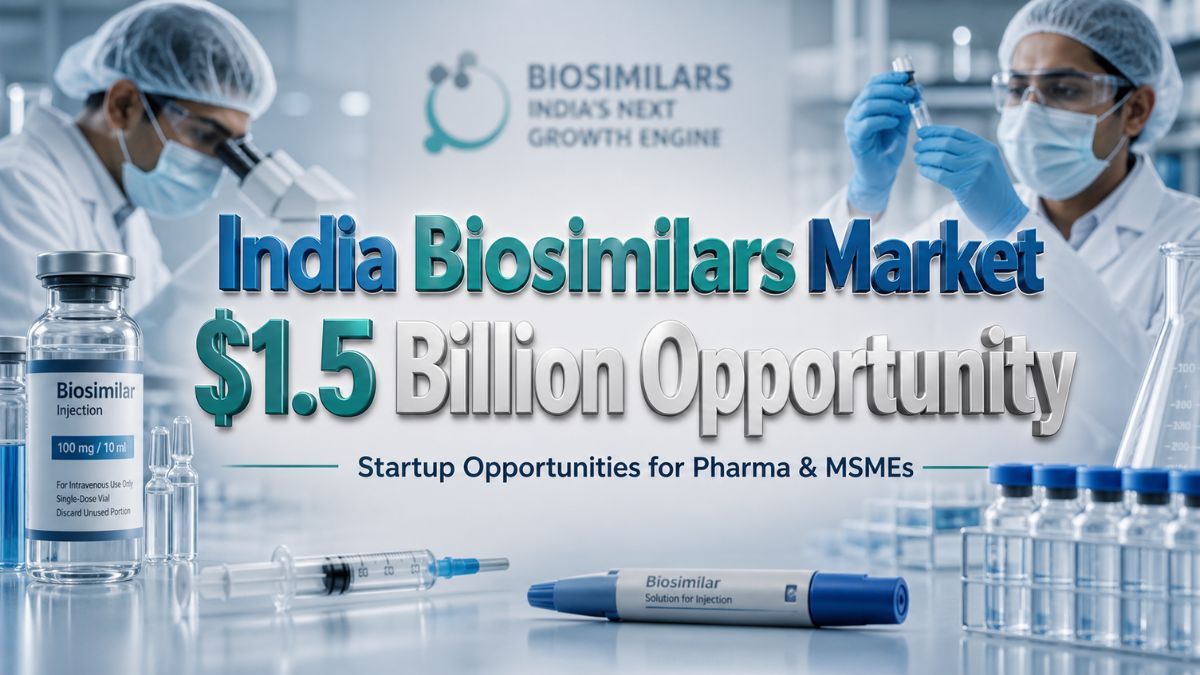
India has now graduated from being merely “the pharmacy of the world” for generic medicines to also becoming the most favoured country to manufacture high-value, complex drugs – especially, biosimilars. As the market is set to surpass $1.5 billion by 2030, biosimilars are emerging as a lucrative business opportunity in the pharmaceutical industry.
Biosimilars are biological medicines that are ‘similar’ to already-approved biologics. They are used for treating cancer, diabetes and autoimmune disorders. The use of biosimilars has seen a significant uptake worldwide because they are more cost-effective than the original biologics.
India is currently producing 35% of the world’s biosimilars, which indicates its presence in this market.
Table of Contents
ToggleGet Detailed Insights from This Book: India API Market Report (2027 Forecast)
Global Market Growth and Why It Matters
The biosimilars market is growing fast. The market is estimated to expand from $36.5 billion in 2023 to exceed $100 billion by 2030. This expansion is mainly being driven by the expiring patents of a couple of block-buster biologic drugs and the increasing demand for cost-effective drugs.
India is at an advantage because it can manufacture these drugs cost-effectively as well and the combined presence of its high-skilled manpower and a rapidly advancing regulatory framework allows Indian firms to export biosimilars to Europe, USA and Asia.
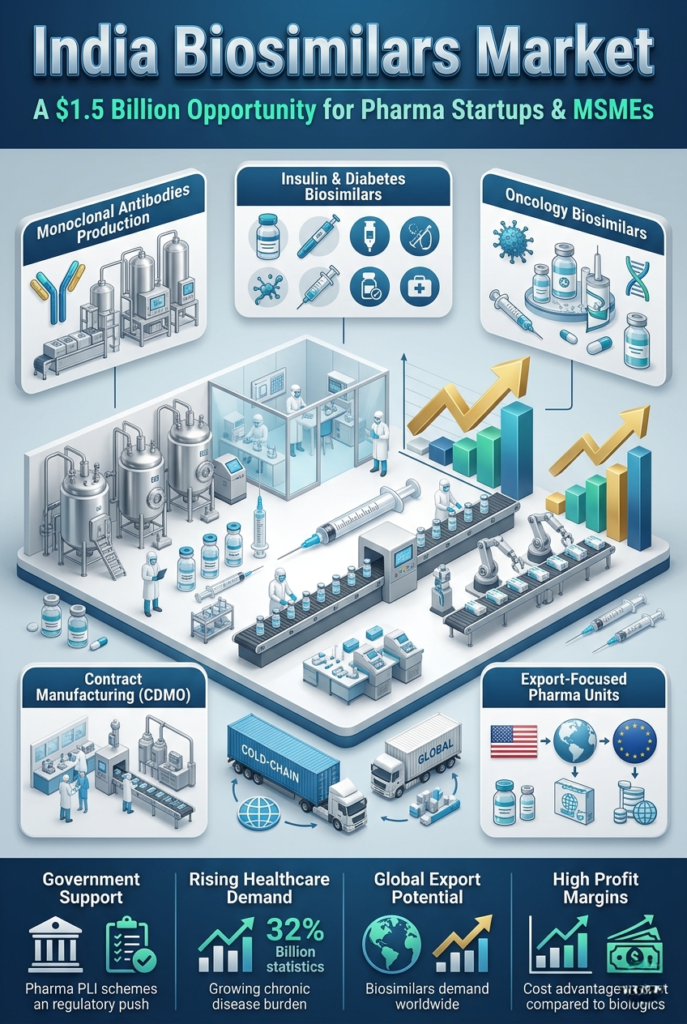
High-Profit Segments You Should Know
Not all biosimilar markets are created equal. There are clearly more profitable and scalable segments.
Monoclonal antibodies-used in the treatment of cancer and autoimmune diseases are the most profitable segment. But these are extremely complex products. They do offer huge profits.
The other key segment is insulin biosimilars. The high and steady demand for insulin due to the increasing number of diabetes patients is a good starting point.
Other segments like erythropoietin, G-CSF are more crowded but still lucrative, particularly for government supply.
Key high-value segments include:
- Monoclonal antibodies (oncology, autoimmune diseases)
- Insulin and insulin analogues
- Fusion proteins and specialty biologics
Get Detailed Project Report (DPR): Market Research Report on India Active Pharmaceutical Ingredient (API)
Demand–Supply Gap: Where the Real Opportunity Lies
While the country has strong growth in biosimilars, there are gaps in the ecosystem. These are opportunities for entrepreneurs.
First, access for patients. High potency biosimilars are not always affordable or accessible in India.
Another issue is a reliance on imports for inputs. Many biologic components, like cell culture media and purification resins, are imported.
The cold chain is also poorly developed, particularly in tier 2 and 3 cities, limiting supply.
Major opportunity areas:
- Local production of biologic inputs
- Cost effective biosimilar distribution models
- Cold chain services for Tier-2 and Tier-3 cities
Investment Opportunities for Entrepreneurs
There are several opportunities for entrepreneurs in the biosimilars space, depending on their investment capacity. Full-scale manufacturing is costly but there are smaller opportunities.
For startups and MSMEs, it is not essential to set up a biologics facility. You can build up segments later.
Popular investment options include:
- Insulin fill-finish manufacturing units
- Contract development and manufacturing (CDMO)
- Biologic API production
- Cold chain logistics
- Bioanalytical testing labs
These segments are all key players in the biosimilars value chain, and are prime for growth.
Government Support Is a Big Advantage
The Indian government is encouraging the development of biosimilars with incentives and support. This makes it easier for startups to be profitable.
One of the greatest benefits is the Production Linked Incentive (PLI) scheme, which provides incentives for increased sales. There’s also support with funding through biotech and start-up grants.
Key government support includes:
- Pharmaceuticals PLI Scheme
- BIRAC support for biotech startups
- Subsidies and biotech parks at the State level
Such policy support is beneficial for entrepreneurs.
How Niir Project Consultancy Services Helps You Start
Setting up a biosimilars business is complicated. It requires technical expertise, regulatory clearances and funding. It can be risky if not done right.
This is where Niir Project Consultancy Services (NPCS) come in.
NPCS has over 45 years of experience in assisting entrepreneurs to establish manufacturing businesses in India. With their experience in biopharmaceutical projects, they are the ideal partner for anyone setting up a biosimilars business.
They offer full range services including:
- Detailed Project Reports (DPR)
- Market analysis and demand forecasts
- Manufacturing process planning
- Capital investment and financial analysis
- CDSCO/ USFDA/ EMA regulatory support
- Government support (PLI)
NPCS supports entrepreneurs from concept to commercialisation.
Future Outlook: Why You Should Act Now
The coming years will shape the future of the biosimilars market. The patent cliffs of many biologic drugs between 2024 and 2030 will increase the demand for biosimilars.
The country is likely to emerge as the biosimilars capital of the world. But so will competition among manufacturers.
That’s where the need to get in early comes in. Early entrants will be able to get their operations in place, approvals and branding established before the market is saturated.
Conclusion
The biosimilars sector in India is on the threshold of its biggest moment. Leveraging on increasing global demand for biosimilars, favourable government policies, and the existing strong manufacturing base in India, this sector provides one of the biggest entrepreneurial opportunities.
Timing, strategic choice of segments and formulation of a right strategy is critical. Niir Project Consultancy Services will assist you to establish the business.
FAQs
How much is the minimum investment?
It varies by segment. It could be as low as ₹10-20 crore for small-scale operations and as high as ₹150 crore for large-scale biologic manufacturing.
Is this a good business for startups?
Yes, particularly in business segments such as API manufacturing, CDMO and logistics, which have lower initial investment than manufacturing.
How long does approval take?
The usual time is 4-7 years, but some products can be approved quicker (18-36 months).
Which products are most profitable?
Monoclonal antibodies and insulin biosimilars are the most profitable products.
How can NPCS help me?
Niir Project Consultancy Services offers comprehensive services like project development, financial assessment, and regulatory advice.


