





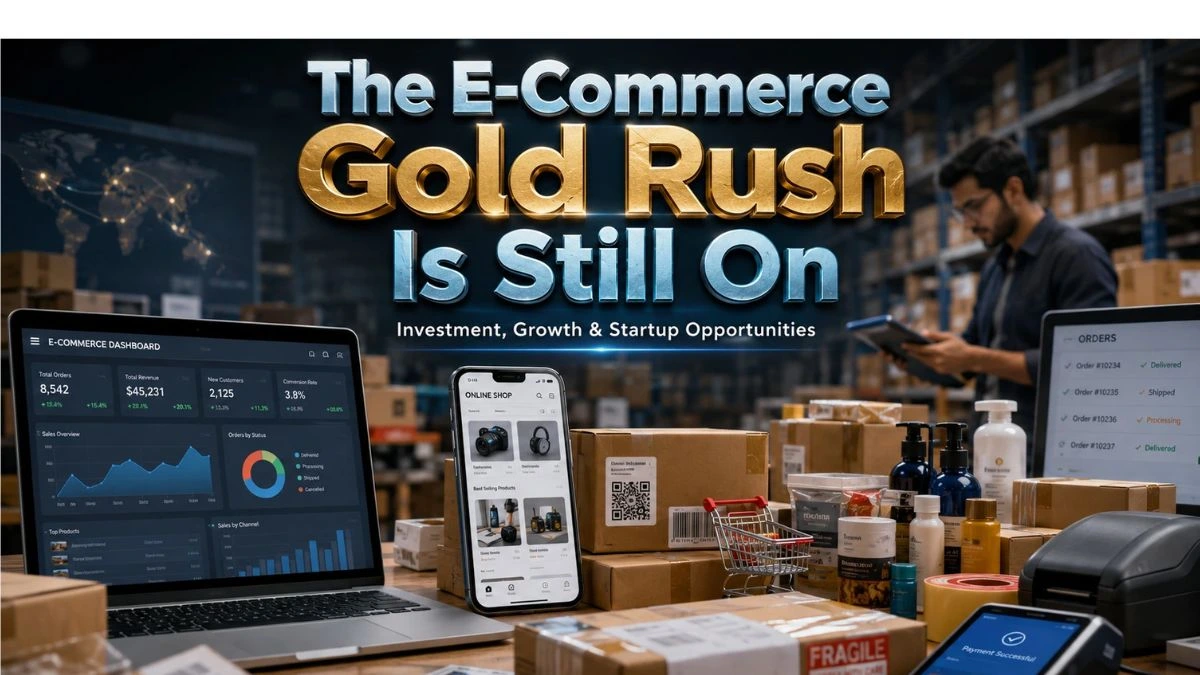
How small business tools, marketing automation, and smart e commerce business opportunities strategy are levelling the playing field for independent entrepreneurs in 2026
It’s not the story of Amazon or Walmart or the mega platforms that make headlines — it’s the story of 2026. The more interesting story, the one that really counts for most of the entrepreneurs and small business owners is happening on a different scale altogether. It’s the tale of a guy who builds a seven-figure business out of a spare bedroom with the light of his one-person candle. The story of a local butcher shop getting to customers in three counties by a well-managed online storefront.
Large corporations once enjoyed a competitive edge but that has been leveled by the tools that were available. With the introduction of low monthly subscription fees, sophisticated inventory management, personalised marketing, data-driven pricing, and automated customer service are no longer reserved for larger businesses, but are available to any company, according to Shopify’s Future of Commerce Report 2025.
Access Complete Business Plan: Profitable Opportunities in E-commerce Business
The State of E-Commerce in 2026: Bigger, More Competitive, and More Interesting Than Ever
Global e-commerce revenue hit $7 trillion in 2025 and is projected to reach $7.4 trillion in 2026, per eMarketers Global E-Commerce Forecast 2025-2026. It is an actual and continual growth, but it is a different kind of growth. Those early e-commerce days of the ‘just be online’ and have folks come to you are gone. The world today is very competitive, sophisticated and ever changing.
The basic opportunity of small and independent businesses has not changed. The demand for special, artisanal and ethically produced goods remains strong. Millions of shoppers still want to buy from independent retailers because they like them.There are millions of people who still want to buy from independent retailers because they like them.
The Small Business Software Revolution
Five years ago, there was a small business that had to cobble together disconnected tools. It’s a world that’s largely gone. The Small Business Software Landscape Report from G2 reinforces this idea that integration is the key principle of the modern small business software landscape. There are various platforms available that have become a true OS for e-commerce businesses, such as Shopify, WooCommerce, and BigCommerce.
The Tools Making the Biggest Difference
- All-in-one e-commerce platforms (Shopify, WooCommerce, Squarespace Commerce) — including the basic storefront, checkout and payment processing features.
- Email marketing automation (Klaviyo, Mailchimp, Omnisend) — which provides a more advanced way to trigger more income-generating email sequences.
- Multi-channel/Inventory Management (Linnworks, Skubana, Cin7) — real-time inventory management and sync to website and marketplace.
- Customer support platforms (Gorgias, Freshdesk) – Chat to all customers from email, social, chat and phone in one place and have AI help draft responses.
- A unified view of marketing performance and customer lifetime value through analytics and reporting (Triple Whale, Google Analytics 4).
Marketing Automation: The Great Equaliser
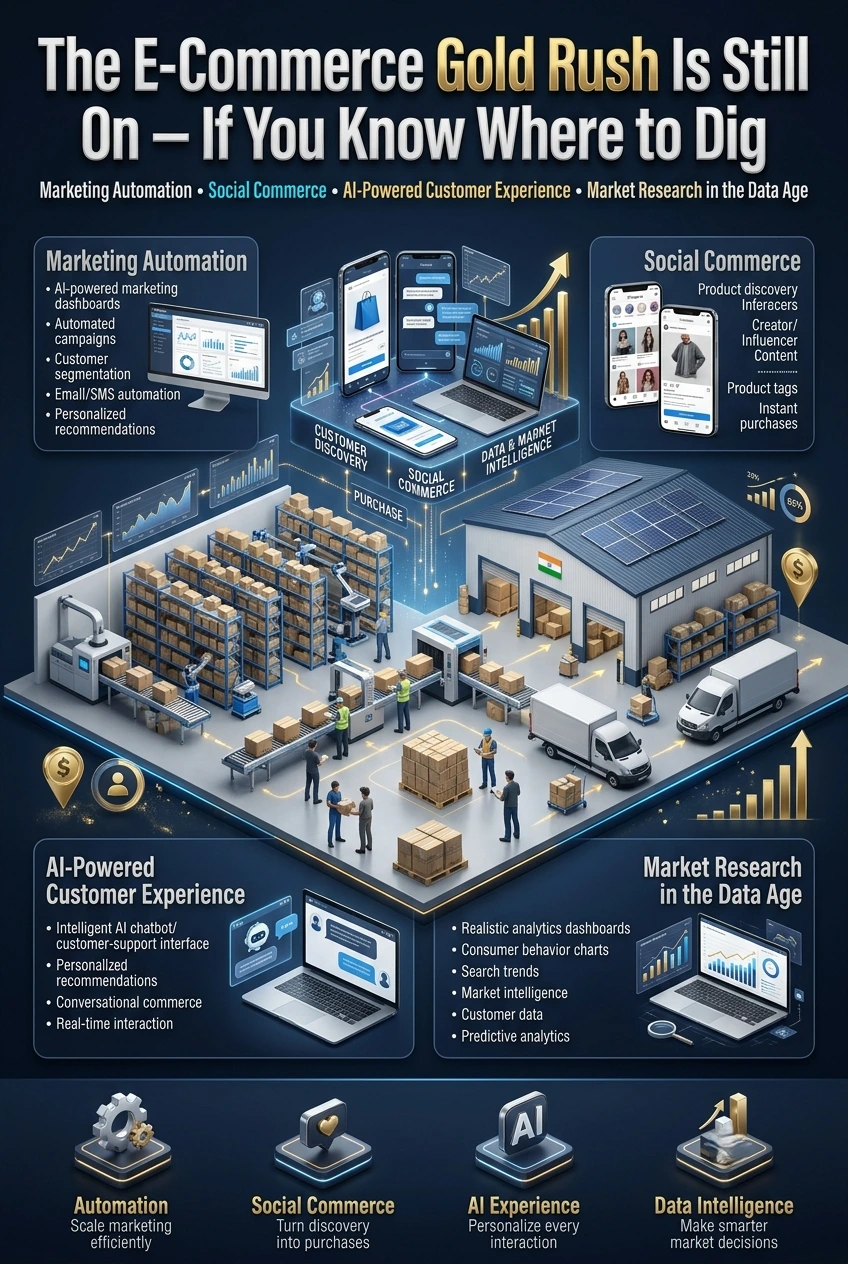
Marketing automation has had the most transformative impact on the competitive landscape. Klaviyo’s E-Commerce Benchmarks Report shows that businesses with comprehensive automation typically see 20-40% increases in email-generated revenue without proportional increases in marketing staff or spend. Abandoned cart recovery alone typically recovers 5-15% of otherwise lost sales.
Social Commerce: Where Discovery Meets Purchase
Social commerce has come of age. The Instagram, TikTok, Pinterest and YouTube have all poured a lot of resources into native shopping capabilities. On one hand, social commerce is a chance for small businesses to tap into billions of daily users, discovery algorithms that popup companies not owned by the platform, and more; on the other, it’s a new operational hurdle, since social media demands a consistent and engaging content strategy.
The AI-Powered Customer Experience
Ecommerce AI chatbots and virtual assistants can now manage most common customer queries, like order status, returns, product questions, shipping timelines, and more, without needing a human touch, around the clock. According to Gorgias’s E-Commerce Customer Service Benchmark Report, companies with AI-powered customer service teams can respond to a query in less than two minutes, while handling five times more than human-only teams.
Related Article: AI Agents Are Taking Over the Workplace — And That’s Actually Good News
Market Research in the Data Age
Google Trends for Business Education Resources is still one of the most powerful and under-used resources within the arsenal of any small business. Monitoring the search trend life cycle of products, comparing geographic trends of product demand and finding window of opportunity for seasonal marketing – all without paying a thing!
Fulfilment Innovation: Getting the Product There
Third party logistics (3PL) providers are becoming more sophisticated and available. Often, companies that outsource fulfilment can lower per-order costs by 20-35%, boost delivery timelines and deliver goods within two days or even same day, which is unattainable without outside help.
Read the Complete Book Here: Books
Building for Retention, Not Just Acquisition
Customer retention is taken as seriously as customer acquisition by the businesses that make a successful e-commerce. To get a new customer is five to seven times more expensive than keeping an existing one. Repeat customers spend more money per order, return more often and refer others more often.
Small businesses can foster loyalty through various channels, such as loyalty programmes, subscription models, exclusive member communities, and exceptional post-purchase service. A 5% rise in customer retention can boost profitability by 25-95% according to the Bain & Company research study into the economics of customer loyalty.
Discover scalable startups tailored to your goals
Getting Started: The Essential 2026 Small Business Stack
- Purchase physical goods in/with Storefront: Shopify for physical products, or Gumroad/Lemon Squeezy for digital products.
- If you’re doing ecommerce, you can use Klaviyo, or if you want more flexibility, you can use Mailchimp.
- Analytics: Google Analytics 4 (Free and Powerful) and your platform’s built-in analytics.
- Customer support: Tidio or Freshdesk for AI-powered customer support at small business cost.
- Social commerce: Begin by using one of the platforms your target is using the most. Become proficient in it before incorporating others.
- Accounting: QuickBooks or Xero linked to your store to do automated bookkeeping.
The Opportunity That Still Exists
If you’re one of those people who believe the opportunity in e-commerce is already so full that there’s nothing left to do, you shouldn’t have read this far.If you think the e-commerce opportunity is already saturated, you shouldn’t be reading this much. They are doing niche service rather than mass service. The means by which that can be done are better than ever.
References & Further Reading
- Shopify — Future of Commerce Report 2025
- G2 — E-Commerce Platform Landscape Report
- Klaviyo — E-Commerce Benchmarks Report
- Google Trends — Business Research Tool
- Forbes — Small Business E-Commerce Trends 2026


