





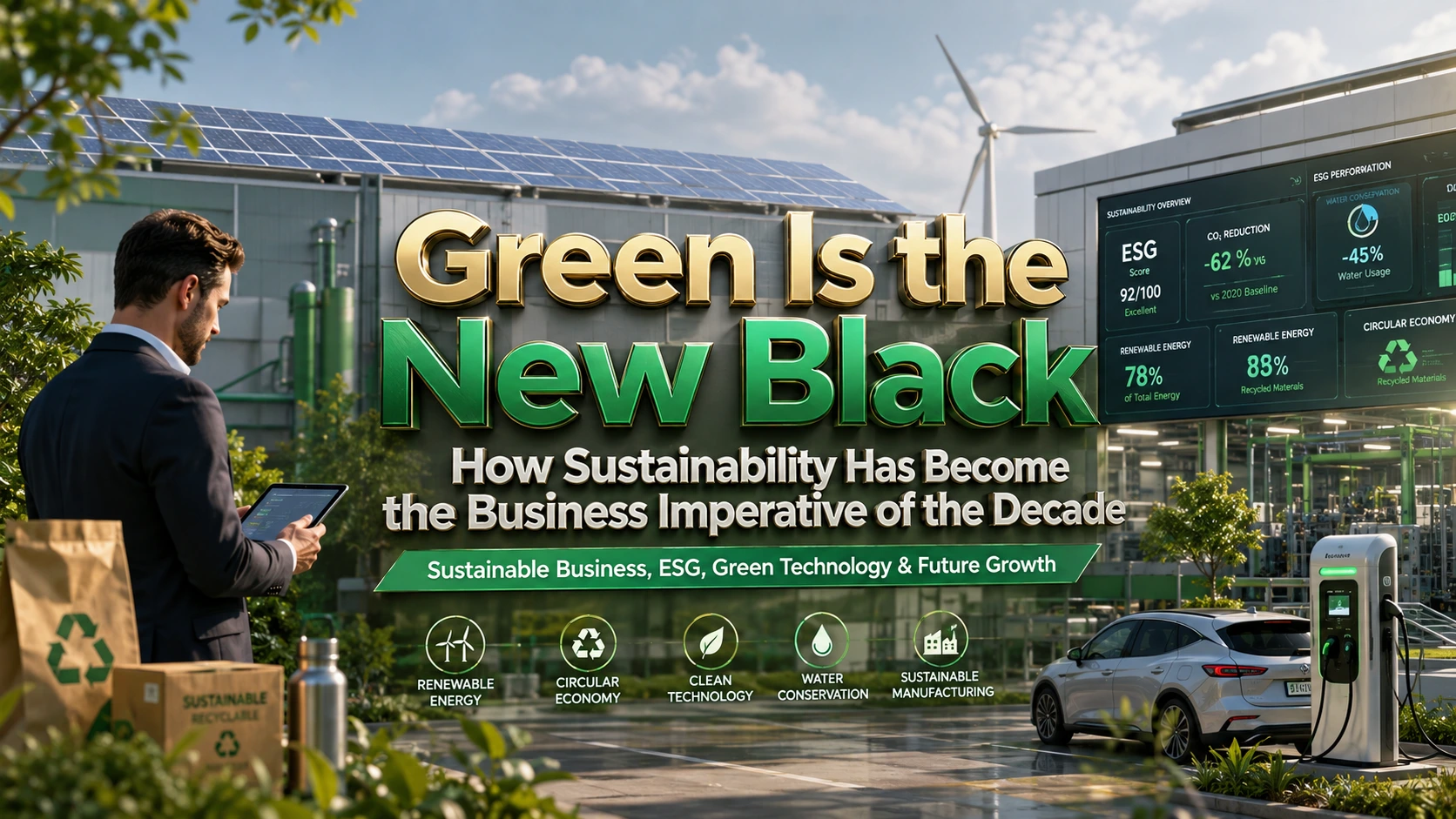
Why sustainability is no longer just about values — it is about survival, competitive advantage, and the future of your business model
By 2026, sustainability has become the heart of business decisions. Not just because of pressure from regulations – although there is, and it is growing. Not only because consumers want it – that is true and it is increasing. However, as business leaders with vision have realised sustainable business models are just more robust, more desirable for talent, more investable, and more aligned with the trajectory of the global economy.
In its recently released Annual Letter to CEOs on Sustainability and Investment, BlackRock argues that the investment case is clear, citing a number of companies that consistently outperform the market in terms of long-term financial results, cost of capital, and economic cycles’ resilience. This has gone beyond a values argument and is a financial argument.
Related Article: Top 20 High-Growth Renewable Energy Startups to Launch in India
The Business Case for Sustainability: Beyond the Ethics Argument
Access to Capital
ESG has come from the margins to the mainstream as a criterion for capital allocation. According to the Global Sustainable Investment Alliance biennial report, global sustainable investment assets now exceed 5 trillion. Green bonds and sustainability-linked loans (SLLs), which reward lenders with lower interest rates for meeting sustainability goals, have become trillion-dollar markets.
Talent Attraction and retention
Compared to other areas of current business research, there is no stronger link between organisational sustainability and talent. Genuine employer commitment to sustainability is a tangible competitive advantage because younger employees have consistently indicated in Deloitte’s Global Millennial and Gen Z Survey that they consider them to be an important factor in determining which jobs to pursue and which to pursue away.
Regulatory Environment
The path of the regulation on sustainability is so clearly and irrefutably in one direction. The official documentation of the EU Corporate Sustainability Reporting Directive (CSRD) is the most comprehensive mandatory sustainability reporting framework ever adopted, impacting a large number of companies in European markets and their global value chains.
Consumer Demand
Sustainable products are no longer a trend but a market reality, with consumers preferring them. A Nielsen IQ Annual Sustainability Report on Consumer Behaviour reveals that sustainably marketed products are increasing at twice the rate of conventional products in key consumer product categories.
What Sustainability Actually Means in Practice
Environmental Sustainability
The Science Based Targets initiative (SBTi) framework is the most credible benchmark for companies beginning their emissions measurement journey to establish corporate emissions reduction targets based on climate science. More than 7,000 companies have pledged themselves to SBTi-compliant targets, offering a distinct clue as to where the sustainable standard is taking a firm stand.
- Measurement and reduction of carbon footprint along value chains and operations.
- Energy transition towards renewable energy and energy efficiency.
- Waste reduction and circular economy practices to remove waste and value of material.
- Water stewardship (especially in water stressed areas).
View Full Project Details: Renewable Energy Projects & Green Power
Social Sustainability
Social sustainability is about how a business affects people – the people who work for the business, people in its supply chain, people who buy from the business, and people in its communities. The main dimensions are fair labour practices, diversity and inclusion, community impact and product responsibility.
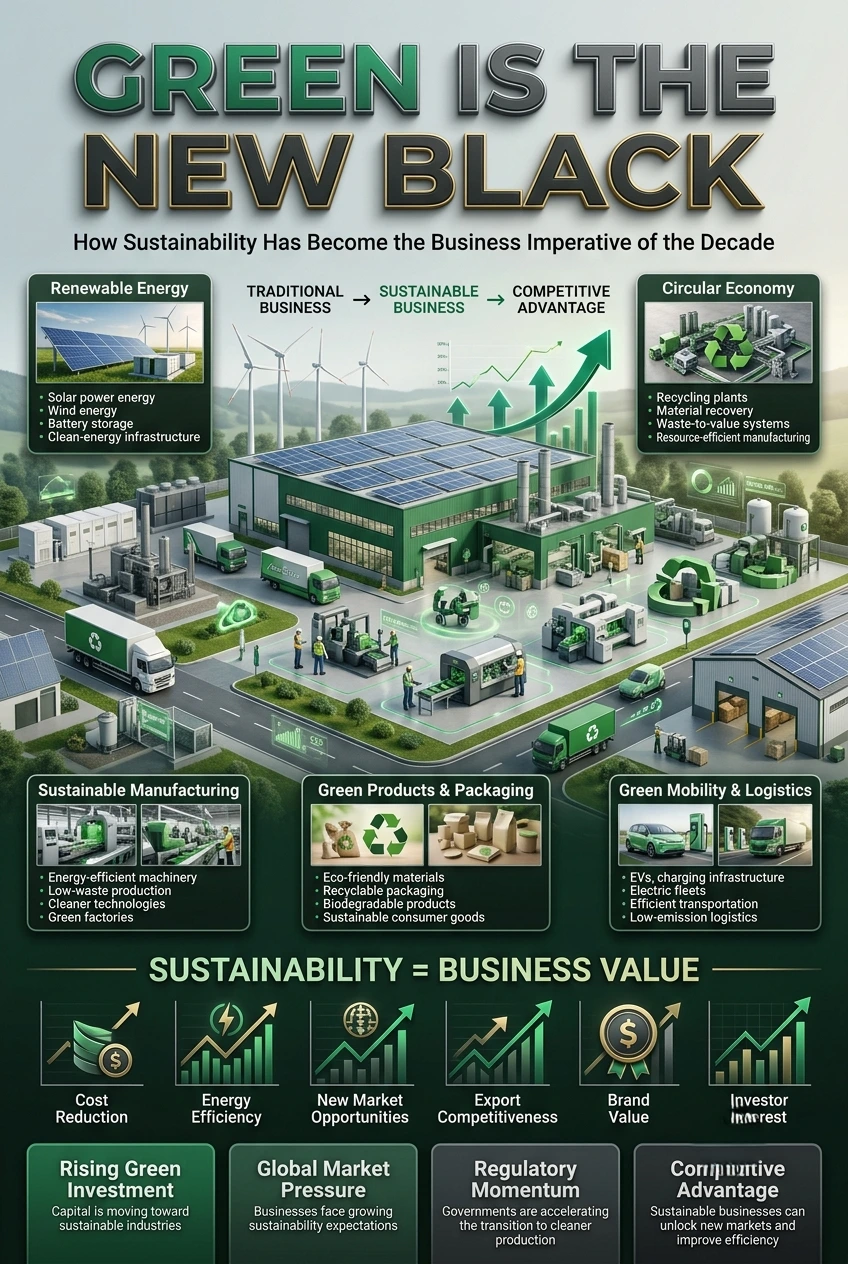
The Supply Chain Challenge: Where Most of the Impact Lies
Far more of the environmental and social footprint lies on the business’s supply chain than its own operations. According to the CDP Supply Chain Report on Scope 3 Emissions, supply chain emissions are 5 to 10 times greater than direct emissions from most industries, hence supply chain sustainability is the top opportunity for most companies to reduce emissions.
Green Energy: The Opportunity Inside the Transition
Now renewable energy is economically attractive regardless of the environmental reasons for using it. The cost of renewables is now the lowest available for a new power generation facility in most global markets, with the cost of utility scale solar PV has dropped by more than 90% in the last ten years, according to IRENA’s Renewable Power Generation Costs Annual Report.
Get Detailed Insights from This Book: Solar PV Power and Solar Products Handbook
Circular Economy: Rethinking the Take-Make-Dispose Model
The circular economy has taken a step from theory to business implementation, both in industry and across industries. The Ellen MacArthur Foundation’s Circular Economy Research calculates that circular economy strategies could have an economic impact of .5 trillion by 2030, through improved resource productivity, new business models and innovation.
Greenwashing: The Risk That Can Destroy What Sustainability Builds
Greenwashing is no zero-sum game. It’s a time bomb to reputation and regulation. Over the past two decades, there has been a significant increase in the level of scrutiny regulatory bodies are applying to environmental claims, while high-profile exposes have sparked consumer distrust of the sustainability claims of any company.
Discover business ideas that actually make money
The Competitive Landscape Is Shifting — Now
Businesses that are actually going down the path of sustainable development are not the ones that are purely doing it for the good of others. They are making the decision to do so because they can clearly see the future of the business environment. There is a trend of capital going to sustainable companies. Talent likes to work for sustainable companies. Regulation is tightening. The times they are changing. Sustainability is a business approach. Those businesses that do are creating a product that has a long shelf life.
References & Further Reading
- Deloitte — Global Millennial and Gen Z Survey
- European Commission — Corporate Sustainability Reporting Directive
- Science Based Targets Initiative (SBTi)
- Ellen MacArthur Foundation — Circular Economy Overview
- PwC — ESG Business Strategy Report


