





The Backbone of Industrial Logistics
In the Chemical packaging manufacturing and supply chain world, packaging is far from an afterthought. This is especially true for the chemical industry, where safety, storage integrity, and legal requirements must be followed. Packaging is critical in transporting industrial solvents, corrosive liquids, and pharmaceutical-grade compounds. Trustworthy packaging solutions such as HDPE drums and chemical carboys are needed.
Chemical packaging is a relatively unexplored area for aspiring industrial entrepreneurs, even though it is vital. There is an expanding market within the chemical sector in India and with foreign supply chains looking for dependable partners. Establishing a chemical packaging plant for drums and carboys is a remarkable MSME prospect because it comes with continuous demand, the potential to export, and strong relevance to the industry—all provided without excessive technical intricacy.
Whether you are a seasoned manufacturer looking to diversify, or a first-time entrepreneur stepping into the world of industrial production, this article will serve as a roadmap. This is your all-inclusive guide on starting a drum and carboy packaging plant, covering everything from materials and machinery to compliance and target customers. With the right information and tools, you will be able to make sensible and practical choices.
Related: Specialty Chemical Industry in India: Growth, Margins, and Market
Why Chemical Packaging is a Niche Worth Entering
Pharmaceuticals, agrochemicals, paints, adhesives, and water treatment industries all deal with liquids and powders that need to be packaged in a specific way to ensure safety. Unlike consumer products, these substances are often volatile, corrosive, or sensitive to environmental exposure. This is why HDPE drums and industrial carboys are so popular—these products provide strength, chemical resistance, reusability, and stackability.
Through an entrepreneurial lens, this industry presents three major advantages. First, it provides stub repeat demand. Chemical companies need to buy large amounts of packages continuously. Second, compliance driven which means companies that invest in quality and standards would win long-term contracts and less competition based on price. Third, in this case the barrier to entry is moderate, thus accessible for small to medium sized manufacturers willing to invest in operational excellence and B2B sales.
Unlike fads that change with market demand, chemical packaging is based on infrastructure, supply chain, industrial processing, and other essentials of a growing economy.
What Are Drums and Carboys? Understanding the Product
It is important to know what you are producing and how it is used before looking into the manufacturing process.
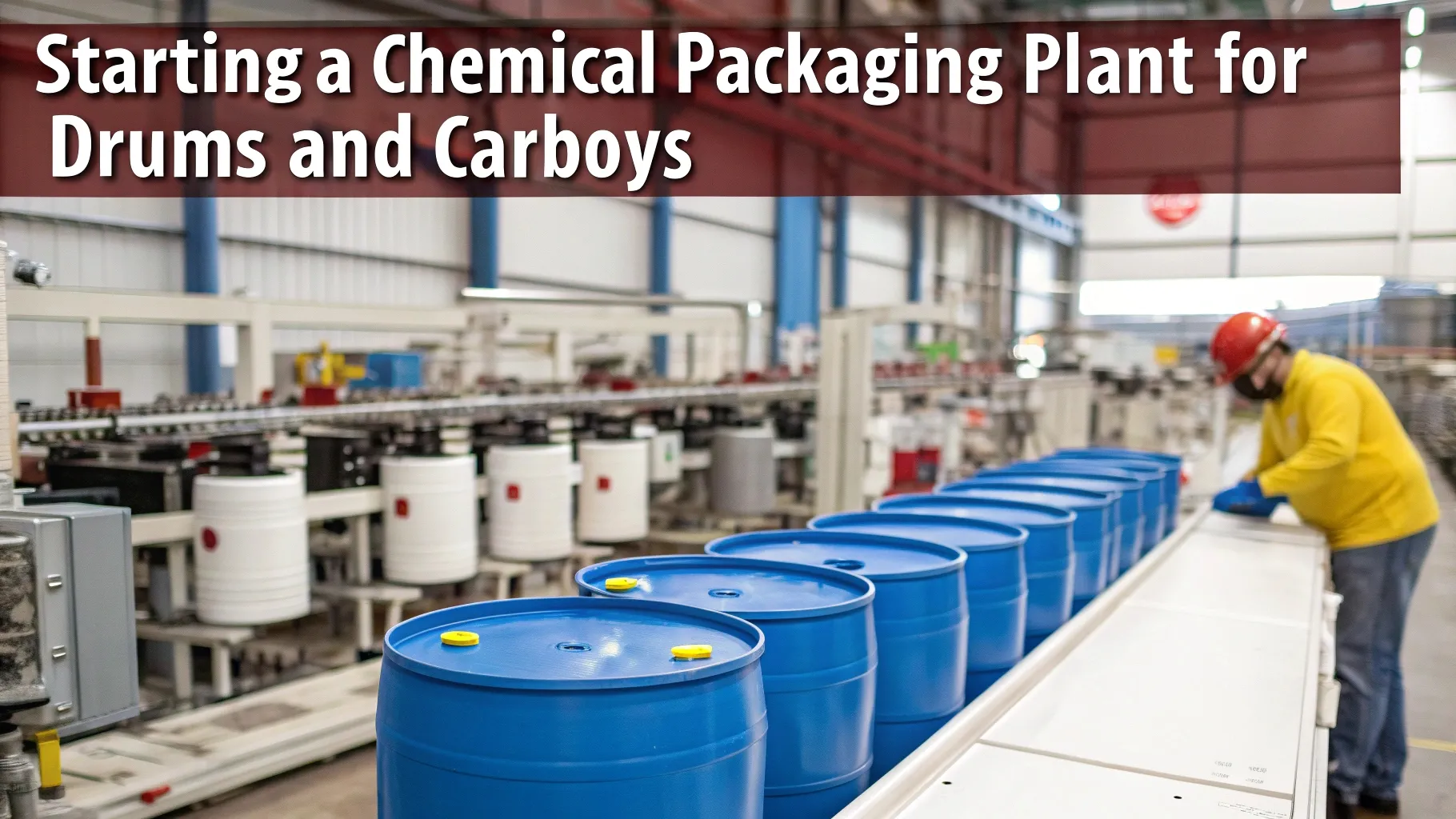
Drums are cylindrical containers made from high-density polyethylene (HDPE) and can hold anywhere from 50 to 250 liters. They are used to store and ship chemicals in bulk. Drums are designed to withstand high internal pressure, corrosive substances, and rough handling. Most of these drums are stackable and reusable, making them ideal for large-scale operations in many industries.
Carboys, on the other hand, are smaller in size and hold 5 to 50 liters of liquids. These are used for controlled dispensing of chemicals and secure chemical handling. They are used in laboratories, pharmaceutical industries, and chemical blending units. Depending on the chemical compatibility required for the carboy, they can be made with HDPE, polypropylene, or even glass. They are often fitted with caps, vents, or dispensing valves.
Together, these packaging forms bring every segment to complete a cycle in the liquid value chain of the industry. It includes raw materials, intermediates, processed and finished goods, and even hazardous waste.
How Chemical Packaging Containers Are Manufactured
The core of this business develops around an efficient process called blow molding. For drums and carboys, this technique is best for them because of the speed, material efficiency, and design flexibility.
The process starts with HDPE granules, which are heated and shaped into a parison— a cylindrical piece of molten plastic. This parison is placed into a mold that is configured into the shape of a drum or carboy. Air under pressure is then pumped into the parison, causing it to expand and fill the mold cavity. After cooling and hardening, the container is removed from the mold.
Additional steps can be carried out, such as trimming excess plastic to the containers, fitting them with threaded necks or valves, checking them for leaks, and labeling. In high-purity chemical labs that use glass carboys, the containers undergo automated molding and annealing in specialized kilns.
All containers, regardless of their material, must have uniform consistency in thickness, chemical resistance, sealing integrity, and structural strength. Each container is required to comply with certain industrial requirements for them to be acceptable within chemical supply chains.
Related: How to Start an Agrochemicals Manufacturing Business?
Tools and Equipment Needed for the Installation
The primary raw material used for the drums and carboys is HDPE resin because of its strength, flexibility, and resistance to acids and solvents. It is used specially for containers. For these purposes, PP or PET can also be utilized. These materials can be sourced from local petrochemical suppliers or imported if necessary.
The most important piece of machinery is a blow molding machine which can be semi-automatic or fully automatic. These machines can also be tailored to one or more cavities per cycle based on the production capacity and drum size. Other required equipment includes:
- For maintaining quality uniformity of materials, there are resin dryers and mixers
- Cap or closure molding machines
- Leak testing units
- Inline or hot stamping printers for labeling
- Conveyors and palletizers for handling post production processing
If your product line also contains glass carboys, then you also need glass melting furnaces, and automatic molding systems along with annealing ovens. However, this is a more capital intensive route, often reserved for pharma-grade or laboratory specific applications.
Safety and production consistency are crucial during industrial operations; therefore, additional auxiliary infrastructure such as chiller systems, water baths, compressed air, power backup, and exhaust systems are required.
Plant Layout and Operational Infrastructure
Raw material storage, blow molding, product cooling, and quality inspection all need to be labeled and packed to steam for. A carboy manufacturing plant needs between 12,000 and 18,000 sq. ft.
The layout should also include adequate ventilation of fire safety measures for pressurized and heated materials. Products must go through molding, cooling, testing, and dispatch while over-exposure to human contact must be avoided.
Waste management is essential to preserving the environment. Trimmed plastics and rejected products can be reused after proper reprocessing.
The layout should also contain the electrical and hygienic stations needed and ensure proper workflow in the designated zones. Heater and pressurized areas require specific electrical layouts to avoid overexposure to combustible materials.
Skilled workers such as the machine operators to the quality control personnel make a teams backbone. Building SOPs is easy with basic training.
For more information check our Project Reports
Compliance, Certification, and Regulatory Requirements
Marking and selling containers for chemical uses comes with severe compliance regulations due to safety and quality norms. Manufacturing overseas comes with its own norms and regulatory bodies, making the process even more complicated.
The BIS or Bureau of Indian Standards certifies Indian manufacturers based on specific IS codes relating to the drum shape, size, and use. If the containers are used for hazardous chemicals and are meant for export, they must comply with UN/DOT packaging requirements which include rigorous drop, pressure, and stacking tests.
Apart from product certification, your plant must also be registered with:
- GST and MSME (Udyam) portal
- Local Factory Act licensing authority
- Pollution Control Board (if dealing with hazardous cleaning agents or waste)
- Compliance with fire safety and EHS
Having ISO 9001 certification for quality systems and ISO 14001 for environmental management supports additional credibility and allows servicing large corporate or government clients who require certified suppliers.
Who Purchases Drums and Carboys—and How Can You Reach The
These customers are spread across different yet high-volume industrial sectors. These include:
- Manufacturers of chemicals and petrochemicals
- Producers of agrochemicals and pesticides
- Plants and laboratories of pharmaceutical manufacturers
- Companies for sanitation and water treatment
- Manufacturers of adhesives, paints and resins
- Food processing and suppliers of cleaning chemicals
Most of these purchase in bulk across B2B industries and seek stable suppliers for volume stability, container fidelity, and delivery punctuality. These buyers can be reached best by having a digital footprint in the form of a dedicated business website that includes product lists, images, quality certificates, and catalogs to download.
It is imperative to gain visibility for your business by listing on IndiaMART, TradeIndia and JustDial, as well as registering on the GeM (Government e-Marketplace) portal. Building direct contacts with procurement and project heads by attending industrial expos, chemical trade fairs and other events for the packaging industry will also aid in networking.
Providing trial batches, responsive customer service, and custom branding (such as logo printing or color coding containers) can help garner trust and secure long-term contracts.
How NPCS Can Assist Entrepreneurs in This Domain
As entrepreneurs look to dive into this niche area, Niir Project Consultancy Services (NPCS) provides them strategic, step-by-step assistance. NPCS formulates Market Survey cum Detailed Techno-Economic Feasibility Reports which aid in planning and setting up a chemical packaging unit.
These reports provide details on:
- Manufacturing process and raw material selection
- Plant layout and machinery choices
- Quality standards and compliance guidelines
- Operational flow and staffing needs
NPCS aids in assessing the technical, commercial, and regulatory feasibility for these entrepreneurs reducing their risk while enhancing the precision in their planning.
Let’s Wrap It Up: An MSME-Focused Venture with Sustainable Potential
The chemical packaging industry, while not as appealing as tech startups or retail brands is fundamentally important to accelerating industrial development. Each liter of chemical produced, transported, or stored must have a compliant container, and drums and carboys fulfill this requirement quite well.
This industry presents MSMEs with a unique opportunity that balances low marketing risk with strong B2B demand and even export opportunities. A chemical packaging brand that meets high standards in quality, regulatory compliance, and reliable supply can emerge as a cornerstone of India’s manufacturing landscape.
Starting a drum and carboy manufacturing plant can be a foothold for a new scalable, essential and reliable industry.


