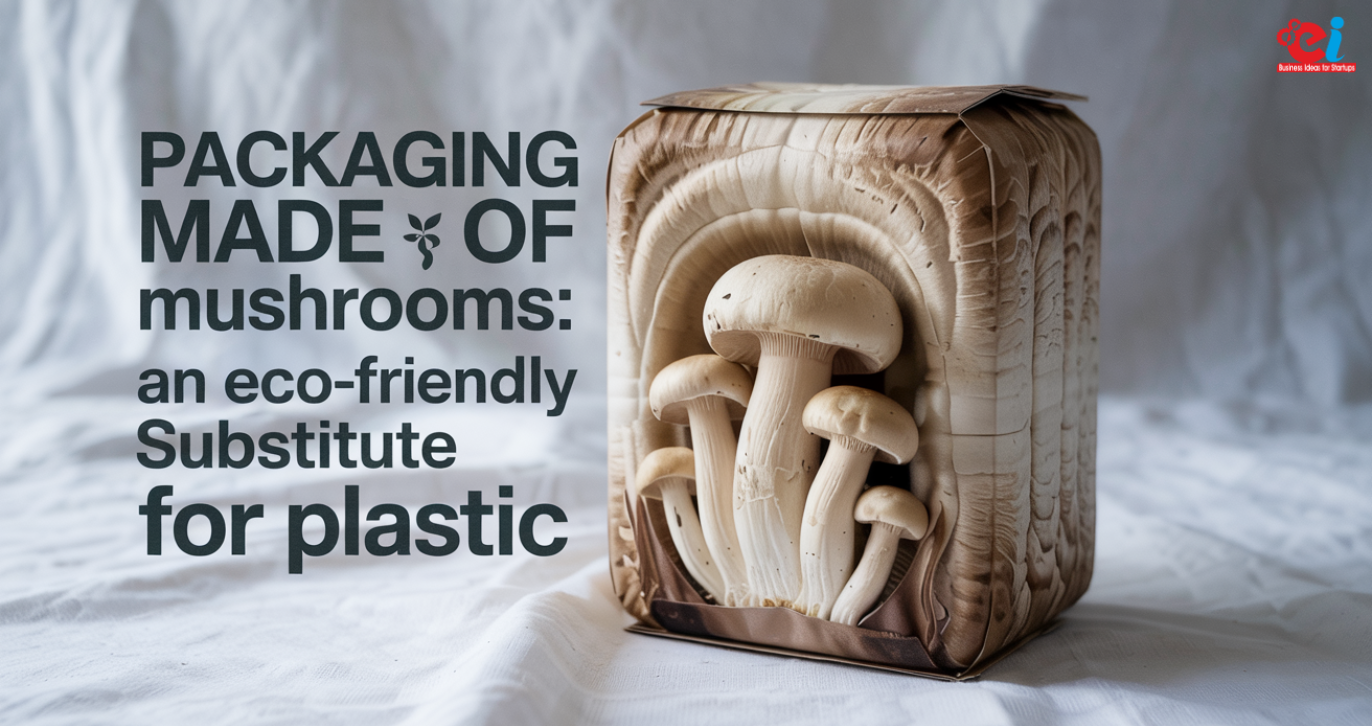


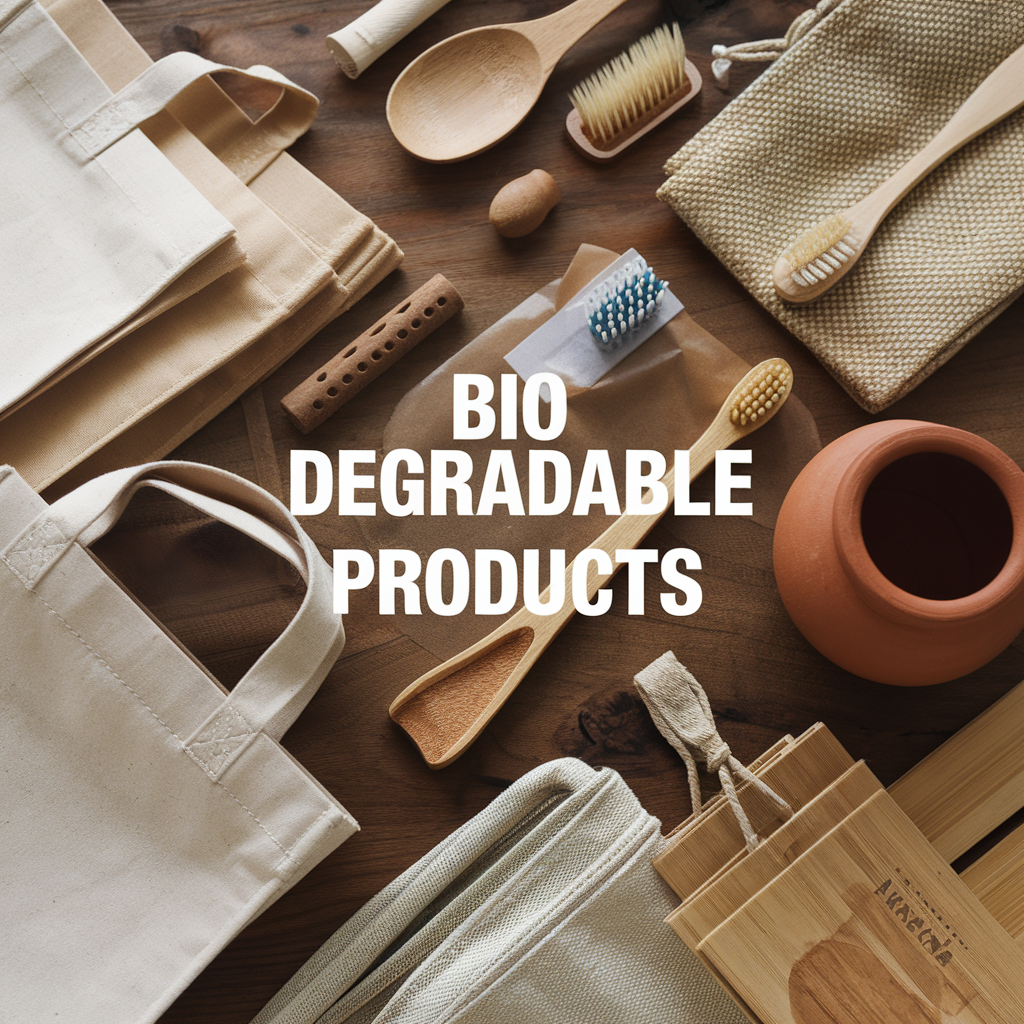



One of the biggest risks to the environment is plastic pollution. One of the best options is mushroom-based packaging. It replaces common plastic items, being biodegradable and eco-friendly. This paper aims to probe the mushroom-based packaging in detail with all its advantages, production, uses, market challenges, and prospects.
What is Mushroom-Based Packaging?
Mushroom-based or mycelium packaging is a biodegradable matrix out of fungi. Mycelium is the root-like vegetative part of this fungus that consists of a dense net of thread-like structures binding together agricultural wastes like corn husks or wood chips. When grown under controlled conditions, mycelium creates a strong, lightweight, compostable matrix to replace plastic packaging.
Mycelium packaging will degrade naturally into the environment in weeks, while conventional synthetic plastic will take hundreds of years to degrade. That property lends it an advantage against conventional single-use plastics and thus eases the burden of waste management. Gradually, the global mycelium-based packaging market is gaining momentum, boosted by concerns over the environment shared by consumers and industries. How Mushroom-Based Packaging Is Grown
Mushroom-based packaging core steps:
- Process One:
- The first of these is sourcing agricultural waste.
- By and large, the agricultural waste that acts as the principal substrate will come in forms such as hemp, sawdust, or corn stalks.
- This is about the waste of environmental degradation for re-salvaging.
- Process Two:
- The second one is Inoculation with Mycelium
- The substrate is inoculated with mycelium spores that will grow through and weave their way throughout the material.
- Process Three:
- The mycelium-infused material is squeezed into mold to form the shape needed
- It will harden into a strong and lightweight structure.
Also Read: Sustainable Packaging- Use Renewable Raw Material
Mushroom-Based Packaging’s Environmental Benefits
Mushroom packaging is entirely absorbed into the natural environment
It can break down within a matter of days to weeks when placed on compost.
As this makes it safe for human beings to ingest as well as environmentally safe, it has also kept it free of harmful chemicals and synthetic additives.
Mycelium packaging consumes much less energy to produce when compared to plastic, which thereby reduces greenhouse gases.
This packaging scheme minimizes waste and instead grows it from renewable resource materials, not generated.
Natural decomposition and soil enrichment are mushroom-based packing disposal ends.
Mycelium insulation is yet another alternative offering to replace polystyrene foam, which stands as a huge example of environmental degradation and of its non-biodegradability.
Read our Blogs: Innovative Approaches to Sustainable Packaging Solutions
Uses of Mushroom-Based Packing
Mushroom-derived packaging has immense potential, yet there are still some challenges to tackle:
Production Expenses: Currently, mycelium packaging costs are much higher than that of plastics due to the unique processes required for its manufacture. This is likely to, however, change with advancing technology and the exploitation of economies of scale.
Not Scalable: The other concern is that growing mycelium takes a lot of time, and it requires close control of environmental parameters for proper growth. Mass production facilities, considering the area, are a must for widespread adoption of learning.
Limited Consumer Awareness: Very few consumers even know what mushroom-based packaging is about; it’s just not marketed in effective ways to create awareness among the possible end-users.
Moisture Sensitivity: Unlike plastic, mycelium packaging can be sensitive to moisture, which might affect its performance in certain applications. Research is going on to improve its water resistance without affecting its biodegradability properties.
Regulatory Challenges: Mycelium packaging is environment-friendly; however, the regulatory approvals and certifications for it are diverse across the areas. Standardization and compliance with industry regulations must be done for wider market acceptance.
The Future of Mushroom-Based Packaging
Increasing investments towards sustainable packaging solutions clearly indicate that mushroom-based packaging has a bright future. Companies and researchers are now working toward enhancement in production efficiency and reduced costs, bringing in new applications. Therefore, the government and environmental organizations set a framework for the biodegradable packaging initiative through regulations and incentives.
Progress in Technology: The expected advancements in biotechnology and material science are also expected to further strengthen the qualities of durability and versatility of mushroom-mycelium-based packaging.
Increased Corporate Consumption: Corporations seeking to fulfil sustainability targets will eventually push more corporations to integrate biodegradable packaging into supply chains.
Consumer Demand for Sustainability: Increased consumer awareness of environmental issues has been driving the demand for eco-friendliness from consumers looking for greener options. This will eventually spur the growth of the industry’s biodegradable packaging sector.
Policy and Legislation: Countries around the world are putting up laws to prohibit plastic use and encourage the introduction of sustainable packaging solutions for a conducive environment for mycelium-based products.
Plastic from mycelium-based packaging is becoming mainstream due to increasing business and consumer gravitas on sustainability. Of the most significant things to consider, mushroom-based packaging is an excellent alternative for a greener future because it wastes and pollutes less, resulting in a more established circular economy.
Final Thoughts
Plastic pollution is now one of the biggest environmental disasters. But an extremely encouraging solution such as mushroom-based packaging makes people believe that a sustainable world is around the corner. Adopting biodegradable solutions, therefore, means reducing sullying carbon footprints created by businesses and individuals and paving the way toward a cleaner, greener world.