





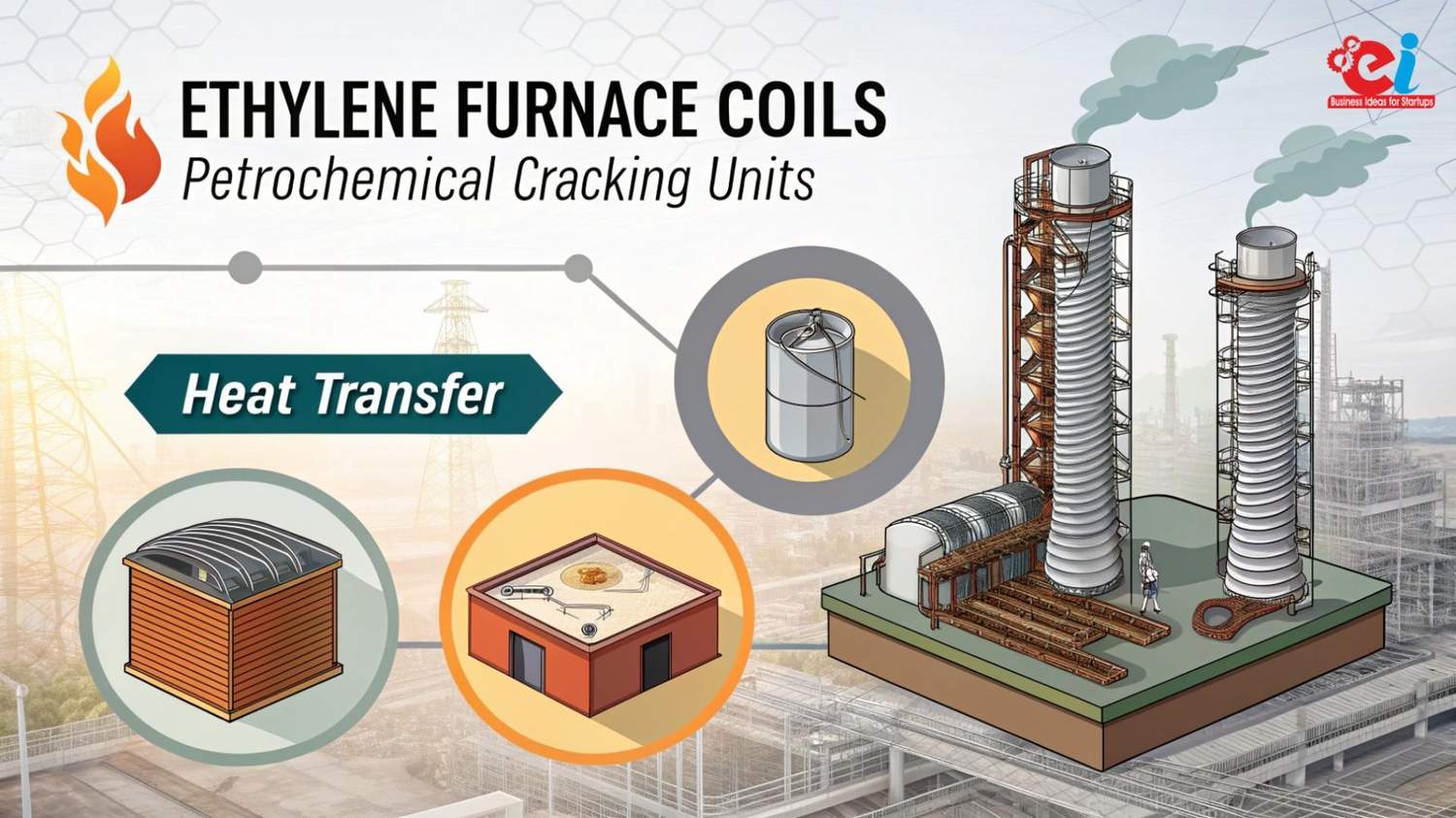
Within the petrochemical industry, precision, temperature tolerance, and real world functionality define succeeding Ethylene Furnace Coils as one of the most basic building types of modern engineering. These coils rest in the center of steam cracking furnaces, which is the mechanism that performs the transformation of the hydrocarbons that could be naphtha, ethane or propane into ethylene which is the fundamental building block of the entire modern petrochemical value chain.
Ethylene is essential for the making of various plastics, rubber elastomers, solvents as well as industrial chemicals. This encompasses rotary furnace coils as not only mechanical devices but vital apparatus for the perpetuity of manufacturing, packaging, construction, automotive and many more sectors on a global level which with dependencies gnerate and fuel economic growth. The positing increase of demand on polyethylene, PVC and allied derivatives have a direct impact for advanced cracking technologies and their high performance powering coils.
With the introduction of new ethylene shifting technologies, new advancements of precision steam turbines and supercritical thermal electric generators offers steam cracking furnaces modern boundaries for transforming naphtha into ethylene. The focus of this thesis is the complex combination of these structures and machines, along with the the strategic role in the thermal cracking process. Alongside the evolution with regards to the processes of changing the old soviet style furnaces from petrochemical plants into furnaces that are more innovative in technology adds a hint of sustainable development.
Exploring What Ethylene Furnace Coils Do
A bank of radiant coils, a collection of tubes experienced to high levels of thermal and mechanical stress, serves as the heart of a steam cracking unit. Their function is to carry the hydrocarbon feedstock through the furnace’s radiant section. During the endothermic cracking reaction, where large hydrocarbons are turned into smaller molecules, primarily ethylene, propylene, butadiene, and aromatics, these coils have to endure skin temperatures that exceed 1,100 °C.
These coils work at temperatures above 1,100 °C to preform the endothermic cracking reaction. Ethylene furnace coils’ primary function is accomplishing thermal cracking while maintaining over cracking, coke deposition, and reduced selectivity. Achieving such a complex goal is allowed by maintaining a delicate balance between thermal input and residence time. Such a balance requires intense management on coil geometry, surface roughness, flow dynamics, and metallurgy.
The radiant box contains coils which are set either vertically or horizontally. These configurations allow buners to easily expose the coil containing feedstock to radiant heat. The product mix undergoes cracking as it flows through the coil. In order to prevent further decomposition, the mixture needs to be quenched rapidly downstream. To maintain and suspend structural integrity over prolonged periods of time, the coil containing the feedstock needs to survive the intense heat.
Metallurgical Composition and Material Engineering
The cracking furnace’s efficiency, longevity, and safety all rely on the coil material selection. Considering the operational temperatures and the coke-forming reactions, traditional carbon steels are out of the question. High alloy austenitic and nickel-based materials provide mechanical strength, resist oxidation, carburization, and have superior tensile properties at extreme temperatures, unlike other materials.
Modern ethylene furnace coils HP-modified alloys like 25Cr-35Ni doped with niobium, titanium, or rare-earth elements. Others include advanced cast micro-alloys like HP-MA, HPM, and HX. All these compositions are well known because they resist creep deformation, enhance heat transfer, and catalyst coke formation — sustaining coil degradation.
Decades of alloy development has contributed to the new material design with enhanced heat treatment, finer grain structures, and increased thermal fatigue resistance to address low-emission technologies and high efficiency requirements. Engineers can now evaluate stress and temperature profiles at the coil surface to aid material selection using 3D numerical modeling and finite element analysis. The models enable more precise optimization to guide the material selection geometry to achieve greater robustness.
Coiling Arrangement and its Thermal Efficiency
Like in ethylene furnaces, coils for ethylene heaters and furnaces require equal attention in terms of spiral design. In the case of horizontal coils, their internal diameter, length, wall thickness, surface finish, radius of bends, and even bow shape have a great impact on the coils heat flux, drop in pressure, as well as the kinetics of reactions. In high temperatures, smaller-diameter coils yield maximum transfer of heat, albeit at a higher drop in pressure and risk of coking, while larger-diameter coils reduce surface temperature and thus cracking efficiency.
These factors determine the combination of single-zone, double-zone and multizone coils that is most suitable for a specific furnace configuration, type of feedstock and target yield. To decrease residence time and make maintenance easy, segmented or multi-pass arrangements can also be adapted.
While designing, turbulent flow is to be encouraged in order to maximize the heat transfer and avoid the formation of hot spots that facilitate coke build-up. It is important to note, however, that the turbulence that stirs the fluids enhances stripping or wall shear stress, metal fatigue, and other vessel wear. Thus finding the optimal balance between hydrodynamic conditions and durable, reliable structures becomes the main focus of design.
The current focus of coil experts is the addition of internal fins, vortex generators, as well as special coatings able to outlast foulant buildup to enhance thermal performance while increasing operational duration. Non-invasive inspection and prognosis methods, such as intelligent pigging systems and acoustic monitoring techniques, are also employed for early detection of abnormalities.
Related: Best Business Ideas to Start In Aluminium and Aluminium Downstream Sector
Coking: The Major Hurdle in Ethylene Unit Maintenance
One of the primary operational issues with ethylene furnace coils is coke build-up. Coking is the phenomenon of accumulation of carbonaceous materials, or coke, onto the spiral’s inner surface because of thermal cracking of heavy hydrocarbons. Coking reduces the effective diameter and heat transfer, increases the pressure drop and operating temperature, and c is a main contributor to coil erosion.
Coil efficiency is typically increased every few months through steam-air mixtures or chemical cleaning procedures. Frequency of decoking can vary from one coil configuration to the other due to design, operating conditions, feedstock grade, and anti-coking measures implemented.
Coking is reduced in modern design because of smoother finishes on internal surfaces, anti-coking or primers, and more advanced control systems that finely tune the steam-to-hydrocarbon ratios. Operational practices such as low-pressure drop firing, strategic coil layout, and even temperature spread within the furnace also aid in increased run lengths.
The financial impact from unpredicted coil failure and excessive coking is incredibly costly, reinforcing the need for predictive maintenance, advanced material selection, and methodical strategic planning on coil rep placement.
Strategic Importance in the Economics of Petrochemicals
Since more than 60% of worldwide ethylene production comes from steam cracking, ethylene furnace coils are the center of concern for the entire value chain of the petrochemical industry. Their dependability affects plant uptime, product output, energy consumption, and emissions. Overcoil metallurgy, static thermal design enhancements, or even simple changes can accomplish a lot in terms of cash flow savings and assets (ROA).
Furnace coils could be considered high-ROI investments waiting to occur regarding the strategic upgrading of performance targets during overhauls or periodic plant upgrades. Better coil performance entails less decoking, increased furnace run time, greater allowed throughput, and even feedstock flexibility—capable of shifting between naphtha, ethane or propane without changing costly internals.
Amid expansion of petrochemical capacities, there is a region-specific demand surge for funneling type furnace coils in India, Middle East, China and the U.S. The domestic market of furnace coils can take advantage of this opportunity by cooperating with EPC contractors and licensors such as Technip or Lummus and with big players like Reliance Industries, SABIC, ExxonMobil and Indian Oil.
Sustainability and Future Developments
In their effort to meet carbon emission and energy consumption mandates, the industry is looking into the use of ethylene furnace coils for decarbonizing steam cracking operations. Attention is now placed on lower carbon footprint materials with better thermal profiles and increased alloy utilization efficiency in the furnaces.
Work is in progress on reflectively controlled metallic radiant hybrid tubes, phosphorite-clad metallic coils, and nano alloying. Hydrogen-rich firing combined with AI process control and smart sensors has the potential to optimize furnace operations and greatly improve environmental impact.
Coil metallurgy also needs to evolve with increasing green ethylene production using bio-based or recycled feedstocks as demand grows. This shifts the focus of coil material science innovation from performance enhancement to sustainability.
Conclusion: Ethylene Furnace Coils as the Foundation of Petrochemical Progress
In an industry where efficiency is king and downtime is costly, ethylene furnace coils represent more than a mechanical asset — they are the thermal core of global petrochemical production. From material selection and heat transfer performance to coke resistance and lifecycle economics, these coils are decisive factors in the reliability and profitability of steam cracking units.
For petrochemical plant owners, EPC firms, and furnace designers, investing in advanced furnace coil technologies offers a direct path to higher yields, lower energy costs, and regulatory compliance. For manufacturers of ethylene furnace coils, this is a high-value niche demanding metallurgy excellence, precision engineering, and continuous innovation.
As the global demand for plastics, specialty chemicals, and industrial intermediates continues to rise, the humble coil inside a radiant furnace remains the unsung hero powering it all.


