





A Practical Guide for Entrepreneurs, MSMEs, and First-Generation Industrialists
Why Agro-Industrial Manufacturing Deserves a Serious Look
When it comes to India’s agriculture-based economy, the discussion is almost always about agriculture—whether it’s mandi prices, monsoons or rural livelihoods. But a much more commercially dynamic tale is playing out at the processing end of the supply chain. The country is a huge producer of cassava, coconuts, soybeans and bananas. However, a large portion of the value of these commodities remains stranded as unprocessed commodities or poorly packaged finished products. Today’s most promising agro manufacturing business ideas blossom in that space between the farm gate and the end consumer.
There are a number of strong currents that are coming together at this moment. Government policy (PLI, PMFME and SFURTI) is very proactively directing capital towards food and agro-processing. The days of eating unprocessed food are over, and people are heading towards products that are clean-label and traceable. Changes in the global supply chain in the years after 2020 have created new export routes, which were unavailable 10 years ago. Further, small manufacturers have seen their entry barriers significantly reduced through digital infrastructure. The article discusses seven opportunities in agricultural processing, natural oil extraction, and agriculture-related infrastructure that have been identified as having proven potential for commercial success, strong economic returns, and a match between domestic demand and export demand.
Get Detailed Insights from This Book: Modern Technology of Agro Processing & Agricultural Waste Products
1. Cassava (Tapioca) Starch Manufacturing: A Quiet Industrial Backbone
Cassava stealthily supports entire industrial supply chains. The starch extracted from cassava root has the properties of gelation, thickening, stabilization and binding in a variety of applications. The global market for cassava starch is estimated to be worth around USD 3.8 billion in 2023 and will be expanding at a compound annual growth rate of 4.8% till 2030. The major growing regions in India are Tamil Nadu, Kerala, Andhra Pradesh and Karnataka. Native starch can be marketed as is or further modified into starches which can be sold for a 40–60% higher margin. End use industries are food processing, textile sizing, paper manufacturing, production of adhesive, bioplastics, and pharmaceuticals. Cassava starch has low concentration risk as buyers are distributed across several stable markets. The capital investment is Rs. for a medium scale unit of 10-15 tonnes/day. Depending on drying technology, 40-70 lakhs.
| Parameter | Details |
| Raw Material | Fresh Cassava Roots (Rs. 3–5/kg farm gate) |
| End Products | Native Starch, Modified Starch, Glucose Syrup |
| Key Industries | Food, Textile, Paper, Pharma, Bioplastics |
| Small Unit Capacity | 5–10 MT/day |
| Investment Range | Rs. 35–70 Lakhs |
| Global CAGR | ~4.8% through 2030 |
2. Virgin Coconut Oil: Where Wellness Economics Meet Traditional Processing
There is hardly anything that has experienced the dramatic repositioning as coconut oil has. It was a commodity manufactured by pressing it in small ghanis and sold locally in plain plastic bottles a generation ago. In today’s market, the price range of Virgin Coconut Oil (VCO) is between Rs. 400 and Rs. At 900 per litre it is in high demand by buyers in the food, cosmetic, nutraceutical and pharmaceutical sectors throughout Europe, North America and East Asia. VCO is made from fresh coconut milk without chemicals or high heat processing by using cold-press or fermentation induced separation techniques. VCO is not refined or bleached in either method so it has a natural odor, medium-chain fatty acids and antioxidants. India is the third largest producer of coconut in the world. Domestic production is located in the four southern states with more than 90% of the production taking place in Kerala, Tamil Nadu, Karnataka and Andhra Pradesh. The manufacturing of VCO is, however, quite fragmented and that provides an opportunity for organised manufacturers to make inroads in the market.
A small VCO setup with a 500-800 coconut processing per day can be set up at Rs. 15–30 lakhs. The elements that are critical to success are:
- The organic certification is USDA Organic or India Organic.
- Export registration by APEDA export registration
- Weighing of products for domestic sales
- Established direct links with export aggregators and B2B buyers in food and cosmetics.
VCO margins vary from 25 – 45% and are typically below export realizations. This is also one of the most affordable agro manufacturing business ideas for anyone who is looking for a business with little or no capital.
3. Banana Ripening Chambers: Infrastructure as a Business Model
Reaching the proper temperature and ethylene concentration in banana ripening chambers is critical for commercial banana ripening. Bananas are needed in a uniform stage of ripeness, yellow color and blemish-free, and shelf-stable, for large retail chains, modern trade outlets and food processors. This consistency can’t be obtained from natural ripening. The ripening chamber operator purchases green bananas from the growers and distributes the ripe bananas to the retailers, hotels, and caterers, making banana one of the most reliable valued products from a volatile one. The capacity of a basic unit is 20 MT and it can be built at Rs. Having 50-100 retail points in a 50km radius, with payback periods frequently less than 24 months, 20-35 lakhs. The modern retail sector is expanding by 12-15% each year and the fast delivery commerce platforms demand uniformity during the fruit ripening process, making ripening chambers a true scalable food logistics business.
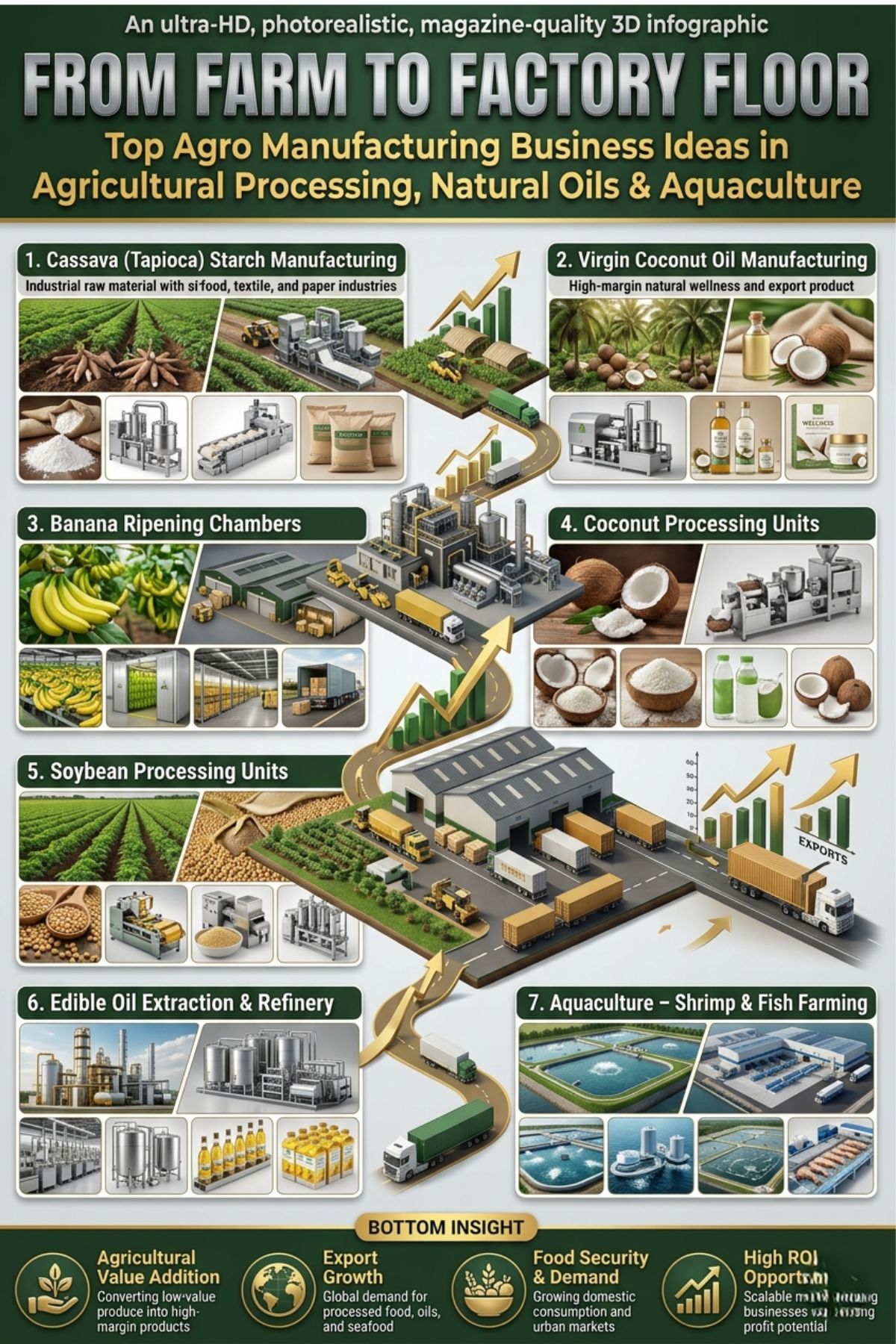
4. Coconut Processing Units: One Raw Material, Multiple Revenue Streams
A coconut processing unit coordinates the whole coconut from the shell to the husk, water to kernel and the oil. A tonne of dried copra can be utilised to produce coconut oil, desiccated coconut, coconut milk powder, shells as activated carbon, husks as coir fibre and concentrate as coconut water. Desiccated coconut is a high-volume export product; the bakeries and the chocolate industry in Europe and the Middle East use it. Coconut shell-based activated carbon, which is used for water purification, pharmaceuticals and industrial filtration, is a market that is expanding at more than 7 per cent per year. Coir pith is highly sought after in the world for horticulture and hydroponic farming.
50,000 is considered very low. Facing a coconut belt entrepreneur, the cost of establishing a semi-integrated operation is Rs. Multiple revenue streams can be generated with 60-120 lakhs. Entrepreneurs can find great advantages in structured feasibility analysis before investing capital in these segments. Market Survey cum Detailed Techno-Economic Feasibility Reports on manufacturing processes, raw material costing, projected financials, and competitive landscape analysis are prepared by Niir Project Consultancy services (NPCS) which are very useful for Entrepreneurs who approach financial institutions for Project loans.
Get Detailed Project Report (DPR): Coconut and Coconut Value-Added Products (recommended)
5. Soybean Processing Units: India’s Underutilised Oilseed Powerhouse
Soybean is arguably, the most nutritious and most industrialized crop in Indian agricultural basket. However, the processing of soybeans at scale is still limited to Madhya Pradesh and Maharashtra and there is huge potential in other states. The crop is used for two main commercial products: soybean oil and defatted soya meal (DOC) which is the biggest determinant of crop processing economics due to its use in animal feeds and aquafeed formulations. Though India is a significant oil crushing country, it is important to note that India imports significant amount of refined soybean oil, creating a unique business opportunity for co-located integrated refineries with crushing units. In addition, food grade soy protein concentrates (meat analogues and protein supplements) are expanding demand categories where domestic supplies are short. A 50 TPD Solvent extraction unit cost Rs. An investment of Rs. 2.5–4 crore in plant and machinery and suitable for second stage entrepreneurs with raw material linkages.
| Segment | Primary Output | Key Buyers | Market Outlook |
| Cassava Starch | Native/Modified Starch | Food, Textile, Paper | Strong – 4.8% CAGR |
| Virgin Coconut Oil | Cold-pressed VCO | Food, Cosmetic, Pharma | Strong – 6.2% CAGR |
| Banana Ripening | Ripened Bananas | Retail, HoReCa, Processors | Steady – Retail-linked |
| Coconut Processing | Oil, DCN, Activated Carbon | Food, Industrial, Export | Strong – Multi-product |
| Soybean Processing | Oil + Soy Meal (DOC) | Feed, Food, Refinery | Robust – Import Subst. |
| Edible Oil Refinery | Refined Edible Oil | FMCG, HoReCa, Retail | Very Strong – Staple |
| Aquaculture | Shrimp, Fish | Domestic + Export | Strong – 8%+ CAGR |
6. Edible Oil Extraction and Refinery: Bridging India’s Structural Import Gap
India emerges as the biggest importer of edible oil with the huge demand for oil in the country and a structural underinvestment in domestic oil processing capacity. The nation imports palm oil, soyabean oil and sunflower oil in crores of dollars every year. A well-designed refinery will be able to process more than one feedstock, for example, mustard, groundnut, sunflower and soybean crude in a year when it is available. In the premium segment, there is a significant uptake of cold press oil extraction units in an easily accessible location. The price of cold-pressed groundnut oil, sesame oil, flaxseed oil and black seed oil is 2–4 times higher in health food stores and e-commerce compared to conventional refined oils. Minimal Package unit can be developed for Rs. 8-20 lakhs and targeted urban consumers with high willingness to pay who are health conscious. The mid scale refinery (10-20 TPD) is aimed at the institutional and regionals FMCG segments and demands Rs. 1.5–3 crore. The operating margin is in the range of 4-6% for commodity grades and 15-25% for specialty and branded oils.
Related Article: Top 3 Profitable Manufacturing Businesses in India (2026): Hemp Oil, Herbal Oral Care & Spice Oils
7. Aquaculture — Shrimp and Fish Farming: India’s Quiet Export Success Story
Aquaculture is one of the most remarkable success stories of the last decade in India. The country has become the second largest producer and the top exporter of aquaculture products in the world, including the largest exports of frozen shrimp to the U.S., E.U., Japan and China. Vannamei shrimp has revolutionized the economics of coastal aquaculture in Andhra Pradesh, Gujarat, Odisha, and West Bengal. Shrimp production in a one ha system is 8-12 MT/90-120 days of a crop cycle and in tropical regions 3 cropping cycles per year. At a farm gate price of Rs. The annual income from even two hectares of this, is quite high, about 350-500 per kilogram. In addition to primary farming, aquaculture offers opportunities for downstream processing, such as shrimp peeling plants, IQF processing, value added products and fish feed production.
Fish farming is becoming a trend with the Pradhan Mantri Matsya Sampada Yojana (PMMSY), which offers subsidy and credit linked support to aquaculture entrepreneurs. The National Fisheries Development Board (NFDB) through the Fisheries ministry portal is the main government portal to find scheme information, eligibility and applications for financial support.
Profitability Reality Check: What the Numbers Actually Look Like
A frequent error that business owners make is taking the profit calculations from the gross margin figures alone. Four elements—utilisation rate, working capital efficiency, energy cost, and market channel selection—are critical to real manufacturing profitability. In cassava starch production, raw material cost is the largest cost in the starch production process, accounting for 55-65% of the cost of production. EBITDA margins of 18-22% can be achieved on native starch and 28-35% on modified starch grades in a 5 MT/day plant at full utilisation. A good unit through export aggregators or D2C can have EBITDA margins of 30–40% in VCO manufacturing. But there is a risk of concentration in the buyer market: diversifying market channels over time is essential. Aquaculture is the most profitable but also the most bio-risky. Disease outbreaks which include White Spot Syndrome Virus (WSSV) in shrimp can destroy an entire crop cycle. It is an investment that is essential to make when it comes to insurance, biosecurity measures and veterinary assistance.
Explore proven business ideas with high success potential
Frequently Asked Questions
Q1. Which segment suits a first-time entrepreneur with Rs. 20–30 lakhs?
The simplest of the entries for this capital outlay range would be virgin coconut oil production. The equipment requirements are simple, the inputs have a geographical location and the markets (export and domestic) are defined. A cold-press oil unit or micro cassava starch unit could also be undertaken depending on the proximity to buyers.
Q2. Are government subsidies available for these manufacturing units?
Yes. Many different ones applies for different sections:
- PMFME (PM Formalisation of Micro Food Enterprises) — covers food processing units including oil and starch
- PMMSY — covers aquaculture and fish farming
- SFURTI and ODOP — support cluster-based manufacturing including coconut and soybean products
- State-level industrial agencies — capital subsidy, power tariff concessions, and stamp duty exemptions
Q3. How long does it take to reach breakeven?
Breakeven for a well-planned cassava starch unit (assuming 70%+) is expected within 18 to 30 months. For a VCO unit with export linkages established before launch, breakeven can come as early as 12–18 months. Units with pre-signed supply agreements consistently outperform those selling into spot markets.
Q4. What certifications are required for export-oriented production?
Registration with the FSSAI is the basic requirement for the Indian market. If you are dealing with exports, you may require further registrations such as:
- APEDA registration — mandatory for all export-oriented food businesses
- USDA Organic or EU Organic certification — for VCO and organic starch
- BRC or FSSC 22000 — for food safety management systems
- MPEDA registration and residue monitoring compliance — for shrimp exporters
Q5. Is edible oil refining viable for medium entrepreneurs?
Large players dominate commodity refined oil in urban distribution. Yet, two niche markets can be established: regional supply in Tier 2 and 3 markets with poor distribution from big brands, and niche cold pressed oil markets where trust is more critical than price. Both paths are increasingly validated by D2C brands that have built strong businesses with modest manufacturing investment.
Q6. What is the role of technology in modern aquaculture?
Technology adoption — automated feeders, dissolved oxygen sensors, CCTV-based pond monitoring, and water quality IoT systems — has been shown to improve yields by 15–25% while reducing feed conversion ratios. Support from CGTMSE credit guarantee schemes make equipment financing more accessible for small aquaculture entrepreneurs without adequate collateral.
Conclusion: The Opportunity Has Never Been More Tangible
What unites all seven segments is not their agricultural origin but a shared characteristic: each represents a genuine disconnect between raw material availability and value-added processing capacity. India grows the cassava, the coconuts, the soybeans, and the bananas. It produces the shrimp and the oilseeds. Yet it continues to under-process, under-brand, and under-export these materials relative to global benchmarks. That persistent gap is precisely where agro manufacturing business ideas become real commercial opportunities.
For the first-generation entrepreneur, the practical question is not whether the opportunity exists — it clearly does. The real question is how to enter in a way that manages capital risk, builds market relationships before achieving scale, and creates genuine operational capability rather than merely installed capacity. Businesses that succeed in these segments share a few consistent traits:
- They start with a specific product and a specific buyer before expanding
- They treat quality compliance as a competitive asset, not just a regulatory burden
- They build working capital discipline from day one
- They invest in market access before investing in further production capacity
India’s policy environment — from PLI schemes to MSME credit guarantees under CGTMSE to the massive expansion of organised food retail — is now more supportive of agro-industrial manufacturing than at any point in the last three decades. The window is open. The question is simply who walks through it with a well-prepared plan and the patience to see it through.


