





IMC Hisar Manufacturing
The Airport That Rewrote Hisar’s Industrial Story
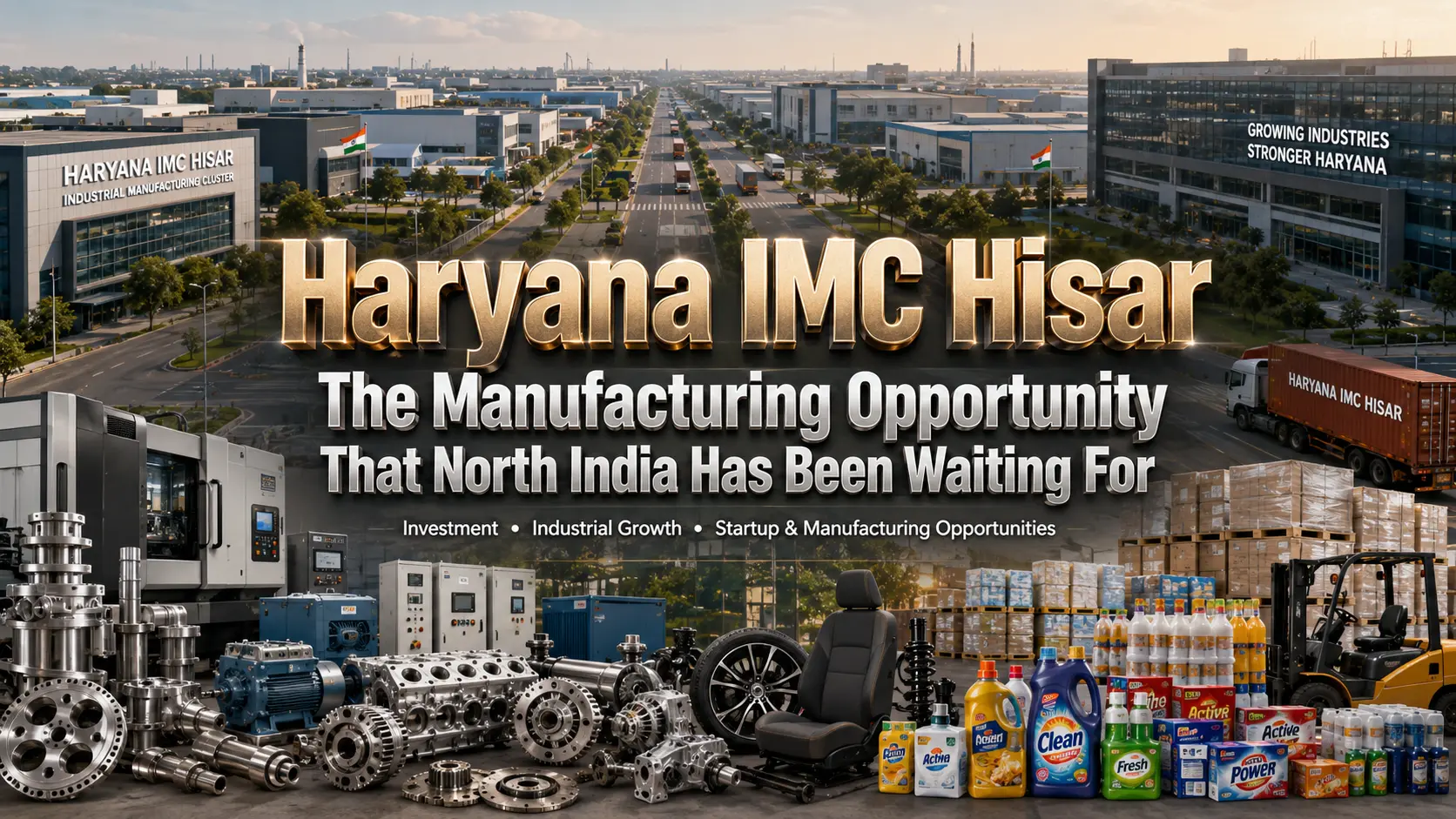
Hisar was a steel town. It still is. The district is home to more than 550 units of iron, steel and ferroalloy manufacturing, one of the highest densities of metal manufacturing in North India, as compiled by Dun & Bradstreet. However, steel isn’t the only reason as to why the industrialists from as far as Pune and Coimbatore are lining up at the window of the Haryana State Industrial and Infrastructure Development Corporation (HSIIDC) in Chandigarh.
The trigger is the Integrated Manufacturing Cluster (IMC) being built in Hisar under one of the flagship industrial corridor programmes of India, the Amritsar-Kolkata Industrial Corridor (AKIC). According to the numbers the total cost of the project is ₹4,680 crore, the investment potential is ₹32,417 crore and expected employment is 1.25 lakh, the project comes with.
National Industrial Corridor Development Corporation (NICDC) project profile (nicdc.in/projects/imc-hisar-haryana). All this is supported by the new Maharaja Agrasen International Airport, Hisar’s first civilian airport, which will eventually be used for the transportation of cargo along the Eastern Dedicated Freight Corridor (EDFC) spine.
The “first mover advantage” is indeed real here. A total of 1,605 acres is in Phase I. Land values still remain at an affordable level. The master plan has already been finalised. Statutory approval and infrastructure planning is under way, said in a review by Haryana Chief Secretary Anurag Rastogi. The question is not if, but how, a manufacturing entrepreneur will matter at Hisar. The question will be whether it is inside the cluster or outside.
The Supply Gap That Makes This Urgent
Structural imbalance of manufacturing sector exists in North India. Most of the big industrial investment is received by the Delhi-NCR belt (Faridabad, Gurugram, Manesar). Any place to the west of Rohtak and to the south of Ambala is actually a supply desert. Although hisar has a steel history, components and semi-finished goods are made here that are used in the factories of the NCR and Punjab with few integrated manufacturing of finished goods.
The impact of this disparity is stark in three areas. In auto components, Haryana contributes about two-thirds of India’s production of passenger cars (Haryana Industrial Policy data via investharyana.in)
While some Tier-2 and Tier-3 auto component suppliers (more than 60%) are located within 80 km of Delhi, 86% of those suppliers are found outside this radius, leading to chronic congestion and logistics inefficiency. This supply chain will be further stressed if Maruti Suzuki’s world record new manufacturing plant at IMT Kharkhoda, having an annual capacity of 10 lakh cars, doesn’t find new production plant for components in western Haryana.
Hisar and other adjoining areas of Fatehabad, Sirsa and Bhiwani are the industrial wheat, mustard and cotton producing areas in food processing. However, processed output – oils, flours, packaged grains – mostly goes out to Punjab and Delhi, and is returned to the local markets for value addition. The Ministry of Food Processing Industries (MoFPI) puts the value of the food processing industry in India at more than ₹2.85 lakh crore, but most of the crops that are cultivated in western Haryana have less than 11% value addition at the farm gate level.
For textile products, Panipat has been the leading textile center in the North India for decades. However, the skyrocketing price of land in Panipat has compelled smaller weavers and garment manufacturers to seek the west. Hisar, where the land cost is lower and with a new airport that will facilitate the exports of goods, is the next destination.
Related Article: Top Steel Raw Material Business Opportunities in India (Pellet & DRI Guide)
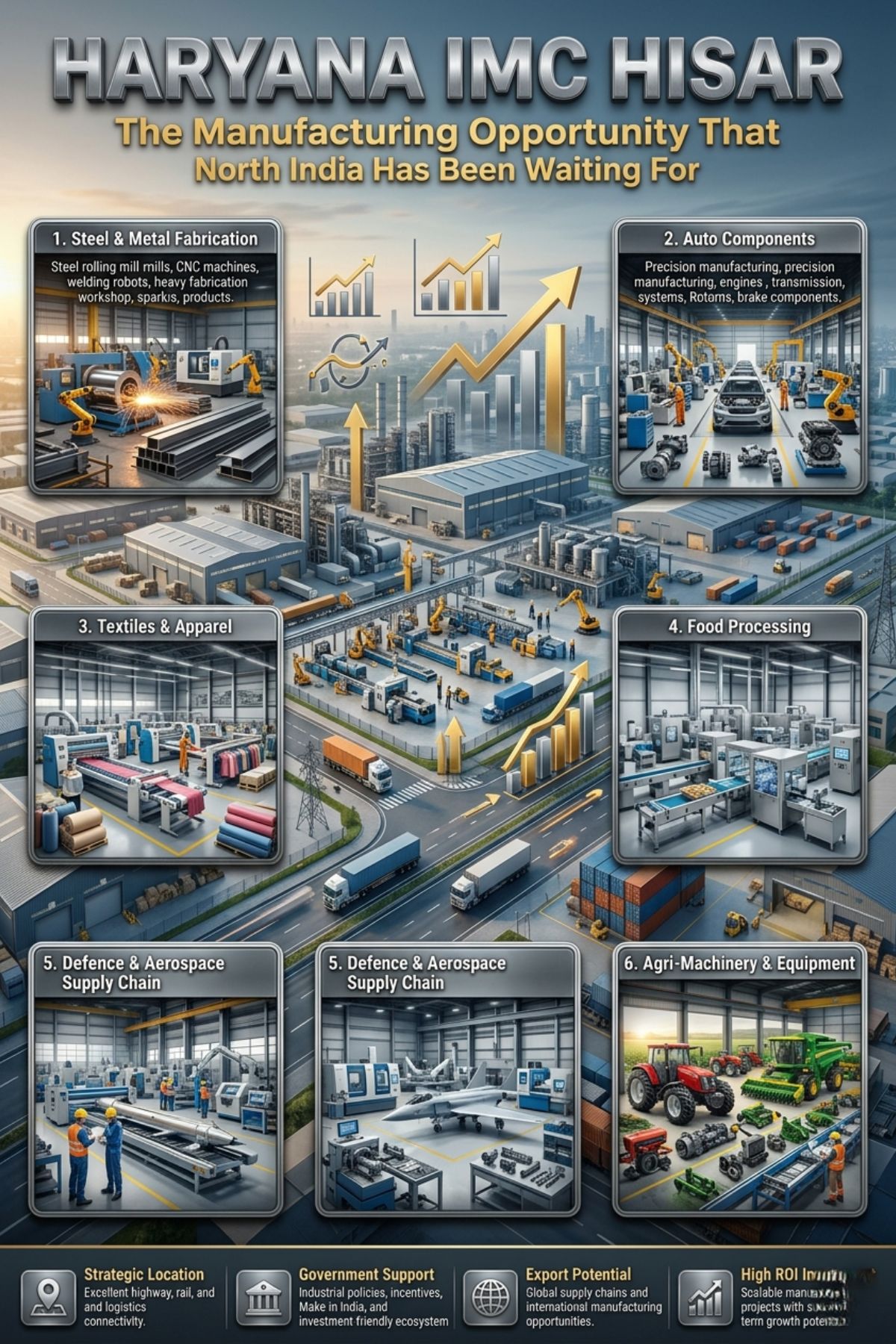
Table 1: Sector Opportunity & Industrial Cluster Map — IMC Hisar Context
| Sector | Key States (Demand) | Existing Cluster in Haryana | IMC Hisar Advantage | Approx. Market Size (India) |
| Steel & Metal Fabrication | Delhi-NCR, Punjab, Rajasthan | Hisar (largest steel belt in North India) | Proximity to raw steel suppliers; freight corridor access | ₹8.5 lakh crore (IBEF data) |
| Auto Components | Gurugram, Faridabad, Pune | Manesar, Kundli, Kharkhoda IMT | Direct feeder to Maruti Suzuki Kharkhoda; AKIC logistics spine | ₹3.32 lakh crore (ACMA, FY2025) |
| Textiles & Apparel | Panipat, Faridabad, Sonipat | Panipat (recycled textiles); Hisar garment units | Airport cargo for exports; lower land cost vs Panipat | ₹2.3 lakh crore domestic; exports $16.2 bn |
| Food Processing | Karnal, Kaithal, Ambala | Karnal agro cluster; Sonipat food park | Rich hinterland wheat/oilseed belt; cold chain via EDFC | ₹2.85 lakh crore (MoFPI data) |
| Defence & Aerospace Supply Chain | Pune, Bengaluru, Hyderabad | Nascent — Hisar Airport MRO zone proposed | Dedicated defence zone in IMC master plan | ₹1.75 lakh crore (DDP target) |
| Agri-Machinery & Equipment | Ludhiana, Rajkot, Coimbatore | Limited; opportunity gap in Hisar district | Agricultural hinterland with strong farmer demand | ₹45,000 crore (FICCI estimate) |
Sources: IBEF (ibef.org), ACMA, MoFPI, DDP, FICCI industry estimates. Data current as of FY2025.
Get Detailed Insights from This Book: Handbook on Fruits, Vegetables & Food Processing with Canning & Preservation
Why Right Now — The Four Tailwinds
At this moment, IMC Hisar is unusually attractive because of four forces, all of them are structural in nature.
Multi-modal logistics is finally here. Hisar is located on the Western Dedicated Freight Corridor (WDFC) and Eastern Dedicated Freight Corridor (EDFC) and is connected with both the stations. The IMC master plan features a freight terminal that will link directly to the EDFC. Inside the cluster, manufacturers will have the option to ship to Mumbai or Kolkata with freight costs that are 25–35% less than the present cost of road transport, which will be a significant benefit for bulk manufacturers of steel, textiles and food processing.
Secondly, policy environment at the state has become more focussed in Haryana. The Make in Haryana Industrial Policy 2025.
investharyana.in provides a net SGST rebate for seven years, 100% electricity duty exemption for 10 years, capital subsidy and employment generation subsidies for D-block (incentive-priority) units in Hisar district. The state has continued to allocate more funds to industry and commerce, with a 47% increase in the latest budget cycle.
Third, central government schemes actively promote the development of manufacturing in the underdeveloped industrial nodes. The IMC Hisar includes a wide range of companies in all major industries, including auto component makers, food processors and textiles. The capital subsidy is provided by PMEGP (PM Employment Generation Programme) for micro manufacturing unit up to 35% in rural/semi-urban area and Hisar comes in the list of this type of areas. CGTMSE offers credit guarantees without any collateral up to the limit of ₹5 crore, which is essential for the first generation of entrepreneurs who don’t have any property to put up.
Fourth, the Haryana government has resolved to establish 10 more Industrial Model Townships (IMTs) and has dedicated a fund with a corpus of ₹500 crore, called the Saksham Fund, for the refurbishment of old industrial townships in Hisar, Sonipat, Sirsa and other districts. The project PADMA is introducing plug-and-play MSME sheds in the entire 143 blocks of the state. These are not mere aspirational terms, rather they are budget line items and the money has already been spent,
The Print’s coverage of Haryana industrial policy (April 2026).
How to Set Up a Manufacturing Unit at IMC Hisar: Step-by-Step
Step 1 — Define Your Sector and Unit Size
Begin with the one you’re familiar with. IMC Hisar’s master plan has demarcated the cluster into separate industrial sectors such as metal fabrication and engineering, textiles and apparel, food and agro-processing, defence supply chain, logistics and warehousing and light manufacturing. Select a zone compatible with your product. The Planning Commission has been dividing the manufacturing units in the investment range by micro manufacturing unit (plant & machinery up to ₹1 crore), small manufacturing unit (plant & machinery in range ₹1–10 crore), and medium manufacturing unit (plant & machinery in the range of ₹10–50 crore). The government schemes available, as well as the financing instruments, will depend on your unit size.
Step 2 — Land and Space Requirements
There is active land acquisition and infrastructure development going on in Phase I of IMC Hisar. Allotment of plots for Industrial Units will be carried out under HSIIDC (Haryana State Industrial and Infrastructure Development Corporation) and single window facilitation system of NICDC. A micro unit’s plot size is generally 250-500 sq.m., a small to medium unit is usually 1,000-5,000 sq.m. Since you are a first mover, be sure to apply early – land in the IMC will be reserved at government rates before market rates take effect. Contact:
For updates regarding allotment, please visit website: hsiidc.org.in
Step 3 — Machinery and Equipment
For sourcing of machinery, it relies on your sector. While CNC plasma cutters, rolling mills and hydraulic presses are available from Ludhiana-based suppliers (Malwa Machine Tools and Faridabad Engineering Cluster) at 15–25% cheaper than imported options, they are also of good quality. The manufacturers in Rajkot (Gujarat) provide food processors with stainless steel processing machinery, packaging machinery, and grading machinery. Power is on the horizon, as are stitching lines from the power suppliers of Surat and Coimbatore for textiles. Allow 4–8 weeks for custom spec machines.
Step 4 — Raw Material Sourcing
Hisar’s geographic location is indeed an asset for raw material access. Steel & Iron: Hisar has a large secondary steel market, the primary steel suppliers are JSPL Angul and SAIL Bhilai, local processors are involved in cut-to-size billet & angle processing within the district. Cotton and textiles: Raw cotton is provided by Sirsa and Fatehabad districts and Bathinda in Punjab is a source of yarn. Wheat and oilseeds for food processing: district’s agricultural belt meets the procurement requirement. Defence and Engineering Components: Delivered from vendors in Delhi NCR with Road Reach of 4 to 6 hours.
Step 5 — Licenses and Regulatory Approvals
Mandatory approvals in order of priority: (a) Udyam Registration (free, online at
(a) udyamregistration.gov.in – 1 day; (b) GST Registration – 3-5 days; (c) Factory License under Haryana Factories Act – through HEPC single window – 15-day guaranteed clearance or deemed clearance; (d) Pollution NOC from Haryana State Pollution Control Board – Green/Orange category units, 15-30 days guaranteed clearance; and (e) BIS certification if applicable (for steel, electrical, food products); (f) FSSAI certificate for food processing units. Under the Haryana’s Enterprises Promotion (Amendment) Rules, any MSME will be issued clearances within 15 days of getting the completed application after which deemed clearance will come through HEPC portal.
Step 6 — Timeline and Team
Realistic timeframe from registration till first production: Land allotment & documentation (2-4 months), construction (3-5 months), machinery installation & trial runs (1-2 months). Duration: 6-11 months for a micro unit, 10-16 months for a small or medium unit. Starter team for a 15-20 person micro unit: 1 production supervisor, 2-3 machine operators, 1 quality technician, 1 accountant/admin person and contract labour as necessary. Hisar and surrounding areas like Rohtak and Bhiwani districts have skilled workers and Industrial Training Institutes have a supply of trained machinists.
View Full Project Details: Haryana Business Opportunities Guide
Table 2: Investment Breakdown — Micro, Small, and Medium Units at IMC Hisar
| Cost Head | Micro Unit (₹ Lakh) | Small Unit (₹ Lakh) | Medium Unit (₹ Lakh) |
| Land (leasehold plot at IMC, Phase I est.) | 10–18 | 35–60 | 80–140 |
| Factory Construction / Shed | 12–20 | 30–55 | 70–120 |
| Plant & Machinery | 15–30 | 60–100 | 150–280 |
| Utilities (power, water, effluent system) | 3–5 | 10–18 | 25–45 |
| Working Capital (3 months) | 8–15 | 25–45 | 60–100 |
| Pre-operative & Misc. (licenses, travel, consultancy) | 2–4 | 5–10 | 12–20 |
| Total Estimated Investment | 50–92 | 165–288 | 397–705 |
Note: Land cost assumes leasehold allotment under HSIIDC/NICDC rates. Construction cost assumes standard RCC shed. All figures are representative central estimates; actual costs depend on sector-specific machinery and scale.
Financial Snapshot: What the Numbers Look Like
Let’s take a small manufacturing business, a representative metal fabrication shop and precision components, which serves OEMs in the automotive and construction industries, as the basis. Total capital investment: ₹2.2 crores. This includes 1,200 sq.m. leasehold plot, 900 RCC shed, CNC machinery (2 units), power connection and transformer and three months working capital.
If it has only 60% capacity utilisation (typical after stabilisation in Year 1): ₹28–32 lakh per month. Monthly running expenses (raw material, labour, utilities, loan EMIs): Around ₹22 to 25 lakh per month. Gross margin: 18–22%. Net margin after depreciation and interest: 10-14%.
If the utilisation is at 100% (Year 2-3): Monthly revenue is around ₹48-55 lakh. The operating cost is proportional to cost of about ₹36–40 lakh. Gross margin: 22–28%. Net margin: 16–22%. The margins are similar to those of other precision fabrication clusters in Ludhiana and Faridabad, which are two well-established clusters, running on full capacity.
Payback period: 3.5–4.5 years at 60% utilisation; 2.5–3 years at 80%+ utilisation. These estimates are based on the assumption of reimbursement of SGST under Make in Haryana policy 2025 and that there will be no PLI incentive (conservative basis). A payback period of 4-6 % of PLI results in shorter payback within 6-10 months.
Net margins of 18–24% can be achieved at a full capacity in a food processing unit of a similar scale (₹1.8 crore capex), when the raw material cost (procurement at farm-gate rates in the hinterland of Hisar) and the strong demand for branded packaged food (12–14% annual growth in North India) are taken into account.
MoFPI Annual Report — msme.gov.in).
Table 3: Key Government Schemes — Eligibility and Benefits for IMC Hisar Manufacturers
| Scheme | Nodal Body | Eligible Unit Type | Key Benefit for IMC Hisar Unit |
| PMEGP (PM Employment Generation Programme) | KVIC / MSME Ministry | Micro units; first-gen founders | Subsidy up to 35% of project cost (rural); max project ₹50 lakh (mfg) |
| CGTMSE (Credit Guarantee Fund) | SIDBI + MoMSME | Micro & Small units | Collateral-free loans up to ₹5 crore; 75–85% credit guarantee |
| MUDRA Loan (Tarun/Kishor tier) | Scheduled banks/MFIs | Micro enterprises | Loans ₹50,000–₹10 lakh without collateral; quick disbursal |
| PLI Scheme (Auto & Food Processing) | DHI / MoFPI | Medium to large manufacturers | Production-linked incentive 4–6% on incremental sales for 5 years |
| Make in Haryana Policy 2025 — SGST Reimbursement | HSIIDC / Invest Haryana | All registered units in D-block districts (incl. Hisar) | Net SGST refund for 7 years; 100% electricity duty exemption for 10 yrs |
| PADMA Mini Industrial Parks (Haryana) | DMSME Haryana | Micro units; rural entrepreneurs | Plug-and-play sheds in all 143 blocks; no land hassle for starter units |
| Udyam Registration + ZED Certification | MoMSME | All MSMEs | Priority credit, market access, govt procurement eligibility, export facilitation |
Sources: Ministry of MSME (msme.gov.in), KVIC, SIDBI, Make in Haryana Industrial Policy 2025 (investharyana.in), Haryana Industries portal (haryanaindustries.com)
Getting the Technical Foundation Right
A very important aspect which many first-time entrepreneurs overlook and have to pay for in the future is a proper techno-economic feasibility study prior to any investment. Niir Project Consultancy Services (NPCS), which can be found at
niir.org and entrepreneurindia.co prepares detailed project report for plant layout design, plant machinery specifications, raw material sourcing plan, financial projection and complete roadmap of regulatory compliances for manufacturing units in all sectors including all key sectors at IMC Hisar. They are making project reports which are specially prepared for bank loan applications (PMEGP, MUDRA and term loan routes) and are accepted by most of the nationalized banks and NBFCs. A convincing project report from NPCS alleviates financing hassles and expensive configuration mistakes for an entrepreneur entering a new cluster such as Hisar IMC where sector-specific benchmarks and infrastructure norms are still being set.
ENTREPRENEUR SPOTLIGHT
Rajesh Nagpal, Hisar, Haryana. Precision steel components manufacturer. Annual turnover: ₹6.8 crore.
In the early 2000s, Nagpal began his business in the estate of HSIIDC, Hisar, with a 1000 sq.m. leasehold shed for manufacturing basic steel angles in the construction industry. Over a decade, he has added CNC capabilities and provides precision brackets to Tier-1 auto suppliers at Manesar. His one big advice, “Most of the entrepreneurs leave money on the table as they don’t apply for it in time, know your incentives and claim them, the SGST reimbursement from Haryana enterprise policy recovered ₹38 lakh for us in first five years only. Nagpal’s unit has 34 employees and exports 8% of its production.
Your investment deserves the right opportunity
The Decision in Front of You
The predictable trajectory of industrialization in India. Early movers can secure land at base rates, enjoy logistics benefits and establish supplier relationships ahead of the competition. Late movers have to pay 3–5 times more for the same plot and years is wasted. Right now, IMC Hisar is in Early mover’s phase. The scale of plot allotment has not yet begun but there are land acquisition and planning for infrastructure. This window is not to be held open for long.
Your next step is determined:
Plot allotment in IMC Hisar through a single window platform called, invest Haryana portal (investharyana.in) and provide an expression of interest. At the same time, register your business as an MSME under Udyam (udyamregistration.gov.in) if not already done, as this will enable you to avail various incentives offered by PMEGP, CGTMSE and State Govt. At the same time, get your business registered as an MSME under Udyam (udyamregistration.gov.in) if not registered already, as this will free you from forfeiting various incentives available under PMEGP, CGTMSE and State Govt. Be sure to have a project report ready before contacting any bank for financing. IMC Hisar’s strategic geographical location, government support and multi-modal connectivity make it one of the most viable new manufacturing addresses in North India. Act on it.
Frequently Asked Questions
Q1. How much minimum investment is needed to set up a manufacturing unit at IMC Hisar?
The total capital invested in setting up a micro unit is between ₹50–92 lakh, which includes land (leasehold), building of shed, purchase of basic machinery, payment of utilities and three months working capital. A small unit requires ₹1.65–2.88 crore; a medium unit ₹3.97–7.05 crore. These are realistic central estimates; actual costs do vary depending on the machinery needs and the sector. Seek PMEGP/Mudra loan to only put 10-25% of the project cost.
Q2. What license is required to begin the production?
At least: Udyam Registration (free, online, 1 day), GST Registration (3-5 days), Factory License under Haryana Factories Act (15 days or deemed clearance as per HEPC portal) & Pollution NOC from Haryana State Pollution Control Board (15-30 days for Green/Orange category units). Also, food processing units require FSSAI registration. BIS certification is valid for certain products like steel, electrics and packaged food products. In Haryana, all MSME clearances are ensured within 15 days of the fulfilment of all clearances.
Q3. How to get raw materials in metal fabrication unit at Hisar?
Hisar has one of the highest clusters of steel secondary processing units in North India – more than 550 iron and steel units in the district alone (Dun & Bradstreet data). Primary steel is available from JSPL Angul, SAIL Bhilai and Tata Steel, and the stockists in Hisar provide cut-to-size billets and sections at affordable prices. In case of specialised alloy steel, it takes 4-6 hours roadtime to get to Delhi NCR vendors. Once in operation the freight terminal will reduce inbound logistics cost for bulk raw material further with the freight connectivity provided by the EDFC.
Q4. How profitable will it be?
Net margins of 10-14% can be achieved at 60% capacity utilisation of a small metal fabrication company. Net margins at 80% utilisation and above are 16-22%. Similar food processing plant with branded packaged goods would be able to get around 18-24% net margins if it is operating at maximum capacity, which would be backed by low procurement costs at farm-gate in the rear yard of Hisar. The payback time of the total investment is 2.5-4.5 years depending on scale and capacity utilisation. Don’t miss the Make in Haryana Policy 2025 reimbursement of SGST.
Q5. What government schemes are helpful to a first-time manufacturer in Hisar?
Three schemes go well together. PMEGP provides capital subsidy of up to 35% on micro units (through KVIC or lead bank). For the founders who don’t have property to pledge, CGTMSE eliminates the requirement for collateral in loans up to ₹5 crore. For units in the D block of Hisar district, SGST reimbursement and electricity duty exemption of 100% have been provided for seven years in the Make in Haryana Industrial Policy 2025 and 10 years respectively for 10 years. All three of these, together, mean a significant reduction in effective capital cost and operating cost in the first few years. More details at msme.gov.in and investharyana.in.
Q6. Does NPCS have any assistance in project reports/bank documentation for loans?
Yes. Nir Project Consultancy Services (NPCS) at
niir.org and entrepreneurindia.co is an organization that prepares detailed project reports (DPRs) for various industries for manufacturing plants in Hisar IMC, covering areas such as metal fabrication, food processing, textile and auto component manufacturing and more. They are prepared in the format of DPRs which are accepted by all the Nationalized Banks and also submitted to the banks under PMEGP, MUDRA and term loan route. NPCS also offers techno-economic feasibility studies and investment site analysis (ISA) relevant for investors weighing the various cluster options before investing.


