





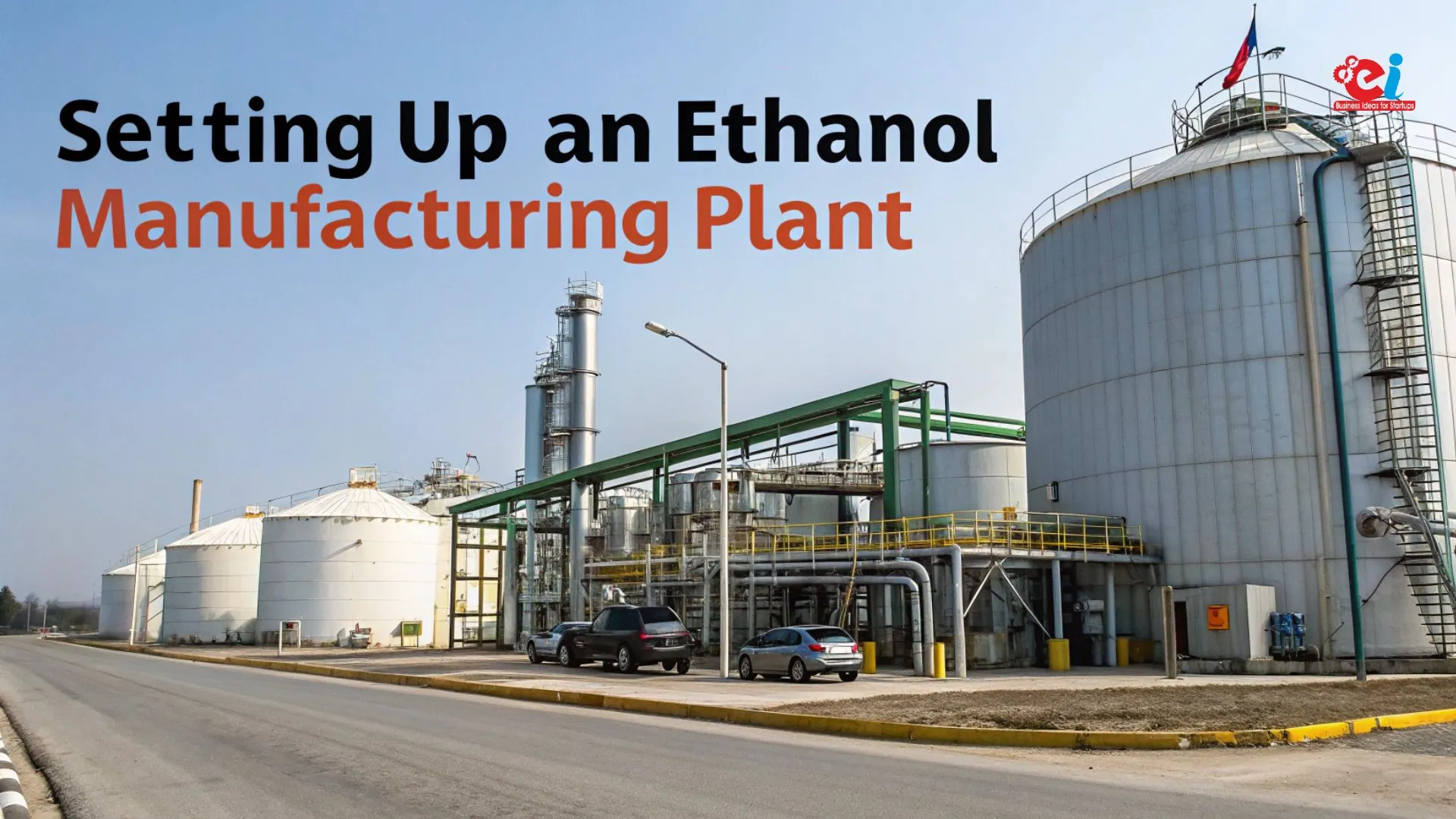
In the age of climate-conscious industry, ethanol is a versatile bio-based energy. In an age of climate-conscious industrialization, ethanol is one of the most versatile bio-based fuels. Ethanol manufacturing, a renewable alcohol, is produced by fermentation primarily from starch or sugar. The alcohol is widely used in fuel blends, pharmaceuticals, cosmetics, and industrial solvents. Startups and entrepreneurs will find that establishing an ethanol plant is a great way to expand their business. This is especially true in light of strong policy support and the growing demand on the market.
This article is a comprehensive, detailed guide on how to set up an ethanol plant. This article covers market trends, raw materials, manufacturing processes and regulatory requirements.
Market Landscape: Understanding The Market
Ethanol Growth and the Global Context
In 2024, global ethanol production will reach 117 billion liters. This is a substantial increase compared to the previous decade. This growth is mainly driven by the United States, Brazil, and India. Due to its increasing importance for clean transportation, industrial use, and bioeconomy, the demand for ethanol is expected to continue to increase.
In India, the ethanol manufacturing industry has been undergoing structural changes. This is supported by EBP (Ethanol Blended Petrol Program), which targets a blend of 20% with petrol by 2025-2026. For ethanol to reach this target by 2024, the production of ethanol must be increased from 9 billion liters per year. This gap allows for the construction of new plants to meet both fuel and non-fuel needs.
The public oil marketing companies’ long-term purchasing policies support the purchase of fuel ethanol that is blended with petrol. The market is more than just transportation fuel. Raw ethanol manufacturing can be found in many products, including pharmaceuticals, sanitizers, and industrial chemicals. The raw material ethanol is also used in the production of industrial chemicals, perfumes, and alcoholic drinks.
Related: Setting Up a Small-Scale Methanol Gel Unit Under ₹25 Lakhs: A Feasibility Blueprint
Key Demand Drivers
Financial incentives such as a guarantee of procurement, higher ethanol prices made from sugarcane, broken grains, and interest subsidies for new distilleries have made this sector more attractive. Ethanol is a fuel that has many environmental benefits, such as reduced greenhouse gas emissions and particle pollution. By using by-products, such as broken rice and molasses, and waste feedstocks like these, ethanol helps to create circular economies in agriculture. These trends together make ethanol production an industry that is resilient and in high demand.
Market Forecast: Demand and Growth Potential
The ethanol manufacturing industry is expected to grow at a CAGR of 4,4% due to consistent policy implementation and global efforts towards decarbonization.
The chart below shows the projected growth for the Indian market.
| Year | Demand for Ethanol in India | Blending Target | Sector Drivers |
| 2025 | 11 billion liters | 20% | Fuel blending, industrial alcohol |
| 2026 | 12,5 billion liters | 22-24% (targeted) | Increased capacity in new molasses-based and grain-based distilleries |
| 2027 | 14 billion liters | 25% (long-term) | Maize, rice, and other feedstocks can be used as diverse feedstock |
These figures demonstrate a demand cycle supported by structural policy continuity. It reduces the risks of entrepreneurs entering a new market.

The selection of raw materials and feedstock is based on their respective requirements.
The best way to start an ethanol plant is by identifying the feedstock. The feedstock will have a direct impact on the production efficiency, process design, and economics. India’s diverse agricultural industry allows for multiple options of feedstock. Sugarcane juice, B-heavy or C-heavy molasses and other byproducts of the sugar industry can all be used to make ethanol. Other feedstocks include maize, broken rice, and lignocellulosic biomass under second-generation technology.
Sugarcane juice and molasses are most commonly produced in western and southern India, where there are many mills. These raw materials are high in fermentable carbohydrate and produce higher ethanol yields after relatively simple processing. In India’s north-east, starch-based feedstocks such as broken maize or rice are widely used. These crops grow abundantly in these regions. These feedstocks need an additional enzymatic processing, but offer a more stable supply and better price predictability.
Biomass, including bagasse, wheat husk, rice straw and other biomasses, can now be used. The second-generation technologies are more expensive to operate and maintain because they require complex pretreatments, enzymatic hydrogenation and other processes. However, these technologies can be used with agricultural waste and have a long life cycle.
It is essential to research regional crop cycles and seasonal variations as well as the availability of feedstock, before establishing a new plant. Entrepreneurs often form partnerships with grain or sugar mandis to secure supply contracts.
Ethanol Manufacturing Process: From Feedstocks To Finished Products
Depending on the feedstock, the biochemical and mechanical processes involved in ethanol production may vary. The industrial ethanol manufacturing process is usually composed of four steps: feed preparation, fermentation, distillation, and dehydration.
Preprocessing and feed preparation
Milling starch-based material, such as broken rice and maize, is the first step. The starch-based materials are milled and then combined with water to form a slurry. In a saccharification process, enzymes such as alpha-amylase and glucoamylase transform starch into fermentable sugars. The first step in the saccharification process is to clarify and dilute the feedstock. This can be molasses or sugarcane juice.
Fermentation
The feedstock is then transferred to large fermenters, where strains such as Saccharomyces Cervisiae are added. Under controlled temperature and pH conditions, these microbes convert sugars into ethanol in 48-72 hours. Fermentation yields are affected by nutrient content, oxygen and sterility.
Distillation and Rectification
Fermented mash, also known as “beer”, contains 8-12% ethanol. The mash then goes through a column of heated air where the ethanol and water is separated. In a rectification system, the concentrated stream is further purified to remove fusel oils and other byproducts. The process yields around 95% pure ethanol.
Dehydration of the body and its denaturing
Fuel-grade alcohol is produced by dehydrating ethanol, usually using molecular sieves or azeotropic distillation. Fuel-grade ethanol can be made by dehydrating the product and adding small amounts of hydrocarbons or ketones.
Byproduct Management and Utility Integration
After distillation, spent wash is the liquid effluent. The effluent can be treated with evaporation, anaerobic digesters or incineration. Carbon dioxide from fermentation can be sold to the gas or beverage industry. Most efficient plants combine steam generation and electricity production with boilers fed by biomass such as bagasse, dried distillation residues or other biomass. It reduces the cost of energy.
Related: How to Start an Ethanol Production Business
Site Planning and Layout Design
When selecting a location for an ethanol plant, several key factors are taken into account, including logistics, environmental considerations, and operational requirements. Ideal locations are close to raw materials and have reliable access to transportation, water and electricity networks. The land should be big enough to accommodate expansion in the future, as well as conform with local pollution and zoned norms.
The layout should be designed for a smooth flow, from the reception of raw materials to product storage and discharge. Material handling efficiency can reduce operating costs and increase plant uptime. Civil and mechanical design must separate utilities, processing zones and storage areas.
Modularity allows for increased scalability as the units can be added when demand increases. Modern ethanol plants use automation, remote monitoring and instrumentation more often to improve the process control.
Environmental Compliance and Regulatory Framework
Before ethanol production begins, the manufacturer needs to obtain several approvals.
- State Pollution Control Board approval for air, water, hazardous waste, and water emissions
- Environmental Clearance (EC), issued by the Ministry of Environment for plants that exceed a certain capacity
- Industrial Alcohol Licenses and Denatured Spirit Manufacturing Licenses are available from the Excise Department
- Registration with the Petroleum Ministry or a designated procuring agent for fuel ethanol
Compliance with the Zero Liquid Discharge (ZLD) mandate is crucial. The Zero Liquid Discharge (ZLD) mandate in many states requires that the waste be either composted or concentrated and then incinerated. If plants fail to meet the standards, they may be fined and shut down.
For more information check out this video
Arrangements for Strategic Marketing and Offtake
For a successful business in ethanol, long-term contracts are crucial. In India, public sector oil marketing corporations (OMCs), part of the Indian government, buy ethanol in annual tenders with pre-determined prices, based on feedstock type and zone. This helps to reduce the risk of fluctuations in the market and ensures financial predictability.
For the sale of industrial-grade or beverage-grade ethanol, it is important to have relationships with clients such as chemical companies, pharmaceuticals, and liquor. It is essential to have both quality certifications and logistics capabilities (tankers, tank farms) to access these markets.
The Role of NPCS as a Supporting Role
Niir Project Consultancy Services provides expert-driven Market Survey cum Technoeconomic Feasibility reports which are essential for industrial project developers. The reports cover the entire manufacturing process as well as raw materials requirements, plant layout plans, and financial models. NPCS helps entrepreneurs evaluate the feasibility of new projects. They help them navigate technical and regulatory frameworks to improve project success rates.
Which business to start? How to choose a business idea?
Conclusion
Sugar mills are not the only ones that produce ethanol. It is now a major industry with a wide range of applications, including energy, agriculture, and sustainability. With the right planning and sourcing of raw materials, regulatory compliance, and process design, entrepreneurs can build efficient, future-ready ethanol plants.
As biofuel policies at the national and international level increase, ethanol is a profitable business model with environmental benefits. Entrepreneurs willing to invest time in technical knowledge and ecosystem creation will find ethanol manufacturing a rewarding sector for the next decade.


