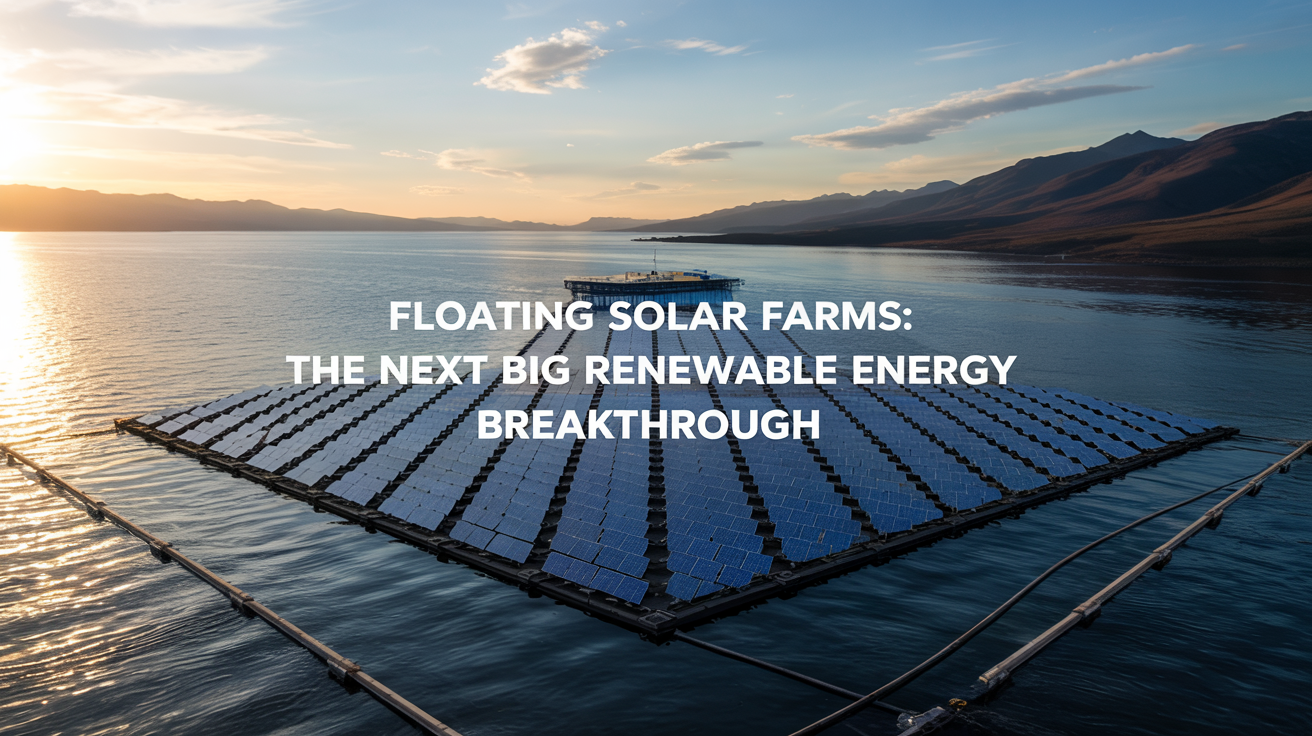






A Solar Farm is the new-age approach to solar energy generation using new methodologies for tomorrow. Floating solar farms have been installed in water bodies to ensure the optimal use of available space and land utilization. It has many environmental and economic benefits. This blog covers everything about floating solar farms: working, advantages, challenges, real-life use manifestation, innovations, and how they will impact the renewable energy sector.
How Do Floating Solar Farms Work?
Floating solar farms will also operate like solar panels on land. Sunlight converted by photovoltaic (PV) cells into electricity is what electricity produced is. This electricity is either fed directly into the power grid or stored in batteries. Such systems are generally installed on specially made floating platforms that keep the solar panels above the water for stability while allowing maximum sun exposure. These floating platforms are made up of high-density polyethylene (HDPE) or any other durable materials resistant to both water and UV. Besides, floating platforms are anchored securely by anchoring systems so that they will not drift with the wind or currents in water.
- Fifty-six components of a Floating Solar Farm
- Photovoltaic Panels: These convert sunlight into electricity.
- Floating Platforms: Provide support and buoyancy for panels.
- Anchoring and Mooring Systems: Stabilize the structure in water bodies.
- Inverter: Converts DC electricity from solar panels into AC electricity for the grid.
- Power Transmission Lines: Convey Electricity from the farm to the grid.
- Monitoring and Maintenance Systems: Guarantee the proper performance of the solar farm.
Read our blogs: Emerging Trends in Solar Energy Ventures and Their Profit Potential
Benefits of Floating Solar Farms
Efficient Land Usage
Floating solar farming helps create infrastructure by occupying space. Since ground-mounted solar farms fight against growing crops, urban settlements, or untouched habitats, FPV uses subdued surfaces in the water territories. Countries with large populations and less available land find this extremely useful.
2. Enhanced Effects in Energy Use
Solar panels benefit from water bodies in that they keep them cool and, therefore, improve efficiency. Compared with land-based systems, about 10% extra energy generation can be achieved because of improved efficiencies at low temperatures. Floating solar farms would thus generate more electricity with fewer solar panels, resulting in lower costs and higher efficiencies.
3. A Reduction in Evaporation from Water
Floating solar panels shade reservoirs and lakes, thus reducing evaporation from them; this is a win-win saving scheme in a water-scarce region because it saves freshwater. FPV system designs are such that they cover portions of a reservoir, enabling the conservation of millions of liters of water annually in terms of securing water.
4. Minimum Environmental Expense
Automatically, a reduction in the land needed will also reduce the associated risks of deforestation and habitat destruction. A diminished area implies less deforestation and habitat destruction for floating solar farms. Excess algal growth can even be prevented by reducing the sun’s penetration into the water and, thus, enhancing water quality. In certain circumstances, the installation of FPV systems is correlated with the increase of biodiversity and the creation of new habitats for aquatic species.
5. Scalable Applications Versatile
A modular floating solar installation can be fed into any type of pond, from a reservoir for irrigation to an industry water treatment plant. Thus, it can be easily scalable to meet any energy demands, whether small-sized community projects or megawatt-scale utility programs. Systems and equipment for pumping water from a lake or reservoir.
Business Plan: Set up Rice Milling Plant
Challenges floating solar farms must deal with for their usefulness
High Capital Expenditure
Floating photovoltaic systems are sometimes more expensive to install, maintain, and run than land-based solar farms because of the specialized floating structures and anchoring methods. However, the expectation as the technology matures and the economy of scale improves is that these figures shall go down.
Environmental and Regulatory Concerns
Floating solar farms should be planned to avoid any harmful impacts on the local ecosystem. In addition, such approvals would vary according to water rights and environmental impact assessment requirements. In some parts, the two have imposed stricter regulations because of too much concern over fish and water quality.
Grid Connectivity and Infrastructure
Floating solar farms are tied to grid connectivity just like other solar farms. This would need the money to invest in transmission infrastructure, and of course, that is quite an issue in remote and underdeveloped areas. It is needed that governments and energy-providing bodies work together for grid interconnections and seamless energy distribution.
Practical Floating Solar Farm Usage
The truth is that floating solar farms have been commercially implemented by several countries, indicating the vision for a future entirely different in the renewable energy generation field.
Also read: Rajasthan’s Expansion in Solar Equipment Manufacturing
Future of Floating Solar Farms
The future of floating solar farms is promising. The high cost of solar farms is offset by the hybrid solar-hydro system, which merges floating solar energy systems set above reservoirs or dams with hydroelectric sources. Such schemes enhance the efficiency and reliability of renewable sources of energy. The floating solar projects can also support steady energy delivery in times of cloudy weather, rain, or at night, which will be of great benefit.Various research and development works are being carried out to enhance the durability of floating structures, improve the efficiency of PV cells, and integrate AI-powered monitoring systems for optimal performance. These improvements will make floating solar farms more accessible and cost-competitive within the coming years.
Closing Thoughts
Floating solar farms indeed represent a big step toward sustainable and efficient energy futures. In timelines of overcoming issues such as cost, maintenance, and regulatory frameworks, these systems could earn an important place in a global renewable strategy. Countries start investing in mega-scale FPV projects, and with the continuous development of new technologies, floating solar farms have the potential to become the major players toward a cleaner and greener planet.