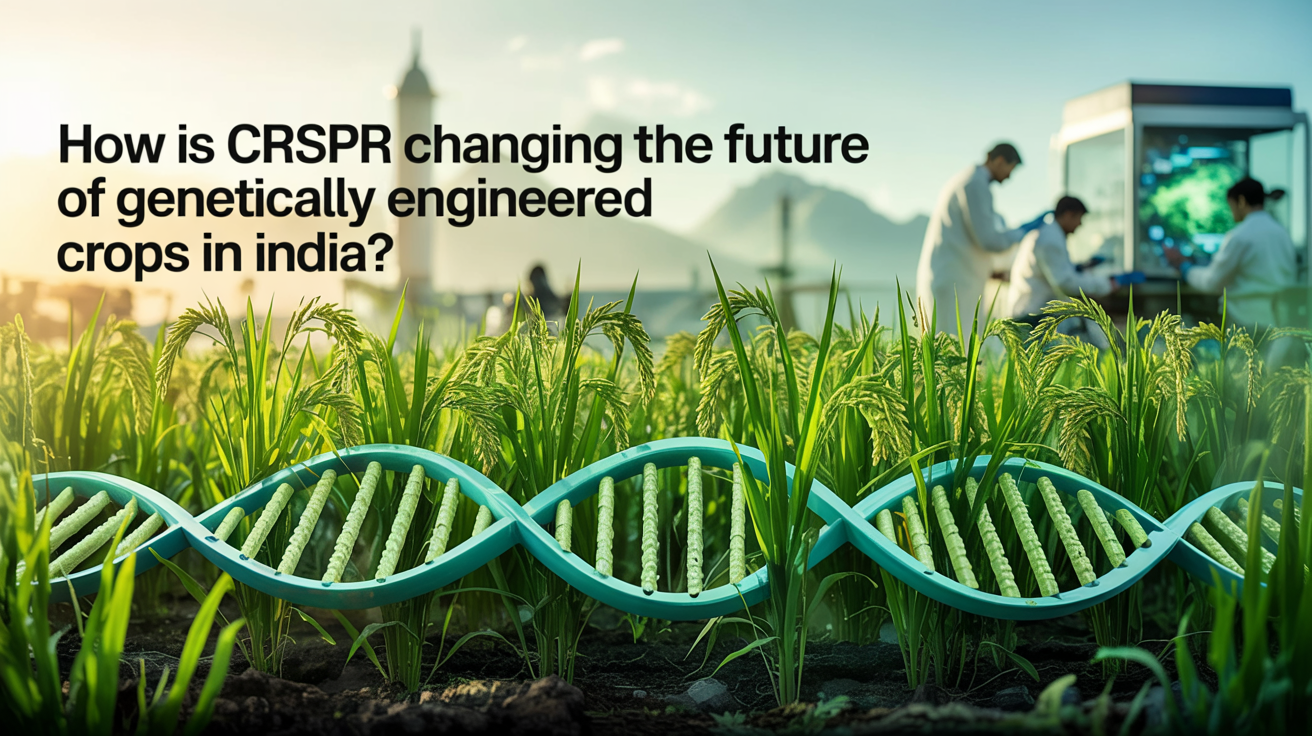






CRISPR represents a set of technologies with the potential to fundamentally change Indian agriculture. It provides solutions to climate change, pest attacks, soil degradation, and food intolerance. Conventional breeding and GM crops have played significant roles, but CRISPR is considered more precise and effective. This blog deals with how CRISPR is changing the very face of genetically engineered crops in India and what it means for a more resilient and sustainable agricultural future.
Also Read: Biodegradable Mulching Film: The Eco-Friendly Answer for Agriculture
What Is CRISPR, and What Are Its Benefits?
It refers to the novel gene-editing technology empowering scientists to change DNA sequences with unapproachable accuracy. Unlike the traditional formats of transgenic modification, this technology strengthens local editing within the existing DNA of the organism. This makes it far more natural and far less disputable.
Key advantages of CRISPR
- Precision and Efficiency:
- CRISPR targets specific genes, which helps eliminate many unintended consequences and ensures precise genetic edits.
- Cost-Effectiveness:
- Researchers use it to achieve faster results at a lower cost compared to traditional genetic engineering methods.
- Reduced Regulatory Barriers:
- Since CRISPR edits existing genes without adding foreign DNA, many countries classify it differently from older GMOs, easing regulatory hurdles.
- Climate-Resilient Crops:
- Scientists are using this technology to develop crops that resist drought, pests, and diseases—directly addressing India’s agroclimatic challenges.
Applications in Indian Agriculture
In India, the CRISPR technology is being harnessed for several crop improvement programs. There are some very critical applications:
1. Crops Resistant to Diseases
For developing major plant disease resistance, it has been put to good use. For instance:
- Rice Blast Disease – This is a major threat to rice crops in India, and the fungus Magnaporthe oryzae causes it.
- Tomato Leaf Curl Virus-—Tomatoes are economically important with devastating viral diseases.
2. Enhanced Nutrition
- Biofortified crops under CRISPR that would bear a further nutritional status include iron- and zinc-enriched rice—it improves micronutritional deficiencies by having staples made of higher nutritional profiles.
- Vitamin A-enriched bananas: Just like golden rice, vitamin deficiency from these crops will be helping to eradicate such conditions in rural areas.
3. Less Dependency on Chemical Pesticides
CRICPR has improved health and environmental benefits to the farmer by formulating host plants that can be resistant to pests and diseases, hence reducing the farmers’ use of chemical pesticides. Important changes include genetically edited cotton, which can resist the attack by the pink bollworms on the crop.
Read our Blogs: AI-based Detection: How Farmers are Using Tech to Prevent Losses
Regulatory Landscape Against Challenges in India
With the anticipated revolution of CRISPR in Indian agriculture, the regulatory hangovers have, however, proved to impede the whole process. The existing strict GMO prohibitions in India had, for a considerable time, delayed the uptake of genetically modified crops in the regions of India, but these CRISPR modifications may not be on the same level of scrutiny, as they do not involve the transfer of exogenous DNA into the crops.
Government Policies and CRISPR Regulation
The Indian government is at present balancing the prohibition of CRISPR regulations to facilitate research but at the same time enforce safety. Some of the major happenings include:
- The proposed legal framework by the Department of Biotechnology (DBT) that distinguishes CRISPR-edited crops from conventional GMOs.
- The Genetic Engineering Appraisal Committee (GEAC) is reviewing international guidelines on CRISPR to formulate India-specific policies.
- Safety assessment of CRISPR-edited food products for commercial approval by the Food Safety and Standards Authority of India (FSSAI).
- Public Perspectives and Ethical Issues
- There remains public skepticism as an impediment to genetically engineered crops in India. The issues in this regard are as follows:
- The long-term safety of CRISPR-edited crops.
- The technology could be dominated by large agribusiness firms who leave little or no benefits to small farmers.
Read Similar Blogs: Which Crops Have the Highest Consumption of Pesticides in India?
The Future of CRISPR in Indian Agriculture
The future course of Human Resource Development in agriculture is dependent on how forward-looking the continuous research is with creating policy support and public acceptance. Development expected in the future would include:
1. Expansion of CRISPR Research in India
Most Indian Research Institutes such as the Indian Council of Agricultural Research (ICAR) and the National Institute of Plant Genome Research (NIPGR), have ongoing CRISPR projects. Additional funding from the government and collaboration with global biotech industries are expected to further accelerate the tempo.
2. Creating staple crops through CRISPR editing
The scaling of this applications to staple crops like rice, wheat, and pulses could lead to radical changes regarding food security in India. For example, using CRISPR-edited rice varieties resistant to floods and droughts might serve farmers quite well.
3. Commercialization and Adoption by Farmers
While these things happen, CRISPR should be such that it reaches the Indian farmer in the form of low-cost edited seeds, penetrating the most strata within the farmers. Mechanisms for facilitating partnerships between research institutions, seed companies, and government agencies should be put in place, which will facilitate cost-effective widespread adoption.
4. Sustainability in Agriculture through CRISPR
This will contribute to sustainable agriculture through the reduction of chemicals, improvement of soil health, and promotion of biodiversity. Further integration of CRISPR into organic and precision farming offers chances to develop a much more resilient system of agriculture.
Closing Thoughts
As stated, CRISPR is the coming wave in India about genetically engineered crops. This promises to resolve some of the most important agricultural challenges, namely, climate change and pest, and malnutrition problems. This will balance regulatory measures and public trust with investment into research so that India will be able to deliver from CRISPR in terms of food security and sustainable farming.