





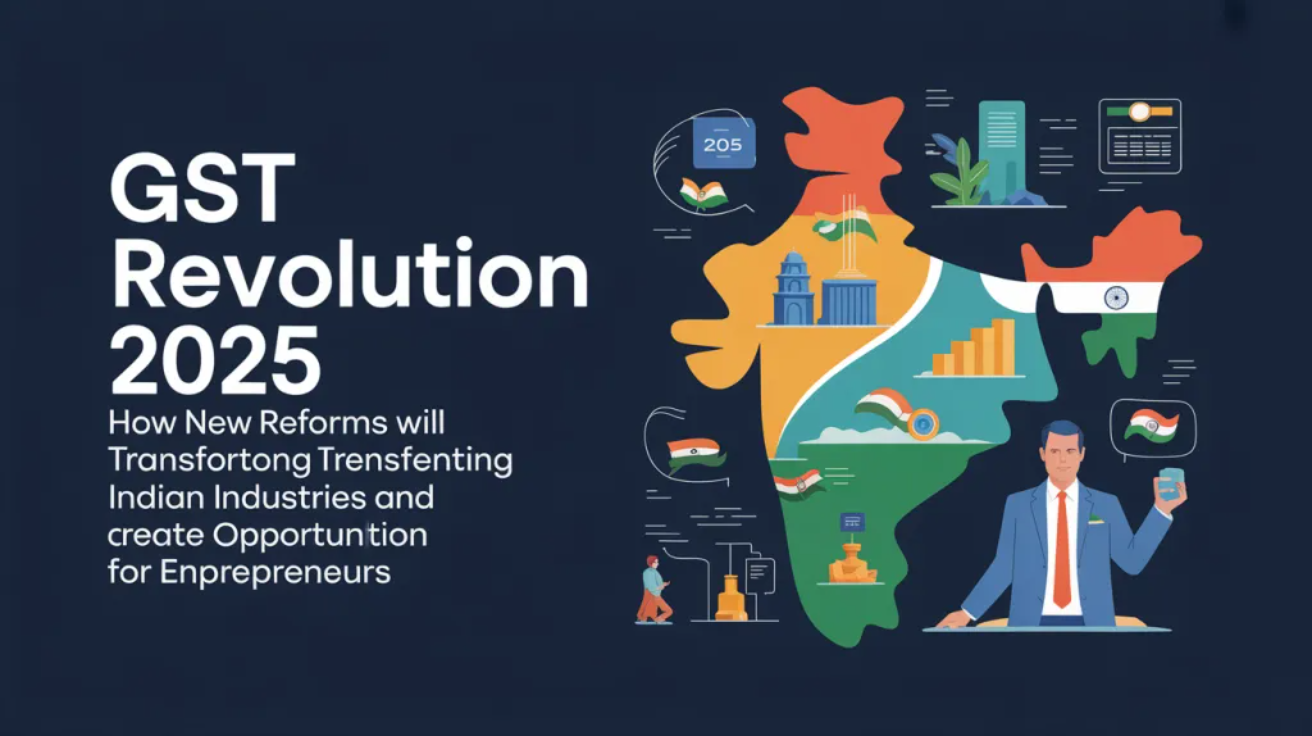
GST impact on Indian startups is expected to be a game-changer as India stands on the cusp of a transformational economic revolution. The comprehensive GST reforms, set to roll out on September 22, 2025, go far beyond tax restructuring. They signal a new era of entrepreneurship, industrial development, and inclusive growth. With simplified GST slabs of 5%, 18%, and 40%, and a record ₹22.08 lakh crore collected in 2024–25 (a 9.4% year-on-year increase), India is primed for unprecedented business expansion.
These reforms have a significant impact on entrepreneurs and startups as they reduce compliance costs, eliminate bottlenecks, and create a more stable business environment. The GST taxpayer base has grown from 66.5 lakh entities in 2017 to 1.51 crore by 2025. This reflects the formalization of India’s economy and creates a fertile environment for new ventures.
The GST impact on Indian startups is particularly evident in this reform package, which offers aspiring entrepreneurs a golden opportunity to launch manufacturing, service, and export-oriented businesses. With reduced taxes and simplified compliance procedures, these reforms are expected to boost GDP by 0.5 to 0.8 percentage points per year, while creating growth opportunities across all sectors.
Trends in GST Collection and Growth Analysis
| Metric | Value |
| Total GST Collection 2024-25 | ₹22.08 Lakh Crore |
| Year-on-Year Increase | 9.4% |
| Total Taxpayers | 1.51 Crore |

The Revolutionary Features of GST 2.0 Reforms
Simple Tax Structure
- 5% GST: Basic goods and services, necessities.
- 18% GST: Standard rate for most goods and services.
- 40% GST: Luxury items and sin goods.
Economic Impact
- Reduced compliance burden by 40%.
- Improved cash flow for MSMEs.
- Enhanced export competitiveness.
- Acceleration of GDP growth.
Industry-Specific Benefits Analysis
Manufacturing Sector
The manufacturing sector stands to benefit significantly from the GST reforms. Manufacturers can expect to see:
- Reduced input costs by 8% to 12% through efficient tax credit utilization.
- Faster working capital cycles with improved refund mechanisms.
- Increased competitiveness in international markets.
- Elimination of cascading taxes across the supply chain.
Services Sector
- A uniform 18% rate across most service categories.
- Simplified registration and compliance procedures.
- Enhanced credit availability for service exports.
- Reduced litigation time and dispute resolution.
Benefits for service providers, particularly in IT, consulting, and professional services, will include:
MSME Sector
Micro, Small, and Medium Enterprises receive targeted support via:
- Benefits of the composition scheme with lower tax rates.
- Quarterly return filing options.
- Faster refund processing for exporters.
- Reduced documentation requirements.
Find all our Books Here
Import-Export Data Analysis and Manufacturing Opportunities
India’s Trade Performance 2024-25
| Category | Value |
| Total Exports | $820+ billion (6% growth) |
| Merchandise Exports | $437.42 billion |
| Services Exports | $340 billion |
| Total Imports | $680 billion |
| Services Imports | $180 billion |
Check our project Report: Click Here
High-Potential Import Substitution Opportunities
According to India’s analysis of import data, the following sectors offer lucrative opportunities for entrepreneurs who want to reduce their import dependency and establish manufacturing units:
1. Electronics and Semiconductor Components
- Import Value: $65+ Billion annually
- Business Opportunities:
- PCB Manufacturing: Set up automated PCB production with an investment of ₹50-100 crores to meet 30-40% of domestic demand.
- LED Component Assembly: Establish LED module and chip manufacturing with an investment of ₹25-50 crore, taking advantage of the 5% GST rate.
- Mobile Phone Component Manufacturing: Focus on camera modules and batteries with a potential revenue of ₹200-500 crore per year.
- Semiconductor Packaging and Testing: Develop ATMP facilities (Assembly, Test, Mark, Pack) with government support and an 18% GST benefit.
- A major GST impact on Indian startups is the ability to access simplified tax structures that improve working capital and lower entry barriers in key sectors.
2. Pharmaceutical Raw Materials and APIs
- Import Value: $18+ Billion annually
- Business Opportunities:
- Generic API Production: Establish facilities for high-volume APIs like Paracetamol and Metformin with an investment of ₹100-200 Crore.
- Pharmaceutical Intermediates: Focus on key intermediates for diabetes and cardiovascular drugs with an 18% GST benefit.
- Herbal and Nutraceutical APIs: Leverage traditional medicine knowledge to target ₹50-100 crore in annual revenue.
- Specialty Chemicals Manufacturing: Develop custom synthesis capabilities with potential margins between 25-35%.
3. Renewable Energy Equipment
- Import Value: $15+ Billion annually
- Business Opportunities:
- Solar Panel Production: Establish integrated production of solar cells and modules with an investment of ₹300-500 crore.
- Wind Turbine Part Manufacturing: Focus on blades and towers with a potential revenue of ₹100 to 300 crore per facility.
- Energy Storage Systems: Develop manufacturing for lithium-ion batteries for grid-scale and residential applications.
- Inverter & Power Electronics: Manufacture solar inverters and charge controllers with high export potential.
Top 10 High-Potential Business Opportunities Post-GST Reform
- Electric Vehicle Component Manufacturing
- Food Processing and Packaging
- Textile and Apparel Manufacturing
- Healthcare and Medical Device Manufacturing
- Logistics and Warehousing Services
- Renewable Energy Solutions
- Specialty Chemicals
- IT & Digital Services
- Tourism & Hospitality Infrastructure
- Skill Development & Ed-Tech
Find the Best Business Ideas by clicking here
GDP Growth Impact and Economic Transformation
| Metric | Projected Impact |
| Additional GDP Growth | 0.5-0.8% |
| Compliance Cost Reduction | 15-20% |
| Working Capital Improvement | 25-30% |
Short-Term Impact (1-2 Years):
Immediate benefits include reduced compliance costs, quicker refund processing, and improved cash flow.
Medium-Term Impact (3-5 Years):
Structural changes become evident with increased formalization, better supply chain integration, and enhanced competitiveness.
Long-Term Impact (5+ Years):
India emerges as a more attractive destination for manufacturing, supporting the ‘Make in India’ and ‘Atmanirbhar Bharat’ initiatives.
Find the Best Idea for Yourself With our Startup Selector Tool
Strategic Action Plan for Entrepreneurs
Phase 1: Research and Planning (Months 1-3)
- Conduct detailed market research.
- Analyze import substitution possibilities.
- Understand GST implications for your chosen sector.
- Develop a comprehensive business plan.
Phase 2: Setup and Registration (Months 4-6)
- Complete GST registration and compliance setup.
- Secure the necessary licenses.
- Establish manufacturing or service infrastructure.
- Develop supplier and customer relationships.
Phase 3: Launch and Scale (Months 7-12)
- Launch operations with a focus on quality.
- Maximize GST benefits for cash flow management.
- Develop brand recognition and market presence.
- Plan expansion and diversification strategies.
Phase 4: Growth and Expansion (Year 2+)
- Scale operations and increase efficiency.
- Explore export opportunities.
- Invest in innovation and technology.
- Consider strategic acquisitions or partnerships.
Key Success Factors in the GST 2.0 Era
- Technology Integration: Leverage digital tools for compliance and efficiency.
- Supply Chain Optimization: Design GST-efficient procurement and distribution strategies. It helps in the GST impact on indian startups
- Quality Focus: Build a reputation by delivering consistent quality.
- Financial Management: Optimize working capital and cash flow.
- Market Intelligence: Stay up-to-date on changes in policy and opportunities.
- Professional Support: Engage experts for compliance and strategic guidance.
- Scalable Operations: Build systems that can grow with the business.
- Innovation Culture: Continuously improve products and processes.
Conclusion
Staying informed about the GST impact on Indian startups will help entrepreneurs align their strategies with evolving policy benefits and long-term growth trends.
Visit Our YouTube Channel: Click Here
Frequently Asked Questions(FAQ)
Q1:What will be the impact of GST on indian startups by 2025?
The GST Reforms in 2025 will simplify tax slabs and reduce compliance costs. They also improve cash flow and create a more stable environment that is growth-friendly for Indian startups. These changes make it easier to start and expand a business, particularly in manufacturing and service.
Q2: What are the benefits of the ST 2.0 reforms for startups in india?
A: GST2.0 reforms reduce paperwork and lower tax rates on essential goods. They also speed up refund processing. It lowers startup costs and allows them to manage their working capital more effectively. This boosts their competitiveness and scalability
Q3 What is the new GST impact on indian startups slabs in GST 2.0?
The GST slabs have been simplified. They are 5% for goods and services that are basic, 18% standard, and 40% luxury and sin items. This simplified structure allows startups to better plan their tax and pricing obligations.
Q4 Can GST impact indian startups’ claim input credit under GST 2.0?
The answer is Yes. Startups can benefit from input tax credits that are efficient, which reduce cascading tax and improve cash flow. This is especially beneficial for startups that are export-oriented and in manufacturing.
Q5 – How does GST reform help startups with import substitution?
By simplifying the compliance process and lowering GST rates, these reforms encourage startups and small businesses to manufacture locally, reducing their reliance on imported goods in sectors such as electronics, pharmaceuticals, nd renewable energy.


