




Introduction
Environmental building practices have led to substantially increasing demand for sustainable construction materials. Rice-husk plywood represents a promising product that provides valuable advantages to both environmental sustainability and monetary value. High-quality plywood production has become possible by transforming the usually discarded agricultural waste product known as rice husks. The market expansion coupled with waste reduction creates a profitable business prospect. This post evaluates the advantages of rice husk plywood creation together with its status as a prime startup business opportunity.
What is Rice Husk Plywood?
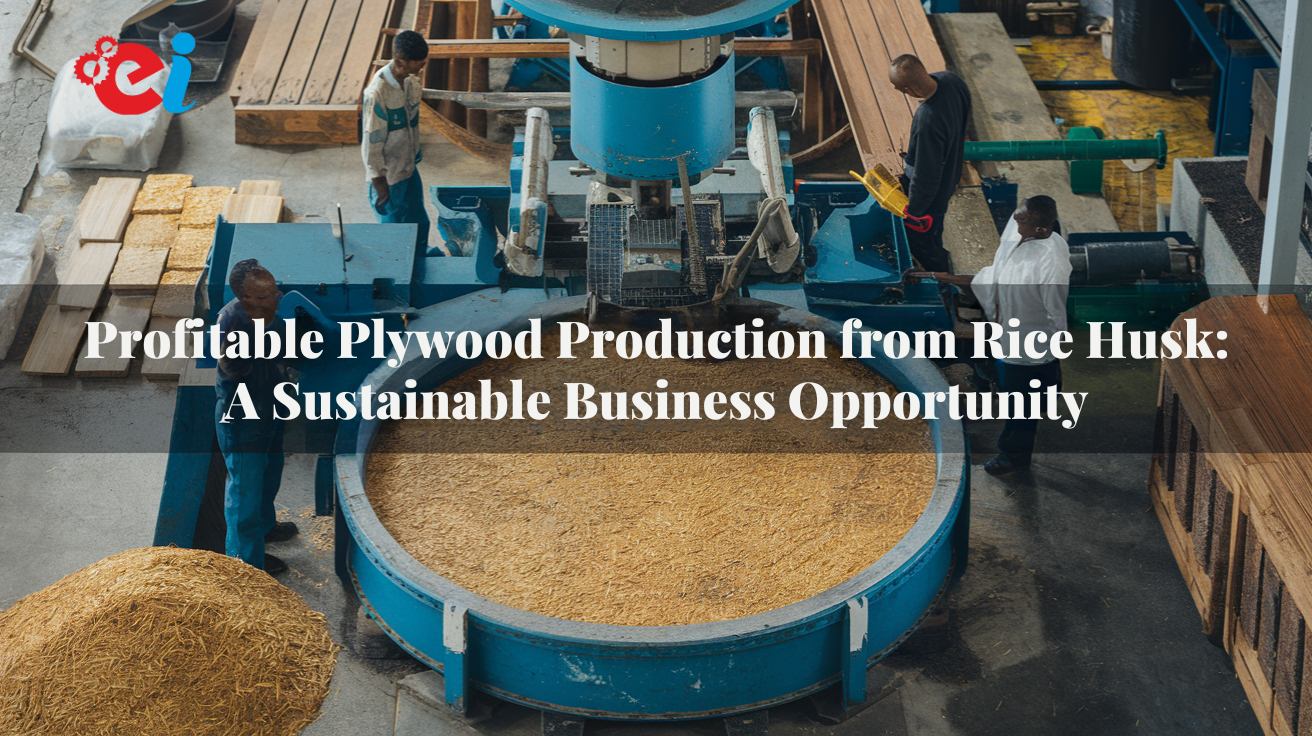
Production of rice husk plywood uses compressed rice husks with applied heat and binding agents. After rice husk delivers plywood materials that perform similarly to conventional wood-based plywood products when it comes to strength and durability. Rice husk plywood stands out in sustainability terms because it derives from the waste rice production process. Rice husk waste presents itself as unused raw material that industry now transforms into profitable resources. The substance demonstrates durability against termite infestation and decay and fire conditions, thus serving as a powerful material choice for construction and furniture applications and flooring systems.
The demand for rice husk plywood
The worldwide market for sustainable building materials shows rapid growth in current times. The expanding concern about environmental problems leads to increased use of environmentally conscious products by industries. The construction and furniture industries are increasingly adopting rice husk plywood since it presents environmental advantages while satisfying growing market needs for sustainable resources. The total value of rice husk ash that results from rice husk processing reached USD 2.53 billion during 2023. The industry analysis shows that rice husk plywood production will reach USD 3.88 billion through 2033 and achieve 4.37% compound annual growth. Rice husk plywood serves the industry need for sustainable building materials since construction and furniture sectors remain devoted to environmental practices.
Benefits of Rice Husk Plywood Production
1. Environmental Sustainability
Rice husk plywood demonstrates sustainability through its purpose to supply environmentally friendly materials to meet rising market demands. Rice husks generally end up as waste products after the completion of rice milling operations. The valuable resource potential of rice husks enables their transformation into plywood products, which are then disposed of by burning or other means. Through this manufacturing process, the environment benefits by creating a waste reduction system that appeals to businesses and customers who practice sustainability.
2. Cost-Effectiveness
The main material used to produce rice husk plywood comes from cheap and extensive rice husk supplies. Several regions treat rice husks as worthless objects since they make the decision to dispose of them. The production of plywood through rice husk reduces dependency on conventional wood resources, thus preventing both their high cost and deforestation effects. The affordable production process of rice husk plywood gives businesses access to an affordable plywood, which helps them maintain market competitiveness.
3. Durability and Strength
The characteristics of rice husk plywood make it an effective and stable building material. The strength of traditional plywood and its application versatility run throughout this alternative wood product. Natural resistance against termite decay and fire exists in rice husk plywood products. The substance meets multiple design requirements because it stands against wear and tear in various construction elements, from floors to furniture to building frameworks.
Read our Books Here: Manufacture of Value Added Products from Rice Husk (Hull) and Rice Husk Ash (RHA)(2nd Revised Edition)
The process to begin a rice husk plywood business
A husk plywood business needs strategic preparation in addition to financial capital to start. Setting up a husk plywood business requires obtaining raw materials together with factory establishment and market strategy development. The following breakdown shows the essential actions needed for establishing a husk plywood business.
1. Conduct Market Research
Market research must be completed as the first step before launching your business. Analysis of sustainable building material demand and audience identification constitute essential research before beginning operations. Examine the existing market patterns of plywood businesses and analyze competing products. Your investigation of the market will reveal gaps and opportunities where you can make your product stand out in the market. Your research will show you which organizations within the construction sector and furniture manufacturing sector need eco-friendly plywood.
2. Develop a Business Plan
Every new enterprise requires an effective business plan as its foundation. A well-developed plan must include all business targets in addition to market focus and production methods and anticipated financial growth. Your business plan needs to detail the expenses associated with founding your production facility, including the procurement of raw materials, together with forecast profit earnings. The business plan will guide your business growth as it helps secure financial support and offers direction for business expansion.
3. Secure Quality Raw Materials
The production of top-quality rice husk plywood requires high-quality rice husks as your starting material. You must decide whether to join local rice mill partnerships or independently set up procedures to acquire rice husks. Stable rice husk material supply depends on building strong partnerships with raw material suppliers. The decision to grow your own rice husk supply means you should allocate funds for acquiring additional land and suitable farming equipment. High-quality raw materials ensure the production of market-standard products with optimal quality.
4. Set Up Production Facilities
Production facility creation stands as one of the main essential steps for business development. Specialized equipment consisting of drying machines, binding devices, and cleaning machines will be necessary during the processing of rice husks. The manufacturing routine comprises husk-adhesive mixture followed by heat and pressure-based shaping and subsequent creation of ready plywood sections from final products. The investment in present-day equipment remains vital since both productivity and product quality depend on it. The business must keep to all health and safety standards to make its workplace safe for employees.
5. Product compliance and high quality standards must be established as foundation elements for production.
The production of plywood needs strict quality control measures to be successful. The plywood product needs to fulfill industry standard requirements and receive certifications before being exported because it is your export product. Your business credibility will improve because of environmental and safety requirements. Regular quality inspections run during the production period to ensure each plywood batch demonstrates required strength together with durability and resistance capabilities.
you
6. Develop a Marketing Strategy
Your business should develop an effective marketing strategy for promotion. Your marketing strategy should include emphasizing the environmentally sustainable features of your product toward reaching eco-conscious consumers. You need to develop educational material that includes both blog content and videos and social media platform strategies to generate knowledge about your product. You should focus on presenting rice husk plywood benefits, which include being both affordable and sustainable and durable. Join networking activities with construction companies together with furniture businesses and use trade show participation to display your product.
Conclusion
The rice husk plywood industry presents a profitable opportunity for businesses. With the growing demand for sustainable building materials, husk plywood offers an eco-friendly alternative to traditional plywood. The low cost of raw materials, combined with the durability and strength of the product, makes it an attractive option for the construction and furniture industries. By following the necessary steps and leveraging expert support, you can successfully enter the plywood market and build a sustainable, profitable business.