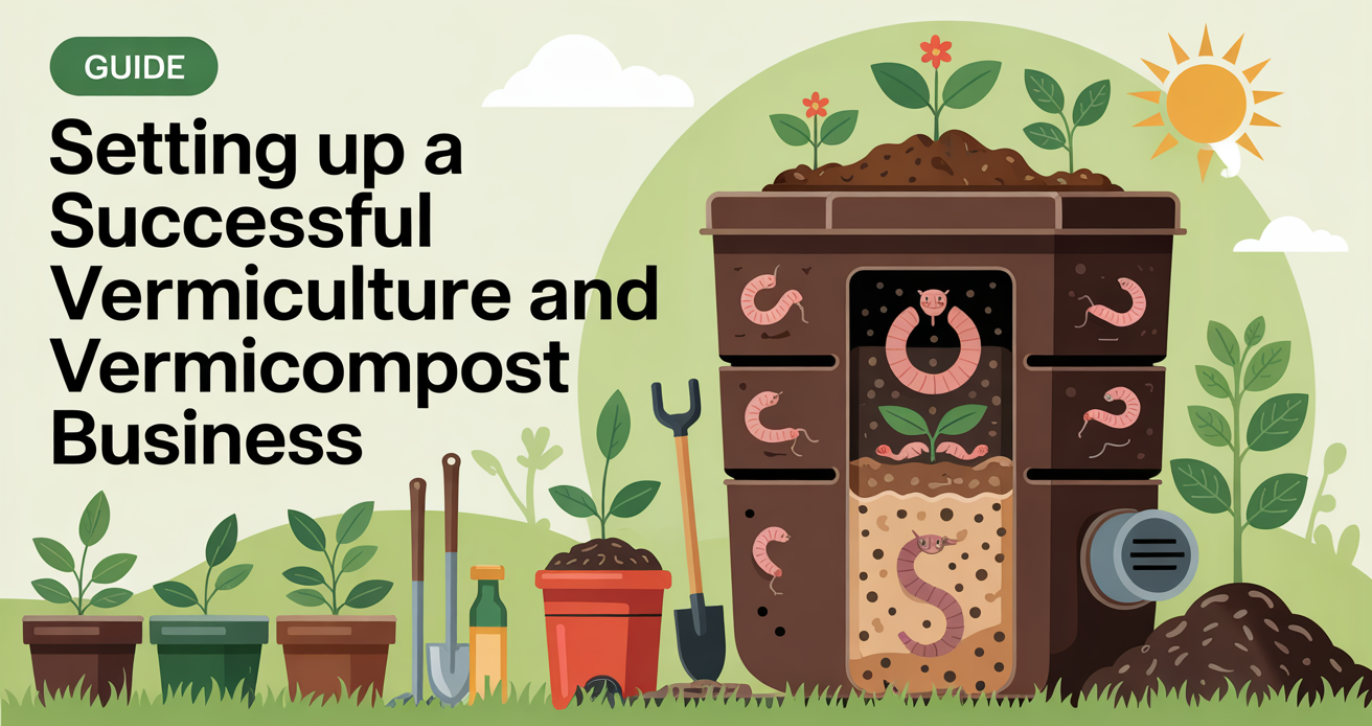






Starting a Vermiculture and vermicompost business is a safe and environmentally friendly way. It turns organic waste into good compost. Since it works on the needs and awareness of sustainable farming and organic gardening principles, the demand for vermicompost is large. The opening of a vermiculture business will also be a profitable and eco-friendly venture. The following guide will explore everything you need to successfully start your vermiculture and vermicompost business.
Vermiculture and Vermicompost Business : Understanding
Breeding farmed earthworms for composting or other agricultural uses is termed “vermiculture.
Vermicomposting describes the process by which worms degrade organic matter into compost enriched with various nutrients.
The product, called vermicompost, is quite valuable. It is an excellent enrichment and growth medium for both soil and plants.
Beneficial Aspects of Vermiculture and Vermicompost Business
1. This practice reduces waste and improves the quality of soil health.
2. The minimum setup costs needed compared to other agricultural businesses.
3. Vermicompost is in high demand among organic farmers, gardeners, and plant nurseries.
4. The Quick reproduction of worms will always ensure continued production.
5. Very little space and work are required once properly set up.
6. Improved soil microorganisms and plant health.
7. Move to synthetic fertilizer-free using chemicals for farmers and gardeners.
Step-by-Step Guide to Starting Your Business
Step 1: Choosing the Right Worms
There is more than one worm that can be utilized in vermicomposting. The most common species include the following:
Eisenia fetida (Red Wigglers) period.
Lumbricus rubellus
Mostly popular in tropical regions.
Step 2: Make the Vermiculture Bed
An excellent worm bed will be necessary for maintaining the health of your worms and the compost they produce. Follow the steps provided below:
1. Sensitization of the location – This should be an ideal shaded and moisture-controlled place.
2. Bins or pits—Glass, plastic, wooden crates, or ground pits are used, but they should have proper drainage.
3. Prepare bedding materials for the worms. Use shredded newspapers or coconut coir, dry leaves, or composted manure.
Step 3: Feed the Worms
Worms feed on organic waste, through which they survive and produce compost. Suitable food includes:
1. Scrapings of fruits and vegetables
2. Coffee grounds and tea leaves
3. Eggshells-crushed
4. Garden waste (leaves, grass clippings)
5. Paper products such as unbleached cardboard and shredded newspaper
Avoid feeding dairy products, oils, meats, and citrus peels, as they are harmful to worms.
Step 4: Feed the Worm Bed
1. Moisten it to make it moist: spray regularly to keep the moisture level right.
2. Aerate properly—Always turn the compost occasionally, or else it will smell foul and overheat.
3. Worm health check—See how they are doing in terms of distress signals: escaping worms or slow composting.
4. Protect from pests: Cover with fabric that allows breathability from flies and rodents.
5. Constant temperature—Keep in a narrow range between 15 degrees to 25 degrees Celsius for possible activity.
Step 5: Harvesting Vermicompost
Your worms will be able to change the waste into rich black compost after about 2-3 months.
Here is how to harvest
1. Stop feeding for 1 week – this way they will not take more time in finishing the present consumption.
2. Separate worms from compost – Place fresh food in one corner; worms will migrate, making collection easier.
3. Sieve the compost – Remove any large, undigested particles.
4. Store properly – Keep in a dry, breathable bag or container for packaging and sale.
Packaging and Selling Your Vermicompost
To make your vermicompost business successful, you need effective marketing strategies. Below are a few ways to sell your products:
1. Local Farmers and Gardeners – Give some samples for free to farmers or gardening enthusiasts.
2. Nurseries and Plant Shops – Approach nurseries in your area to carry your products together with theirs.
3. Online Platforms – Sell via e-commerce sites like Amazon, Etsy, and Facebook Marketplace.
4. Agricultural Exhibitions and Farmers’ Markets – Join events where your compost will be showcased.
5. Direct to Consumers – Start an organic gardener subscription service to provide regular supplies of compost.
6. Collaborate with Government Programs – Many local governments are proponents of sustainable farming, and some may even want to offer grants or buy in bulk.
7. Branding and Labelling – Beautifully packaged with clear instructions on using vermicompost will propel branding.
Expanding Your Business
After establishing your business in vermiculture, consider expanding in the following ways:
- Live worms for sale: A lot of people look around for composting worms to set up their home vermicomposting systems.
- Workshops – Setting up their vermicomposting systems by farmers and gardeners will be taught at these workshops.
- Compost-based products – Make liquid fertilizers, compost tea, and mixes for organic soil.
- Work with waste management services – Organic waste collected from households or restaurants and converted into compost.
- Organic farming: Grow vegetables and herbs organically for sale in the future with this compost.
- Export opportunities – Look for international markets in which organic compost is in high demand.
Challenges and Solutions
Like all enterprises, vermiculture has its share of challenges. Below are the most common problems in vermiculture and their possible solutions:
1. Overfeeding and Odor Problems
Solution: Feed worms only what they can consume in a few days without adding too much wet waste.
2. Worm Disappearance
Solution: Maintain moisture and create a comfortable living environment.
3. Slow Decomposition
Solution: Balance each component in terms of food, moisture, and aeration.
4. Seasonal Demand
Solution: Proper storage of compost while focusing on pre-selling bulk orders.
5. Lack of Awareness
Solution: Educate potential buyers via blogs, social media, and local workshops.
6. Countering Synthetic Fertilizers
Solution: Educate farmers regarding the sustenance and improvement of soil structure in the long term.
Read our Blog: Sustainable Raw Material Sourcing for Manufacturing Entrepreneurs: Strategies and Supplier Networks
Concluding Thought
Commencing a business in vermiculture and vermicomposting is not only lucrative but also friendly to the environment. Knowing the right worms, setting them up properly, and marketing wisely will equip you with the ingredients for a viable and sustainable venture. By following the steps mentioned above, you are on the road to producing the high-quality vermicompost already in demand among farmers, gardeners, and agribusiness firms. Gradual business expansion and educating the customers on the benefits of vermicomposting will help you in building a brand in the organic farming landscape.