





In India, a country with a large population that fuels both production and consumption, the footwear market is one of the best and most stable opportunities for entrepreneurs. Shoes are more than just a necessity for daily life. They are also a reflection of lifestyle, brand, functionality, and identity. Launching a shoe manufacturing business is a lucrative business venture, as the demand for stylish, quality footwear in urban and rural areas alike continues to grow.
This is a detailed, comprehensive guide for entrepreneurs looking to learn how to set up a shoe-making unit and how to create a profitable, scalable business that aligns with current industry trends.
Why the Shoe Manufacturing Business is a Good Industry in 2025
The Indian MSME sector is one of its most promising. India is ranked second globally in footwear production, after China. It also ranks third in terms of consumption. India produces over 2.6 billion pairs of shoes each year. India’s manufacturing base, which exports a large portion of its production to more than 150 countries, is strong. Its labor and material costs advantages also make it competitive globally.
The rapid diversification in consumer demands makes 2025 a great time to start this shoe manufacturing business. The demand for trendy and casual footwear is driven by a large, young population, while older groups are looking for functional, orthopedic shoes. Government initiatives such as Make in India, Production Linked Incentives and other schemes encourage more manufacturing startups in areas like leather goods and synthetic footwear.
The shoe manufacturing business is also seeing an increase in investment into design, automation and e-commerce. This change opens the door for entrepreneurs with innovative ideas who want to combine manufacturing, branding, digital presence and sustainable practices.
Related: Starting a Shoe Manufacturing Company
Market demand, growth forecast, and key trends
By 2030, the Indian footwear market will be valued at over Rs 1.38 lakh cr. This is a growth rate of 8.5% per annum. The growing disposable incomes, lifestyle upgrades and fashion awareness in Tier II and Tier III Cities are driving the domestic market, while India’s reputation as a manufacturer of leather and synthetic shoes is attracting global buyers.
Exports are also expected to increase steadily in the future, particularly in categories like safety shoes, men’s formal shoes, low-cost athletic shoes, and vegan leather footwear. Indian manufacturers are gaining an advantage in terms of custom orders, OEM contracts and private label manufacturing for international brands.
Many direct-to-consumer (D2C), footwear brands are now emerging, and they are willing to enter into contract manufacturing agreements. It is a great way to add another revenue stream to a manufacturer who can maintain quality while adapting to shorter, more frequent production cycles.
How to Choose the Right Shoe Type for Manufacturing
One of the first and most important decisions you will make is choosing your product line. It’s tempting, but focusing on one specific product category will allow you to develop better products, improve your branding, and increase operational efficiency.
Sports shoes made of PU or synthetic fabrics are always in demand and can be sold both on the domestic and international markets. Safety shoes are also gaining popularity as India’s industrial and infrastructure sectors grow. Formal leather shoes are aimed at the premium market and require skilled workers and a special supply chain. Casual canvas shoes, on the other hand, are popular among youth and school uniform providers.
Your choice will depend on the availability of raw materials, your target market, your manufacturing experience, and any branding goals you have. Most entrepreneurs start with just one or two categories, and then expand their offerings as demand and capabilities increase.
The Shoe Manufacturing Process
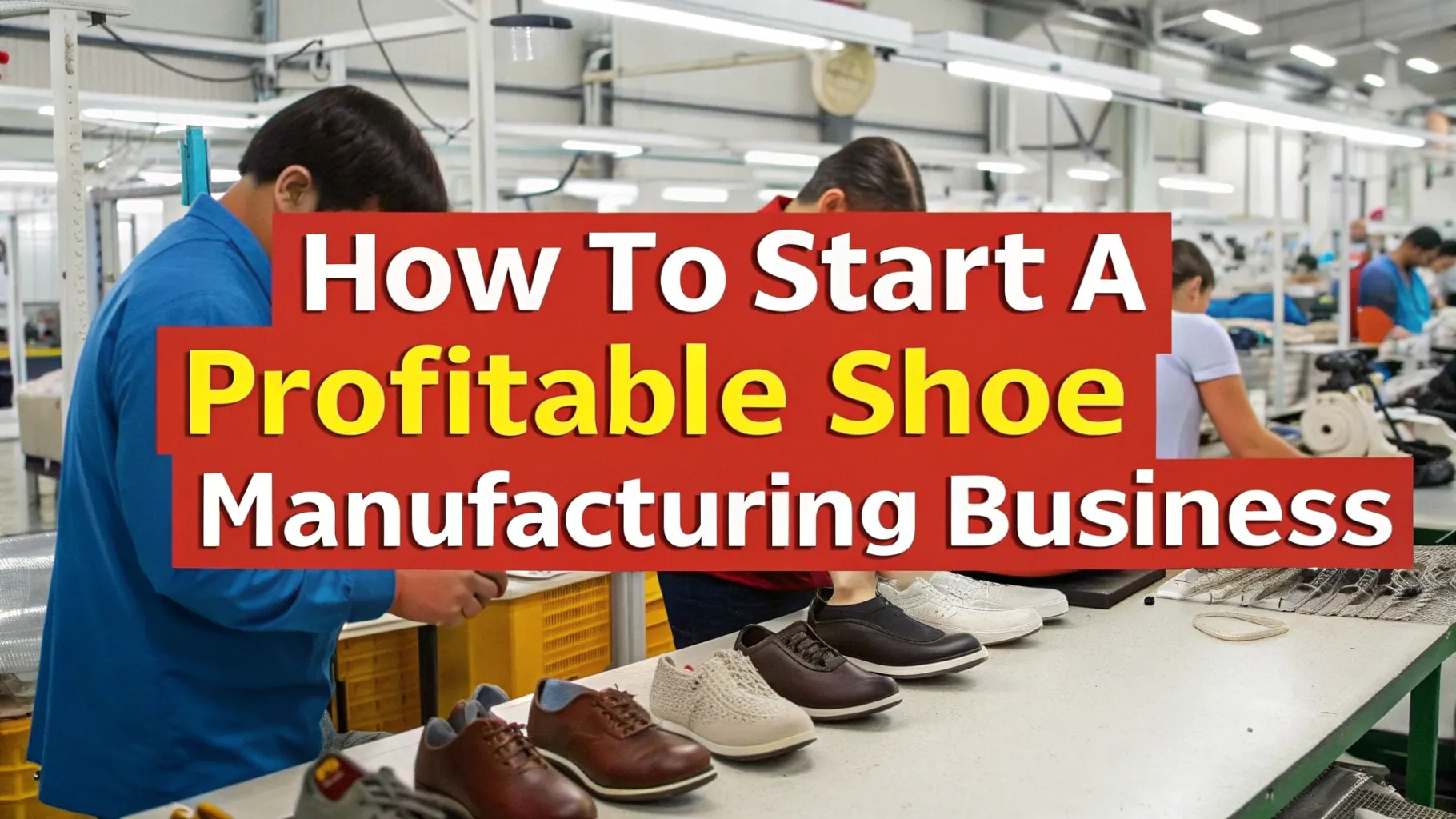
The shoe manufacturing business is a combination of both mechanical and artisanal processes. Although automation can increase speed and scale, some parts of the shoe manufacturing business process still require human expertise, particularly in design, cut, and finish. The steps will differ slightly depending on if you are manufacturing rubber, leather, or sports shoes. However, the core steps will remain the same.
Design and prototyping are the first steps. Designers use CAD patterns, or sketches drawn by hand, to create prototypes that are tested for comfort and quality. After the design has been finalized, production begins with the material cutting. Fabrics or PU sheets can be precision cut into uppers by using die-cutting machines or templates.
The upper part of the shoe is then constructed by stitching the cut pieces together with industrial sewing machines. The soles can be moulded by injection moulding or pressed using rubber sheets, depending on the type of shoe. After the upper and sole have been finished, they are bonded together using adhesives and press equipment.
Each pair is then finished with a variety of finishing operations, including cleaning, polishing, painting, embossing (or labeling) and lacing. Then, a thorough quality check is performed to detect any defects, whether in the material, stitching or alignment. After passing this quality check, the shoes are packed, shrink-wrapped, and sent to distribution.
Hand-finishing and polishing leather shoes is a critical factor in ensuring quality.
Related: Production of Industrial Safety Leather Shoes
Shoe Manufacturing Materials
The raw materials are a major part of the production cost and affect both durability and comfort. Material selection is determined by the target market.
The upper of PU sports shoes is usually made from polyurethane or fabric mesh. This provides flexibility and breathability. The soles are made from EVA or rubber and moulded using injection systems.
Genuine or synthetic leather uppers are used in leather shoe manufacturing, and they are often paired with leather or rubber soles. All shoe types are equipped with accessories like laces, eyelets, cushioning foam and adhesives.
Using reliable raw materials, whether from local or imported suppliers, ensures consistency in product quality. To ensure competitive pricing and timely delivery, many Indian manufacturers develop long-term relationships.
Infrastructure and machinery Set-up
The infrastructure of a shoe production unit is set up by selecting an industrial site with the right logistics support, electricity, ventilation and skilled labor. The unit should have designated zones for design and cutting, stitching, moulding, assembly and packaging.
The equipment includes a cutting press, flatbed and overlock sewing machines, PU injecting moulding machines and sole pressing and attaching machines. Also included are drying chambers and polishing tools. For larger setups, conveyor belt systems and robot arms are used to increase production speed.
The level of automation can be changed based on the output required. Semi-automated lines allow for quicker production without sacrificing quality. A fully automated plant, on the other hand, may be more suitable for large-scale production under OEM contracts.
Hiring skilled labor and managing operations
Hiring and retaining qualified labor is a challenge in the shoe industry, particularly for roles such as stitching and finishing. Many startups can benefit from government-supported programs like the Leather Sector Skills Council (LSSC), or the Footwear Design and Development Institute, which provide access to skilled workers.
Daily operations must be closely managed. This includes everything from machine maintenance and inventory planning to timely procurement and quality control. Most startups start with a small team, and then add supervisors and managers as production grows.
Implementing SOPs at every stage is essential for maintaining quality. This includes cutting, stitching and moulding. Even medium-sized units can benefit from introducing software to track inventory, orders, and perform quality checks.
Take advantage of the domestic and export markets
Indian consumers are divided into two groups: those who value quality and those who prioritize price. Small manufacturers can win wholesale orders, retail stores, and online sellers by offering high-quality products at an affordable price.
Manufacturers must adhere to international safety and quality standards to export their products. Certifications such as CE, ISO, and REACH (for chemical compliance) increase the likelihood of receiving orders from overseas distributors.
Trade shows such as the India International Leather Fair and government portals such as the India Trade Portal and Export Promotion Councils are great places to meet global buyers. Many startups explore partnership opportunities with foreign brands seeking white-label suppliers.
For more information check out this video
Embracing Innovation & Sustainability
The shoe manufacturing business has seen rapid innovation. Indian startups are experimenting with recycled materials, biodegradable leathers, and plant-based soles to appeal to eco-conscious consumers. Cork, coconut fiber, jute, and organic dyes are becoming more popular as a way to reduce the carbon footprint.
Such sustainable materials and production methods can be a powerful differentiator on competitive markets, and attract funding from ESG-focused investors.
Integrating design software, 3D prototypes, and small-batch manufacturing systems also allows manufacturers to test the market before they launch large-scale production. Being agile and responsive is essential in the age of fast fashion and customization.
How NPCS Supports Entrepreneurs in the Shoe Manufacturing Business
Niir Project Consultancy Services plays a vital role in helping entrepreneurs establish profitable manufacturing units. They produce detailed Market Surveys and Techno-Economic Feasibility Reports that assess the commercial viability of your business idea.
NPCS reports include detailed information on manufacturing processes, raw material lists, layout and plant planning, as well as financials. Their knowledge can help you to avoid mistakes, save time and create a successful business.
Whether you are planning a leather shoe unit or a PU sport shoe plant, NPCS offers industry-specific advice tailored to your vision.
Which business to start? How to choose a business idea?
Conclusion: Building a Scalable and Profitable Footwear Brand
A shoe manufacturing business in India is the ideal combination of scale, potential exports, and domestic demand. You can create a niche by focusing on the quality of your product, operational efficiency and customer needs.
You can start small and grow your business by automating gradually. The future of footwear production in India looks promising, thanks to the availability of skilled labor, robust supply chains and increased brand awareness among consumers.
The success of this business is not only about manufacturing shoes. It’s also about understanding your market, refining the product and creating a brand that walks confidently forward.


