

NPCS has been helping entrepreneurs, startups, MSMEs, and industrial investors since 1992 with detailed project reports, feasibility studies, market research, and business consulting services across 50+ industries.
|
Author: P. K. Chattopadhyay |
ISBN: 978-81-940995-4-3 |
|
Code: NI377 |
Format: paperback |
|
Price (₹): ₹2475 |
Price (US$): $80 |
|
Publisher: Asia Pacific Business Press Inc. |
Usually Ships within: 5 |
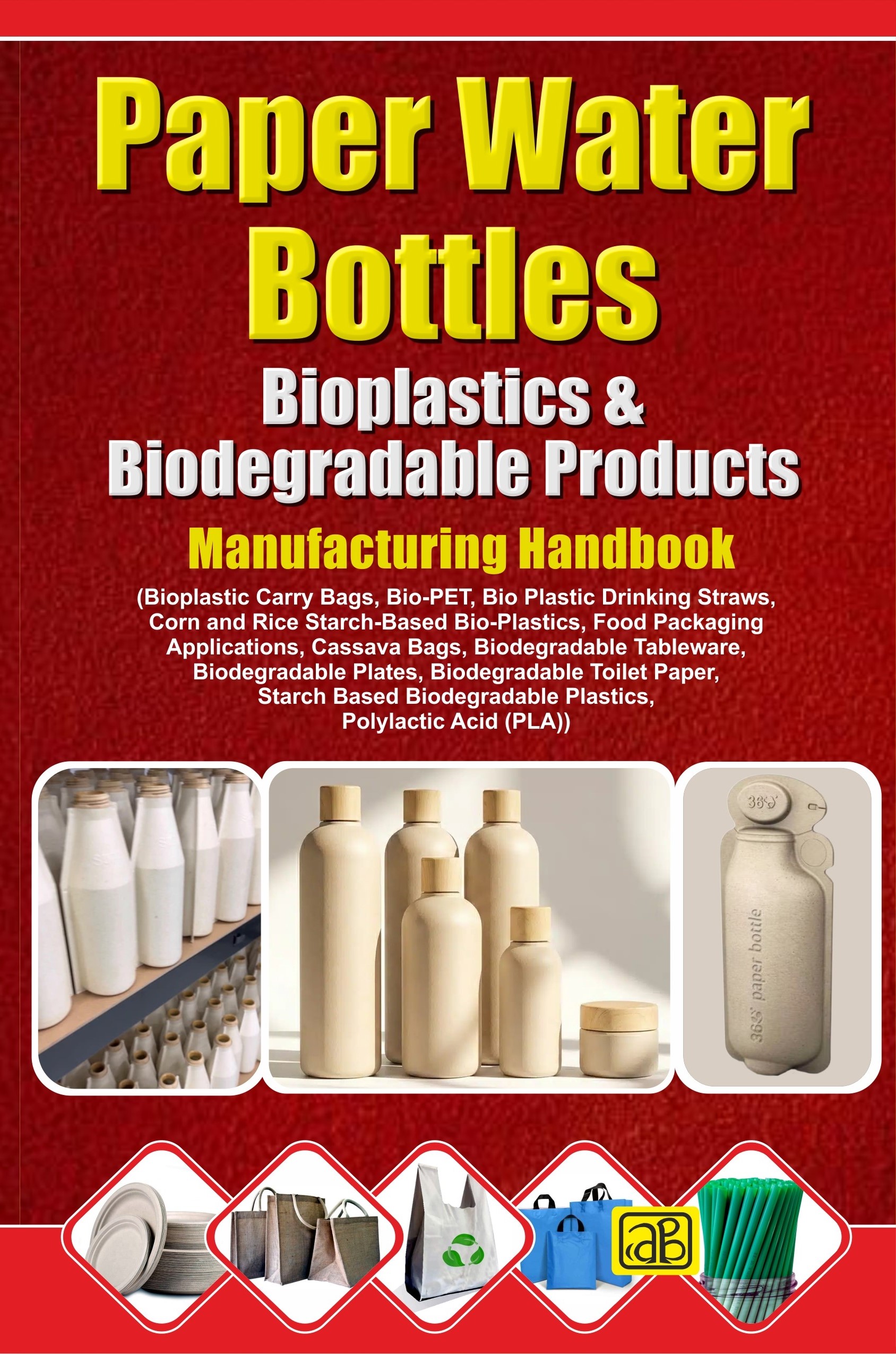
Paper Water Bottles, Bioplastics & Biodegradable Products Manufacturing Handbook
(Bioplastic Carry Bags, Bio-PET, Bio Plastic Drinking Straws, Corn and Rice Starch-Based Bio-Plastics, Food Packaging Applications, Cassava Bags, Biodegradable Tableware, Biodegradable Plates, Biodegradable Toilet Paper, Starch Based Biodegradable Plastics, Polylactic Acid (PLA))
Plastic pollution is one of the biggest environmental problems today. Every year, millions of tonnes of single-use plastic end up in landfills and oceans, harming wildlife, ecosystems, and even human health. The good news is that better alternatives are now available. Bioplastics and biodegradable products can perform the same functions as regular plastics but break down naturally without leaving harmful waste.
The market for these eco-friendly materials is growing quickly around the world, and India is becoming an important player in both production and consumption. Demand is increasing in areas like food packaging, retail, agriculture, healthcare, and consumer goods. Many Indian manufacturers, small businesses, and exporters are now using biodegradable materials, supported by government rules that limit the use of traditional plastics. Globally, there is also a strong demand for certified biodegradable products, making this a fast-growing and profitable industry.
A major focus of the book is on sustainable packaging, especially paper water bottles. These bottles are becoming a popular and eco-friendly alternative to plastic water bottles due to increasing environmental awareness, strict rules against single-use plastics, and growing demand from customers and beverage companies. The book highlights their strong business potential, easy scalability, and wide market acceptance, making them an important product for the future of green manufacturing.
This book provides clear and detailed information about the biodegradable plastics industry, including its growth, challenges, and environmental impact. It covers many products such as carry bags, bottles, straws, food packaging, cassava bags, plates, tableware, and even biodegradable toilet paper. It also explains key materials like PLA, PHAs, and starch-based plastics made from corn, rice, wheat, and potato waste. Along with this, the book includes practical details like manufacturing processes, plant layouts, flow charts, and machinery information, which are very helpful for setting up or improving a production unit.
This handbook is an essential resource for students, researchers, process engineers, startup founders, entrepreneurs, manufacturers, and exporters seeking authoritative, actionable knowledge in the field of sustainable materials and biodegradable product manufacturing. It serves as both a reliable academic reference and a practical industrial guide for those committed to building responsible, future-ready manufacturing enterprises.
Paper Water Bottles, Bioplastics & Biodegradable Products Manufacturing Handbook
(Bioplastic Carry Bags, Bio-PET, Bio Plastic Drinking Straws, Corn and Rice Starch-Based Bio-Plastics, Food Packaging Applications, Cassava Bags, Biodegradable Tableware, Biodegradable Plates, Biodegradable Toilet Paper, Starch Based Biodegradable Plastics, Polylactic Acid (PLA))
1. INTRODUCTION
1.1. Biodegradable Plastics
1.1.1. Properties
1.1.2. Applications
1.2. Type of Biodegradable Plastics
1.3. Biodegradable Vs. Compostable
1.4. Bio-Based Plastics
1.4.1. Applications
1.4.2. Benefits of Bioplastics
1.5. Renewable Resources
1.5.1. Natural Polymers
1.5.2. Polysaccharides (Carbohydrates)
1.5.3. Proteins
1.5.4. Lignin
1.5.5. Natural Rubber
1.6. Other Biogenic Materials
1.6.1. Plant Oils
1.6.2. Monomers
2. THE BIODEGRADABLE PLASTICS INDUSTRY
2.1. Applications
2.2. Economic and Social Development
2.3. Impact Factors on Bioplastic Demand
2.4. Specific Options for the Development of Bioplastics
2.4.1. Mobilizing Resources for Research and Development
2.4.2. Supporting Scaling Up Activities
2.4.3. Investing in Demonstrator Facilities
2.4.4. Alternative Uses for Feedstock
2.4.5. Agricultural Land Productivity
2.4.6. Alternative Cropping Systems
2.4.7. Public Procurement
2.4.8. Quotas
2.4.9. Subsidies and Taxes
2.4.10. Standards, Labels, and Consumer Awareness
3. BIODEGRADABLE PLASTICS —DEVELOPMENTS AND ENVIRONMENTAL IMPACTS
3.1. Biodegradable
3.1.1. The ASTM Defines ‘Biodegradable’ as
3.2. Compostable
3.2.1. ‘Compostable’ is Defined by the ASTM as
3.2.2. Hydro-biodegradable and Photo-biodegradable
3.2.3. Bio-erodable
3.3. Biodegradable Starch-based Polymers
3.3.1. Thermoplastic Starch Products
3.3.2. Starch Synthetic Aliphatic Polyester Blends
3.3.3. Starch and PBS/PBSA Polyester Blends
3.3.4. Starch-PVOH Blends
3.4. Biodegradable Polyesters
3.4.1. PHA (Naturally Produced) Polyesters
3.4.2. PHBH (Naturally Produced) Polyesters
3.4.3. PLA (Renewable Resource) Polyesters
3.4.4. PCL (Synthetic Aliphatic) Polyesters
3.4.5. PBS (Synthetic Aliphatic) Polyesters
3.4.6. AAC Copolyesters
3.4.7. Modified PET
3.5. Other Degradable Polymers
3.6. Water Soluble Polymers
3.6.1. Polyvinyl Alcohol (PVOH)
3.6.2. Ethylene Vinyl Alcohol (EVOH)
3.7. Controlled Degradation Additive Masterbatches
3.8. Emerging Application Areas in Australia
3.9. Coated Paper
3.10. Agricultural Mulch Film
3.11. Shopping Bags
3.12. Food Waste Film and Bags
3.13. Consumer Packaging Materials
3.14. Landfill Cover Film
3.15. Other Applications
3.16. Standards and Test Methods
3.17. Biodegradation Standards and Tests
3.17.1. American Society for Testing and Materials
3.17.2. ASTM D5338-93 (Composting)
3.17.3. ASTM D5209-91 (Aerobic, Sewer Sludge)
3.17.4. ASTM D5210-92 (Anaerobic, Sewage Sludge)
3.17.5. ASTM D5511-94 (High-solids Anaerobic Digestion)
3.17.6. ASTM Tests for Specific Disposal Environments
3.17.7. International Standards Research
3.17.8. International Standards Organisation
3.17.9. European Committee for Normalisation
3.17.10. ‘OK Compost’ Certification and Logo
3.17.11. Compost Toxicity Tests
3.17.12. Plant Phytotoxicity Testing
3.17.13. Animal Toxicity Test
3.17.14. Difference Between Standards for Biodegradation
3.17.15. Development of Australian Standards
3.17.16. Disposal Environments
3.17.17. Composting Facilities and Soil Burial
3.17.18. Key Factors Defining Compostability
3.17.19. Physical Persistence
3.17.20. Chemical Persistence
3.17.21. Toxicity
3.17.22. Effect on Quality of Compost
3.17.23. Anaerobic Digestion
3.17.24. Waste Water Treatment Plants
3.17.25. Reprocessing Facilities
3.17.26. Landfills
3.17.27. Marine and Freshwater Environments
3.17.28. Litter
3.18. Plastics Sorting and Reprocessing
3.18.1. Key Issues
3.18.2. Recyclable Plastics Sorting Considerations
3.18.3. Reprocessing Considerations
3.18.4. Polyolefin Reprocessing
3.18.5. Polyethylene Reprocessing
3.19. Potential Positive Environment Impacts
3.19.1. Composting
3.19.2. Landfill Degradation
3.19.3. Energy Use
3.19.4. Greenhouse Gas Emissions
3.20. Potential Negative Enviornment Impact
3.20.1. Pollution of Aquatic Environments
3.20.1.1. Increased Aquatic BOD
3.20.1.2. Water Transportable Degradation Products
3.20.1.3. Risk to Marine Species
3.20.2. Litter
3.20.3. Compost Toxicity
3.20.4. Recalcitrant Residues
3.20.4.1. Aromatic Compounds
3.20.5. Addigtives and Modifiers
3.20.5.1. Isocyanate Coupling Agents
3.20.5.2. Plasticisers
3.20.5.3. Fillers
3.20.5.4. Catalyst Residues
3.20.6. Prodegradants and Other Additives
3.20.7. Source of Raw Materials
3.21. Development of Australian Standards and Testing
3.21.1. Life-Cycle Assessment
3.21.2. Minimisation of Impact on Reprocessing
3.21.3. Determination of Appropriate Disposal Environments
3.21.4. Education
3.22. Conclusions
3.22.1. Identify standards and test methods for biodegradable plastics in Australia
3.23. Appendix A
4. BIOPLASTIC CARRY BAGS
4.1. A Climate-Friendly Brand
4.2. Main Applications
4.3. Reduce CO2 Emission with Bioplastics
4.4. Which Biobag to Choose?
4.5. Types of Bio Bag
4.6. Bio-Recyclable Bags can be Used to Create New Bags
4.7. Bio-Recyclable Bags do not Pollute the Recycling Process
4.8. Bio-Compostable Bags Break Down into Humus
4.8.1. Polyethylene (PE)
4.8.2. Polylactic Acid (PLA)
4.8.3. Thermoplastic Starch (TPS)
4.9. Bioplastics
4.9.1. Manufacturing Process
4.9.2. Recyclability of Plastic Materials
4.9.3. How Recycling Improvements Affect the Manufacturer
5. BIO-PET
5.1. Bio-PET as a Replacement for Virgin PET
5.2. Biodegradable Plastics
5.3. Biopolymer Plastic
5.4. Why is Bio-based Polyester Important?
5.5. The Benefits of Biopolymer Bottles
5.6. Biopolymer Bottle Types
5.7. Bottle-to-bottle Recycling
6. BIO PLASTIC DRINKING STRAWS
6.1. Types of Biodegradable Plastic Straws
6.1.1. Wheat Straws
6.1.2. Bamboo Straws
6.1.3. The Truth of Sugarcane Bagasse
6.1.4. Rice Straw
6.2. Technology Process
6.2.1. Pulp Bleaching Process
6.2.2. Pulp Washing Process
6.2.3. Pulp Cooking Process
6.2.4. Chemi-Mechanical Pulping
7. FOOD PACKAGING APPLICATIONS
7.1. Biobased Packaging Materials
7.2. Polymers Produced from Biomass
7.3. Polymers from Bio-derived Monomers
7.4. Polymers Produced from Micro-Organisms
7.5. Properties of Packaging Materials
7.5.1. Gas Barrier Properties
7.5.2. Moisture Barrier Properties
7.5.3. Mechanical and Thermal Properties
7.6. Biodegradability
7.6.1. Packaging Products from Bio based
Materials
8. POLYVINYL MODIFIED GUAR-GUM BIOPLASTICS
8.1. Introduction
8.2. Modification of Guar Gum
8.3. Derivatization of Functional Groups
8.4. PVS Modified Guar Gum
8.5. Characterization
9. CORN AND RICE STARCH-BASED BIO-PLASTICS
9.1. Introduction
9.2. Materials and Methods
9.3. Extraction of Starch
9.4. Preparation of Bioplastics Film
9.5. Characterization
9.5.1. Tensile Test
9.5.2. Thickness Measurement
9.5.3. Test for Moisture Content
9.5.4. Water Solubility Test
9.5.5. Water Contact Angle Measurement
9.5.6. Biodegradability Test
9.5.7. Scanning Electron Microscopy (SEM)
9.5.8. Thermogravimetric Analysis
9.5.9. Sealing Properties of Bioplastics
10. BIOPLASTICS PROCESSING OF DRY INGREDIENTS
10.1. Introduction
10.1.1. Ingredient Properties Affecting Feedrates and Dry Ingredients Handling
10.1.2. Storage Hoppers and Ingredient Activation
10.1.3. Volumetric Feeders
10.1.4. Vibrating Tray Feeders
10.1.5. Belt Feeders
10.1.6. Loss-in-Weight Feeders
10.2. Start with a Traditional Feeding Device, Example a Screw Feeder
11. BIOPLASTICS – END-OF-LIFE OPTIONS
11.1. Recycling
11.1.1. Mechanical Recycling of Bioplastics
11.2. Renewable Energy Recovery (incineration)
11.3. Feedstock Recovery or Chemical Recycling
11.4. Compost/Biodegradation
11.4.1. Biodegradable
11.5. Anaerobic Digestion
11.5.1. Energy Recovery
11.6. Communicating End-of-Life Options
12. CASSAVA BAGS
12.1. Manufacturing Process
12.2. Types of Cassava Bags
13. PLASTICS FROM POTATO WASTE
13.1. Begin Insert
13.2. Plastics From Potato Waste
13.3. Starch to Glucose to Lactic Acid
13.4. Lactic Acid into Plastic
13.5. Potential Markets
14. BIODEGRADABLE SYNTHETIC POLYMERS
14.1. Formula of the Product
14.2. Introduction
14.3. Objective of the Present Invention
14.4. Preferred Embodiments
14.5. Claims
14.6. Conclusion
15. BIODEGRADABLE PLASTICS FROM RENEWABLE SOURCES
15.1. Plastics and the Environment
15.2. The Move to Renewable Sources
15.3. Extending the Recycling Loop
15.4. Biopolymers, Conventional Plastics and Biodegradable Plastics
15.5. Packaging
15.6. Plastic Films
15.7. Structure of the Business
15.8. Recent Developments
15.9. Biodegradability and Compostability
15.10. Challenges Ahead
16. BIODEGRADABLE PLASTICS FROM WHEAT STARCH AND POLYLACTIC ACID (PLA)
16.1. Introduction and Background
16.2. Results from Previous Funding
16.3. Rational and Significance
16.4. Procedures/Methodology
16.5. Other Related Works
17. STARCH BASED BIODEGRADABLE PLASTICS
17.1. Introduction
17.2. Technology Commercialization Model
17.2.1. Application of Technology Commercialization Model
17.3. Starch-based Biodegradable Plastics – Commercialization Case Studies
17.4. Conclusion
18. BIO-NANOCOMPOSITES FOR PACKAGING APPLICATIONS
18.1. Structure of Nano Composites Based on Natural Nano Fillers
18.1.1. Layered Silicate Filled Nano Composites
18.1.2. Cellulose Nanoparticles Filled Nano Composites
18.1.3. Starch Nano Crystals Filled Nano Composites
18.2. Properties of Bio-Nano Composites
18.2.1. PLA Based Bio-Nano Composites
18.2.2. Mechanical Properties
18.2.3. Barrier Properties
18.3. Starch Based Nano Composites
18.3.1. Elaboration Processes
18.3.2. Effect of the Surfactant and Plasticizer on the Structure
18.3.3. Mechanical Properties
18.4. Optical Properties
18.5. PHA Based Bio-Nano Composites
18.6. Proteins Based Nanocomposites
19. POLYHYDROXYALKANOATES (PHAS)
19.1. What are the General Characteristics of PHAs?
19.2. What are the Benefits of Bioplastics and PHAs in Particular?
19.3. What Applications have Utilized or can Utilize PHAs?
19.4. Materials and Methods
19.4.1. Reagents Preparation
19.4.2. Media Preparation
19.4.3. Sample Collection
19.4.4. Waste Collection
19.4.5. Isolation and Screening
19.4.6. Submerged Fermentation for PHA Production
19.4.7. Extraction of PHA Produced during Fermentation
19.4.8. Quantification of Produced PHA
19.4.9. Characterization of the Extracted PHA by FTIR
19.4.10. Molecular Identification of the Most Efficient PHA Producing Strain
19.4.11. Optimization of Cultural Conditions
19.4.12. PHA Film Preparation
19.4.13. Statistical Analysis
20. POLYLACTIC ACID (PLA)
20.1. Introduction
20.1.1. PLA Film
20.1.2. PLA Trays and Other Thermoformed Products
20.1.3. PLA Bottles
20.1.4. Other Packaging Products
20.2. (Biodegradable) Starch based Plastics
20.2.1. Starch based Films
20.2.2. Starch based Trays and Other Thermoformed Products
20.2.3. Other Packaging Products
20.3. Cellophane Films
20.4. Biodegradable (and bio-based) Polyesters
20.4.1. Flexible Films based on Biodegradable Polyesters
20.4.2. Trays and Other Thermoformed Products
20.4.3. Other Packaging Products
20.5. Manufacture of Polylactic Acids
20.6. Influence of Optical Composition
21. BIODEGRADABLE TABLEWARE
21.1. Sugarcane Bagasse
21.1.1. Characteristics
21.1.2. Advantages
21.1.3. Manufacturing Process
21.2. Cornstarch Tableware
21.2.1. Advantages
21.3. Bamboo Tableware
21.3.1. Features
21.3.2. Making Disposable Bamboo Tableware
21.3.3. Durable or Reusable
21.3.4. Benefits
21.4. Palm Leaf Tableware
21.4.1. Features
21.4.2. Eco-friendly
21.4.3. Manufacturing Process
22. BIODEGRADABLE PLATES
22.1. Characteristics of Bagasse Products
22.2. Benefits of Using Biodegradable Plates
22.2.1. Saves Non-renewable Sources of Energy
22.2.2. Reduces Carbon Emission
22.2.3. Consumes Less Energy
22.2.4. Provides an Eco-Friendly Solution
22.3. Various Types of Disposable Plates
22.4. Disposable Bamboo Plates
22.5. Palm Leaf Plates
22.6. Bagasse Plates/ Sugarcane Plates
22.6.1. What is Bagasse? How is it used to Make Plates and Bowls?
22.7. Manufacturing Stages
22.7.1. Pulping
22.7.2. Forming
22.7.3. Shaping and Drying
22.7.4. Edge cutting and Sterilization
22.7.5. Packaging
23. BIODEGRADABLE TOILET PAPER
23.1. Types
24. BIODEGRADABLE POLYOLEFINS
24.1. Introduction
24.1.1. Results and Discussion
24.1.2. General Procedure for Grafting of Sugars
onto Poly (styrene Maleic Anhydride)
24.1.3. Determination of Biodegradability of Polymers Using Aerobic Microorganisms
24.2. Supplementary Data
24.2.1. Weight Loss Data
24.2.2. FTIR Spectral Data
24.2.3. Use of Colorimetry for Determination of the Sugar Content in the Poly(styrene Maleic Anhydride) Linked with Glucose: The Phenol-Sulfuric Acid Reaction Method
24.2.4. Quantification of Carbohydrate Groups Linked to Poly(styrene-Maleic Anhydride) by Silylation of the Carbohydrate Hydroxyl’s and NMR Anlysis of the Spectrum
24.2.5. Molecular Weight Decrease After Biodegradation by GPC
24.2.6. Mechanism of Reaction of Poly(styrene Maleic Anhydride) with the Sugar
25. Paper Water Bottles
25.1. Introduction
25.2. How Paper Bottles Differ from Others
25.3 Common Design and use
25.4. Food Contact and Barrier Performance
25.5. Advantages of this Venture
25.5.1 Environmental Advantages
25.5.2 Competitive Advantages
25.6. Market Demand
25.8.1. Global Market Drivers
25.8.2. Indian Demand Factors
25.8.3. Market Segmentation
25.7. Manufacturing Process
25.8. Raw Material Availability
25.9. Machinery Used in Manufacturing
25.10. Tips and Professional Guidance
26. STARCH FOR PACKAGING APPLICATIONS
26.1. Introduction
26.2. Bioplastic as Packaging Material
25.2.1. Why Use Starch as Packaging Material?
26.3. Characteristics of a Good Packaging
Material
26.4. Recent Advances in Starch Based Composites for Packaging Applications
26.5. Plasticized Starch and Fiber Reinforced Composites for Packaging Applications
26.6. Protein-Starch Based Plastic Produced by Extrusion and Injection Molding
26.7. Starch-based Completely Biodegradable Polymer Materials
25.7.1. Starch: The Future of Sustainable
Packaging
27. PLANT LAYOUTs, PROCESS FLOW CHARTs & DIAGRAMs
28. PHOTOGRAPHS OF Plant & MACHINERY WITH SUPPLIER’S CONTACT DETAILS
• Bio Degradable Bag Machine
• Corn Starch Biodegradable Bag Machine
• Biodegradable Compostable Bags Machine
• Biodegradable Carry Bag Cutting and Sealing Machine
• Biodegradable Carry Bag Machine
• Biodegradable Plastic Film Machine
• Blown Film Machine
• Areca Leaf Plate Machine
• Betel Leaf Plate Machine
• Areca Food Container Machine
• Bagasse Tableware Pulp Molding Machine
• Pulp Molded Tableware Machinery
• Eggs Pulp Tray Machine
• Biodegradable Pulp Cup Rotary Machine
• Biodegradable Paper Straw Making Machine
• Biodegradable Straw Making Machine
• Biodegradable Shopping Bag Making Machine
• Automatic Cassava Starch Bag Making Machine
• Sugarcane Bagasse Tableware Making Machine
• Rotary Thermoforming Pulp Moulding Machine
• Paper Coating Machine
• Paper Bottle Assembly Machine
• Paper Pulp Board Calender Machine
29. References 443
|
Author NIIR Board of Consultants & Engineers |
ISBN 8178330288 |
|
Code NI156 |
Format paperback |
|
Price: Rs ₹1275 |
US$ $125 |
|
Publisher Asia Pacific Business Press Inc. |
Usually Ships within 5 |
|
Author NIIR Board |
ISBN 8178330776 |
|
Code NI83 |
Format paperback |
|
Price: Rs ₹750 |
US$ $100 |
|
Publisher Asia Pacific Business Press Inc. |
Usually Ships within 5 |
|
Author H. Panda |
ISBN 9788178331478 |
|
Code NI240 |
Format paperback |
|
Price: Rs ₹1675 |
US$ $150 |
|
Publisher Asia Pacific Business Press Inc. |
Usually Ships within 5 |
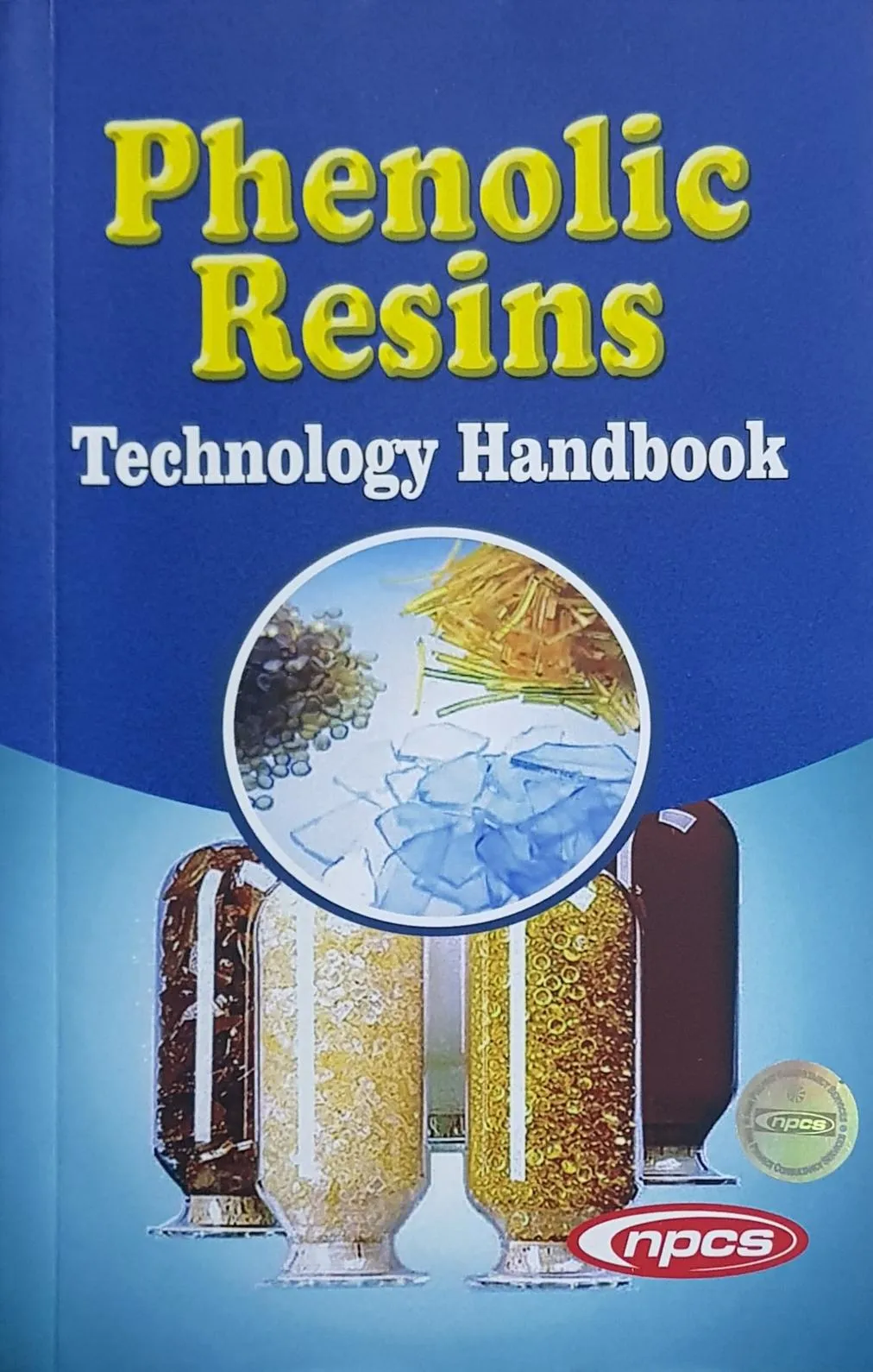
|
Author NPCS Board of Consultants & Engineers |
ISBN 9789381039977 |
|
Code NI197 |
Format paperback |
|
Price: Rs ₹1895 |
US$ $150 |
|
Publisher NIIR PROJECT CONSULTANCY SERVICES |
Usually Ships within 5 |
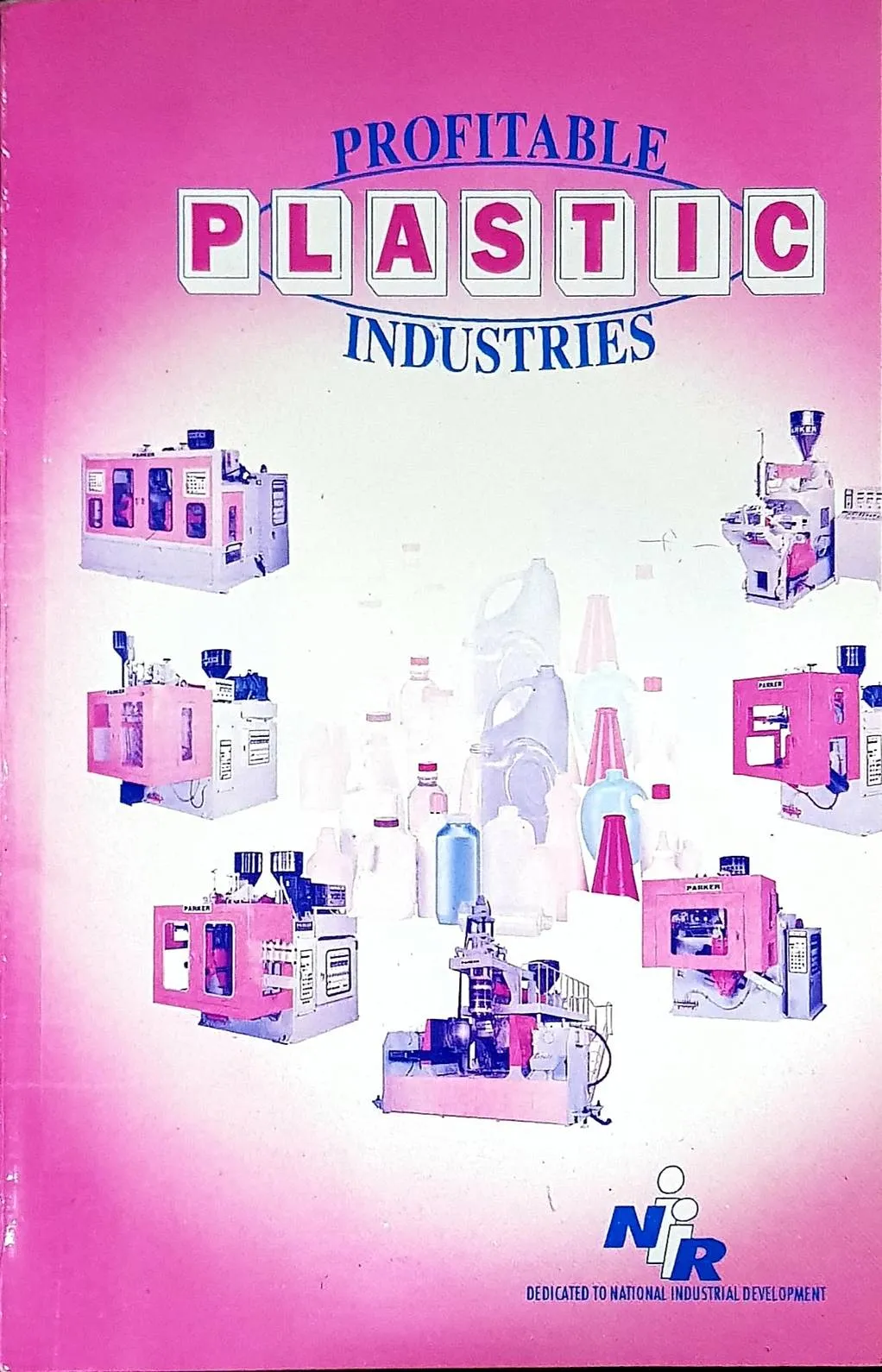
|
Author NIIR Board |
ISBN 818662323X |
|
Code NI24 |
Format paperback |
|
Price: Rs ₹250 |
US$ $50 |
|
Publisher National Institute of Industrial Research |
Usually Ships within 5 |
|
Author NIIR Board of Consultants & Engineers |
ISBN 8178330113 |
|
Code NI182 |
Format paperback |
|
Price: Rs ₹1175 |
US$ $125 |
|
Publisher Asia Pacific Business Press Inc. |
Usually Ships within 5 |
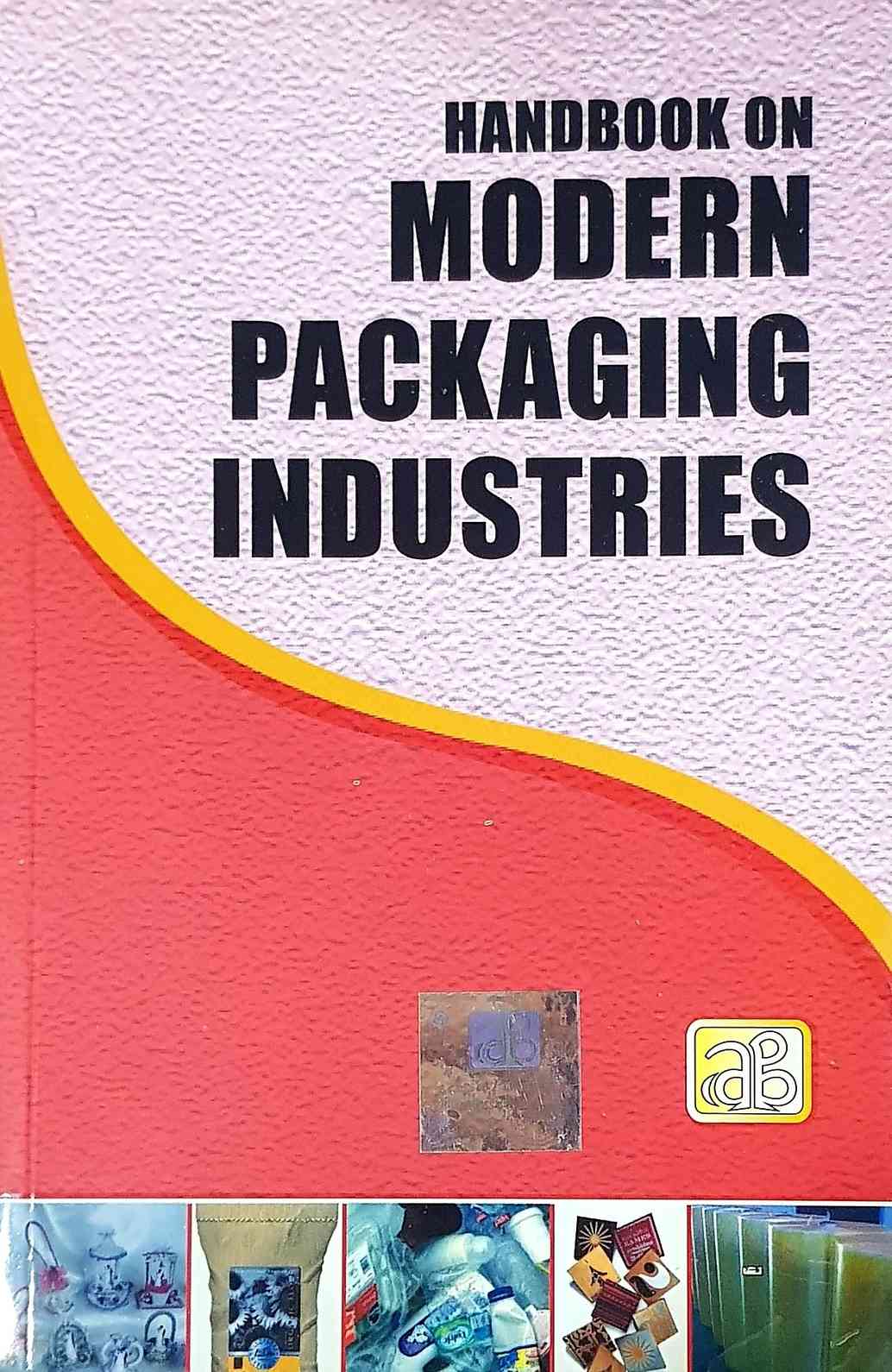
|
Author NIIR Board |
ISBN 9788178330860 |
|
Code NI72 |
Format paperback |
|
Price: Rs ₹1675 |
US$ $150 |
|
Publisher Asia Pacific Business Press Inc. |
Usually Ships within 5 |
|
Author NIIR Board |
ISBN 8186623426 |
|
Code NI22 |
Format paperback |
|
Price: Rs ₹975 |
US$ $100 |
|
Publisher National Institute of Industrial Research |
Usually Ships within 5 |
|
Author NIIR Board of Consultants & Engineers |
ISBN 8178330008 |
|
Code NI172 |
Format paperback |
|
Price: Rs ₹975 |
US$ $100 |
|
Publisher Asia Pacific Business Press Inc. |
Usually Ships within 5 |
|
Author NPCS Board of Consultants & Engineers |
ISBN 9788178331232 |
|
Code NI219 |
Format paperback |
|
Price: Rs ₹1575 |
US$ $150 |
|
Publisher Asia Pacific Business Press Inc. |
Usually Ships within 5 |
Entrepreneur India, an Industrial monthly magazine on industrial development, technologies & project opportunities aims at simplifying the process of choosing the suitable project for investment.

Entrepreneur India - Copyright 2017-. All rights reserved.



