

NPCS has been helping entrepreneurs, startups, MSMEs, and industrial investors since 1992 with detailed project reports, feasibility studies, market research, and business consulting services across 50+ industries.
Jordan does not have oil or gas wealth to lean on, and that scarcity has quietly shaped one of the more resilient manufacturing bases in the Levant. Entrepreneurs scanning the region for business ideas often skip past Jordan for larger Gulf markets, yet the country's garment and pharmaceutical exporters have kept growing through years of regional turmoil.
That resilience is exactly what makes business opportunities in Jordan worth a closer look right now. The Kingdom holds free trade agreements with the United States, the European Union, and most Arab markets, giving locally made goods tariff-free access most competitors do not have.
This briefing walks through the market size, incentives, realistic costs, and near-term growth numbers behind starting a manufacturing business in Jordan today, from pharmaceuticals and garments to agro-processing and logistics.
Political stability sets Jordan apart from several of its neighbours, and that stability has translated into real export growth even during a volatile regional stretch. National exports reached US$13.3 billion in 2024, up 4.1% from the prior year, with early 2025 data showing a further 9% increase (Department of Statistics data).
Manufacturing has led that growth. Garment and apparel exports climbed from just JD80 million in 2000 to roughly JD1.8 billion in 2024, a trajectory the Jordan Chamber of Industry calls a landmark performance for the sector (industry association data).
|
Pharmaceutical exports rose 14.8% year on year to reach JD611 million in 2024, and preliminary 2025 data shows continued double-digit growth, making pharma one of the fastest-expanding manufacturing categories in the Kingdom (Department of Statistics, industry data). |
Trade access explains much of this momentum. The Jordan-US Free Trade Agreement and Qualifying Industrial Zone program let Jordanian-made goods enter the United States duty-free, a benefit few manufacturing hubs in the region can match, and one directly built into investment incentives in Jordan under the current Investment Environment Law.
Demand pulls from three directions: US and EU apparel buyers sourcing under preferential trade terms, regional pharmaceutical markets served from Jordan's generics base, and a domestic construction and food sector still importing a large share of its inputs.
The garment sector alone employs about 90,000 workers, including 29,000 Jordanians, and generates a value-add rate of roughly 42%, meaning every dinar of production adds more than 42 fils directly to GDP (Jordan Chamber of Industry data).
Pharmaceutical manufacturers export to more than 70 countries from a domestic base built on generics, biosimilars, and contract manufacturing, serving both GCC markets and price-sensitive markets across Africa and Asia (industry value-chain data).
Food processing and agro-exports are earning fresh attention too, with olive oil, dried fruit, purees, and essential oils increasingly packaged for GCC and EU shipment using refrigerated containment, capitalising on Jordan's organic and specialty-crop reputation.
Jordan's current framework, the Investment Environment Law No. 21 of 2022, replaced the older 2014 Investment Law and still runs alongside Income Tax Law No. 34 of 2014 as amended. Together they set the incentive structure investors work within today.
Companies operating inside one of Jordan's 14 Development Zones pay just 5% income tax on manufacturing income where local value added reaches 30% or more, and 10% on other qualifying activities, alongside a zero-rate general sales tax on inputs (national investment law).
Outside development zones, projects that employ at least 250 Jordanians qualify for a four-year full income tax exemption plus a 50% reduction the following year. Industrial projects in less-developed regions can secure a reduction of income tax ranging from 40% to 100%, tiered by region group under Regulation No. 44 of 2016 (Ministry of Investment data).
Free Zone Companies get a separate deal: full income tax exemption on profits from exporting goods and services outside Jordan, zero-rate sales tax, and duty-free import of construction materials and equipment, run through six public free zones led by the Zarqa Free Zone.
A 2026 Cabinet-approved package of amendments to the Investment Environment Regulation aims to cut standard approval timelines to 20-40 business days, with an expedited track for renewables, digital economy, and healthcare projects (Jordan News Agency data).
Jordan's economy grew 2.5% in 2024 and is projected to reach 2.6% in 2025 and 2.9% in 2026, according to IMF Regional Economic Outlook estimates, with growth expected to climb toward 3% by 2030 on the back of fiscal and structural reforms.
The IMF specifically flagged lower global commodity prices, a tourism rebound, stronger remittance inflows, and improved agricultural output as key tailwinds behind this recovery path for oil-importing economies like Jordan.
Manufacturing exports are diversifying beyond legacy commodities. The number of export destinations receiving over JD100 million in Jordanian industrial goods grew from 9 markets in 2019 to 13 in 2025, driven by pharmaceuticals, chemicals, value-added food processing, and packaging (Jordan News Agency data).
The table below tracks Jordan's real GDP growth alongside manufacturing export trends, with a forecast to 2035 built on a stated growth assumption.
|
Year |
Real GDP growth |
Manufacturing export trend |
Notes |
|
2023 |
3.1% |
Apparel and pharma expanding |
Resilient growth despite regional shocks (Wikipedia/national data) |
|
2024 |
2.5% |
Exports up 4.1% to US$13.3bn |
Garments (JD1.8bn) and pharma (JD611m) lead (DoS data) |
|
2025 (F) |
2.6% |
H1 exports up 9% YoY |
Continued diversification into 13+ major markets (IMF, JNA data) |
|
2026 (F) |
2.9% |
modest growth (est.) |
IMF forecast, tourism and remittance-driven recovery |
|
2030 (F) |
3.0% (est.) |
steady growth (assumption) |
IMF medium-term projection |
|
2035 (F) |
3.0-3.5% (assumption) |
accelerating (assumption) |
Assumed CAGR under Economic Modernization Vision 2029 follow-through |
Projecting Jordan's manufacturing base to 2035 requires a stated assumption, since most official forecasts stop around 2030. Using a moderated GDP growth path of roughly 3-3.5% a year beyond 2030, non-mineral manufacturing exports could plausibly double their current value by the mid-2030s if apparel and pharma keep their present growth pace (assumption, based on stated trend).
Jordan's Economic Modernization Vision already runs to 2029, with 182 initiatives across 25 sectors targeting a direct economic impact of billions of dinars, and a follow-on phase widely expected to extend priorities toward 2035 (national vision documents).
The clearest swing factor remains regional stability. Jordan's garment sector, in particular, depends heavily on Red Sea shipping routes and a single dominant export market in the United States, both of which have shown vulnerability to regional disruption in recent years (industry trade analysis).
Jordan runs a persistent trade deficit, importing far more than it exports, largely due to crude oil, petroleum products, and machinery purchases that topped JD1.755 billion and JD1.093 billion respectively through August 2025 (Department of Statistics data).
That import bill signals clear substitution openings in machinery components, packaging, and food processing inputs. Meanwhile, Jordan's export side keeps strengthening: garments alone brought in JD1.6 billion in the first eight months of 2025, with pharmaceuticals up 5.9% to JD398 million over the same period.
For a new entrant, the clearest opening sits in export-oriented manufacturing feeding US and EU buyers under existing trade preferences, rather than competing in Jordan's small domestic consumer market alone.
A mix of large exporters and state-linked institutions anchor Jordan's priority manufacturing sectors. New entrants can study their positioning before choosing a niche.
|
Company / Institution |
Specialisation / Region |
|
Classic Fashion Apparel Industry |
Leading MENA garment manufacturer, contributing over 30% of Jordan's garment exports |
|
Hikma Pharmaceuticals |
Major generics and pharmaceutical manufacturer with global export reach from Amman |
|
Jordan Chamber of Industry |
National industry association supporting manufacturers across textiles, pharma and food |
|
Zarqa Free Zone operators |
Trade and re-export hub, largest of Jordan's six public free zones |
|
Aqaba Special Economic Zone Authority (ASEZA) |
Special economic zone covering port logistics, industry and tourism at Aqaba |
|
Jordan Industrial Estates Corporation (JIEC) |
State body overseeing industrial estates at Sahab, Al-Hussein and Al-Karak |
|
National Petroleum Company |
Domestic gas exploration operator, seeking partners for the Risha Gas Field |
|
Jordan Investment Commission (Ministry of Investment) |
National one-stop investment authority administering incentives nationwide |
Three factors support Jordan's manufacturing decade ahead: durable trade access to the US and EU, a stated government push to double down on pharma, chemicals, and food processing, and a young, English-proficient, college-educated workforce still underutilised in the formal economy.
The Economic Modernization Vision explicitly names logistics, ICT, chemicals, mining, healthcare, and real estate as priority sectors, giving founders a clear policy signal to build against through 2029 and likely beyond.
For a founder weighing Jordan against other Levant or Gulf markets, its free trade network, low development-zone tax rates, and proven pharma and garment export base make it one of the more dependable manufacturing bases in the region right now.
|
We would tell any founder scouting Jordan to register inside a development zone from day one rather than retrofitting later, since the 5% manufacturing tax rate and zero-rate input costs meaningfully change project economics, especially for export-oriented ventures. |
Investment requirements vary by sector, scale and zone eligibility. The table below gives indicative ranges for common entry points, in Jordanian dinars (JOD) with approximate US dollar equivalents.
|
Business Type |
Approx. Investment Range (JOD) |
Approx. USD Equivalent |
Notes |
|
Small garment/apparel workshop |
JOD 150,000-600,000 |
US$212,000-846,000 |
Eligible for QIZ/FTA duty-free US market access |
|
Food/agro-processing unit |
JOD 100,000-400,000 |
US$141,000-564,000 |
Targets GCC and EU specialty export demand |
|
Pharmaceutical contract manufacturing line |
JOD 1-5 million |
US$1.4-7 million |
High regulatory bar via JFDA, strong export upside |
|
Light engineering/packaging unit |
JOD 200,000-800,000 |
US$282,000-1.1 million |
Feeds growing machinery and packaging import substitution |
|
Development-zone manufacturing facility (Sahab/Zarqa) |
JOD 500,000-3 million |
US$705,000-4.2 million |
Qualifies for 5% income tax if local value added exceeds 30% |
|
Logistics/warehousing facility (Aqaba) |
JOD 300,000-2 million |
US$423,000-2.8 million |
Aligned with Aqaba's port and free zone infrastructure |
Garment manufacturing, pharmaceutical contract production, food and agro-processing, and light packaging are strong starting points, since all three build on Jordan's existing export infrastructure and trade preferences rather than competing solely in the small domestic market.
Register through the Jordan Investment Commission's Investment Window, decide whether to locate inside a development zone or free zone for tax purposes, and confirm sector-specific licensing requirements with the relevant regulator, such as the JFDA for pharmaceuticals.
A small garment workshop typically starts between JOD 150,000 and JOD 600,000, while a development-zone manufacturing facility near Sahab or Zarqa can run from JOD 500,000 to JOD 3 million depending on scale and equipment.
Development-zone manufacturers pay just 5% income tax where local value added reaches 30%, projects employing 250 or more Jordanians get a four-year full tax exemption, and less-developed regions offer additional reductions of 40% to 100% under Regulation No. 44 of 2016.
Yes, in most sectors non-Jordanians can hold up to 100% ownership under the Investment Environment Law, though certain strategic sectors carry ownership caps or additional licensing requirements investors should confirm before registering.
Yes, given duty-free access to the US market through the Jordan-US FTA and QIZ program, a pharmaceutical sector growing exports by double digits, and a government actively streamlining approval timelines in 2026, though new entrants should budget for regional shipping disruption risk.
Heavy dependence on Red Sea shipping routes for garment exports, a persistent trade deficit driven by energy imports, high unemployment near 21%, and a small domestic consumer market are the risks that come up most often in investment climate assessments.
Standard registration through the Investment Window typically takes a matter of weeks, and the 2026 regulatory amendments aim to cut standard applications to 20-40 business days, with a faster track for renewables, digital economy and healthcare projects.
Sahab and Zarqa suit manufacturing thanks to established development-zone infrastructure near Amman, while Aqaba's special economic zone and port access make it the stronger fit for logistics, warehousing and re-export businesses.
The Jordan Investment Commission's Investment Window offers hands-on registration support, while sector associations such as the Jordan Chamber of Industry provide market data and export guidance, alongside development-bank and donor-backed SME credit lines active in the market.
A pharmaceutical contract manufacturing line typically requires JOD 1 million to JOD 5 million, reflecting the country's strict Jordan Food and Drug Administration licensing standards and the equipment needed to meet export-market regulatory requirements.
Jordan is not a market to enter chasing size; it is a market to enter for access. A small domestic economy paired with duty-free entry into the US and EU creates real openings in garments, pharmaceuticals, food processing, and light manufacturing.
For entrepreneurs willing to register inside a development or free zone, align with existing trade preferences, and plan around regional shipping risk, Jordan offers one of the more dependable, policy-backed manufacturing bases in the Middle East heading into 2026.
Please choose a project below related to this category.

Industrial-grade metal applications have grown immensely to develop the power transfer systems, electric vehicle production, renewable energy systems,...
|
Capacity : Copper Cathode: 2100 MT Per Annum Copper Slag, Residue: 135 MT Per Annum |
Plant and Machinery cost: 649 |
|
Working Capital : N/A |
Rate of Return (ROR): 29 |
|
Break Even Point (BEP): 57 |
TCI :
|
|
Cost of Project : 1536 |
The rapid changes in the renewable energy sector present many opportunities for starting new businesses in the manufacturing of Monocrystalline Solar...
|
Capacity : 4 Mw Per Day |
Plant and Machinery cost: 13570 |
|
Working Capital : N/A |
Rate of Return (ROR): 28 |
|
Break Even Point (BEP): 47 |
TCI :
|
|
Cost of Project : 20737 |
The fiberglass composite see-through LPG cylinders are set to revolutionize the LPG industry. They also provide the invaluable benefit of safety by al...
|
Capacity : 2,000 Nos. Per Day |
Plant and Machinery cost: 10100 |
|
Working Capital : N/A |
Rate of Return (ROR): 25 |
|
Break Even Point (BEP): 40 |
TCI :
|
|
Cost of Project : 13600 |
The rise in demand for lithium-ion batteries has created a new set of challenges in battery recycling for electric vehicles, smartphones, and solar en...
|
Capacity : Black Mass: 4,200 MT Per Annum Lithium: 3 MT Per Annum Cobalt: 9 MT Per Annum Nickel: 12 MT Per Annum |
Plant and Machinery cost: 434 |
|
Working Capital : N/A |
Rate of Return (ROR): 31 |
|
Break Even Point (BEP): 55 |
TCI :
|
|
Cost of Project : 1150 |
The healthcare sector in India is undergoing a revolutionary shift. With rising incomes, increased health awareness, and supportive government policie...
|
Capacity : 275 Beds |
Plant and Machinery cost: 9700 |
|
Working Capital : N/A |
Rate of Return (ROR): 20 |
|
Break Even Point (BEP): 43 |
TCI :
|
|
Cost of Project : 27200 |
In the ever-evolving landscape of the electrical and power generation sector, power transformers remain a critical component for effective energy tran...
|
Capacity : Power Transformers (132/33KV, 10000KVA Core Type Oil Cooled): 120 Nos Per Annum |
Plant and Machinery cost: 111 |
|
Working Capital : N/A |
Rate of Return (ROR): 33 |
|
Break Even Point (BEP): 73 |
TCI :
|
|
Cost of Project : 289 |
Curcumin, the bioactive compound found in turmeric, has emerged as a high-demand ingredient across industries such as pharmaceuticals, nutraceuticals,...
|
Capacity : Curcumin Powder: 25 Kgs Per Day Turmeric Oil: 25 Kgs Per Day Deoiled Turmeric: 463 Kgs Per Day |
Plant and Machinery cost: 120 |
|
Working Capital : N/A |
Rate of Return (ROR): 30 |
|
Break Even Point (BEP): 63 |
TCI :
|
|
Cost of Project : 240 |
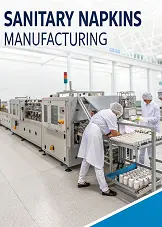
Adhesive sanitary napkins are a basic consumer item that is directly linked to the health, dignity, and productivity of women, and, of course, the bas...
|
Capacity : 90,000 Pkts. Per Day |
Plant and Machinery cost: 378 |
|
Working Capital : N/A |
Rate of Return (ROR): 31 |
|
Break Even Point (BEP): 54 |
TCI :
|
|
Cost of Project : 894 |
Chemically, sodium chlorite has the formula NaClO2. It is a white, crystalline material that is non-flammable and odourless. It is employed in industr...
|
Capacity : Sodium Chlorite (NaClO2: 15 MT Per Day |
Plant and Machinery cost: 567 Lakhs |
|
Working Capital : - |
Rate of Return (ROR): 26.00 |
|
Break Even Point (BEP): 48.00 |
TCI : Cost of Project: 1892 Lakhs |
|
Cost of Project : 189200000 |
A plug-in hybrid electric vehicle (PHEV) is an HEV that can be plugged-in or recharged from wall electricity. PHEVs are distinguished by much larger b...
|
Capacity : 50 Nos./day |
Plant and Machinery cost: 95 lakhs |
|
Working Capital : - |
Rate of Return (ROR): 34.00 |
|
Break Even Point (BEP): 74.00 |
TCI : Cost of Project: Rs 279 lakhs |
|
Cost of Project : 27900000 |
Detergent Cake and Detergent Powder Manufacturing Industry. Start a Washing Powder and Cake Business Detergent is a blend of surfactants with cleanin...
|
Capacity : - |
Plant and Machinery cost: - |
|
Working Capital : - |
Rate of Return (ROR): 1.00 |
|
Break Even Point (BEP): 0.00 |
TCI : - |
|
Cost of Project : 0 |
Hybrid Electric Scooter Assembling Business. Electric Vehicles (EVs) Industry. Business Opportunities in Electric Two-Wheelers Manufacturing Industry...
|
Capacity : - |
Plant and Machinery cost: - |
|
Working Capital : - |
Rate of Return (ROR): 1.00 |
|
Break Even Point (BEP): 0.00 |
TCI : - |
|
Cost of Project : 0 |

Entrepreneur India, an Industrial monthly magazine on industrial development, technologies & project opportunities aims at simplifying the process of choosing the suitable project for investment.

Entrepreneur India - Copyright 2017-. All rights reserved.



