

NPCS has been helping entrepreneurs, startups, MSMEs, and industrial investors since 1992 with detailed project reports, feasibility studies, market research, and business consulting services across 50+ industries.
Three forces are converging here: lightweighting, decarbonisation, and import substitution. Automakers need lighter components to hit emission targets. Wind energy developers need longer, stronger turbine blades. Defence and aerospace programmes need composites that resist fatigue at a fraction of the weight of steel or aluminium. As a result, demand keeps climbing across sectors that rarely slow down together.
India, however, still lacks large-scale domestic carbon fiber production. Most manufacturers here work with imported tow and prepreg, which pushes up landed cost and lead time. Therefore, a business built around composite fabrication, prepreg conversion, or CFRP component manufacturing can undercut import-dependent competitors on both price and delivery. Profitability in this space comes less from producing raw carbon fiber, which needs heavy capital and technical know-how, and more from downstream conversion: fabric weaving, resin infusion, moulding, and finished CFRP parts for automotive, sporting goods, and industrial end users.
Cost economics also favour new entrants who choose the right entry point. A raw carbon fiber precursor plant demands specialised furnaces, oxidation lines, and years of process tuning before yields stabilise. A fabric weaving or CFRP moulding unit, by contrast, can be operational within months using proven machinery, standard resin systems, and semi-skilled labour trained on the job. That shorter runway matters for entrepreneurs who want revenue sooner rather than later.
Policy support for advanced materials has strengthened considerably. The Production Linked Incentive (PLI) scheme for specialty steel and the broader push under Atmanirbhar Bharat both favour import substitution in high-performance materials, and carbon fiber composites fit squarely into that goal. Meanwhile, the Ministry of Heavy Industries' Automotive Mission Plan runs through 2047 and specifically targets a 30 percent rise in auto and auto-component exports by 2030, which directly benefits lightweight composite component makers.
MSME entrepreneurs can also tap into Credit Guarantee Fund Trust for Micro and Small Enterprises (CGTMSE) collateral-free loans, the MSME Champions scheme for technology upgradation, and Startup India tax and compliance benefits if the venture qualifies as an early-stage company. Several state industrial policies, including those in Gujarat, Maharashtra, and Karnataka, offer capital subsidy and stamp duty relief for advanced manufacturing units, which composite and CFRP plants typically qualify for.
Global demand for carbon fiber has grown steadily on the back of aerospace recovery, automotive lightweighting mandates, and wind energy expansion. Asia Pacific now holds the largest regional share, driven by rising automotive and infrastructure activity in India, China, and Southeast Asia. Within end-use industries, aerospace and defence remain the highest-value segment, while industrial applications such as pressure vessels, cable cores, and construction reinforcement are growing the fastest by volume.
India's growth curve looks even steeper than the global average, though it starts from a much smaller base. New domestic capacity, expanding prepreg and fabric manufacturing, and rising defence indigenisation are pulling demand forward. As DRDO and private players build lightweight platforms using carbon composites, downstream fabricators stand to gain the most, since India still has very limited raw fiber production of its own.
Industry estimates place the global carbon fiber market at roughly USD 7.06 billion, expanding at an assumed CAGR of about 11.7 percent through 2032, which would take the market to approximately USD 19.16 billion. Some forecasts using a slightly different base year and a CAGR near 11.4 percent arrive at a comparable figure of around USD 16 billion by 2032, so the range broadly holds regardless of which base year a report uses.
On the domestic side, the Indian carbon fiber market was estimated at around USD 31.5 million, with a reported CAGR near 22.3 percent through 2030. Extending that same growth assumption two years further, out to 2032, would put the Indian market in the range of USD 205 to 215 million. These are report-based estimates and assumptions, not guaranteed outcomes, so treat the CAGR figures as planning inputs rather than fixed targets when you build your own project financials.
India currently imports the bulk of its carbon fiber tow from suppliers in Japan, South Korea, and the United States, since domestic raw fiber capacity remains thin. This creates two distinct openings. First, import substitution: any unit that can convert imported tow into fabric, prepreg, or finished CFRP parts locally saves customers on freight, duty, and lead time. Second, export potential: Indian labour and manufacturing costs remain competitive, so composite component exporters serving automotive and sporting goods buyers in Europe and Southeast Asia can price aggressively while still protecting margins.
Global players such as Toray, Hexcel, and Toho Tenax continue to expand capacity, which signals confidence in long-term demand. However, that also means new Indian entrants should focus on niche, high-margin conversion rather than competing head-on in commodity raw fiber production, where capital intensity and technology barriers are steep.
Component exporters also benefit from proximity advantages. Automotive OEMs in Europe and Southeast Asia are actively looking to diversify suppliers away from single-country sourcing, and Indian manufacturers with ISO-certified quality systems are well placed to win that business, provided they can demonstrate consistent batch quality and on-time delivery.
Several structural trends support long-term growth here. Electric vehicle makers need lighter chassis and battery enclosures to offset battery weight. Wind turbine blades keep getting longer, and longer blades need stiffer, lighter reinforcement. Sporting goods, from cricket bats to bicycle frames, are shifting toward composite construction for performance branding. Meanwhile, recycled carbon fiber is emerging as its own sub-segment, projected to grow at a double-digit CAGR through 2032, which opens a lower-capital entry point for units focused on reclaiming and reprocessing composite waste.
Put together, this is a sector where demand growth, policy tailwinds, and import substitution logic all point the same direction. Timing favours entrants who move now, while India's domestic capacity base is still small enough that new units can capture meaningful market share instead of fighting over margins in an already crowded field.
|
Parameter |
Base Year Estimate |
Assumed CAGR |
Projected by 2032 |
|
Global Carbon Fiber Market Size |
USD 7.06 Billion |
11.7% |
USD 19.16 Billion |
|
India Carbon Fiber Market Size |
USD 31.5 Million |
22.3% |
USD 205-215 Million (est.) |
|
Typical Plant Investment (Small-Mid CFRP Unit) |
INR 4-8 Crore |
Assumption |
Scales with capacity added |
|
Raw Carbon Fiber Precursor Cost (PAN-based) |
INR 1,800-2,400/kg |
Assumption |
Subject to crude/energy pricing |
|
Aerospace & Defense Segment CAGR |
Base year varies |
10.6% |
Fastest-value growth segment |
Note: Figures above are compiled from published industry market research reports and NPCS project consulting estimates. Investment and raw material figures are indicative assumptions for planning purposes; actual project cost depends on capacity, location, technology, and machinery selection.
Is carbon fiber manufacturing viable for a small or mid-size Indian entrepreneur?
Yes, provided you enter at the conversion or fabrication stage rather than raw fiber production. Weaving, prepreg conversion, and CFRP moulding units need far less capital than a carbon fiber precursor plant and still serve strong demand.
What is the minimum investment needed to start a CFRP component unit?
A small to mid-size CFRP fabrication unit typically needs an investment in the range of INR 4 to 8 crore, covering machinery, moulds, and working capital, though this varies with product mix and automation level.
Which industries buy the most carbon fiber composite products in India?
Automotive, wind energy, defence, sporting goods, and industrial equipment are the largest buyers. Automotive and wind energy are growing the fastest by volume.
Does India produce raw carbon fiber, or is it all imported?
India has very limited domestic raw carbon fiber production. Most manufacturers import tow from Japan, South Korea, and the United States, which is exactly why downstream conversion businesses have room to grow.
What government support is available for a carbon fiber composites business?
Entrepreneurs can access CGTMSE collateral-free loans, MSME technology upgradation schemes, Startup India benefits for eligible entities, and state-level capital subsidies for advanced manufacturing, alongside the broader push under the PLI framework for specialty materials.
How do I get a detailed project report for a carbon fiber or CFRP unit?
A Detailed Project Report should cover capacity selection, machinery list, raw material sourcing, manpower, project cost, and profitability projections specific to your target product line, since carbon fiber weaving, prepreg conversion, and CFRP moulding all carry very different cost structures.
Carbon fiber and CFRP manufacturing sit at a genuinely useful intersection of policy support, structural demand growth, and India's own import dependence. The raw fiber segment remains capital-heavy and best left to established global players. However, conversion, fabrication, and finished composite component manufacturing offer a realistic entry point for MSMEs and first-generation entrepreneurs, particularly those willing to serve automotive, wind energy, or defence supply chains. With demand curves pointing upward through 2032 across every major forecast, this is a sector worth evaluating with a proper feasibility study before the window of easy entry narrows.
Please choose a project below related to this category.

Carbon Fiber Reinforced Polymer (CFRP) has transformed beyond just a material for aerospace labs into a booming industrial contender. CFRP boasts a un...
|
Capacity : 5,000 Kgs Per Day |
Plant and Machinery cost: 2973 |
|
Working Capital : N/A |
Rate of Return (ROR): 29 |
|
Break Even Point (BEP): 46 |
TCI :
|
|
Cost of Project : 4273 |
In the race for advanced materials that are lightweight, ultra-strong, and performance-driven, carbon fibre stands out as a clear winner. Once used on...
|
Capacity : Project Capacity:10,00,000 Kg Per Annum |
Plant and Machinery cost: 6500 |
|
Working Capital : N/A |
Rate of Return (ROR): 30 |
|
Break Even Point (BEP): 54 |
TCI :
|
|
Cost of Project : 1700 |
Aluminium billets, when produced from recycled scrap, balance the increasing demand for downstream infrastructures like extrusion for EVs, building, s...
|
Capacity : Aluminium Billets:1,200 MTPA, Aluminium Dross by Product:54 MTPA |
Plant and Machinery cost: 274 |
|
Working Capital : N/A |
Rate of Return (ROR): 31 |
|
Break Even Point (BEP): 61 |
TCI :
|
|
Cost of Project : 730 |
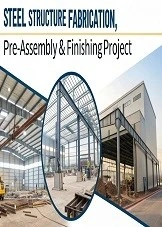
The industrial steel structure fabrication industry is direct at the intersection of building our cities and fuelling our industrialization. It is a h...
|
Capacity : PEB Components, Crash Barriers, Transmission Towers, Steel Gates, Grills & Railings: All 500 MTPD. |
Plant and Machinery cost: 1500 |
|
Working Capital : N/A |
Rate of Return (ROR): 35 |
|
Break Even Point (BEP): 39 |
TCI :
|
|
Cost of Project : 18700 |
The market for industrial pumps worldwide is flourishing, and Air Operated Double Diaphragm (AODD) Pumps are leading the way as highly versatile fluid...
|
Capacity : Metallic AODD Pump (100 to 500LPM): 4 Nos. PD, Non - Metallic AODD Pump (100 to 500LPM): 4 Nos. PD |
Plant and Machinery cost: 16 |
|
Working Capital : N/A |
Rate of Return (ROR): 30 |
|
Break Even Point (BEP): 56 |
TCI :
|
|
Cost of Project : 126 |
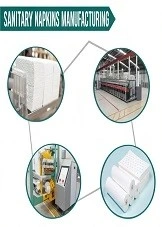
The field of feminine hygiene is a very vibrant space where new ventures and start-ups have a wide scope of making a real difference in society, besid...
|
Capacity : 30,000 Pkts. Per Day |
Plant and Machinery cost: 371 |
|
Working Capital : N/A |
Rate of Return (ROR): 29 |
|
Break Even Point (BEP): 51 |
TCI :
|
|
Cost of Project : 607 |
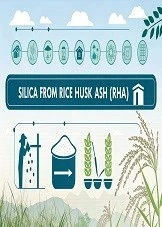
The manufacturing sector is transforming as many industry players are beginning to tap into the potential of agro waste. Among the many possible oppor...
|
Capacity : Silica: 3,000 MTPA, Activated Carbon (by product): 330 MTPA, Sodium Carbonate (by product): 495 MTPA |
Plant and Machinery cost: 1300 |
|
Working Capital : N/A |
Rate of Return (ROR): 29 |
|
Break Even Point (BEP): 46 |
TCI :
|
|
Cost of Project : 2000 |

Currently, in the context of green entrepreneurship and the circular economy, the processing of eggshells into a powder represents a promising idea fo...
|
Capacity : 5 MT Per Day |
Plant and Machinery cost: 16 |
|
Working Capital : N/A |
Rate of Return (ROR): 29 |
|
Break Even Point (BEP): 52 |
TCI :
|
|
Cost of Project : 226 |

The plywood industry is one of the fastest-growing sectors in the global construction and furniture markets, with the India Plywood Market valued at I...
|
Capacity : Screen Ink: 1,000 Kgs Per Day Roller Ink: 1,000 Kgs Per Day |
Plant and Machinery cost: 57 |
|
Working Capital : 0 |
Rate of Return (ROR): 27 |
|
Break Even Point (BEP): 61 |
TCI :
|
|
Cost of Project : 240 |
A Carbon Fiber is a fibrous carbon material having a micro graphite crystal structure made by fibrillation of Acrylic resin, a well-known textile mate...
|
Capacity : 300,000 Kgs/Annum |
Plant and Machinery cost: Rs 111 lakhs |
|
Working Capital : - |
Rate of Return (ROR): 27.00 |
|
Break Even Point (BEP): 61.00 |
TCI : Cost of Project : Rs 451 lakhs |
|
Cost of Project : 45100000 |
Carbon fibers have been under continuous development for the last 50 years. The properties of carbon fibers, such as high stiffness, high tensile stre...
|
Capacity : Carbon Fibre: 1000 Kgs/Day |
Plant and Machinery cost: Rs 173 Lakhs |
|
Working Capital : - |
Rate of Return (ROR): 27.00 |
|
Break Even Point (BEP): 57.00 |
TCI : Cost of Project: Rs 543 Lakhs |
|
Cost of Project : 54300000 |
Carbon fiber is composed of carbon atoms bonded together to form a long chain. The fibers are extremely stiff, strong, and light, and are used in many...
|
Capacity : 1 MT/Day. |
Plant and Machinery cost: Rs.70 Lakhs |
|
Working Capital : - |
Rate of Return (ROR): 31.00 |
|
Break Even Point (BEP): 60.00 |
TCI : Cost of Project:Rs.544 Lakhs. |
|
Cost of Project : 54400000 |

Entrepreneur India, an Industrial monthly magazine on industrial development, technologies & project opportunities aims at simplifying the process of choosing the suitable project for investment.

Entrepreneur India - Copyright 2017-. All rights reserved.



