






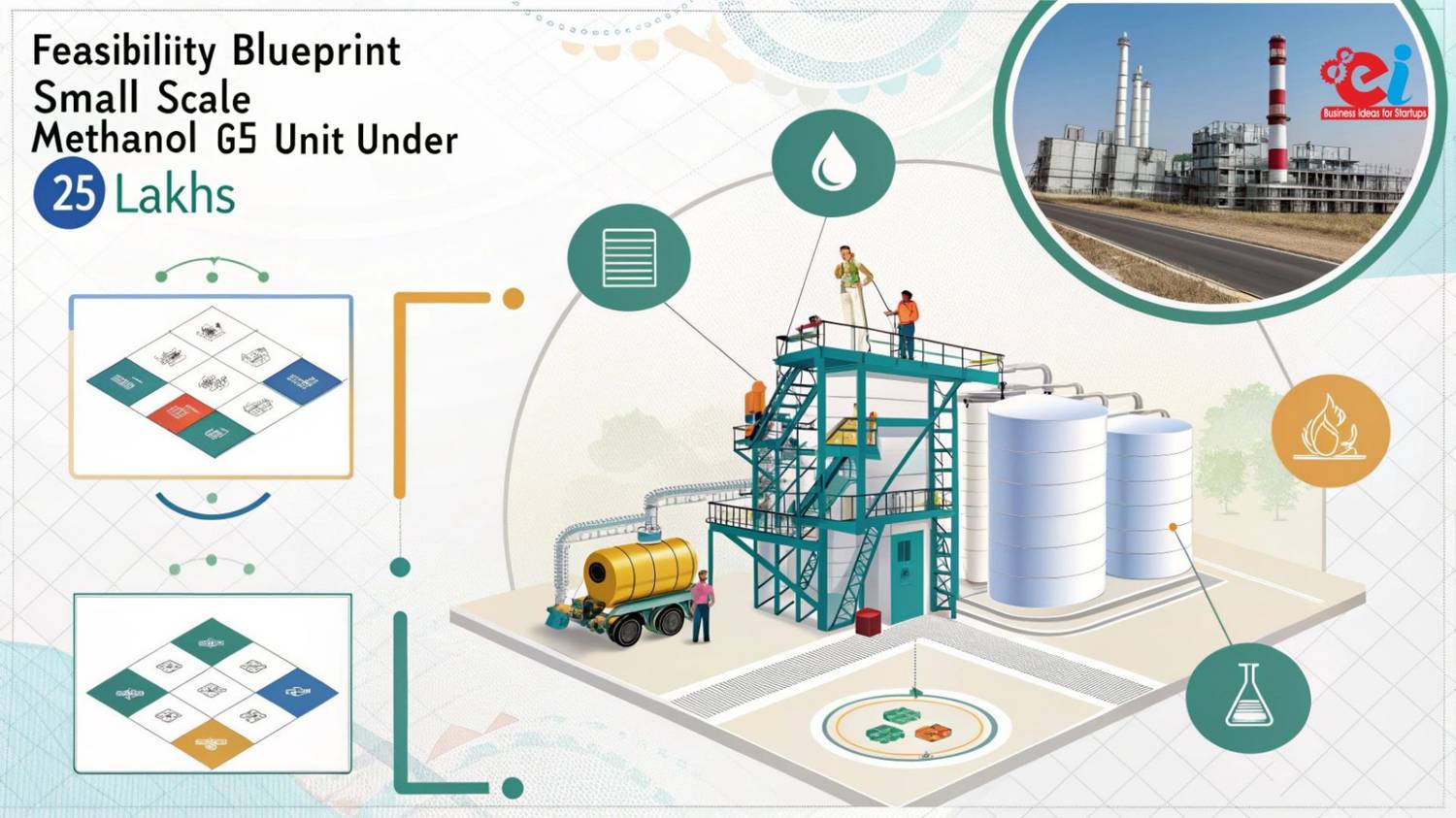
The energy sector of India is changing. While the country progresses in its journey to integrate clean and decentralized energy systems, alternative fuels such as methanol based fuel gel are rapidly emerging. Methanol gel is emerging as a cost-efficient answer for rural cooking, urban emergency heating, and even for the hospitality sector, as it is safer and cleaner than traditional fuels kerosene, firewood, and even LPG. This shift is a great blessing for medium and small entrepreneurs because it allows them to invest a meager sum of ₹25 lakhs to build a methanol fuel gel manufacturing unit and capitalize on a growing market.
Fuel methanol gel is very simple to produce and could help an individual meet India’s targets of clean fuel accessibility, lowering greenhouse emissions, and fostering self-employment opportunities in the MSME sector. Be it the rural energyless pockets of India, home gardeners from urban regions or institutional customers in relief, tourism, and catering, methanol gel can meet all their needs. With a shift towards low manufacturing cost sustainable development and decentralized production structures, the methanol fuel gel industry emerges as a premier option for aspiring entrepreneurs.
Comprehending the Product and Its Importance
A fuel gel is a type of methanol gel derived from a volatile alcohol called methanol. It is a semi-solid gel-like substance that burns cleanly with little to no harmful smoke. Fuel gel can also be viewed as safer than liquid fuels because of its lesser risks in terms of spills, leaks, and flare-ups. It also burns with a stable flame, has no strong odor, and does not require pressurized containers, which makes it perfect for compact use in households as well as in outdoors.
For the millions of people in India who struggle with finances, the methanol gel is more useful than ever. Over the years, the prices of LPG have increased, and even where subsidized LPG is available, recurring refill costs are often a financial burden on low income families. In these cases, methanol gel comes handy. It is affordable and comes in a refillable container that is safe to store and handle. Furthermore, it can be used in specially designed gel stoves or makeshift burners and requires little modification for traditional chulhas.
The use of methanol gel is not restricted to personal use. It is greatly employed in the hospitality sector for buffet warmers and camping equipment. During natural disasters, government relief agencies and non-governmental organizations depend on it for use in snacks during emergencies. It is carried by trekking and military units for use as portable heaters and cooking stoves. Its varied use in rural areas, along with commercial and academic institutions, makes it highly sought after as a readily available product throughout the year.
Business Opportunities and Prospects: “Methanol Economy” for India’s Industry
The encouragement of rural activities and work in India towards the diversification of energy sources have shifted attention towards alternative fuels. To fuel this, the government is looking to increase the use of methanol in transportation, cooking, and power generation as highlighted in NITI Aayog’s Roadmap on Economy of Methanol. While there are large scale projects aimed at blending methanol into petrol and diesel, the other uses of molten methanol, such as gelled fuel, are rising in popularity and simpler to develop and distribute.
The gel fuel made from methanol is becoming well-known in places where LPG is either difficult to reach or inconsistent. Large tribal and forested regions like Chhattisgarh, Odisha, Jharkhand, and some portions of Madhya Pradesh have become trial spots for the distribution of methanol gel, usually through self-help groups and NGOs. These projects demonstrate that the use of burners that are simple to operate methanol gels can lessen the use of firewood and charcoal, leading to improvements in health and better conservation of the environment.
Apart from rural India, the product is steadily in demand in urban areas. Street vendors, restaurants, and hotels all use chafing fuels to warm food, and methanol gel is the most preferred chafing fuel since it burns without odor and leaves no traces behind. There’s a sharp rise in portable cooking demolitions due to growing eco-resorts and tourism, which is clean-burning. E-commerce allows the marketing, which is user-friendly, of methanol gel online in pouches, jars, and refillable canisters, further expanding the market.
Methanol gel offers micro, small, and medium enterprises (MSME) manufacturers good profit margins with a production cost of ₹25–₹35 per kg and retail prices of ₹60 to ₹100 per kg. Its low competition, when compared to other energy products, is of great importance, especially in underserved districts where scope for branding, innovation, and regional dominance is available.
Sourcing and Raw Materials
Methanol gel is produced using easily accessible and storable ingredients. Methanol, the primary component, is procured from bulk chemical distributors and petrochemical companies across India. Its price varies between ₹28 to ₹40 per litre, depending on purity and volume.
Thickening agent or gelling compound is critical in transforming methanol from a liquid into a gel that can be handled safely. Carbopol is a polymer that gels stably when crosslinked with alcohol, which makes it a polymer of choice. Other options include hydroxypropyl cellulose, xanthan gum, or food-grade starches, as long as they meet the viscosity and budgetary requirements.
Other than methanol and the gelling agent, a small amount of deionized water may be added to improve texture. Certain producers opt to add colorant and fragrance to appeal to hospitality and urban camping markets. Although optional, these additions help in marketing the product as premium or user-friendly.
All precursors must be managed in the vicinity of a safety cabinet with adequate ventilation and appropriate protective equipment due to the methanol’s flammable vapors. The workstation must be equipped with fundamental first response equipment, such as fire extinguishers and fume extraction fans, to protect operators.
Designing the Workflow: Methanol Fuel Gel Manufacturing Process
The process of manufacturing methanol fuel gel is straightforward and appropriate for batch production considering it does not contain any high-pressure vessels, which is favorable for small-scale operations. Manufacturing begins by measuring specific amounts of methanol which is poured into a stainless steel mixing vessel, then capping it off with a gelling agent. During captain, gelling agents are slowly added to reduce the potential for clumping. Agitation of the mixture is maintained for 30–45 minutes where it is expected to form a homogenous gel.
In the next stage, optional fragrance or coloring can be added as well. The mixture possesses nciliated air bubbles which need to be vented to ensure a homogenous surface free of any texture. After achieving the required level of firmness and stability, the gel is placed in assorted containers for packaging. Depending on the targeted market, these containers can range from aluminum cups and refill pouches, to plastic tubs and small bottles.
The production cycle lies between four to six hours per batch, which allows for multiple small batches to be produced each day. This agile approach helps in controlling wastage, testing different product versions, and responding to customer feedback in a timely manner. Moreover, the machinery required is basic and can be procured inexpensively in industrial markets throughout India.
Financial Viability and Profit Margin
A small unit can produce approximately 250 kg of fuel gel per day at full capacity. So considering 25 working days in a month, the unit’s production escalates to 6,250 kg a month. Revenue on average in the market sells at the rate of ₹70 per kg, the revenue generated stands at ₹4.3 Lakhs. Now considering an average production cost of ₹47 per kg, the unit stands to make a gross profit of approximately ₹1.43 Lakhs per month.
With the figures highlighted above, the unit stands to be above ₹17 Lakhs which gross profit stands to be, puts the ROI above 70%. Calculated net profit margin, even after deducting taxes, loan interests, and depreciation stands to be 25 to 30%, which is termed as outstanding for a manufacturing business of this scale. The investment payback period is 15 months, which is bankable for government made MSME financing structure.
NPCS’s Part in Entrepreneur Support
Even though the methanol gel business is straightforward, NPCS has great relevance with work of legal aid supporting, safety measures, proper documentation, both procurement is strongly recommended handy, raw material procured, sought out the proper filling out documents, procedure, and strategizing artisition around the product. NPCS is a renowned industrial consulting firm Niir Project Consultancy Services that runs aid prepares detailed DPRs designed with thorough feasibility reports that every entrepreneur looks for, giving NPCS a diet of clients to choke on as each corner of India fill the needs growing making NPC one of NPCS’s few peers in the MSME project sector.
NPCS aids from scratch to finish – starting from concept verification, project finance planning, and site selection, all the way to machinery selection, plant layout, regulatory compliance, and market entry strategies. Their custom DPRs for methanol-based fuel gel include brand analysis alongside process workflows, costing sheets, profit modeling, risk analysis, and branding suggestions. Clients of NPCS have greater prospects for obtaining loans, investment capital, and government funding.
For a consultation, they can be reached at npcs.ei@gmail.com or visit their websites www.niir.org or www.entrepreneurindia.co.
Final Thought
From the perspective of a clean burning fuel, the Indian market is highly untapped and provides uncultivated areas brimming with opportunity. The entire country stands to boost its productivity prospects in conjunction with sustainable development. From the side of investment, methanol-based fuel gel has exceptional features like low capital burden alongside utility and safety. The scope of its application spans from the remote rural households to expensive luxury hotels, making it an attractive solution for many.
A small scale manufacturing gel set up can be initiated at an investment of under ₹25 lakhs. This enables the business to have high reward prospects without effluxing a massive capital. Ostensible government support, strong profit margins, and low operational risk render this business a seamless entry into the bounds of India’s clean energy sector. With NPCS involved, emerging entrepreneurs can guarantee an effortless transition from idea creation to practical implementation, realizing the prospects this great yet unexploited market holds.


