

NPCS has been helping entrepreneurs, startups, MSMEs, and industrial investors since 1992 with detailed project reports, feasibility studies, market research, and business consulting services across 50+ industries.
The Union of the Comoros is one of Africa's smallest economies — a three-island archipelago in the Indian Ocean with a nominal GDP of approximately USD 1.55 billion and a population of around 900,000. But small size and high economic development potential are not contradictory for entrepreneurs who understand how to identify niche commercial opportunities in frontier island markets. Comoros produces some of the world's highest-quality vanilla and ylang-ylang essential oil, holds extensive tuna fishing rights in productive Indian Ocean waters, and is positioning its pristine coral reef marine environment as an emerging tourism destination. For investors willing to engage with a challenging but distinctive market, Comoros offers business ideas with genuine global market connections — not just domestic market plays.
The World Bank's June 2025 Comoros Economic Update — titled "An Ocean of Opportunities" — explicitly frames the blue economy (fisheries, marine tourism, and conservation) as the transformative growth driver for Comoros. GDP grew 3.8% in 2025 (World Bank estimate), with industry growing 5.3% driven by construction linked to the Galawa Hotel, El-Maarouf Hospital reconstruction, and infrastructure for the 2027 Indian Ocean Island Games. These are real, documented growth catalysts — not aspirational projections.
Comoros occupies a specific market niche that few investors have systematically explored. Three commercial propositions stand out. First, ylang-ylang essential oil production: Comoros is the world's largest producer of ylang-ylang oil, supplying perfumers including Chanel (No. 5), Dior, and Guerlain. The global essential oils market is growing, and Comorian ylang-ylang commands premium pricing as a genuinely origin-specific ingredient. Essential oil manufacturing and export from Comoros combines an existing raw material supply chain with global luxury brand buyer relationships.
Comoros is the world's largest producer of ylang-ylang essential oil — supplying luxury perfumers including Chanel No. 5, Dior, and Guerlain. Total exports including cloves generated roughly USD 65 million in recent years. This is a niche with genuine global market connectivity and origin-specific premium pricing (various trade sources).
Second, vanilla and spice processing: Comoros is among the world's leading vanilla producers, alongside Madagascar and Tahiti. Raw vanilla commands global premium prices, but the margin capture opportunity lies in cured, processed, and packaged vanilla products. A vanilla processing and export business in Comoros benefits from existing production, quality heritage, and direct relationships with global food and fragrance buyers.
Comoros' most underappreciated commercial advantage is its Indian Ocean strategic position between East Africa, Madagascar, and the Arabian Peninsula. The country is a genuine marine biodiversity destination — Chumbe Island Coral Park model, but at archipelago scale — that sophisticated eco-tourism investors have barely explored. Development capital requirements are modest by any regional standard, and the competitive intensity is near-zero.
Third, marine tourism and blue economy services: The World Bank identifies the blue economy as Comoros' most transformative growth opportunity. The country's coral reefs, whale shark and sea turtle populations, and genuinely undiscovered status among international ecotourists create a first-mover opportunity for eco-resort developers, dive operators, and marine tourism service providers. The 2027 Indian Ocean Island Games — being actively prepared for with new hotel and infrastructure investment — will raise Comoros' international profile substantially.
Comoros' domestic consumer market is small — approximately 900,000 people, the majority in subsistence agriculture — but it is import-dependent for a wide range of goods. Rice, petroleum products, and consumer goods all arrive primarily from external markets. Diaspora remittances — approximately 24% of GDP — represent the economy's most reliable income stream and fund household consumption at levels above what domestic production alone would support.
Construction demand has been growing. The El-Maarouf Hospital reconstruction, Galawa Hotel development, and Indian Ocean Island Games infrastructure (all driving the 5.3% industry growth in 2025) have created demand for construction materials, MEP services, and building contractors. This infrastructure wave — modest by African mainland standards but significant relative to Comoros' size — is expected to sustain into 2027 and beyond as Games preparation continues.
Fishing is both a domestic food source and a major export industry. Comoros' Exclusive Economic Zone covers 327,600 square kilometers of productive Indian Ocean waters. Tuna — particularly skipjack, yellowfin, and bigeye — are present in commercial quantities and are currently harvested primarily by distant-water fishing fleets paying license fees. Fisheries processing and fish export business in Comoros provides an alternative to license-fee-only monetization of these resources, capturing value domestically.
The Comoros Investment Code (revised in recent years) provides the legal framework for private investment. Key incentives include: tax exemptions for qualifying investment projects (duration and scope vary by project scale), financial support schemes for priority investments, and streamlined registration for approved projects. The Investment Promotion Agency of Comoros facilitates investor liaison with government.
The Comoros Emerging Plan 2030 (PCE 2030) is the country's overarching development framework, identifying five strategic catalysts including strengthening institutional and governance frameworks, mobilizing domestic resources, and developing the private sector. PCE 2030 explicitly identifies tourism, fisheries, agriculture, and digital economy as priority sectors for investment and development.
Comoros is a member of the Indian Ocean Commission (IOC), COMESA, and the African Union. It has signed the AfCFTA. IOC membership provides access to Indian Ocean region trade facilitation programs and connects Comoros to regional economic integration frameworks with Madagascar, Mauritius, Réunion, Seychelles, and Maldives. COMESA membership extends trade preferences to 21 Eastern and Southern African countries.
The Comorian franc (KMF) is pegged to the Euro — which eliminates currency risk for European investors and provides monetary stability exceptional for a small island developing economy. The government of France provides guarantees underlying the peg, making it a structurally durable arrangement. For European fragrance, food, and tourism companies investing in Comoros, this EUR equivalence is a significant operational advantage.
The World Bank's June 2025 Economic Update projects a positive medium-term growth outlook for Comoros, driven by construction (Indian Ocean Island Games preparation), agriculture and fishing recovery, and nascent tourism expansion. The blue economy explicitly identified as the transformative sector — fisheries, marine tourism, and conservation — represents a category where Comoros has natural comparative advantage and almost no current commercial exploitation at scale.
The 2027 Indian Ocean Island Games represent a specific near-term catalyst. Preparation requires new hotel capacity, airport infrastructure improvements, sporting facilities, and logistics upgrades — each creating procurement demand and setting the stage for sustained tourism industry development post-Games. The timeline is confirmed and the investment is underway — this is not speculative future policy.
Diaspora investment is a structural growth driver. Comorian diaspora — concentrated in France, particularly Marseille — remit approximately 24% of GDP annually. The government is actively channeling diaspora capital toward productive investment through structured financial instruments and diaspora investment programs under the PCE 2030 framework. Any investment program that can offer co-investment to diaspora investors accesses this significant capital channel.
|
Year |
GDP Growth (%) |
GDP Nominal (USD Bn) |
Key Driver / Theme |
|
2020 |
−0.3 |
1.18 |
COVID-19 impact; remittances sustain consumption |
|
2021 |
2.1 |
1.28 |
Recovery; construction grows |
|
2022 |
2.4 |
1.35 |
Post-pandemic normalization; tourism slow |
|
2023 |
3.0–3.3 |
1.40 |
GDP growth; PCE 2030 framework active |
|
2024 |
3.4–3.5 |
1.50 |
Galawa Hotel, hospital; blue economy focus begins |
|
2025 (est.) |
3.8 |
1.55 |
Industry +5.3%; Island Games prep investment surge |
|
2026 (proj.) |
4.0–4.3* |
1.65* |
Indian Ocean Island Games preparation; tourism grows |
|
2027 (proj.) |
3.8–4.5* |
1.75* |
Island Games year; tourism peak; fishing reform |
|
2030 (proj.) |
4.0–5.0* |
2.0–2.2* |
Blue economy mature; eco-tourism grows; ylang exports up |
|
2035 (proj.) |
4.0–5.5* |
2.5–3.0* |
Diversified island economy; diaspora investment structured |
GDP projections are assumptions based on World Bank and AfDB medium-term scenarios. Island economies are sensitive to weather, political, and external shocks — projections carry higher uncertainty than continental economies.
By 2035, Comoros' economy could be 60–90% larger than today in nominal USD terms if the blue economy transition — fisheries processing, marine tourism, and conservation services — materializes alongside continued agricultural export development and diaspora investment. The World Bank's scenario for sustained growth specifically hinges on three factors: improved governance and fiscal management, private sector development (removing regulatory barriers), and blue economy investment.
The essential oils and spice market provides a more predictable export growth scenario. Global demand for natural fragrances and flavors is structurally growing as consumers shift toward natural ingredients. Comoros' position as the world's leading ylang-ylang producer and a significant vanilla grower gives it a resource base that the global fragrance and food industry needs — and that cannot be easily replicated elsewhere.
Comoros currently exports cloves, vanilla, ylang-ylang oil, and scrap vessels — generating roughly USD 125 million in total exports against USD 300+ million in imports, creating a structural trade deficit. The import substitution opportunity is modest by mainland African standards but real: rice processing (Comoros imports virtually all its rice), cement manufacturing, and simple consumer goods production could each reduce the import bill meaningfully.
The export opportunity is more compelling. Ylang-ylang and vanilla processing and export — moving from raw commodity to refined, certified, packaged product — captures margin that currently goes to European processors. Tuna and other fish species caught in Comorian waters and exported as fresh or processed product rather than supporting distant-water fleets captures fisheries value domestically. Both opportunities are small by absolute scale but offer strong return-on-capital for appropriately sized investments.
|
Company / Entity |
Sector |
Scale / Role |
|
Société Comorienne des Hydrocarbures (SCH) |
Petroleum Distribution |
State-managed petroleum imports and distribution |
|
Comoros Fishing Authority (ANRH) |
Fisheries Management |
Issues fishing licenses; manages EEZ for tuna and pelagic fish |
|
Banque Centrale des Comores (BCC) |
Central Banking / Financial |
Manages KMF peg to Euro; monetary stability anchor |
|
Exim Bank Comores |
Commercial Banking |
Primary commercial bank; trade finance and project lending |
|
Comoros Telecom (Comores Telecom) |
Telecommunications |
State-owned telecom; mobile and internet services |
|
Galawa Beach Hotel (under development) |
Tourism / Hospitality |
Major resort development; signals private tourism investment viability |
|
Comorian Vanilla Exporters (various) |
Vanilla / Spice Export |
Multiple SME exporters; global fragrance and food industry buyers |
|
COLAS Comoros (French) |
Construction |
Major road and infrastructure contractor; largest construction player |
Comoros is not the right market for investors seeking large-scale manufacturing or rapid returns. But it is precisely the right market for investors seeking niche, defensible commercial positions in sectors with global market connectivity and minimal local competition. The combination of world-leading ylang-ylang production, premium vanilla, productive Indian Ocean fishing waters, and a genuinely undiscovered marine tourism environment creates a cluster of opportunities that reward entrepreneurs with domain expertise and long-term orientation.
The World Bank's June 2025 Comoros Economic Update explicitly identifies the blue economy — fisheries, marine tourism, and conservation — as the transformative growth opportunity for Comoros, capable of creating jobs, protecting ecosystems, and driving sustainable growth for decades. This is institutional validation of the investment thesis for marine-focused entrepreneurs (World Bank, June 2025).
For entrepreneurs considering business ideas in Africa at the niche end of the market, Comoros in 2025 offers four commercially viable entry points: essential oil processing and export (ylang-ylang, clove oil, vanilla); tuna and seafood processing for export to Asia and the EU; eco-tourism and marine tourism resort development; and construction materials and services for the Island Games infrastructure wave. Each is small-scale by continental standards but appropriately sized for SME investors with the right expertise.
|
Business / Project Type |
Setup Cost Range (KMF) |
Approx. USD Equivalent |
Notes / Investment Rationale |
|
Ylang-ylang distillation & export |
25M–200M |
~$55K–$445K |
World's #1 producer; luxury perfumery buyer relationships |
|
Vanilla curing & packaging |
20M–150M |
~$45K–$335K |
Premium global market; origin certification advantage |
|
Fish processing & cold chain |
100M–1Bn |
~$225K–$2.2M |
Indian Ocean EEZ; tuna and pelagic export potential |
|
Eco-tourism resort (small scale) |
200M–3Bn |
~$445K–$6.7M |
Undiscovered market; 2027 Island Games pre-Games entry |
|
Dive center / marine tourism |
50M–300M |
~$110K–$670K |
Coral reef destination; low competition; EU tourism market |
|
Construction materials supply |
100M–1Bn |
~$225K–$2.2M |
Island Games infrastructure; hospital and hotel procurement |
|
Agri-processing (cloves, cassava) |
30M–200M |
~$67K–$445K |
Export and domestic market; EU food import standards apply |
KMF/USD at approx. KMF 449/USD. All figures are indicative estimates based on Investment Promotion Agency Comoros guidelines and market comparables. Comoros costs reflect island economy logistics premiums. Verify with local partners before planning.
What are the best business opportunities in Comoros in 2025?
Ylang-ylang essential oil processing and export, vanilla curing and packaging, tuna and seafood processing, eco-tourism and marine resort development, construction materials and services (for Island Games infrastructure), and clove oil production are the most commercially validated opportunities in 2025.
How do I start a business in Comoros as a foreign investor?
Register through the Investment Promotion Agency of Comoros (ANPI), which facilitates investor liaison with government ministries. Company formation is governed by the OHADA commercial law framework — familiar to French-speaking African investors. The Investment Code provides tax exemptions for qualifying projects.
Is Comoros a stable investment destination?
Comoros has historically been one of Africa's most politically fragile small states, but recent years have shown greater stability under the current government. The currency peg to the Euro (KMF) and French monetary guarantee provide financial stability. The 2027 Indian Ocean Island Games hosting commitment reflects an international confidence signal. Investors should conduct thorough country risk due diligence specific to their sector.
What is Comoros' ylang-ylang opportunity?
Comoros is the world's largest producer of ylang-ylang essential oil, supplying luxury perfumers including Chanel, Dior, and Guerlain. Opportunities exist in distillation technology improvement (increasing yield and quality), direct supply relationships with fragrance companies, and organic/fair-trade certification commanding premium prices.
What is the blue economy investment opportunity in Comoros?
The World Bank explicitly identifies the blue economy as Comoros' transformative growth opportunity. Specific opportunities include: commercial tuna fishing and processing from the 327,600 sq km EEZ, eco-tourism and marine resort development, coral reef conservation revenue programs, and marine research and monitoring services. Each is underdeveloped relative to the natural endowment.
What currency does Comoros use and is there currency risk?
Comoros uses the Comorian franc (KMF), which is pegged to the Euro at KMF 491.96 per EUR. France guarantees the peg through the convertibility agreement with the Central Bank of Comoros. For European investors, there is effectively zero EUR currency risk — a significant advantage for fragrance and tourism-related investments.
What trade agreements benefit Comoros-based exporters?
Comoros is a signatory to the AfCFTA (54-country market), a COMESA member (21 countries), and a member of the Indian Ocean Commission (IOC). It also benefits from EU's Everything But Arms (EBA) scheme, which gives Comorian exports duty-free access to EU markets — valuable for ylang-ylang, vanilla, fish products, and agricultural exports.
What is the 2027 Indian Ocean Island Games and how does it affect investment?
The 2027 Indian Ocean Island Games are a multi-sport event being hosted by Comoros. Preparation requires new hotel capacity, airport infrastructure, sporting facilities, and logistics improvements. Construction contracts are active now (Galawa Hotel, El-Maarouf Hospital), and the Games will raise Comoros' tourism profile substantially for the post-event period.
What are the main business risks in Comoros?
Key risks include: small market size limiting domestic revenue scale, political fragility (historical coup risk, though current stability is improved), logistics premiums due to island geography, limited skilled workforce and infrastructure, and vulnerability to cyclones and climate change impacts on agriculture and tourism.
What financing options are available for investment in Comoros?
Options include: Exim Bank Comores (primary commercial bank), BCC development programs, diaspora investment channels through structured vehicles, French development finance (AFD — Agence Française de Développement), and multilateral DFI co-financing (AfDB, IDA — World Bank's IDA arm for least developed countries). Investment amounts are typically modest; commercial bank lending is the most accessible channel.
Comoros is not a conventional manufacturing investment destination. It is a small, fragile, but genuinely distinctive island economy with world-leading positions in ylang-ylang essential oil production, premium vanilla cultivation, Indian Ocean fishing access, and emerging eco-tourism potential. For entrepreneurs who operate in niche natural product markets — fragrance, specialty food, marine tourism, sustainable fisheries — Comoros offers commercial opportunities with global market reach that larger, more competitive markets cannot replicate.
The best business opportunities in Comoros for 2025–2035 are those that leverage the country's natural endowments — ylang-ylang, vanilla, tuna, coral reef marine tourism — and connect them to global buyers through quality certification, processing infrastructure, and logistics improvement. Capital requirements are modest. Competition is minimal. And the 2027 Indian Ocean Island Games provides a near-term catalyst for tourism infrastructure investment that will benefit the sector for years afterward. For the right investor with the right expertise, Comoros is genuinely compelling.
1. World Bank — Comoros Economic Update: An Ocean of Opportunities (June 2025): GDP growth 3.8%, blue economy framework
2. African Development Bank (AfDB) — Comoros Economic Outlook 2024: GDP growth 3.5%, agricultural and construction sector data
3. World Bank Comoros Country Overview — GDP data 2025, construction growth (5.3%), Island Games investment
4. FAO / HiH Investment Forum 2024 — Comoros investment cases: banana, poultry, fisheries (total USD 50M; IRR 19–23%)
5. Wikipedia / CIA World Factbook — Economy of the Comoros: sectoral data, trade partners, top industries
6. Investment Promotion Agency (ANPI), Comoros — Investment Code, tax exemption schemes, priority sectors (tourism, fisheries, agriculture)
Please choose a project below related to this category.

Washing of coking coal involves the removal of impurities including ash and sulfur from coal to improve its quality. The washing of coking coal is imp...
|
Capacity : Coal Washing (Job Work) 5,000 MT Per Day By Product (Waste Coal) 1,000 MT Per Day |
Plant and Machinery cost: 1600 |
|
Working Capital : N/A |
Rate of Return (ROR): 34 |
|
Break Even Point (BEP): 49 |
TCI :
|
|
Cost of Project : 6000 |
The glass industry is enormous and offers promising entry-level startup and entrepreneurial opportunities. Manufacturing glass bottles from sand is an...
|
Capacity : 300 MT Per Day |
Plant and Machinery cost: 5200 |
|
Working Capital : N/A |
Rate of Return (ROR): 27 |
|
Break Even Point (BEP): 41 |
TCI :
|
|
Cost of Project : 10600 |
The versatility of epoxy resins and their popularity in many fields like construction, automotive, and electronics, have made them a valuable product....
|
Capacity : Epoxy Resin (Liquid): 4 MT Per Day |
Plant and Machinery cost: 181 |
|
Working Capital : N/A |
Rate of Return (ROR): 29 |
|
Break Even Point (BEP): 49 |
TCI :
|
|
Cost of Project : 550 |
The fiberglass composite see-through LPG cylinders are set to revolutionize the LPG industry. They also provide the invaluable benefit of safety by al...
|
Capacity : 2,000 Nos. Per Day |
Plant and Machinery cost: 10100 |
|
Working Capital : N/A |
Rate of Return (ROR): 25 |
|
Break Even Point (BEP): 40 |
TCI :
|
|
Cost of Project : 13600 |
The rise in demand for lithium-ion batteries has created a new set of challenges in battery recycling for electric vehicles, smartphones, and solar en...
|
Capacity : Black Mass: 4,200 MT Per Annum Lithium: 3 MT Per Annum Cobalt: 9 MT Per Annum Nickel: 12 MT Per Annum |
Plant and Machinery cost: 434 |
|
Working Capital : N/A |
Rate of Return (ROR): 31 |
|
Break Even Point (BEP): 55 |
TCI :
|
|
Cost of Project : 1150 |
In the ever-evolving landscape of the electrical and power generation sector, power transformers remain a critical component for effective energy tran...
|
Capacity : Power Transformers (132/33KV, 10000KVA Core Type Oil Cooled): 120 Nos Per Annum |
Plant and Machinery cost: 111 |
|
Working Capital : N/A |
Rate of Return (ROR): 33 |
|
Break Even Point (BEP): 73 |
TCI :
|
|
Cost of Project : 289 |
Aluminium billets, when produced from recycled scrap, balance the increasing demand for downstream infrastructures like extrusion for EVs, building, s...
|
Capacity : Aluminium Billets:1,200 MTPA, Aluminium Dross by Product:54 MTPA |
Plant and Machinery cost: 274 |
|
Working Capital : N/A |
Rate of Return (ROR): 31 |
|
Break Even Point (BEP): 61 |
TCI :
|
|
Cost of Project : 730 |

The industrial steel structure fabrication industry is direct at the intersection of building our cities and fuelling our industrialization. It is a h...
|
Capacity : PEB Components, Crash Barriers, Transmission Towers, Steel Gates, Grills & Railings: All 500 MTPD. |
Plant and Machinery cost: 1500 |
|
Working Capital : N/A |
Rate of Return (ROR): 35 |
|
Break Even Point (BEP): 39 |
TCI :
|
|
Cost of Project : 18700 |
The market for industrial pumps worldwide is flourishing, and Air Operated Double Diaphragm (AODD) Pumps are leading the way as highly versatile fluid...
|
Capacity : Metallic AODD Pump (100 to 500LPM): 4 Nos. PD, Non - Metallic AODD Pump (100 to 500LPM): 4 Nos. PD |
Plant and Machinery cost: 16 |
|
Working Capital : N/A |
Rate of Return (ROR): 30 |
|
Break Even Point (BEP): 56 |
TCI :
|
|
Cost of Project : 126 |
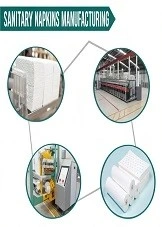
The field of feminine hygiene is a very vibrant space where new ventures and start-ups have a wide scope of making a real difference in society, besid...
|
Capacity : 30,000 Pkts. Per Day |
Plant and Machinery cost: 371 |
|
Working Capital : N/A |
Rate of Return (ROR): 29 |
|
Break Even Point (BEP): 51 |
TCI :
|
|
Cost of Project : 607 |
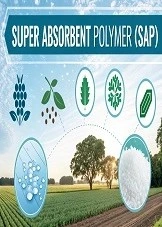
The Indian manufacturing landscape is undergoing a phase of swift transition, with SAP manufacturing being one of the sectors showing high potential....
|
Capacity : 40,000 MT Per Annum |
Plant and Machinery cost: 9400 |
|
Working Capital : N/A |
Rate of Return (ROR): 26 |
|
Break Even Point (BEP): 42 |
TCI :
|
|
Cost of Project : 13700 |
Chemically, sodium chlorite has the formula NaClO2. It is a white, crystalline material that is non-flammable and odourless. It is employed in industr...
|
Capacity : Sodium Chlorite (NaClO2: 15 MT Per Day |
Plant and Machinery cost: 567 Lakhs |
|
Working Capital : - |
Rate of Return (ROR): 26.00 |
|
Break Even Point (BEP): 48.00 |
TCI : Cost of Project: 1892 Lakhs |
|
Cost of Project : 189200000 |

Entrepreneur India, an Industrial monthly magazine on industrial development, technologies & project opportunities aims at simplifying the process of choosing the suitable project for investment.

Entrepreneur India - Copyright 2017-. All rights reserved.



