

NPCS has been helping entrepreneurs, startups, MSMEs, and industrial investors since 1992 with detailed project reports, feasibility studies, market research, and business consulting services across 50+ industries.
A factory budget of Rs 5-10 crore sits at a genuinely useful spot: big enough to run real production lines, small enough for one founder to still walk the shop floor every day.
This bracket has become one of the most active zones for business ideas in India today, since it lets a first-time promoter move straight from a small workshop into a proper manufacturing business without the complexity of a mega-project.
This briefing covers few project ideas across five sectors that consistently work at this ticket size, along with the financing, policy and cost detail an entrepreneur needs before shortlisting one.
None of these ideas demand a conglomerate's balance sheet or a decade of industry experience. Most are run successfully by first-generation entrepreneurs who paired a clear-eyed read of local demand with a well-prepared feasibility study before committing capital.
Projects sized here typically post a faster payback than larger plants, since the capital base is smaller relative to achievable revenue in most of these categories.
|
Manufacturing units funded in the Rs 5-10 crore plant and machinery range typically show a payback period of 2.5 to 4 years, create 40-150 direct jobs, and can start production at 50-60% of installed capacity before scaling up further (industry estimate). |
Anyone searching for manufacturing business ideas with 5 crore investment is also entering at a point where institutional credit has genuinely improved: the CGTMSE collateral-free guarantee ceiling rose from Rs 5 crore to Rs 10 crore starting April 2025, putting nearly the entire bracket within reach of guarantee-backed lending.
This range also offers real sector breadth. A first-time entrepreneur is not locked into one product category, since food processing, chemicals, packaging, engineering and green manufacturing all produce workable, bankable projects at this exact investment level.
Timing favours entrants who move now rather than wait. Industrial land in emerging clusters is still priced below saturated metro rates, and the widened MSME classification thresholds introduced in the 2025-26 Union Budget give more headroom to grow within MSME status before crossing into medium-enterprise compliance requirements.
The table below groups representative project ideas by sector, with an indicative investment position inside the band and a one-line note on why each is in demand.
|
Business Idea |
Sector |
Indicative Investment (Rs Crore) |
Opportunity Note |
|
Spice grinding & blending unit |
Food processing |
5-6 |
Steady retail and HORECA demand, low raw material volatility |
|
Bakery & confectionery production line |
Food processing |
6-8 |
High repeat consumption, strong branding potential |
|
Roasted snacks & namkeen unit |
Food processing |
5-7 |
Fast-growing packaged snacks segment |
|
Fruit juice & RTS beverage plant |
Food processing |
7-9 |
Rising demand for packaged, ready-to-serve drinks |
|
Detergent powder & liquid detergent plant |
Chemicals/household |
5-7 |
Non-seasonal, stable domestic demand |
|
Cosmetic & personal care unit (creams, shampoos) |
Chemicals/household |
6-9 |
High margins, low-to-medium automation needs |
|
PET bottles, jars & caps manufacturing |
Plastics/packaging |
6-9 |
Broad FMCG and pharma packaging demand |
|
Corrugated box manufacturing plant |
Plastics/packaging |
5-8 |
Direct link to e-commerce and logistics growth |
|
PP/LDPE carry bags & packaging film unit |
Plastics/packaging |
5-7 |
Steady industrial and retail packaging demand |
|
CNC machined auto components unit |
Engineering |
7-10 |
OEM supply potential in auto and appliances |
|
Fasteners, nuts & bolts manufacturing |
Engineering |
5-7 |
Broad-based construction and auto demand |
|
Sheet metal fabrication unit |
Engineering |
6-9 |
Scalable, serves multiple industrial buyers |
|
Solar mounting structure fabrication |
Renewable/green |
5-8 |
Direct beneficiary of India's solar capacity build-out |
|
Biomass briquette & pellet manufacturing |
Renewable/green |
5-7 |
Rising industrial demand for cleaner fuel alternatives |
|
Disposable syringes manufacturing unit |
Healthcare/medical |
7-10 |
Consistent hospital and export demand |
Food-based ideas dominate the lower half of this band because raw material costs stay manageable and demand holds up through economic cycles. Chemical and packaging projects, on the other hand, tend to reward entrepreneurs willing to build small business ideas around a specific B2B buyer relationship rather than pure retail sales.
Engineering and healthcare-linked ideas sit at the upper end of the range and usually need a slightly longer sales cycle to land anchor OEM or institutional clients, but they also carry some of the strongest repeat-order potential once that first contract is signed.
Food processing keeps drawing new entrants because rising disposable incomes and changing lifestyles are pushing more households toward packaged and ready-to-eat products.
Plastics and packaging demand is riding India's e-commerce and pharmaceutical growth directly, since almost every shipped product now needs some form of rigid or flexible packaging, giving this cluster unusually diversified customer bases.
Engineering and light fabrication demand tracks the broader industrial capex cycle, particularly automotive and construction, and rewards entrants who can win one strong OEM relationship early rather than chasing scattered small orders.
Renewable and eco-friendly manufacturing is the fastest-growing cluster in relative terms, powered by both government green-energy targets and corporate ESG commitments that are turning into real, contracted procurement volumes.
Chemicals and household products round out this group with a quieter but equally reliable growth story. Detergents, personal care items and industrial cleaners see almost no seasonal dip in demand, which makes cash flow planning noticeably easier for a first-time promoter than in categories with sharper seasonal swings.
Entrepreneurs at this ticket size can now access meaningfully larger guarantee cover than they could two years ago, thanks to recent MSME policy revisions.
The Credit Guarantee Scheme administered through CGTMSE raised its collateral-free ceiling from Rs 5 crore to Rs 10 crore starting April 2025, which now covers the entire top end of business ideas under 10 crore in India without requiring the promoter to pledge personal collateral.
PMEGP remains available for manufacturing projects, though its standard project-cost ceiling of Rs 50 lakh in the manufacturing sector means larger units in this bracket typically combine it with a separate term loan rather than relying on PMEGP alone. State industrial policies add a further layer: Uttar Pradesh, Maharashtra and Gujarat all offer capital subsidies in the 10-25% range plus interest subvention for units in this investment band that locate within notified industrial estates or clusters.
The 2025-26 Union Budget also widened MSME classification thresholds, raising investment limits by 2.5 times and turnover limits by 2 times, which lets more units in this bracket qualify for medium-enterprise benefits without breaching the classification ceiling as they grow.
Export-oriented units in this bracket have an additional lever available too: term loan guarantee cover of up to Rs 20 crore now applies to export-focused MSMEs, which is well above what most projects in this range would need, giving exporters comfortable headroom as they scale beyond their initial capacity.
|
Cost Component |
Food Processing Unit |
Packaging/Plastics Unit |
Engineering Unit |
|
Plant & machinery |
55-60% of project cost |
60-65% of project cost |
60-65% of project cost |
|
Working capital |
20-25% of project cost |
15-20% of project cost |
15-20% of project cost |
|
Setup, utilities & land development |
15-20% of project cost |
15-20% of project cost |
15-20% of project cost |
These splits are illustrative, based on representative feasibility studies for projects in the Rs 5-10 crore range, and assume a greenfield unit on leased or newly acquired industrial land. Actual splits shift with automation level and location.
Margins in this bracket vary widely by sector, but most well-run units land somewhere between 10% and 20% net margin once past the initial ramp-up phase, according to representative feasibility studies (industry estimate).
Break-even for a typical manufacturing business in this range falls around 45-60% capacity utilisation, and payback commonly completes within 2.5 to 4 years, faster than the 3.5-6 year range seen in larger, higher-ticket manufacturing projects.
Food processing and packaging units tend to reach break-even fastest, since both carry high repeat-purchase demand, while engineering and healthcare-linked units may take a little longer to ramp because they depend more heavily on landing anchor institutional buyers first.
Margin durability matters as much as the headline number. A project that locks in even one or two long-term supply contracts, rather than relying purely on spot sales, tends to hold its margin far more consistently through demand cycles than one selling entirely into open retail or trading channels.
Start with raw material access rather than the headline growth number for a sector. A project close to its input source almost always beats a higher-growth idea that depends on long-distance sourcing.
Market proximity matters just as much for anyone comparing profitable small business ideas 5 crore to 10 crore: a plant near its buyer cluster saves on logistics costs that can otherwise erode a thin early-stage margin.
Skill fit is the third filter. A promoter with a process-engineering background will run an engineering or chemical unit more smoothly than a first-time operator, while food processing and packaging units generally demand a shorter learning curve for a new entrepreneur.
Finally, check machinery availability before committing capital. Categories with multiple domestic machinery vendors, such as food processing and packaging, de-risk a project far more than niches where equipment must be imported on long lead times.
It also helps to map out a realistic second product line before construction even begins. Many successful units in this bracket started with one core product, proved the demand, and only then added a second line using the same premises and much of the same workforce, spreading fixed costs across a wider revenue base without a second round of land or building capital.
India's MSME sector is targeting a rise in its GDP contribution from roughly 30% today toward 40% by 2030, alongside a jump in its export share from about 50% to 60% over the same period.
More than 7.9 crore enterprises are now registered on the Udyam and Udyam Assist platforms as of March 2026, reflecting a steady formalisation trend that keeps expanding the pool of entrepreneurs eligible for schemes tied to business ideas India at this investment scale.
Expanding industrial cluster development, improving logistics infrastructure and affordable industrial land in tier-2 towns should keep this investment bracket growing steadily through the rest of the decade, even as larger-ticket manufacturing gets most of the policy headlines.
Digital adoption is quietly reshaping this bracket too. MSMEs now route roughly 72% of their transactions digitally rather than in cash, which is making it easier for lenders to assess creditworthiness quickly and for smaller manufacturers to plug directly into large-buyer procurement platforms like the Government e-Marketplace.
Food processing units, chemical and household-product plants, plastics and packaging lines, engineering fabrication units, and renewable-manufacturing projects all fit comfortably within this budget, as shown in the business ideas table above.
There is no single best answer, but best manufacturing business ideas for startups India in this range tend to cluster around food processing and packaging, since both combine fast break-even with strong repeat demand.
Yes. CGTMSE-backed collateral-free guarantees now cover up to Rs 10 crore as of April 2025, and SIDBI, NABARD, NSIC and both public and private banks actively finance projects in this exact range.
Most projects break even at 45-60% capacity utilisation and complete payback within 2.5 to 4 years, though this varies by sector and demand conditions (industry estimate).
Prioritise raw material access and buyer proximity over headline sector growth, and confirm domestic machinery availability before finalising a project, since these factors affect real-world execution more than market-size projections.
Representative feasibility studies suggest working capital typically runs 15-25% of total project cost on top of the plant and machinery outlay, varying by sector and inventory cycle (industry estimate).
The Rs 5-10 crore investment bracket remains one of the most accessible entry points into serious Indian manufacturing, wide enough to span five very different sectors and still forgiving enough for a first-time promoter to manage directly.
No single project idea in this list is inherently better than another; each one succeeds or struggles based on execution, buyer access and how well the promoter matches their own skills to the sector they choose.
We would advise shortlisting no more than two or three ideas from the table above, based on genuine local advantages, before commissioning a detailed feasibility study, since spreading diligence across too many options at once usually slows decision-making rather than improving it.
Whichever idea a reader ultimately picks, the fundamentals of this bracket, faster payback, broader credit access, and genuine sector choice, make it one of the more forgiving places in Indian manufacturing to make a first serious capital commitment.
Ministry of Micro, Small and Medium Enterprises, Government of India — MSME classification revisions and CGTMSE guarantee ceiling changes
India Brand Equity Foundation (IBEF) — MSME sector GDP contribution, Udyam registration and credit data
Press Information Bureau (PIB), Government of India — Union Budget 2025-26 and 2026-27 MSME allocations
Small Industries Development Bank of India (SIDBI) — financing schemes for small and medium manufacturing
Khadi and Village Industries Commission (KVIC) — PMEGP scheme parameters and project-cost ceilings
Confederation of Indian Industry (CII) — MSME sector growth trends and cluster development
Please choose a project below related to this category.

High carbon steel is a key material used across several industries due to its superior hardness, strength, and wear resistance. It contains a higher c...
|
Capacity : M.S. Billets 40 MT Per Day |
Plant and Machinery cost: 600 |
|
Working Capital : N/A |
Rate of Return (ROR): 29 |
|
Break Even Point (BEP): 52 |
TCI :
|
|
Cost of Project : 1700 |
In the modern age of industrial infrastructure and urban development, channels – both structural and support-based – have emerged as a vit...
|
Capacity : Mild Steel Channel (Size: 200x90x30 to 300x100x46): 200 MT Per Day |
Plant and Machinery cost: 700 |
|
Working Capital : N/A |
Rate of Return (ROR): 31 |
|
Break Even Point (BEP): 50 |
TCI :
|
|
Cost of Project : 1800 |
Angles, commonly referred to as angle irons or L-sections, are one of the most fundamental components in structural steel fabrication. With their vers...
|
Capacity : Mild Steel Angles (Size: 25x25x3 to 200x200x24): 00 MT Per Day Slags: 20 MT Per Day |
Plant and Machinery cost: 750 |
|
Working Capital : N/A |
Rate of Return (ROR): 31 |
|
Break Even Point (BEP): 50 |
TCI :
|
|
Cost of Project : 1900 |
In the world of industrial development, few sectors offer as much consistency and long-term promise as the steel-based pressure equipment industry. At...
|
Capacity : Pressure Boiler Plates (3mm to 200mm): 40 MT Per Day |
Plant and Machinery cost: 700 |
|
Working Capital : N/A |
Rate of Return (ROR): 29 |
|
Break Even Point (BEP): 50 |
TCI :
|
|
Cost of Project : 1430 |
In the race for advanced materials that are lightweight, ultra-strong, and performance-driven, carbon fibre stands out as a clear winner. Once used on...
|
Capacity : Project Capacity:10,00,000 Kg Per Annum |
Plant and Machinery cost: 6500 |
|
Working Capital : N/A |
Rate of Return (ROR): 30 |
|
Break Even Point (BEP): 54 |
TCI :
|
|
Cost of Project : 1700 |
Polypropylene (PP) woven fabric and bags are among the most versatile, cost-effective, and in-demand packaging solutions in the global market. Known f...
|
Capacity : PP Woven Bags (50-60cm x 82-100 cm): 54,545 Nos. Per Day |
Plant and Machinery cost: 629 |
|
Working Capital : N/A |
Rate of Return (ROR): 25 |
|
Break Even Point (BEP): 45 |
TCI :
|
|
Cost of Project : 1688 |
Potassium Permanganate (KMnO₄) is an essential inorganic chemical with a powerful oxidizing property. It appears as dark purple or bronze-colored crys...
|
Capacity : 50 MT Per Day |
Plant and Machinery cost: 833 |
|
Working Capital : N/A |
Rate of Return (ROR): 29 |
|
Break Even Point (BEP): 39 |
TCI :
|
|
Cost of Project : 5508 |
Aluminium billets, when produced from recycled scrap, balance the increasing demand for downstream infrastructures like extrusion for EVs, building, s...
|
Capacity : Aluminium Billets:1,200 MTPA, Aluminium Dross by Product:54 MTPA |
Plant and Machinery cost: 274 |
|
Working Capital : N/A |
Rate of Return (ROR): 31 |
|
Break Even Point (BEP): 61 |
TCI :
|
|
Cost of Project : 730 |
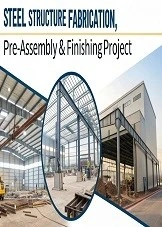
The industrial steel structure fabrication industry is direct at the intersection of building our cities and fuelling our industrialization. It is a h...
|
Capacity : PEB Components, Crash Barriers, Transmission Towers, Steel Gates, Grills & Railings: All 500 MTPD. |
Plant and Machinery cost: 1500 |
|
Working Capital : N/A |
Rate of Return (ROR): 35 |
|
Break Even Point (BEP): 39 |
TCI :
|
|
Cost of Project : 18700 |
The market for industrial pumps worldwide is flourishing, and Air Operated Double Diaphragm (AODD) Pumps are leading the way as highly versatile fluid...
|
Capacity : Metallic AODD Pump (100 to 500LPM): 4 Nos. PD, Non - Metallic AODD Pump (100 to 500LPM): 4 Nos. PD |
Plant and Machinery cost: 16 |
|
Working Capital : N/A |
Rate of Return (ROR): 30 |
|
Break Even Point (BEP): 56 |
TCI :
|
|
Cost of Project : 126 |
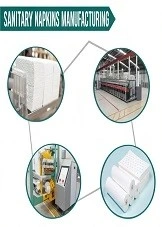
The field of feminine hygiene is a very vibrant space where new ventures and start-ups have a wide scope of making a real difference in society, besid...
|
Capacity : 30,000 Pkts. Per Day |
Plant and Machinery cost: 371 |
|
Working Capital : N/A |
Rate of Return (ROR): 29 |
|
Break Even Point (BEP): 51 |
TCI :
|
|
Cost of Project : 607 |

The manufacturing sector is transforming as many industry players are beginning to tap into the potential of agro waste. Among the many possible oppor...
|
Capacity : Silica: 3,000 MTPA, Activated Carbon (by product): 330 MTPA, Sodium Carbonate (by product): 495 MTPA |
Plant and Machinery cost: 1300 |
|
Working Capital : N/A |
Rate of Return (ROR): 29 |
|
Break Even Point (BEP): 46 |
TCI :
|
|
Cost of Project : 2000 |

Entrepreneur India, an Industrial monthly magazine on industrial development, technologies & project opportunities aims at simplifying the process of choosing the suitable project for investment.

Entrepreneur India - Copyright 2017-. All rights reserved.



